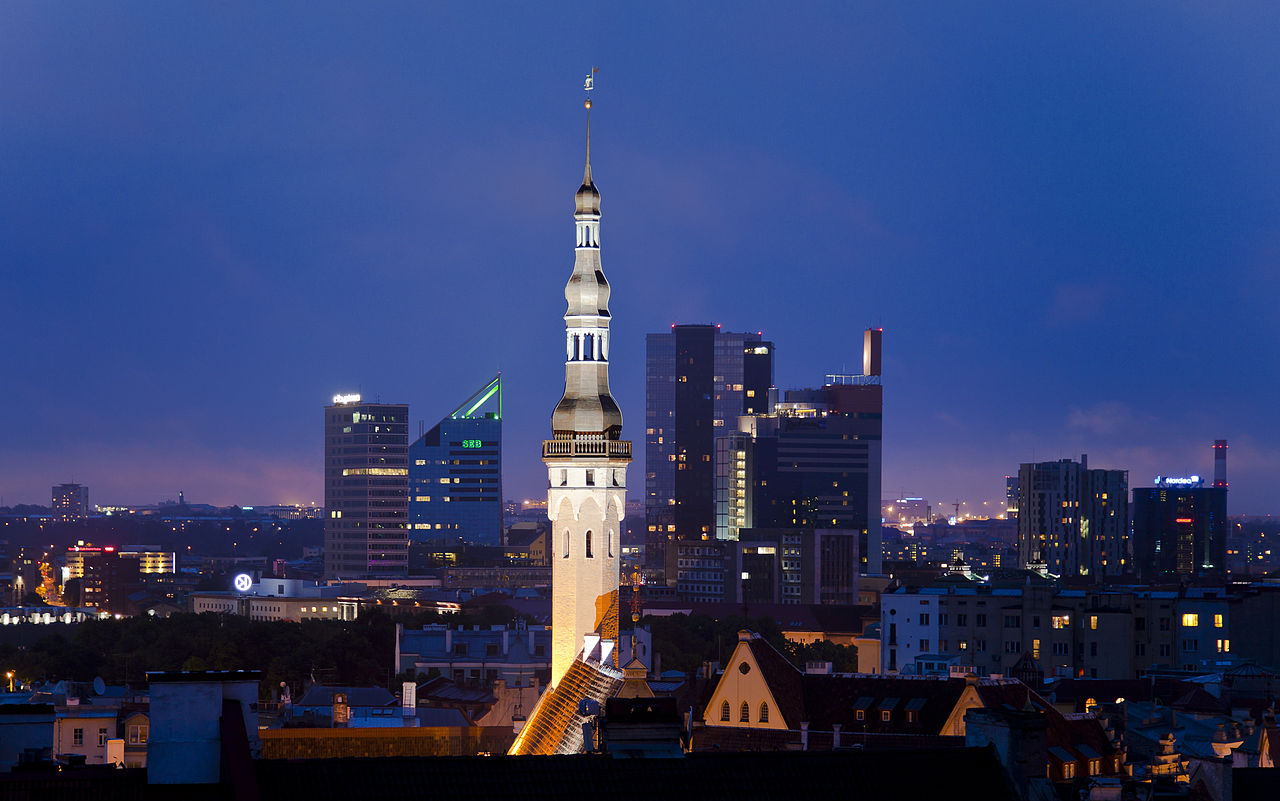
Medieval Spires and the World's Most Digital Nation

Tallinn’s Old Town (UNESCO World Heritage Site 1997; the best-preserved medieval city in Northern Europe; entirely enclosed by 2.35km of 13th–14th-century limestone wall with 26 surviving towers) is a two-level medieval city: the Lower Town (guilds, merchants, the Town Hall Square; free to wander) and Toompea Hill (the upper city of castles and churches; free to access via two gated paths). The Town Hall Square (Raekoja plats; the centre of social and commercial life since the 13th century; the oldest town hall in the Baltics — Gothic; 15th-century council chamber) is the finest outdoor public space in the Baltics.
💡 Walk the Old Town counterclockwise from the Great Coast Gate (the main medieval entrance at the north of the town; the Fat Margaret Tower) down through the merchant Lower Town to Raekoja plats (Town Hall Square; Christmas market in December; the finest square in the Baltics), then up to Toompea Hill via the Short Leg Lane (Lühike jalg). The entire circuit takes 2–3 hours; the views from the Toompea terraces over the Old Town rooftops are the finest panorama in Tallinn.

Toompea Hill (the upper city; accessible via two gates from the Lower Town; free; home to the Estonian Parliament, the Dome Church, and Alexander Nevsky Cathedral) has two viewpoints looking down over the Old Town copper rooftops: the Kohtuotsa terrace (the most photographed panorama; packed in summer; visit at 7am for an empty shot) and the Patkuli terrace (slightly quieter; directly above the old city walls and towers). St Olaf’s Church (the tallest building in the world from 1549 to 1625; the current tower 159m; tower climb CLP 5€; panoramic views of Tallinn and the Gulf of Finland) is the finest single vertical climb in Tallinn.
💡 Visit Kohtuotsa and Patkuli terraces at dawn (7–8am; in summer; the orange light on the limestone towers with no tourists; the finest free photography opportunity in the Baltics). St Olaf tower climb (€5; daily 10am–6pm; 258 steps; the narrow medieval staircase and the full 360-degree panorama of the city, the bay, and the Gulf of Finland on a clear day) is worth the 20-minute queue.

Telliskivi Creative City (Telliskivi 60A; 10 minutes walk from the Old Town; free entry; the converted railway depot and factory district of Kalamaja) is the most interesting neighbourhood in Tallinn outside the medieval walls — a dense area of independent cafes, vintage markets, street art, pop-up restaurants, and the best selection of Estonian design shops. The F-Hoone restaurant, Balti jaama turg (the covered market; the finest food market in Tallinn; fresh produce, artisan food stalls, and the most active Saturday morning scene in the city), and the Fotografiska Tallinn (the finest photography gallery in the Baltics; €12; rotating international exhibitions) are all here.
💡 Visit Telliskivi on a Saturday morning (10am–1pm; the Balti jaama turg market is at its most active; the street food stalls and Estonian producers have their full range; the vintage market in the adjacent Tallinn Market building has the finest second-hand design and Soviet-era finds in the city). Grab a coffee from F-Hoone (the most atmospheric cafe in Telliskivi; the courtyard in summer) before exploring the streets.

Kadriorg Palace (2km east of the Old Town; tram 1 or 3 from the Old Town; €8; 10am–6pm Wed–Mon; a Baroque palace built by Peter the Great for Catherine I in 1718–1736) is the finest Baroque building in Estonia, surrounded by formal gardens (free to enter) and the Swan Lake. The Kumu Art Museum (adjacent; the largest art museum in the Baltic States; €8; the finest collection of Estonian art from the 18th century to the present) is the most significant art institution in Estonia.
💡 Combine the Kadriorg Palace gardens (free; the finest formal garden in the Baltics; the tulip beds in May are extraordinary) with the Kumu Art Museum (adjacent; €8; the Soviet-era Estonian art collection on the 4th floor is the most fascinating section — the political art navigating the censorship of the occupation period is extraordinary) and the Peter the Great House Museum (the small house where Peter stayed during construction; €5) for the most complete Kadriorg visit.
Tallinn has the finest restaurant scene in the Baltic States. The non-negotiables: the Old Town for atmosphere (Olde Hansa — the medieval restaurant that has served period food since 1997; €20–35; theatrical but the wild boar and elk stew with honey mead are genuinely excellent), Telliskivi for creative local food (F-Hoone and the rotating market stalls), and the contemporary Estonian restaurants of the lower Old Town (NOA Chef’s Hall — the finest restaurant in Estonia; €100–150 tasting menu; views over the Gulf of Finland from the terrace). Estonian food: rye bread (the finest in Northern Europe; buy a loaf from any market bakery; €2–3), black pudding (verivorst; the Christmas speciality; year-round in markets), and the Estonian smoked fish (suitsukala; Baltic herring and sprat smoked over alder; the finest version at the Balti jaama turg market).
7am: Kohtuotsa and Patkuli viewpoints (empty; copper rooftops in morning light; 45 mins). 8am: Old Town Lower Town walk (Town Hall Square; St Nicholas Church; Great Guild Hall; 1.5h). Toompea Hill (Alexander Nevsky Cathedral exterior; Dome Church interior; Parliament viewpoint; 1h). Lunch at any Old Town cafe (€12–18). Afternoon: tram to Telliskivi (10 mins; Balti jaama turg; Fotografiska; F-Hoone coffee; 2h). St Olaf tower climb (€5; 6pm; sunset panorama). Old Town restaurant dinner (Olde Hansa for theatre or NOA for excellence; €25–100).
10am: tram to Kadriorg (Tram 1; 15 mins). Kadriorg Palace gardens (free; tulips in May; the Baroque garden fountain). Kumu Art Museum (€8; the Soviet-era collection; 2h). Lunch near Kadriorg. Option: return to port for the afternoon Tallink ferry to Helsinki (3h; €25; return by 10pm). Or: Pirita beach (5 mins by bus from Kadriorg; the Gulf of Finland beach; free; the finest beach near Tallinn) for an afternoon swim in summer.
The Tallinn Old Town viewpoints at sunrise (7–8am in summer; the copper rooftops in morning light with no tourist crowds) are the finest free photography moment in the Baltic States.
Between May and September, Tallinn receives multiple cruise ships daily (each carrying 3,000–5,000 passengers who spend 4–6 hours in the Old Town).
Tallink Silja and Viking Line operate 2–3 hour car ferries between Tallinn and Helsinki (€15–40 one-way; multiple daily crossings; the most popular Baltic day trip for Scandinavians).
Tallinn’s City Bike sharing scheme (€0.15/min; available via the Bolt, Tuul, or Tallinn City Bike apps) covers the Old Town, Telliskivi, and Kadriorg — the three main areas — in a 20-minute cycle circuit.
The Balti jaama turg (Telliskivi; the covered market; Saturdays 8am–4pm are the liveliest) has rye bread, smoked herring, and Estonian cottage cheese at local prices. The finest food experience in Tallinn.
Three nights in Tallinn allows: Day 1 — Old Town (morning) + Toompea Hill + St Olaf tower. Day 2 — Telliskivi Saturday market + Kadriorg Palace + Kumu.
The Estonian ride-hailing app (founded in Tallinn; operates in 40+ countries; the best urban transport option in Tallinn). Also has e-scooters for short distances.
Free
Download Tallinn offline. Transit integration works well for Estonian bus and tram routes.
Free
Shared e-bikes and e-scooters for exploring Tallinn’s flat city beyond the Old Town (Telliskivi; Kadriorg; Pirita). €0.15/min; no docking stations.
Free
Book Helsinki–Tallinn ferry tickets in advance. Book the early Tallinn ferry for a full day in Helsinki; the 10pm return is the most efficient.
Free
Medieval Tallinn, university Tartu, Baltic beach Pärnu, and the island silence of Saaremaa.