LV
Riga
Art Nouveau Capital of the Baltic
Art Nouveau Capital of the Baltic
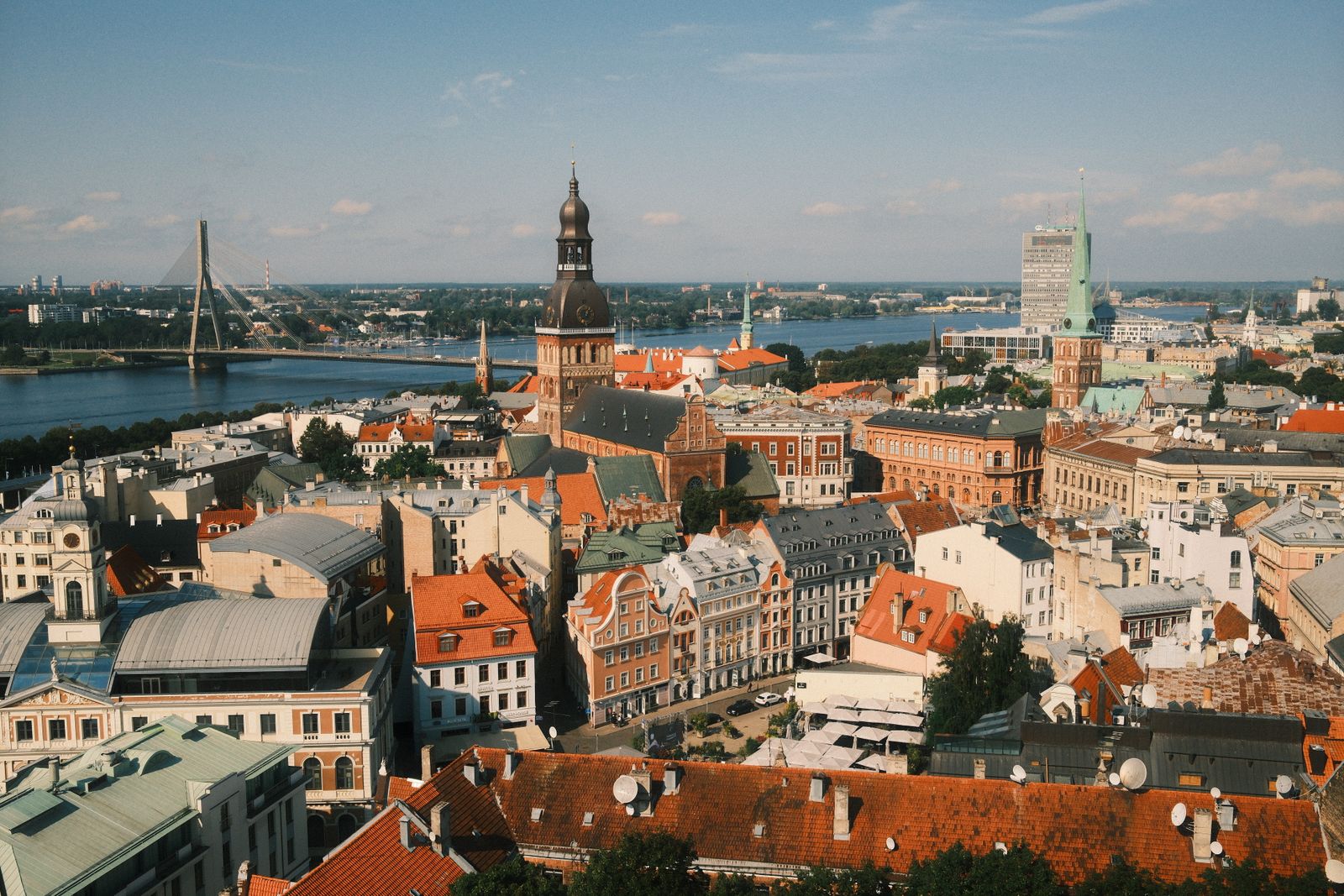
Riga Old Town (UNESCO 1997; the finest ensemble of medieval architecture in the Baltics; free to walk) contains: the Riga Dom (Dome Cathedral; founded 1211; the largest medieval church in the Baltics; €3; organ concerts Wed 6pm from €10; domadarzs.lv), the House of the Blackheads (1334; the most ornate guild house in Latvia; €8; daily; the reconstructed Renaissance portal courtyard is free to enter for a few steps), and the Three Brothers (the oldest residential buildings in Riga; 15th–17th century; Maza Pils iela; free externally).
Walk the Old Town before 9am (cruise ships arrive from 10am; the Old Town is empty in the early morning; the Dom Cathedral in the dawn light and the cobblestone lanes without tourists are the finest version of Riga). The Dom Cathedral organ concert (Wednesday 6pm; €10–20; the most powerful organ in the Baltics; the acoustics of the medieval cathedral are extraordinary) is the finest single event in Riga.

Alberta iela (10 minutes from the Old Town through Esplanade park; the finest single Art Nouveau street in the world; 6 consecutive buildings by Mikhail Eisenstein 1903–1908; dozens of sculpted faces, lions, sphinxes, and floral motifs on every facade) is the defining Riga experience. The Riga Art Nouveau Museum (Alberta 12; €10; daily 10am–6pm; a fully furnished 1903 Art Nouveau apartment with original furniture, ceramics, and stained glass) is the finest interior in the Quiet Centre.
Walk Alberta iela and the surrounding streets (Elizabetes; Strelnieku; Antonijas) in the morning sun (south-facing facades; 9–11am is the finest light). The Art Nouveau Riga app (free; artnouveau.riga.lv) has building-by-building guides to every facade. The full Quiet Centre Art Nouveau walk (2h; self-guided with the free map from the tourist office) is the finest use of a Riga morning.
Photo: Ainars Brūvelis, CC BY-SA 3.0

Riga Central Market (Centraltirgus; free; daily 7am–6pm; five converted WWI zeppelin hangars housing the largest market in the Baltic States; EU Heritage Label 2019) is the most extraordinary market building in Northern Europe. The fish pavilion (fresh Baltic fish; smoked sprats; freshly marinated herring; €2–4 per 100g — the finest smoked sprats in Latvia are here) and the dairy pavilion (Latvian cheese; kefir; farmer’s butter) are the essential stops.
Visit the fish pavilion (enter the main gate; turn right; the smoked fish counter at the far end) at 9am on a Tuesday or Wednesday for the fullest selection. Fresh Latvian rye bread (€1–2 per loaf from any bakery stall) is the essential market purchase. The pavilion rooftops (the five zeppelin hangar arches visible from the outside) are the finest example of industrial heritage reuse in the Baltic States.
Photo: Jorge Láscar from Melbourne, Australia, CC BY 2.0

The Latvian Ethnographic Open-Air Museum (Brivdabas muzejs; 9km from centre; bus from Kronvalda bulvaris; €8; May–Sept daily 10am–6pm; 118 historic farmsteads, barns, churches, and workshops from all Latvian regions on a forested lakeside) is the finest museum in Latvia. A complete traditional Latvian rural world assembled on one site: smoke saunas, windmills, fishing villages, and manor houses over 88 hectares.
Visit on Sunday in summer (live craftspeople — weavers, blacksmiths, potters, bakers; the most active museum experience in Latvia). The smoke sauna (first Sunday of the month; €10 extra; announced on the museum’s Facebook; book early) is the finest traditional sauna experience near Riga.
Photo: Pudelek (Marcin Szala), CC BY-SA 3.0
Riga has the finest restaurant scene in the Baltic States. The Old Town: Upe (Pils iela; creative Latvian cuisine; €20–40; the best food in the Old Town). The Quiet Centre: Nomas (Dzirnavu iela; the finest modern Latvian restaurant; seasonal tasting menu; €40–60) and Bibliotēka No. 1 (Berga Bazars; the finest terrace cafe in the Quiet Centre; €8–15 for lunch). The Central Market food stalls (€3–8) are the finest budget lunch in Riga. Riga Black Balsam (the national herbal bitters; 45% ABV; sold at every supermarket; €8–12; mixed with blackcurrant juice as the classic Latvian cocktail) is the essential Riga souvenir drink.
8am: Old Town dawn walk (Dom Cathedral; Three Brothers; House of the Blackheads courtyard; 1.5h). Central Market (9am; fish pavilion smoked sprats; rye bread; 1h). Dom Cathedral interior (€3; if organ concert 6pm Wed — book it). Lunch: market stalls (€5–8). House of the Blackheads (€8; 1h). 6pm Dom organ concert (€15) or Kalku Varti bar complex for dinner.
9am: Alberta iela Art Nouveau walk (Riga Art Nouveau Museum €10; Elizabetes; Strelnieku; 1.5h). Latvian National Museum of Art (€6; 1h). Lunch at Bibliotēka No. 1 (Berga Bazars; €12). 2pm train to Jurmala Majori (€1.80; 30 mins; beach afternoon in summer). Return 6pm. Nomas dinner (€45–60; book ahead).
🛂 Entry rules: EES and ETIAS
Latvia is in the Schengen area, which has two EU border systems for non-EU visitors.
EES (in force): since 10 April 2026 the EU’s Entry/Exit System registers non-EU visitors’ passport details, fingerprints and a photo the first time they enter the Schengen area, replacing passport stamps. Allow extra time at the border on your first trip; later crossings are quicker. EU, EEA and Swiss citizens are not registered.
ETIAS (not yet running): a €20 online travel authorisation for visitors who don’t need a visa, such as UK, US, Canadian and Australian citizens. It hasn’t started and no start date has been confirmed, so nobody can apply yet; ignore websites that offer to “pre-register” you for a fee.
Visa-free visitors can stay up to 90 days in any 180-day period across the whole Schengen area, not per country.
Official information: EU: Travel to Europe (EES & ETIAS) · Reviewed September 2026
Alberta iela (and Elizabetes; Strelnieku streets) in the morning (9–11am; south-facing facades in direct sun; before tour groups) is the finest architectural photography moment in the Baltic States.
The Dom Cathedral organ (1884 Walcker; 6,768 pipes; the most powerful in the Baltic States) gives concerts May–September (Wednesdays 6pm year-round; summer additional dates; €10–20; book at domadarzs.lv).
Cruise ships discharge thousands of passengers into Riga Old Town 10am–5pm from May–September. Visit the Cathedral, Dome Square, and the Three Brothers before 9am or after 6pm.
Riga’s Christmas Market (Ratslaukums; late November–early January; the most photogenic in the Baltics; the giant tree with handmade ornaments; mulled wine from €3; free entry) is one of Europe’s finest markets.
Trains from Riga Central (direction Tukums; every 30 mins in summer; €1.80; 30 mins to Majori) make Jurmala’s Baltic beach easily accessible as a half-day from Riga.
The Latvian Open-Air Museum (€8; 88 hectares; 118 historic buildings; most atmospheric on Sundays when craftspeople demonstrate weaving and woodcarving; open daily) is the finest open-air museum in the Baltics.
Download Riga offline. Transit integration covers trams and buses.
Free
Download the Latvian offline pack and use camera mode for menus and signs.
Free
Art Nouveau Riga, Baltic beach Jûrmala, medieval castle towns, and Latvia’s extraordinary cultural depth.
Planning a wider trip? Our Latvia travel guide covers getting there, costs, when to go and more.