
TZ
Serengeti
The Greatest Wildlife Show on Earth
The Greatest Wildlife Show on Earth
The Mara River crossing (the moment when the wildebeest herds plunge into the Mara River to cross to Kenya and back; July–October; the northern Serengeti/Kogatende camps; the most dramatic single wildlife event on earth; the crocodiles waiting in the river; the wildebeest hesitating for hours at the bank before a single animal leaps in and the herd follows; the dust and the roar of the herd; the crocodile attacks; the survivors crossing; the dead at the bank) is the most extraordinary natural spectacle available to any wildlife traveller and the defining experience of the Serengeti.
💡 Book the northern Serengeti camps for July–October specifically (Kogatende; the Migration camps; USD 600–1,500/night all-inclusive; the camp is at the Mara River; the game drives include the riverbank wait for a crossing; on average 3–4 crossings per week in peak season; the camp guide notifies guests when a crossing appears imminent; no crossing is guaranteed but the probability in August–September from a riverside camp is 70–80% per 3-day stay).
The Serengeti Central (Seronera; the year-round zone; the permanent water and kopjes — the granite rock outcroppings; the densest lion and leopard population in Africa) is the finest big cat destination on earth. The Seronera kopjes (the granite kopje clusters; the permanent lion prides that use the rocks as hunting platforms and resting sites; the leopards in the sausage trees above the rivers; often 5–8 lion sightings per game drive in peak season) are the most reliably spectacular wildlife area in the Serengeti. The cheetah (the southern Serengeti open plains; fastest land animal; the morning hunts; the acceleration to 120km/h; visible daily in the open grass) is the most reliably seen in the south.
💡 Game drives depart the Serengeti camps at 6:30am (the golden-hour light on the savanna; the cats most active in the first 2 hours of daylight; the cheetah on the mounds scanning for prey; the lions returning from the night hunt; the leopard still visible in the trees before retreating to midday shade). Evening game drives (4pm; the predators active again as the heat drops; the golden light 5–7pm; the finest photography light; the lion hunt most likely in the last hour of light) are the second most productive.
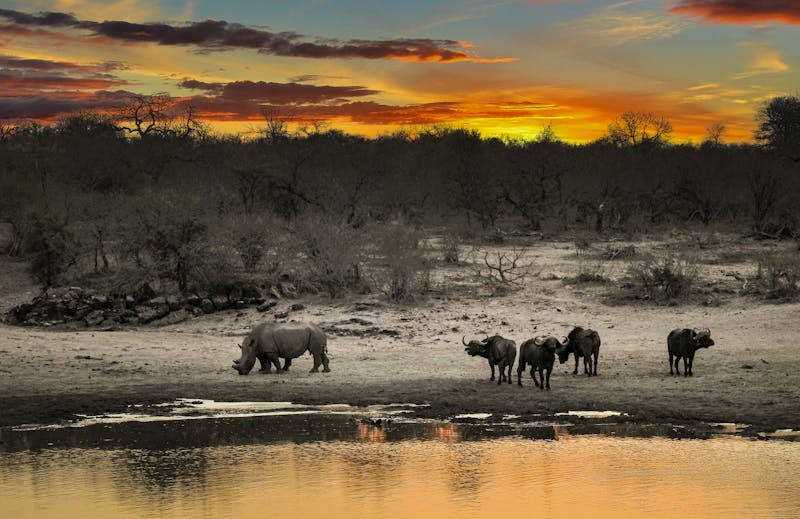
The Serengeti Big Five: lion (the most commonly seen; the Seronera kopjes; multiple prides; daily sightings), leopard (the Seronera and Lobo rivers; less reliably seen; the early morning sausage tree scan), elephant (the Seronera river zone; the large herds; daily sightings), buffalo (the southern and central Serengeti; the massive mixed-age herds; reliable), and black rhino (the rarest; the Moru Kopjes in the south-central Serengeti; the only significant black rhino population in the Serengeti; approximately 60 individuals; not guaranteed but possible in a 3–4 day south Serengeti safari) make the Serengeti the finest single Big Five destination in Africa.
💡 A 4-day Serengeti safari covering the central (Seronera; lions, leopards, elephants), southern (cheetahs; wildebeest calving in January–February), and Moru Kopjes (black rhino; historical San rock paintings on the kopje surface; the “Black Rocks” rhino viewing area) provides the most comprehensive Big Five coverage. Book with a licensed Arusha operator (Shadows of Africa; Wild Frontiers; Roy Safaris; Dorobo Safaris) rather than the cheapest operator available.
The Serengeti hot air balloon safari (the most spectacular optional activity in Africa; departing at dawn from the Seronera balloon launch site; USD 500–550 per person; 1h flight over the Serengeti plains; the heat of the balloon at 5:30am in the dark; the ascent into the first light; the herds visible below; the elephants, giraffes, and wildebeest from bird perspective; the shadow of the balloon on the grass; the champagne breakfast on a bush table at landing; the most extraordinary 2 hours available in Tanzania) is the single most extraordinary optional experience in Tanzania for any visitor whose budget allows.
💡 Book the balloon safari through your Serengeti camp (the camp operator arranges bookings through Serengeti Balloon Safaris — the sole operator; USD 500–550 all-inclusive; pre-payment required; departs 5:30am in the dark; 1h flight; champagne breakfast at landing; return to camp 9am; add a morning game drive after for the most extraordinary full day in the Serengeti). Book as soon as you confirm your safari dates — the balloon fills months in advance in peak season.
All food in the Serengeti is provided by the lodge or camp (all-inclusive packages are standard for all Serengeti accommodation; the daily cost includes accommodation, all meals, and 2 game drives per day). Lodge quality ranges significantly: the budget lodges (USD 200–350/night all-inclusive; the Serengeti Sopa and Mbuzi Mawe) provide functional Tanzanian-international buffet food; the mid-range (USD 400–700/night; Serengeti Serena; Kirawira) provide more refined dining; and the luxury lodges (USD 800–1,500/night; Singita Sasakwa; Four Seasons Serengeti; the Namiri Plains) provide Michelin-adjacent dining with single-origin Tanzanian coffee, fresh-caught Tanzanian fish, and elaborate set menus under the stars. The bush lunch (the packed lunch eaten in the game drive vehicle or at a kopje viewpoint; provided by all camps; the most memorable lunch setting in Tanzania) is the essential midday Serengeti experience.
The northern Serengeti (Lamai Wedge and Kogatende; July–October) has the Mara River crossings. Position at the crossing before 7am — the timing is unpredictable; patience is required.
A telephoto lens (500mm or 600mm f/6.3; or 400mm f/5.6 minimum) is essential for lion portraits at the standard 10-metre vehicle distance. A 300mm with 1.4x converter is the absolute minimum.
The Serengeti park fee (USD 70/person/day; card only at the gates; payable via the TANAPA electronic system) is the largest single daily cost on any Tanzania safari. Budget for it.
A 3–4 day Serengeti safari lets the landscape change around you — different watering holes, different predators, different light. The 1–2 day safari shows you the Serengeti; 3–4 days lets it show itself.
AMREF Flying Doctors evacuation cover (USD 25 for 2 weeks; amref.org/membership) is essential for any Tanzania safari. The nearest trauma hospital is in Nairobi — air evacuation is the only option.
The Serengeti dry season (June–October) concentrates wildlife at waterholes and gives the clearest game drives. Wet season long grass (November–May) hides predators below vehicle sightlines.
Day 1: fly from Arusha to Seronera airstrip (45 mins; USD 120). Afternoon game drive (big cats; elephants; kopje lions; 3h). Camp dinner under stars. Day 2: 5:30am balloon safari (USD 550; 1h over the plains; champagne breakfast). 9am: morning game drive (central Serengeti; big cat follow-up). Afternoon rest. 4pm: evening drive (leopard sighting attempt; the sausage trees; the golden light).
Days 3–4 (July–October): fly to Kogatende camp (45 mins; USD 80). Mara River crossing wait (the driver monitors the herd movement; the crossing can take 30 mins to 6 hours of waiting; the most extraordinary wildlife event on earth when it happens). All game drives in the Mara ecosystem. Return flight to Arusha or direct Zanzibar on Day 4 afternoon.
Download the Serengeti bird checklist (500+ species; the secretary bird, Kori bustard, lilac-breasted roller, and ostrich are the most spectacular safari birds). Offline.
Free
Download the Serengeti mammal and reptile guide offline. Identify the 25+ antelope species, the monitor lizards, and the lesser-known predators (serval, caracal).
Free
USD is the primary currency for Tanzania safari. Park fees, camps, and extras all require USD cash or credit card. Carry USD 500–1,000 for tips and extras.
Free
Serengeti seasonal weather. The dry/wet season boundary (May–June and October–November) is the most important planning variable.
Free
From the Serengeti Great Migration and the Ngorongoro Crater to Zanzibar’s spice island beaches, Kilimanjaro’s summit, and the safari capital of Arusha.