TZ
Kilimanjaro
The Roof of Africa
The Roof of Africa
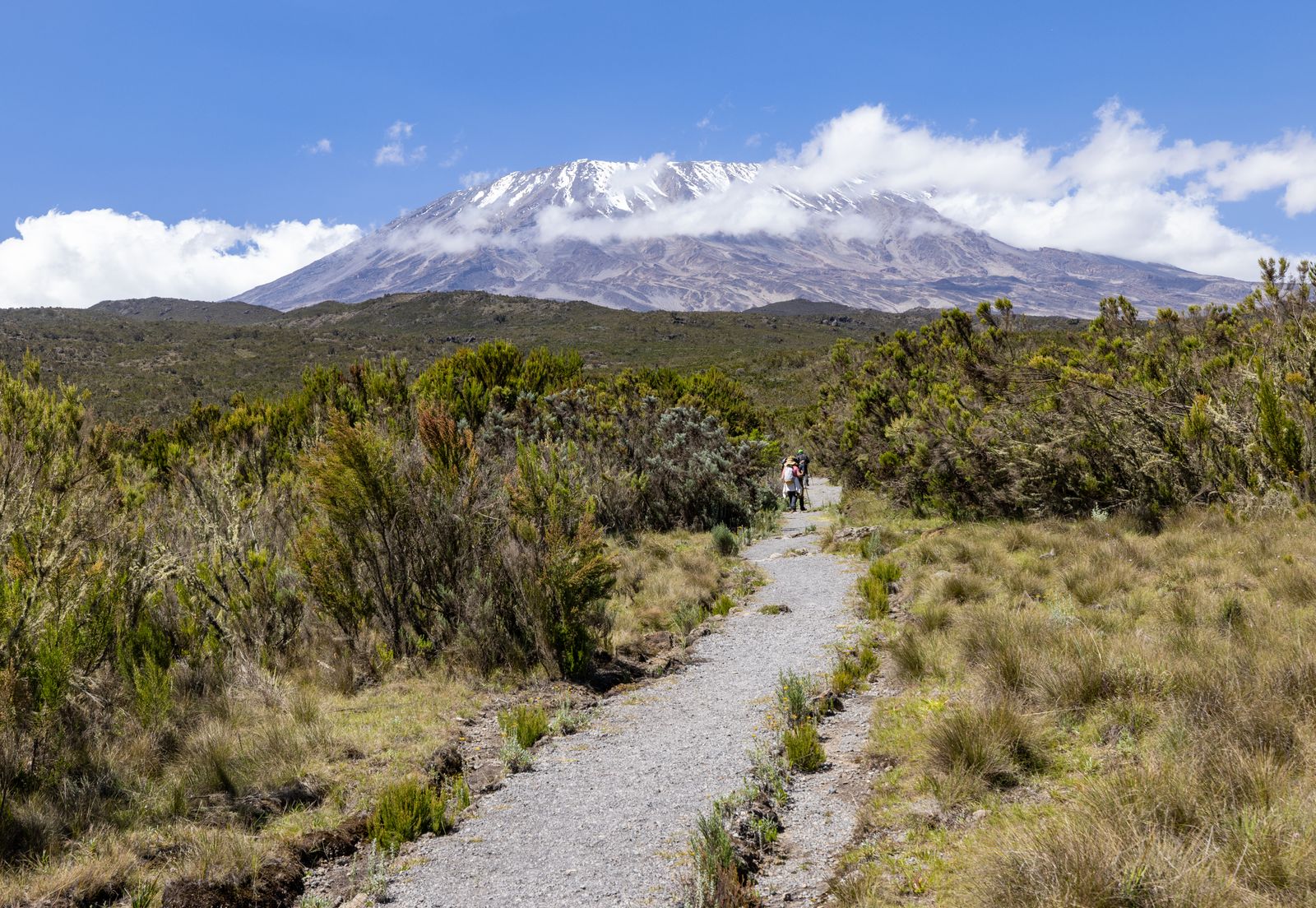
The Lemosho Route (approaching from the Londorossi Gate on the western side; 7–9 days; the longest established route; the most diverse ecosystems — the rainforest; the heath zone; the alpine desert; the glacial zone; the summit crater; the fewest trekkers on the mountain per day — approximately 15% of Kilimanjaro traffic compared to Machame’s 35% and Marangu’s 30%; the highest summit success rate — 85–90% on the 8-day itinerary; the approach across the Shira Plateau — the most dramatic high-altitude landscape on the mountain) is the finest single Kilimanjaro experience for trekkers who prioritise scenery over brevity.
The Lemosho Route 8-day itinerary (the standard recommendation for success; Day 1: Londorossi Gate → Mti Mkubwa camp (2,650m); Day 2: Mti Mkubwa → Shira 1 (3,500m); Day 3: Shira 1 → Shira 2 (3,850m); Day 4: Shira 2 → Barranco via the Lava Tower (4,642m; the essential acclimatisation detour); Day 5: Barranco → Karanga; Day 6: Karanga → Barafu base camp (4,673m); Day 7: midnight summit push from Barafu → Uhuru Peak (5,895m) → descend to Mweka Camp; Day 8: descent to Mweka Gate) provides the finest acclimatisation profile and the most extraordinary mountain scenery on any standard Kilimanjaro route.
Summit night on Kilimanjaro (the midnight departure from Barafu base camp at 4,673m; the darkness; the headtorch column of trekkers ascending Kibo’s volcanic scree; the temperature -10 to -20°C at the summit crater rim; the thin air at 5,895m reducing oxygen to 50% of sea-level; the Stella Point arrival at the crater rim at 5,756m where many trekkers turn back; the final 45-minute walk from Stella Point along the crater rim to Uhuru Peak; the Africa sunrise above the clouds; the Uhuru Peak summit sign; the glaciers below) is the most demanding and most extraordinary single experience available on any non-technical mountain in the world.
Prepare for summit night: take 2 ibuprofen at base camp with dinner (reduces altitude headache); drink 500ml water at midnight departure (dehydration is the primary summit-failure cause); layer: thermal base layer + fleece + down jacket + Gore-Tex shell + balaclava + 3 pairs of gloves + boot gaiters (the scree is fine volcanic ash; it enters everything); walk pole-pole (the Swahili for slowly; the single most important piece of summit advice; the trekkers who walk too fast at 5,000m invariably turn back). Bring 2L of water in an insulated flask (water bottles freeze at -20°C).
Kilimanjaro’s five climate zones (each traversed on the multi-day routes; a journey from tropical African rainforest to the glacial arctic in 5–9 days) are the most extraordinary ecological transect in Africa: the Cultivation Zone (800–1,800m; the Chagga banana farms; the coffee plantations; the villages), the Rainforest Zone (1,800–2,800m; the primary montane rainforest; the colobus monkeys; the hornbills; the giant tree heather), the Heath and Moorland Zone (2,800–4,000m; the giant groundsel; the giant lobelia; the erica shrubs; the last trees thinning), the Alpine Desert Zone (4,000–5,000m; the bare rock; the volcanic ash; the extreme temperature swings — 30°C in the sun, -15°C in the shade), and the Arctic Summit Zone (5,000–5,895m; the glaciers; the permanent ice fields; the volcanic crater; the Uhuru Peak summit cairn).
The Lemosho route’s Shira Plateau (the 3,600–3,900m plateau; the most dramatic landscape on the mountain; the ancient caldera floor of a collapsed volcano; the giant groundsel — a 5m-tall flower that looks like a Dr Seuss plant; the giant lobelia; the silhouette of Kibo dome visible above; the most photographically extraordinary section of the route; the sunset on the Shira Plateau on Day 3 is the finest Kilimanjaro photography moment) is the section that most separates the Lemosho experience from the other routes.

Moshi (the gateway town for Kilimanjaro; 25km from the Marangu Gate; a pleasant, walkable highland town at 900m; the Kilimanjaro summit frequently visible above the town on clear mornings; the Kilimanjaro Cooperative Union (KNCU) — the Chagga people’s coffee cooperative; one of the oldest coffee cooperatives in Africa; the finest single-origin Kilimanjaro coffee available for purchase at the KNCU shop; the Old Moshi road market; the Hindu temple district — the legacy of the 19th-century Indian trader community — the most intact Indian-colonial commercial architecture in Tanzania) is the finest pre- and post-Kilimanjaro base.
Visit the KNCU (Kilimanjaro Native Cooperative Union) shop in Moshi (the oldest continuously operating African coffee cooperative in East Africa; founded 1932; the Chagga farmers’ collective; single-origin Kilimanjaro Arabica at TZS 15,000–25,000 per 250g bag; the finest and most directly sourced Kilimanjaro coffee available; the cooperative story visible in the shop’s historical display; better value than the airport shops and fresher than anything available outside Tanzania) for the finest Tanzania coffee purchase.
Photo: Michelle Maria, CC BY 3.0
Moshi has an excellent food scene for a small town. Indoitaliano (the most beloved Moshi restaurant; a 30-year-old institution; Indian and Italian in combination; the wood-fired pizza and the vegetarian Indian curries; USD 8–15; the traveller gathering point), the Union Café (the finest specialty coffee in Moshi; the KNCU single-origin espresso; the most atmospheric pre-climb coffee stop), and the Moshi market (the freshest fruit and vegetables in the Kilimanjaro foothills; the passion fruit, avocado, and banana) are the three essential Moshi food experiences. On the mountain: all food is provided by the climb operator and porters (3 cooked meals per day; the breakfast ugali — the maize porridge; the lunch packed meals; the camp dinner). The quality varies between operators; confirm the menu before booking.
🛂 Entry rules: visa and new visitor insurance
Most visitors need a Tanzania visa; apply online through the official Immigration e-visa portal before you travel.
New from 1 October 2026: all foreign non-resident visitors to mainland Tanzania must buy a US$44 visitor insurance policy from the state National Insurance Corporation, even if they already have travel insurance. Visitors arriving directly in Zanzibar buy the equivalent Zanzibar policy, required there since October 2024.
Official information: Tanzania Immigration: e-visa · Reviewed September 2026
The 7-day Lemosho route has a dramatically better acclimatisation profile than the 5-day Marangu. Summit success rates on 7–9 day routes exceed 85% versus 45% on 5–6 day options.
The Kilimanjaro porter situation (porters are the most important people on the mountain; they carry 20kg loads at altitude; historically paid below-minimum wages by unscrupulous operators).
Kilimanjaro peak season (December–March and June–October; the two dry seasons; the clearest summit views; the highest demand) books out 2–4 months ahead for reputable operators.
Drink 3–4 litres of water daily on Kilimanjaro. Dehydration accelerates altitude sickness. Diamox (125–250mg twice daily; start 2 days before ascent) reduces AMS symptoms significantly.
Porter tipping standards: USD 15–20/day for porters; USD 20–25 for cook; USD 25–30 for guide. Tip in the evening, publicly, in front of the full team so each person sees their amount.
The Kilimanjaro packing list (the most misunderstood and most critical aspect of the climb) requires the technical layering system: merino wool base layer (dries quickly; no cotton which kills when wet).
Africa’s highest peak is climbed only with a licensed guiding operator — independent trekking isn’t permitted — and your outfitter handles all logistics, porters and park transfers from the gateway towns of Moshi and Arusha. Kilimanjaro International Airport (JRO) sits between the two, about 45 minutes from Moshi, and also serves bush flights to the Serengeti and Zanzibar for a safari-and-beach add-on. There are no trains; around Moshi and Arusha, taxis, bajaji and dala-dala minibuses get you about (Tanzania drives on the left). Climbs and park fees are priced in US dollars, so carry cash for tips to your crew.
Day 1: Moshi to Londorossi Gate (2h drive) → forest camp 2,650m. Day 2: rainforest → Shira 1 camp 3,500m (the heather zone; the first giant groundsel). Day 3: Shira 1 → Shira 2 camp 3,850m (the plateau; the Kibo dome visible; the finest campsite photography). Day 4 (KEY DAY): Shira 2 → Lava Tower 4,642m (acclimatisation; lunch; the altitude sickness peak risk day; drink 4L water) → descend to Barranco camp 3,976m. The ascent-high, sleep-low principle of Day 4 is the most important acclimatisation day.
Day 5: Barranco Wall scramble (the most exciting non-summit section; hands-and-feet scramble; 200m; magnificent) → Karanga camp 4,035m. Day 6: Karanga → Barafu Base Camp 4,673m (arrival 1pm; rest; eat; sleep 7pm for midnight departure). Day 7: MIDNIGHT: summit push (midnight departure; the scree; the column of lights; Stella Point 5:30am; Uhuru Peak 5,895m 6:30am; Africa sunrise; descend to Mweka camp; 14h total). Day 8: descent to Mweka Gate; certificate ceremony; transfer to Moshi.
The only offline GPS app with the Kilimanjaro route trails mapped in detail. Download the Lemosho and Machame route packs before departure. Essential for route verification.
Free
Download the Kilimanjaro bird checklist. The rainforest zone (1,800–2,800m) has the finest birdwatching on the mountain: the Hartlaub’s turaco, the paradise flycatcher, and the Abyssinian crimsonwing.
Free
Download the Kilimanjaro area for offline navigation, walking directions and public transport routes.
Free
Quick answers to the questions travellers most often ask before visiting Kilimanjaro.
The best climbing windows are the dry seasons: January to March and June to October. The long rains (April-May) and short rains (November) make the trails wetter and harder.
The trek itself takes roughly five to nine days depending on the route (such as Machame, Lemosho or Marangu); more days mean better acclimatisation and a higher chance of reaching the summit.
Only with a licensed guide and a support crew of porters, which is mandatory. Climbs start from the base towns of Moshi or Arusha, reached via Kilimanjaro International Airport; the ascent is a non-technical trek.
Being Africa’s highest mountain (5,895m) and the world’s tallest free-standing peak — a bucket-list, non-technical trek to Uhuru Peak that passes through five climate zones, from rainforest to arctic summit.
From the Serengeti Great Migration and the Ngorongoro Crater to Zanzibar’s spice island beaches, Kilimanjaro’s summit, and the safari capital of Arusha.
Planning a wider trip? Our Tanzania travel guide covers getting there, costs, when to go and more.