BG
Veliko Tarnovo
The medieval city of the Bulgarian tsars
The medieval city of the Bulgarian tsars
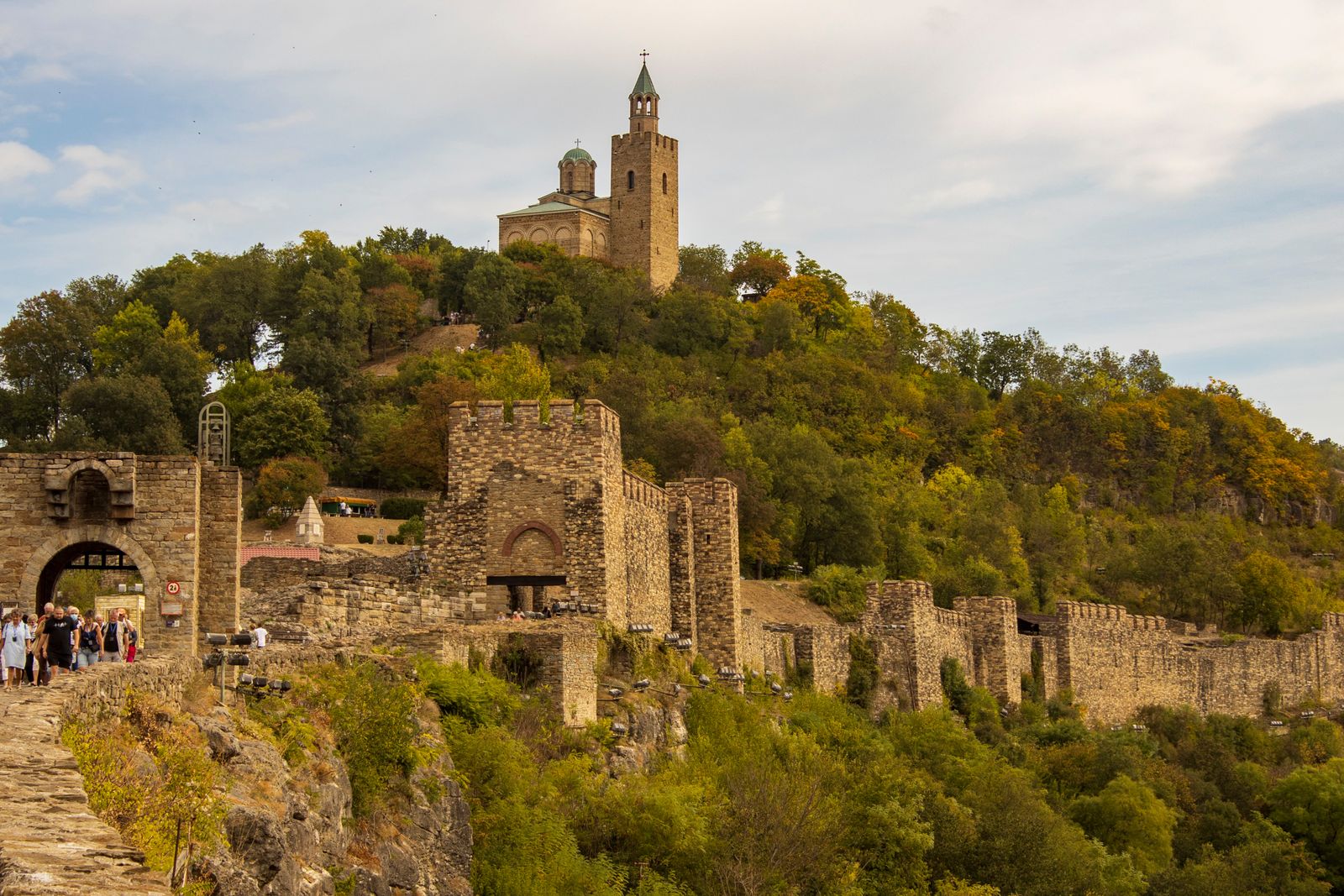
The medieval stronghold of the Bulgarian tsars sprawls across a fortified hill ringed by the Yantra gorge — restored ramparts, gates and the reconstructed Patriarchal Cathedral crowning the summit, its interior filled with striking modern murals. This was the seat of an empire; wandering its walls and towers, with the gorge falling away on all sides, is the essential Veliko Tarnovo experience.
💡 Climb to the Patriarchal Cathedral for the best views; on some summer nights the fortress hosts a spectacular ‘Sound and Light’ show projected across the hill.
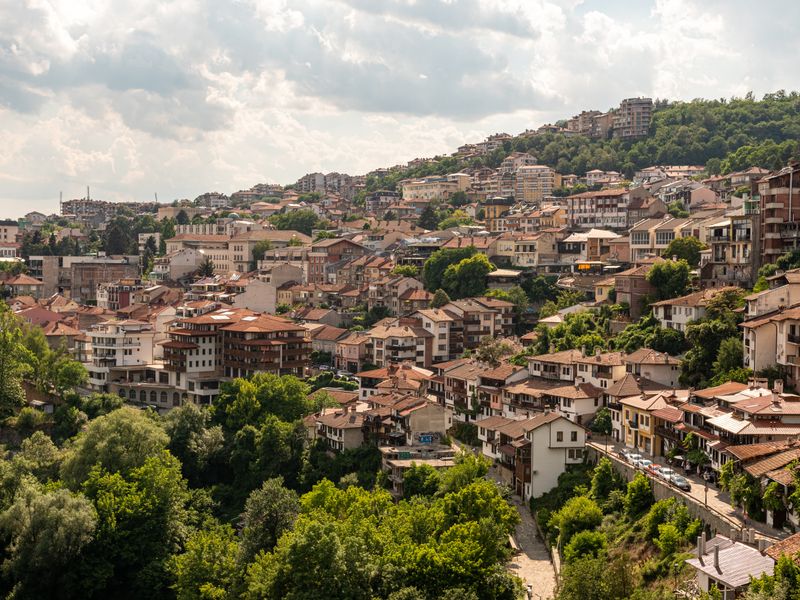
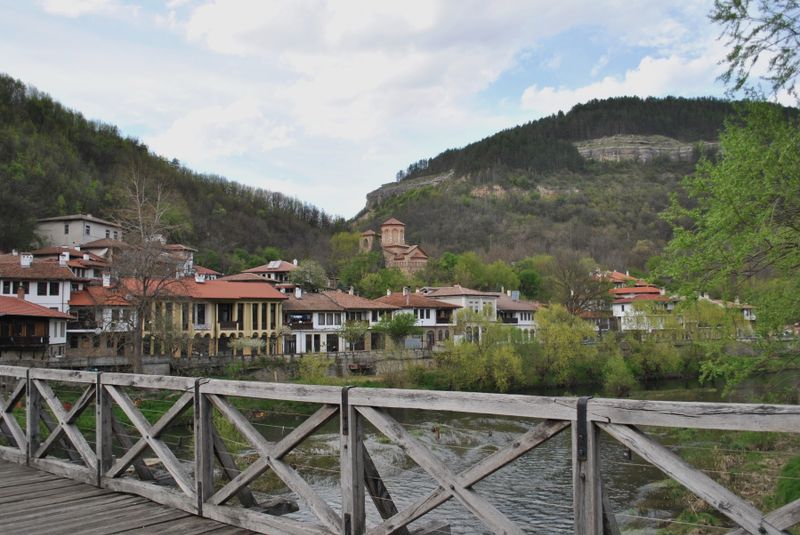
Veliko Tarnovo’s old town clings to the gorge in tiers of National Revival houses, none more photogenic than those along cobbled Gurko Street, where wooden-balconied homes hang over the cliff above the Yantra. It’s a joy to wander — steep lanes, hidden churches, viewpoints at every turn, and the sense of a town built impossibly into its dramatic landscape.
💡 Gurko Street offers the classic photo of houses stacked over the river — go in morning or late-afternoon light; the lanes are steep, so pace yourself.
The old crafts bazaar — Samovodska Charshia — is a restored 19th-century market street where traditional artisans still work: potters, woodcarvers, coppersmiths, weavers and bakers in period workshops. It’s the best place to watch Bulgarian crafts being made, buy genuine handmade souvenirs, and soak up the National Revival atmosphere.
💡 Watch a potter or coppersmith at work and buy craft direct from the maker; the bazaar’s cafes and bakeries are lovely for a break.
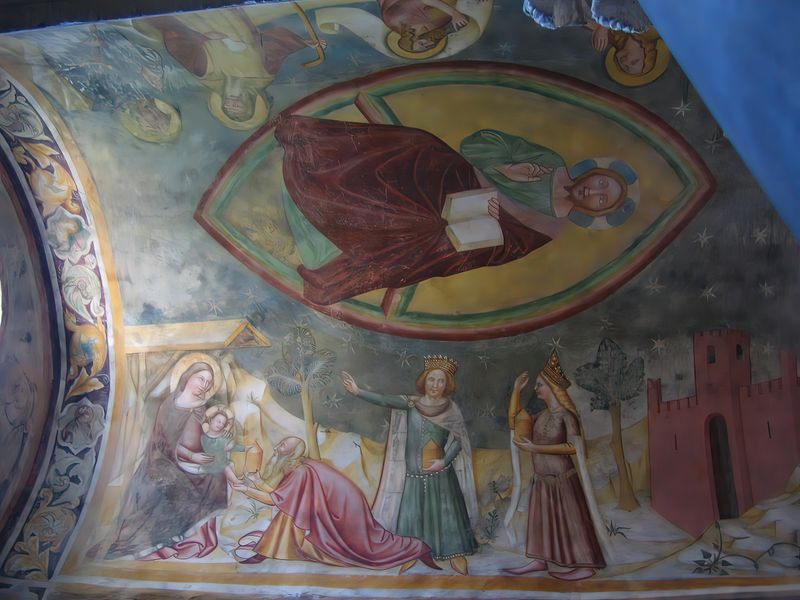
On a plateau just above the city, the village of Arbanasi is a treasure of stone Ottoman-era merchant houses and, above all, the Nativity Church — a plain exterior hiding a breathtaking interior covered floor-to-ceiling in 17th-century frescoes. The surrounding hills hold monasteries (Transfiguration, Kilifarevo) in beautiful settings, easy add-ons to a Veliko Tarnovo stay.
💡 Arbanasi is a 10-minute drive or taxi up — the Nativity Church’s fresco-covered interior is astonishing; combine with a fortified-house museum and the views.
Veliko Tarnovo eats hearty, traditional and very cheaply, often on terraces with jaw-dropping gorge views. The Bulgarian staples are all here — shopska salad, grilled kebapche and kyufte, banitsa, stuffed peppers, kavarma (a rich meat-and-vegetable clay-pot stew), and yogurt-based tarator soup in summer — served in old mehana taverns, often with folk music and a bottle of local wine or rakija. The student population keeps casual, cheap eating plentiful, and a few modern bistros and craft-beer spots have appeared. Local wine from the surrounding regions is excellent value, and the honey and produce of the green Balkan foothills are superb. The real magic is the setting: a plate of kavarma and a glass of Bulgarian red on a cliff-edge terrace as the fortress glows opposite, for a handful of leva.
Climb Tsarevets fortress — ramparts, towers and the mural-filled Patriarchal Cathedral — where the medieval Bulgarian tsars ruled, the gorge falling away on every side.
Wander photogenic Gurko Street’s cliff-hanging houses and the Samovodska Charshia crafts bazaar, watching potters and coppersmiths at work, over a mehana lunch.
Head up to the village of Arbanasi for the astonishing fresco-covered Nativity Church and grand Ottoman-era merchant houses, with views back over the city.
A kavarma clay-pot dinner and Bulgarian wine on a terrace over the gorge as Tsarevets glows opposite — and, in summer, the fortress Sound and Light show.
Veliko Tarnovo was the capital of medieval Bulgaria — Tsarevets fortress is the essential sight; time an evening for the summer Sound and Light show if it’s running.
The cliff-hanging houses along Gurko Street are the iconic shot — morning or late light is best; the whole town is a photographer’s dream of stacked roofs.
The Samovodska Charshia bazaar has genuine working artisans — pottery, copper, woodwork bought direct from the maker; a cut above tourist souvenirs.
The frescoed Nativity Church in nearby Arbanasi is one of Bulgaria’s artistic treasures — a short trip up; pair with the village’s fortified houses.
Veliko Tarnovo sits between Sofia and the coast — a great stop on a cross-country trip, with monasteries, Etar open-air museum and green hills around.
Even by Bulgarian standards Veliko Tarnovo is cheap — cliff-view rooms, hearty dinners and wine for very little; a student-city bargain.
Reliable walking and driving directions around the gorge town and to Arbanasi.
Free
Ride-hailing works in Veliko Tarnovo — handy for the fortress, Arbanasi and the station.
Free
Coaches linking Veliko Tarnovo with Sofia, the coast and the Balkans.
Free
Multi-currency card with strong rates for Bulgarian lev payments and ATM withdrawals.
Free
Ancient Sofia under its mountain, seductive Plovdiv, the tsars’ city of Veliko Tarnovo, the ski town of Bansko and Black-Sea Nessebar — Bulgaria spans mountains, history and coast.