AI
Anguilla
The Caribbean's most glamorous undiscovered secret
The Caribbean's most glamorous undiscovered secret

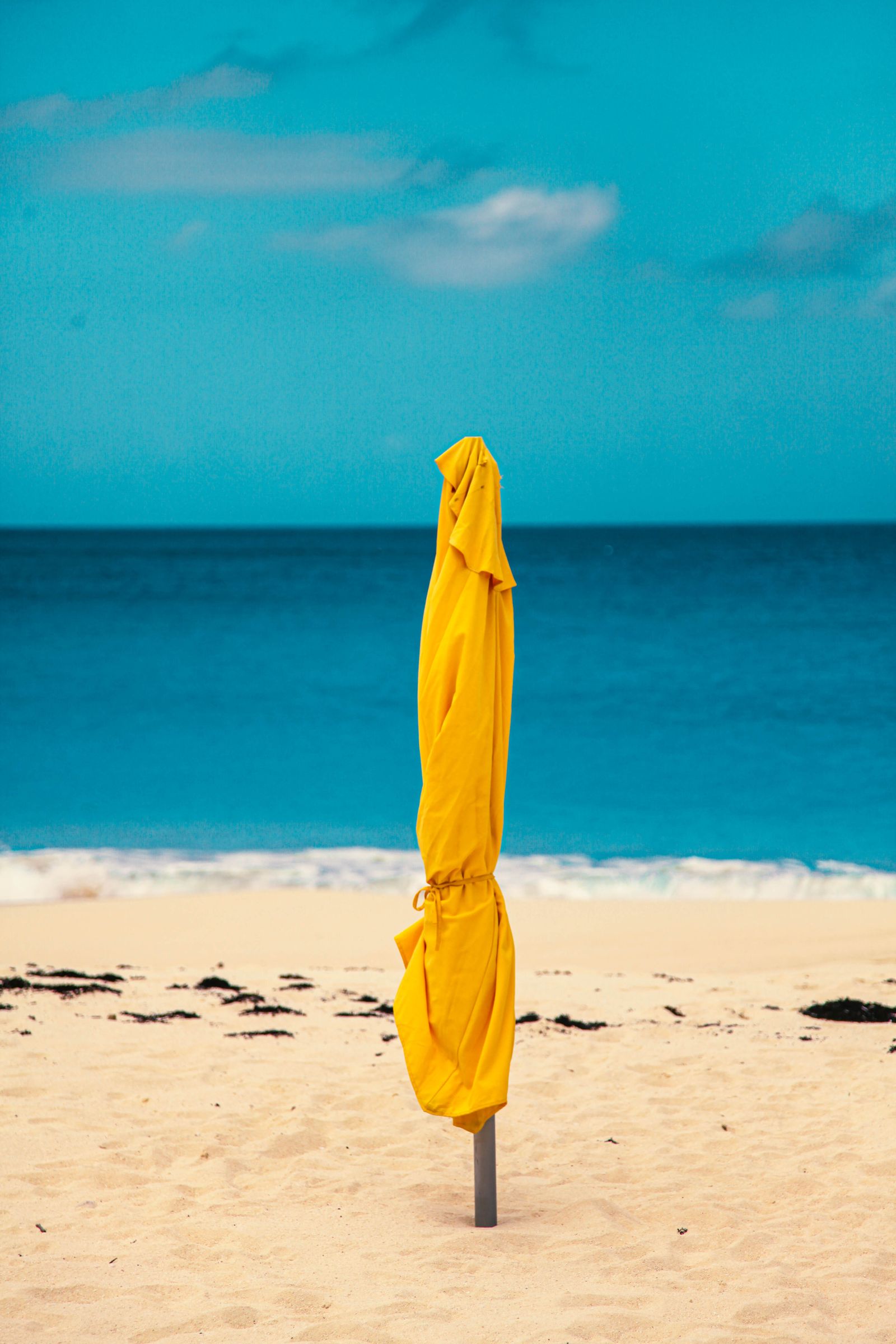
Consistently voted one of the Caribbean’s finest beaches — 2km of powdery white coral sand with brilliant turquoise water and excellent snorkelling on the reef 100m offshore. Blissfully calm, with just a few beach bars and no resort infrastructure overwhelming the natural setting.
Photo: onj, CC BY 3.0
A sweeping arc of brilliant white sand on the west coast — home to Anguilla’s finest luxury hotels and some of its best restaurants right on the beach. The sunsets here are among the best in the Caribbean; the calm protected water is ideal for swimming.
A well-curated introduction to Anguilla’s unique history — including the 1967 Anguillian Revolution, when the island famously “revolted to remain British” against federation with Saint Kitts. One of the most striking constitutional stories in Caribbean history.
A secret beach accessible only by boat or by climbing down a rope from the clifftop — a tiny cove of white sand surrounded by dramatic limestone cliffs, crystal-clear water and complete isolation. Known to locals but missed by most resort tourists.

A tiny uninhabited sandbar and reef 15 minutes by boat from Sandy Ground — ringed with coral, snorkelling-rich shallows and a rustic beach bar serving rum punch. As close to a castaway island as the Eastern Caribbean offers.
Photo: alljengi, CC BY-SA 2.0

A quiet 3km beach on the south coast facing Saint Martin — good snorkelling, calm shallow water, fewer visitors than Shoal Bay and one of the best spots to watch the sunset over the lights of Saint Martin across the channel.
Anguilla (Wikipedia) →Photo: therealaxalady, CC BY 2.0
Anguilla’s spiny lobster — grilled simply with garlic butter or prepared Creole-style with tomato and scotch bonnet pepper — is the undisputed highlight of the island’s restaurant scene. Caught locally and served at beach restaurants from Shoal Bay to Meads Bay.
Fried corn and flour dumplings — Anguilla’s beloved street breakfast, eaten hot from the pan with salt fish, scrambled eggs or just butter. Sold at roadside stalls and bakeries from dawn; the crispy outside and fluffy interior are deeply satisfying.
Whole red snapper marinated and fried then covered with pickled onions, scotch bonnet and allspice vinegar — the Caribbean escovitch technique keeps the fish moist under its tangy pickle. A staple at every local restaurant from Sandy Ground to The Valley.
The local variation on Caribbean rum punch uses Pyrat XO Reserve rum — Anguilla’s own premium aged rum blend. Mixed with fresh lime, Angostura bitters, simple syrup and a splash of grenadine; every beach bar has its own secret ratio.
Slow-cooked pigeon peas with coconut milk, thyme, garlic and pimento peppers, mixed with long-grain rice — the definitive Sunday dish of Anguilla and the wider Eastern Caribbean. Rich, aromatic and satisfying; the standard accompaniment to grilled fish or chicken.
Blended Irish moss (Chondrus crispus) seaweed with condensed milk, cinnamon, vanilla and nutmeg — a thick, sweet, deeply nutritious drink sold at local rum shops and juice bars. Considered a traditional restorative throughout the Eastern Caribbean.
Clayton J. Lloyd International Airport (AXA) handles small aircraft. Most visitors arrive via Sint Maarten (SXM) by ferry — the most practical gateway. For trip planning, see the official Anguilla tourism portal.
Sint Maarten (SXM) is the hub for all Anguilla visits — the ferry from Marigot (French side) to Blowing Point, Anguilla (25 min, US$20–25) runs frequently all day. Most travellers fly into SXM and ferry across.
Direct flights to AXA are short-hop propeller services from SXM (10 min), San Juan (1h15) and Antigua (45 min). The ferry from Sint Maarten is more practical for most visitors.
Almost all hotels offer meet-and-greet at Blowing Point ferry terminal. The island is 16km long — end-to-end takes 20 minutes by car.
Car hire is essential on Anguilla — there is no bus service and taxis are expensive for multiple beach-hopping trips. The island is completely flat, making cycling a genuine alternative for fit visitors.
December to April is peak — dry, clear (24–28°C), the beaches at their finest. January to March is optimal. May to November is the quieter wet season with hurricane risk August–October; prices drop significantly and crowds disappear entirely.
📅 Anguilla is in its best season in January, February, March, April, December. See where else is good to go in those months, or browse where to go by month.
The Eastern Caribbean Dollar (XCD) and US dollars are both accepted. Anguilla is expensive — one of the priciest Caribbean islands due to its luxury positioning.
Fungee (cornmeal porridge cooked with okra — the traditional starch of Anguilla, eaten with stewed saltfish, boiled fish or conch stew — available at local restaurants and the Wednesday fish fry for US$8–15) is.
Anguilla has more award-winning restaurants per capita than almost any other Caribbean island.
Four Seasons Anguilla (on Barnes Bay — the most recently opened major luxury resort on the island, with an 18-hole golf course, overwater cabanas and the finest spa in the British Caribbean, from US$600–2000/night) is.
The Valley for one day, Shoal Bay East for one, Meads Bay for one, Little Bay for one, Sandy Ground for one, Island Harbour for one, Rendezvous Bay for one. Anguilla — 33 beaches on a flat limestone island — has the finest white sand in the Caribbean, the most concentrated luxury hotel strip in the Leeward Islands and lobster grilled on a sand bar 100m offshore.
The Valley — the capital of Anguilla (a British Overseas Territory of 91km² in the northern Leeward Islands, population 18,000, 8km north of Sint Maarten — the flattest island in the Caribbean, made entirely of coral limestone, with no rivers, no dramatic hills, no rainforest, and therefore no natural fresh water — but 33 spectacular white-sand beaches) with the Wallblake House (a restored 18th-century plantation great house, the oldest building on the island) and the heritage cottages of The Valley.
Anguilla has been a British colony since 1650 — and in 1967, when Britain reorganised its Caribbean colonies, uniquely staged a revolution against the proposed merger with Saint Kitts. The Anguillan Revolution (1967 — when Anguillans expelled the Saint Kitts police force, held a referendum with 1,813 votes for independence and 5 against, and declared a republic that Britain refused to recognise) ended when British paratroopers landed to restore order — they were met with flowers and cheering crowds. The episode is the most amicable anti-colonial revolution in history.
Shoal Bay East (the beach consistently ranked the finest in the Caribbean by Condé Nast, Travel + Leisure and the BBC — a 2km crescent of powdery white aragonite sand so fine it squeaks underfoot, backed by low sea grape trees, with turquoise water grading from pale aquamarine to deep cobalt over the reef, and the Gwen’s Reggae Bar beach shack at the western end — the benchmark by which all Caribbean beaches are measured) and the offshore reef for snorkelling.
The sand at Shoal Bay East is composed of pulverised coral (aragonite — a form of calcium carbonate produced by coral polyps and parrotfish, which grind coral with their beak-like teeth and excrete fine white sand) rather than terrestrial silica. Aragonite sand is significantly whiter, finer and more reflective than volcanic or silica sand, which is why Caribbean beaches in coral-limestone islands like Anguilla appear brighter than volcanic island beaches.
Meads Bay (the finest beach on the west coast of Anguilla — a broad crescent of pale sand facing the sunset, with the Malliouhana resort (the hotel that made Anguilla famous in the 1980s), the Straw Hat restaurant and the finest collection of upscale beachfront dining in the British Caribbean) and Barnes Bay (the intimate cove immediately south, with the Four Seasons Anguilla and the most exclusive beach club on the island).
Malliouhana (opened 1984 by Leon Roydon — a British businessman who discovered Anguilla in the 1970s and built a clifftop hotel with no phones, no television and superb French cuisine, promoted primarily by word-of-mouth among wealthy Americans and Europeans) is the hotel that placed Anguilla on the international luxury travel map. Before Malliouhana, Anguilla was known only to sailors passing between Sint Maarten and Saint Kitts.
Little Bay (the most dramatic beach on Anguilla — accessible only by boat or by swimming/climbing through a narrow cave in the cliff face from the car park above, the only beach in the Caribbean that requires genuine physical effort to reach — a horseshoe of pale sand in a collapsed limestone grotto, completely enclosed, with crystal-clear water and the cliffs of the Heritage Collection nearby) and the Anguilla National Trust heritage walk.
Little Bay is one of the few beaches in Anguilla that is technically inaccessible by road — the only land access is via a rope-assisted climb down the 10m cliff face or through a swim-through cave in the limestone. The effort deters all but the most determined visitors; the beach is rarely crowded. Water taxis from Sandy Ground also serve the beach in high season.
Sandy Ground (the main harbour village and the most lively beach area outside the luxury resorts — a salt pond road with the Pumphouse bar (in a former salt factory) and the Road Bay anchorage where charter yachts rest — the centre of Anguillian local life, with the Barrel Stay restaurant and the Wednesday and Saturday beachside fish fry) and the Road Bay salt flat (a UNESCO-tentative heritage salt production site active since the 17th century).
Anguilla’s salt industry (producing salt from the Road Bay salt pond since the 1650s — the flat island with no fresh water had the ideal combination of limestone soil, constant sunshine and steady Trade Winds for natural solar salt evaporation, making Anguilla one of the most productive salt islands in the British Caribbean) exported salt to North America and Newfoundland for fish-curing. The salt pond is now a heritage site and occasional flamingo feeding ground.
Island Harbour (the main fishing village on the northeast coast, with the daily catch brought in by brightly painted open wooden fishing boats — the finest fresh fish available on the island — and the water taxi to Scilly Cay, an uninhabited sand bar 100m offshore with a beach bar serving fresh lobster and rum punch, one of the finest simple beach bar experiences in the Caribbean) and the sea caves of the northeast coast.
Anguillian rock lobster (the Caribbean spiny lobster Panulirus argus — caught daily by Anguillian fishermen in traps set at 10–50m on the surrounding reefs and sold live at the Island Harbour dock — grilled whole with garlic butter at Scilly Cay, Sandy Ground and Shoal Bay for US$35–65) is the defining luxury food of Anguilla and significantly less expensive than equivalent quality in New York or London.
Rendezvous Bay (the longest beach on Anguilla — a 3km arc of white sand on the south coast facing Saint-Martin across the 8km channel, with the silhouette of Sint Maarten’s hills visible from the beach — home to the CuisinArt Golf Resort and Spa and the most atmospheric sunset view on the island, watching the sun set behind Saint-Martin from a beach chair on the finest sand) before flying from Anguilla (AXA) via Sint Maarten (SXM).
The Anguilla ferry to Blowing Point (25 min from Marigot, Sint Maarten — US$20–25 each way) is the primary link to the outside world for most Anguillians — the small Anguilla airport (AXA) handles only small aircraft and limited services, while Sint Maarten (SXM, 8km away) is one of the most connected airports in the Caribbean. Most Anguilla visitors fly into SXM and ferry across.
Fly to Princess Juliana International Airport (SXM) on Sint Maarten, then take a 20-minute public ferry to Blowing Point or a 5-minute air taxi. American Airlines, Delta, Air France and KLM all serve SXM.
The EC dollar is the official currency but US dollars are accepted everywhere at approximately 2.7 XCD = 1 USD. Credit cards are accepted at hotels and most restaurants.
Anguilla’s tourism strategy deliberately limits development — no cruise ships dock, no chain hotels operate, and casino licences are not granted. This keeps the island upscale, quiet and beautiful.
Anguilla’s restaurant scene is astonishingly good for an island of 18,000 people — chefs trained in New York and London operate beach restaurants. In peak season (Dec-Apr) top spots like Koal Keel and Tasty’s require advance reservations.
Car hire is available from a few local operators; roads are quiet and easy to navigate. Taxis are plentiful; agree the fare before departure as meters are not used.
The reefs at Shoal Bay East, Sandy Island and Little Bay have excellent coral and fish life. Rental gear is available at beach bars but your own mask gives a much better experience.
Quick answers to the questions people most often ask before visiting Anguilla.
Most visitors fly to Sint Maarten (SXM), which has direct flights from the US and connections from Europe, then take a short ferry across to Anguilla. There are also small-plane flights to Anguilla's Clayton J. Lloyd Airport (AXA), including from San Juan.
December to April is peak season, dry and sunny at 24–28°C, with January to March the best months. May to November is quieter and cheaper, but hurricane risk peaks from August to October.
Yes — it is one of the priciest Caribbean islands. Expect around US$80–150 per day on a tight budget, US$250–450 mid-range and US$700 or more at the luxury end.
The East Caribbean dollar (XCD) is official, but US dollars are accepted everywhere at roughly 2.7 XCD to US$1.
No. Anguilla deliberately limits development — there are no cruise ship calls and no big chain resorts — which keeps its beaches, like Shoal Bay East, famously uncrowded.
Anguilla sits at the northern end of the Leeward Islands, with Saint Kitts and Nevis, Antigua and Barbuda, the British Virgin Islands, Montserrat, Saba and Saint Eustatius all within the same Eastern Caribbean chain.
Anguilla is one of the world’s least-visited places. See all 90 in our guide to the world’s least-visited countries & territories.
