VG
British Virgin Islands
Sailing waters, The Baths and the Painkiller's birthplace
Sailing waters, The Baths and the Painkiller's birthplace
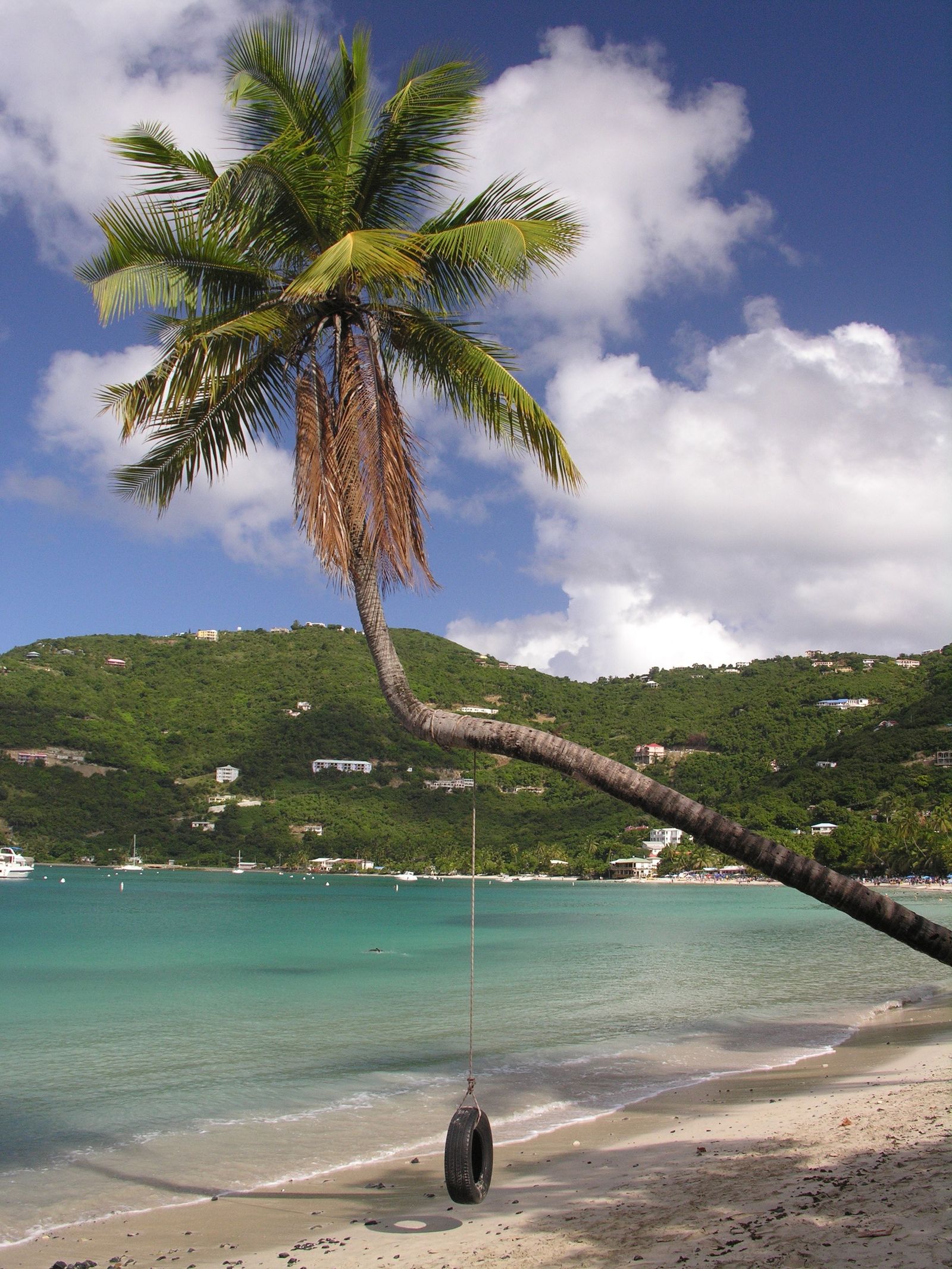
The British Virgin Islands is one of the world’s premier sailing destinations — a British Overseas Territory of over 60 islands and cays in the north-eastern Caribbean, where steady trade winds, protected anchorages, short distances between islands and the extraordinary Norman Island (inspiration for Treasure Island) combine to create a sailing circuit of legendary beauty. The BVI’s bays — The Bight on Norman Island (where the floating Willy T bar-restaurant anchors), the Bitter End on Virgin Gorda, the Baths (giant granite boulders forming natural sea pools), and the Soggy Dollar Bar on Jost Van Dyke where the Painkiller cocktail was invented — are Caribbean sailing folklore. Tortola is the main island; Jost Van Dyke is the BVI’s social hub; Virgin Gorda has the most dramatic scenery.
A national park of enormous granite boulders — deposited by volcanic activity millions of years ago — that have tumbled into a labyrinth of sea grottoes, natural pools and passages at the southern tip of Virgin Gorda. Swimming through the boulders and into the Cathedral grotto with sunlight pouring through from above is one of the Caribbean’s most distinctive natural experiences.
An island of 300 people and the BVI’s most famous beach bar — the Soggy Dollar Bar at White Bay, where sailors swim ashore (getting their dollars wet, hence the name), is the birthplace of the Painkiller (rum, coconut cream, pineapple and orange juice) and the spiritual home of Caribbean sailing culture. Great Harbour’s Saturday night is the wildest party in the BVI.
The BVI’s flat coral island — unlike all other BVIs, Anegada is low-lying limestone ringed by the Horseshoe Reef (the fourth-largest barrier reef in the world), with pink flamingos, wild cattle and donkeys, and the finest grilled lobster in the Caribbean at the island’s simple beachside restaurants.
British Virgin Islands (Wikipedia) →Spiny lobster grilled over charcoal, often in halved oil drums on the beach — Anegada’s signature meal.
Grilled or battered fresh fish in a soft flour tortilla with shredded cabbage, pico de gallo and lime crema — a BVI beach staple reflecting the influence of the US Virgin Islands across the channel. Best from beachside shacks on Anegada and Jost Van Dyke.
Minced queen conch mixed with flour, celery, pepper and hot sauce, deep-fried into golden balls — the definitive Caribbean bar snack, served at every beach restaurant in the BVI with honey-mustard or sweet chilli dipping sauce.
Chicken marinated in Scotch bonnet, allspice, thyme and scallion, slow-smoked over pimento wood until the skin is charred and the meat intensely aromatic — a Jamaican tradition transplanted to the BVI and eaten at beach cookouts and Sunday gatherings.
Rum, pineapple, orange and cream of coconut topped with nutmeg — said to have been created at the Soggy Dollar Bar on Jost Van Dyke.
A fragrant lotion made from West Indian bay leaves and rum, sold as a traditional souvenir.
Terrence B. Lettsome International (EIS) on Beef Island, Tortola is the main gateway. No direct flights from Europe; all routes connect through the US Virgin Islands or Puerto Rico. For trip planning, see the official BVI tourism portal.
The most common route is via San Juan, Puerto Rico (SJU) with a short 30-min prop flight to Tortola. Alternatively, fly to St Thomas (STT) in the US Virgin Islands and take the 45-min ferry to Road Town — this is often cheaper and faster overall.
There are no direct flights from Europe to the BVI. London Heathrow via San Juan (British Airways + Cape Air) is the most common UK route. Amsterdam via St Maarten (KLM + WINAIR) is the most convenient for Dutch and German travellers.
The BVI inter-island ferry network (operated by Native Son, Speedy’s and other operators) connects all main islands daily. Ferries also connect to the US Virgin Islands (St Thomas and St John) — making a BVI + USVI combination itinerary straightforward.
A charter yacht (bareboat or crewed) is the definitive BVI transport — it provides accommodation, transport and access to all the uninhabited anchorages simultaneously. Road Town and Nanny Cay have the Caribbean’s largest charter fleets.
December to April is peak — dry, clear (26–28°C), the sailing season at its height. January to March is the best window. May to November is wetter (28–31°C) with hurricane risk August–October, but the BVI Sailing Festival in May and much lower prices make shoulder season attractive.
📅 British Virgin Islands is in its best season in January, February, March, April, May, December. See where else is good to go in those months, or browse where to go by month.
The US dollar (USD) is the official currency. The BVI is expensive; budget travel is possible on the local islands but Tortola and Virgin Gorda have few cheap options.
Fungi (a stiff polenta-like cornmeal porridge — the national dish of the British Virgin Islands, served as a side dish with stewed fish, peas and rice, or goat water (slow-cooked goat stew)) is the most authentic BVI food, available.
The BVI bareboat yacht charter (chartering a yacht without a captain, for sailors with a valid competency certificate)
Necker Island (Richard Branson’s private island in the North Sound of Virgin Gorda, available for full buyout at approximately US$75,000–100,000/night for 30 guests) is the most famous private island in the Caribbean.
Tortola for one day, Virgin Gorda and The Baths for one, Anegada for one, RMS Rhone diving for one, Jost Van Dyke for one, sailing the channel for one, Cooper Island for one. The BVI — 60 islands, cays and rocks in the northeastern Caribbean — is the finest sailing destination on earth and the home of the Caribbean beach bar.
Road Town — the capital of the British Virgin Islands on Tortola (the largest island, 54km², population 23,000) with the Virgin Islands Folk Museum (the social and natural history of the BVI, including the sugar plantation era — Tortola produced sugar from approximately 1680 to 1838 when emancipation ended plantation slavery — and the 1853 Soper’s Hole waterfront with the pastel-painted houses and the charter yacht fleet).
The British Virgin Islands sugar industry (1680–1838) was the economic foundation of Tortola for 150 years — at its peak, approximately 200 sugar estates covered every hillside, worked by enslaved Africans. The 1831 census recorded 5,000 enslaved people and 400 free people on Tortola. Emancipation in 1834 (with a 4-year apprenticeship period ending in 1838) ended the industry almost immediately; without slave labour, the marginal island sugar plantations could not compete with larger Caribbean producers.
Virgin Gorda (the second-largest BVI island, 21km²) — The Baths National Park: a geological phenomenon at the southwestern tip of Virgin Gorda where enormous granite boulders (some 5m in diameter, thought to be intrusions from the underlying pluton that pushed through to the surface millions of years ago) are piled in a chaotic labyrinth creating sea grottoes, flooded caves and tidal pools of brilliant turquoise, accessible through a maze of passages between the boulders.
The Baths (granite boulders at the southwestern tip of Virgin Gorda, now the most visited site in the BVI) are a geological anomaly — all the other BVI islands are volcanic, but Virgin Gorda’s southern end is composed of a granite batholith that pushed through the volcanic rock approximately 100 million years ago. The boulders visible at the beach are the exposed remnants of this ancient intrusion; the smooth granite has been weathered and rounded by the sea over millions of years.
30 min ferry or charter. Anegada (the only coral island in the BVI — flat, 16km long, ringed by the Horseshoe Reef — the largest barrier reef in the eastern Caribbean, with over 300 shipwrecks in the surrounding waters, the island famous for its flamingo colony (300 West Indian flamingos in the Flamingo Pond) and the Anegada lobster (the finest Caribbean lobster, grilled whole on the beach at Setting Point restaurants).
The Horseshoe Reef around Anegada (the largest barrier reef in the eastern Caribbean at over 32km) has claimed over 300 ships since the age of sail — a graveyard of vessels that misjudged the approach to the Virgin Islands or were driven onto the reef by Atlantic storms. The most famous wreck is the Rhone (a Royal Mail Steam Packet Company ship sunk in the 1867 hurricane — now the BVI’s premier dive site).
The RMS Rhone (a 310-foot Royal Mail steamship sunk by the Great Hurricane of October 29, 1867, in Salt Island Passage — her boiler exploded when cold Atlantic water flooded the engine room as she sank — now the most famous wreck dive in the Caribbean, lying in two sections at 8–24m with coral-encrusted hull plates, propeller, rudder and the distinctive porthole windows from the 1977 film The Deep filmed here).
The Great Hurricane of October 1867 (a Category 3–4 hurricane that struck the Virgin Islands on 29 October) sank 40 ships in the harbour of Road Town alone and killed approximately 1,000 people across the region. The RMS Rhone, caught in open water with a new captain unfamiliar with the BVI, tried to run for open sea but was overtaken; all but 23 of the 145 on board were killed when the ship split on the rocks.
The smallest of the four main BVI islands (population 300) — Jost Van Dyke is the spiritual home of Caribbean beach bars, specifically Foxy’s (a legendary bar and music venue operated since 1968 by Philicianno “Foxy” Callwood, who became famous for the New Year’s Eve party that draws 5,000 people to an island of 300) and the Soggy Dollar Bar at White Bay (the birthplace of the Painkiller cocktail — dark rum, cream of coconut, pineapple juice and orange juice, served with grated nutmeg).
The Painkiller cocktail (created at the Soggy Dollar Bar on Jost Van Dyke in the 1970s by Daphne Henderson — dark rum (traditionally Pusser’s Rum), cream of coconut, pineapple juice and orange juice, topped with grated nutmeg — is one of the most widely copied cocktail recipes in the Caribbean. The name came from the tradition of swimming ashore from boats anchored off White Bay, since there is no dock; arriving with wet money, you’d order a “painkiller” for the swim.
A sailing day on the Sir Francis Drake Channel (the body of water between Tortola and the southern BVI islands — protected from Atlantic swell by the island chain, with consistent 15–20 knot trade winds from the east, a dozen anchorages within a few miles of each other and the Norman Island Caves (the caves that inspired Robert Louis Stevenson’s Treasure Island — snorkelling inside the three water-filled caves with clouds of fish).
The BVI charter yacht industry (approximately 1,000 charter boats based in Road Town and Nanny Cay — the highest concentration of charter yachts per square kilometre of any sailing area in the world) was founded in 1960 when Charlie Cary brought the first charter yachts to the BVI. The Sir Francis Drake Channel (named after Drake’s 1585 raid on the Spanish Caribbean) is considered the finest protected sailing water in the world by professional sailors.
Cooper Island (an uninhabited island on the southern edge of the Sir Francis Drake Channel, accessible only by boat, with the Cooper Island Beach Club — a solar-powered ecolodge with the only rum bar on the island, accessible only to arriving boats — and the marine protected area with the Caribbean’s best visibility for snorkelling on the coral garden at Manchioneel Bay). Fly from Tortola (EIS) or Virgin Gorda (VIJ).
Cooper Island has been entirely solar-powered since 2012 — the Cooper Island Beach Club generates 100% of its electricity from solar panels and uses rainwater collection exclusively, with no grid connection and no diesel generator. It is one of the most carbon-neutral resorts in the Caribbean, operating on an island with no roads, no permanent residents and no freshwater source.
Visa-free for UK, USA, EU and most nationalities for up to 1 month.
The British Virgin Islands — 60+ islands in a protected sea — is one of the world’s great cruising grounds. Chartering a yacht (with or without crew) is the definitive BVI experience. The Bight at Norman Island is the inspiration for Treasure Island.
No direct transatlantic flights. Connect through San Juan (30 min), Antigua or St Maarten.
The BVI is a British territory that uses USD. Cards accepted in resorts and marinas; carry cash for small islands and provisioning.
Hurricane Irma (2017) caused catastrophic damage. Recovery has been extensive but some infrastructure remains affected; check resort status.
Charter a bareboat or crewed yacht from Road Town or Village Cay — the BVI Moorings and Sunsail have large fleets. The BVI Charter Yacht Show in November is the industry’s premier event.
Quick answers to the questions people most often ask before visiting the British Virgin Islands.
There are no direct long-haul flights. Connect through San Juan, Puerto Rico, for a 30-minute flight to Beef Island (EIS) on Tortola, or fly to St Thomas in the US Virgin Islands and take the ferry to Road Town (about 45 minutes).
Most nationalities, including British, American and EU passport holders, can visit without a visa for up to a month. Check the rules for your passport before travel.
December to April is peak sailing season — dry and 26–28°C, with January to March the best window. May to November is wetter and cheaper, with hurricane risk from August to October.
The US dollar, even though the BVI is a British territory. Cards are accepted at resorts and marinas, but carry cash for the smaller islands.
It is one of the world's great sailing grounds: more than 60 islands in sheltered waters, short hops between anchorages and plenty of bareboat and crewed charters from Tortola.
Point your camera at menus, signs or street text for instant translation. Download the language pack offline before you arrive for full use without data.
FreeReal-time and offline exchange rates for all world currencies — converts prices instantly so you always know what you are paying in your home currency.
FreeFind and book hotels, guesthouses and apartments with free cancellation on most rates — one of the widest selections of accommodation worldwide.
FreeBrowse millions of traveller reviews for restaurants, attractions and hotels — helps identify the best local spots and avoid tourist traps.
FreeBritish Virgin Islands sits within easy reach of several other destinations — each with a completely different character.
British Virgin Islands is one of the world’s least-visited places. See all 90 in our guide to the world’s least-visited countries & territories.


