CU
Cuba
Vintage Havana, salsa and Caribbean beaches
Vintage Havana, salsa and Caribbean beaches
⚠️ Travel advisory: check before you go
Cuba is going through a severe energy crisis. Nationwide blackouts have recurred throughout 2026, most recently in September, and fuel, water and cooking gas are scarce. Some hotels have closed, several airlines (including the main Canadian carriers) have suspended flights, and many foreign bank cards no longer work, so carry enough cash. US travellers face tighter restrictions from 30 September 2026. Check your flights, accommodation and official advice before booking.
Latest official advice: UK FCDO · US State Department · Reviewed September 2026

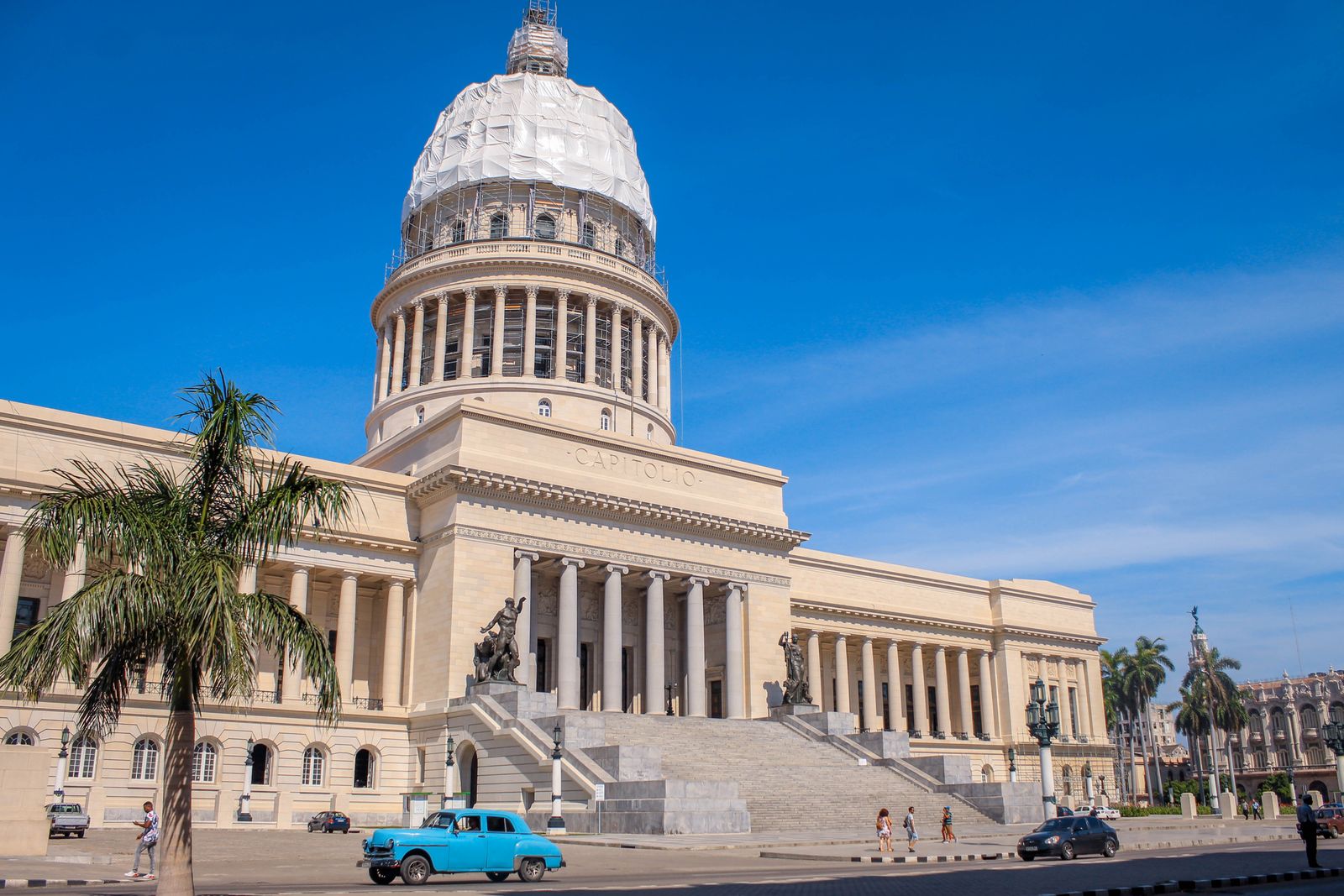
The Malecon seafront with 1950s American cars, the UNESCO Old Havana of baroque churches and colonial plazas, the El Floridita bar (Hemingway’s daiquiri) and the Fabrica de Arte Cubano arts complex.
Photo: RenaatPeeters, CC BY-SA 4.0

A UNESCO-listed colonial city of pastel houses on cobblestone streets: the Plaza Mayor, the Casa de la Musica outdoor nightclub and the finest traditional Cuban music scene outside Havana.
Photo: Marc-Lautenbacher, CC BY-SA 4.0

A UNESCO valley of limestone mogotes (rounded karst hills) with tobacco farms: the origin of the world’s finest cigars, demonstrated by farmers rolling by hand in their casas.
Photo: Manuel Rivera-Ortiz, CC BY-SA 3.0

A 20km white sand peninsula beach with turquoise Caribbean water: the most developed beach resort in Cuba.
Photo: Laslovarga, CC BY-SA 3.0

The birthplace of son and salsa: the Casa de la Trova is the finest traditional Cuban music venue in the country. The Mausoleum of Jose Marti and the San Juan Hill of the Spanish-American War.
Photo: Luis Miguel Bugallo Sánchez, CC BY-SA 4.0

The Bay of Pigs (Playa Giron): the 1961 CIA invasion site, and Cuba’s finest diving – the Zapata Peninsula’s blue holes and wall dives above a mangrove wetland.
Photo: Ji-Elle, CC BY-SA 4.0

The “Pearl of the South”: a French-planned colonial city of neoclassical architecture on a bay, 80km west of Trinidad.
Photo: Unknown author, Public domain

The mountains where Castro’s revolution was planned: Pico Turquino (1,974m, Cuba’s highest peak) and Comandancia de la Plata (Castro’s mountain headquarters during the guerrilla war).
Photo: Óðinn, CC BY-SA 2.5 ca
Shredded beef slow-cooked in tomato sauce with peppers and onions: the national dish of Cuba. The name means “old clothes” (the shredded meat resembles a pile of rags).
Rice and black beans cooked together (Moros y Cristianos – Moors and Christians) or separately: the staple of every Cuban meal.
Ham, roast pork, Swiss cheese, pickles and mustard in a pressed sweet roll: the Cuban sandwich of Miami’s Cuban diaspora, traced to Havana’s 1950s midnight snack culture.
A sponge cake soaked in three milks (whole, evaporated and condensed): Cuba’s most popular dessert. Intensely sweet and moist.
White rum, lime juice, sugar syrup, fresh mint and soda water: invented (disputed) at Havana’s La Bodeguita del Medio in the 1940s. Hemingway drank his at El Floridita.
White rum, fresh lime juice and sugar: Ernest Hemingway drank his double, no sugar, at El Floridita. The simplest and finest rum cocktail.
Cuba’s two lagers. Cristal is lighter; Bucanero is stronger (5.4%). Both cold at a casa particular rooftop.
A Cohiba, Montecristo or Romeo y Julieta rolled in the Vinales valley from vuelta abajo tobacco: the world’s finest hand-rolled cigar.
Havana José Martí (HAV) is the main international airport. Holguin (HOG), Varadero (VRA) and Santa Clara (SNU) receive international charter and some scheduled flights. Cubana de Aviación and Viazul buses serve domestic routes. For trip planning, see the official Cuba tourism portal.
In 2026, jet-fuel shortages led several airlines, including Air Canada, WestJet, Sunwing, Air France and Iberia, to suspend Cuba routes. Check which flights are operating before planning; some travellers now connect via Mexico or the Dominican Republic.
US citizens may visit Cuba only under specific authorised categories, which were tightened from 30 September 2026. Travelling via a third country does not change these rules; check US Treasury (OFAC) guidance before planning.
Viazul (viazul.com) is the tourist bus network — reliable, air-conditioned and the standard way to move between cities. Book online at least 24 hours ahead in high season. Colectivos (shared taxis) are faster but less predictable.
The official taxi from HAV airport is pre-paid at a desk inside the terminal — agree the fare before getting in any taxi outside. The official desk (CUC 25–30 to Habana Vieja) is the safest option.
November to April is the dry season — the best time to visit. Havana and Trinidad are good year-round but humidity drops and skies clear from November onwards. The hurricane season (June–October) brings rain and occasional storms, particularly September–October.
📅 Cuba is in its best season in January, February, March, April, November, December. See where else is good to go in those months, or browse where to go by month.
Cuba operates a dual currency reality — the peso (CUP) for locals, and a hard-currency economy for tourists. Prices for foreigners are significantly higher than for Cubans. The country is not as cheap as it once was.
A casa particular (private homestay) is the best accommodation in Cuba — often a beautiful colonial house, including a cooked breakfast, in the family home. Cost: US$25–60/night, far more atmospheric than a state hotel.
Cuba’s paladares (private restaurants licensed from 2010) vary from modest family kitchens to sophisticated restaurants.
The Hotel Nacional and the Gran Hotel Manzana Kempinski are Havana’s finest addresses — from US$250/night, both historically significant and among the best-maintained buildings in the city.
Havana for three days, Trinidad for two, Variñadero or the Valle de Viñales for the last two. Cuba is best experienced slowly — the country rewards time spent rather than distance covered.
The Malécon — Havana’s 8km seafront promenade — at dusk, when the light turns gold over the Straits of Florida and the 1950s American cars (almendrones) file past. The Plaza de Armas and the old colonial quarter. Ron (rum) at La Bodeguita del Medio, Hemingway’s bar of choice.
La Bodeguita del Medio is now very touristy and expensive — the mojitos are good but the prices are higher than comparable bars elsewhere. The experience is the name on the wall rather than the drink.
The Museo de la Revolución (in the former presidential palace, now housing the history of the revolution from Batista to Castro to Che) is essential for context. The Floridita bar (Hemingway again, daiquiris, another tourist landmark worth one visit). The Colon Cemetery — the most elaborate in the Caribbean.
Havana’s classic cars (officially called máquinas or almendrones) can be hired for tours — AED 25–40/hour for a convertible 1950s Chevrolet or Buick. The city seen from the back of an open-top 1956 Bel Air is an experience.
Vedado — the bourgeois neighbourhood from before the revolution, still handsome, now slowly disintegrating — has the University of Havana, the Hotel Nacional (Graham Greene, Churchill, Frank Sinatra all stayed here) and the best paladares (private restaurants).
The Hotel Nacional’s terrace bar has the finest view of the Malécon and Havana Harbour, and the best daiquiris in the city. The hotel itself is historic, built in 1930.
4h drive from Havana. Trinidad is a UNESCO World Heritage City — the best-preserved colonial town in the Caribbean, unchanged since the 18th century sugar boom. The cobblestone streets, the bell towers, the coloured houses and the salsa music from every doorway.
Trinidad’s Casa de la Música — an outdoor concert on the steps of a church — starts at around 10pm and continues past 2am. The best free live music experience in Cuba.
The Valle de los Ingenios (Valley of the Sugar Mills) by horse or bicycle — 70 ruined sugar plantation towers in a wide green valley, a UNESCO extension of the Trinidad site. Playa Ancón beach (5km south of Trinidad) for the afternoon — one of the best beaches in Cuba.
Playa Ancón is the only good beach within easy reach of Trinidad — turquoise, clean and nowhere near as crowded as Variñadero. Hire a taxi (CUC 10–15 return) or bike the 5km coast road.
3h from Havana (or return via Havana). The Valle de Viñales in the Pinar del Río province: dramatic karst mogotes (flat-topped limestone hills) rising from a valley of red soil and tobacco fields. The most beautiful rural landscape in Cuba.
A tobacco farm visit in Viñales — watching the farmers roll cigars by hand, sampling the harvest — costs nothing but a tip. The genuine hand-rolled cigars bought directly from the farmer are excellent and cheap.
Last day in Havana: the Museo Nacional de Bellas Artes for the Cuban art collection (the finest in the country). A final meal at a good paladar. José Martí airport (HAV) for departure.
Cigar shops (Casa del Habano) sell genuine Cohiba, Montecristo and Romeo y Julieta at government prices. Avoid street sellers — “genuine Cohibas” from a stranger on the street are almost universally counterfeit.
Cuban telecommunications are state-controlled. Buy a Cubacel SIM at the airport; wifi only works at official hotspot areas.
US credit/debit cards frequently don’t work. Bring enough cash for the whole trip.
Private homestays (casas particulares) are cheaper, more authentic and more comfortable than state hotels.
Negotiate a price (in CUP) for a 1950s Chevrolet or Buick for an hour: the definitive Havana transport.
Cuban nightlife starts after midnight. The Casa de la Trova fills at 1am. Dinner is at 9pm.
The combination of music, rum and genuine openness makes Cuban social life infectious.
June-November. Book cancellation-flexible tickets if travelling outside the dry season.
You will be taught anyway. Having a basic step helps enormously.
Quick answers to the questions people most often ask before visiting Cuba.
November to April is the dry season — the best time to visit. Havana and Trinidad are good year-round but humidity drops and skies clear from November onwards.
Havana José Martí (HAV) is the main international airport. Holguin (HOG), Varadero (VRA) and Santa Clara (SNU) receive international charter and some scheduled flights. Cubana de Aviación and Viazul buses serve domestic routes.
Expect roughly US$50–80 a day on a budget and US$120–180 mid-range, or US$250+ for a more luxurious trip, per person and excluding flights.
Cuba uses the CUP.
Plug types: Type A / B / C (mixed, 110/220V).
The only reliable navigation app in Cuba — download offline maps before arriving; Google Maps has poor Cuba coverage.
FreeWorks on Wi-Fi in Cuba — the only reliable messaging app; SIM data is limited and expensive.
FreeBook Cuban casas particulares — private homestay rooms; far more authentic than state hotels.
FreeBook Havana vintage car tours, cigars factory visits, Trinidad day trips and Cuban experiences.
FreeTrack CUP (Cuban Peso) rates — Cuba now uses a single currency; cash is essential throughout.
FreeCuba’s most striking destinations — from revolutionary Havana to the undeveloped beaches of Varadero and the colonial streets of Trinidad.
Cuba sits within easy reach of several other destinations — each with a completely different character.

