
IR
Persepolis
The ceremonial capital of the ancient Persian Empire
The ceremonial capital of the ancient Persian Empire
⚠️ Travel advisory: most governments advise against travel
The US, UK and many other governments advise against all travel to Iran. Foreign and dual nationals face a serious risk of arbitrary detention, and regional hostilities have led to airspace closures. This guide is kept for background and future planning.
Latest official advice: UK FCDO · US State Department · Reviewed September 2026

The great audience hall of Darius and Xerxes, its surviving columns soaring over a platform reached by the famous double staircase carved with rows of delegations bearing tribute.
Study the Apadana staircase reliefs closely; the detail is extraordinary.

The monumental entrance built by Xerxes is guarded by colossal winged bull-men, through which envoys from across the empire once passed to reach the royal halls.
Look for the ancient graffiti left by 19th-century travellers.

Persepolis is renowned for its finely preserved reliefs depicting processions of Persians, Medes and subject nations bringing gifts, a stone catalogue of the ancient world.
A guide brings the carved delegations and symbolism to life.
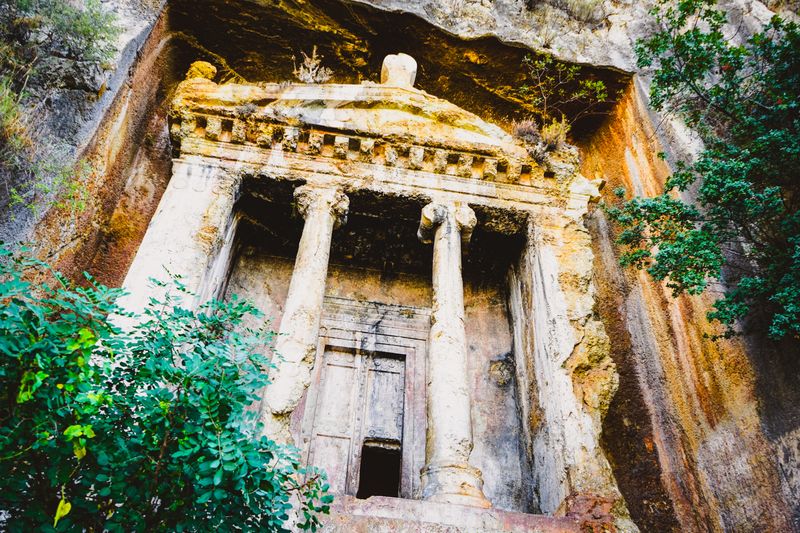
Nearby, four colossal Achaemenid royal tombs are cut high into a cliff face above Sassanid rock reliefs, the dramatic necropolis of Persia’s greatest kings.
Combine it with Persepolis on the same trip; it is very close.

The first Achaemenid capital and site of the simple, moving tomb of Cyrus the Great, founder of the empire, standing alone on a windswept plain.
It is a longer drive out; pair it with Persepolis on a full day.
There are simple cafes and snack stalls at the Persepolis site, but most visitors base in Shiraz and bring water and a picnic for the exposed, shadeless ruins. Shiraz, an hour away, has the full range of Persian dining, from garden restaurants to teahouses. On site, focus on staying hydrated and sun-protected; save the leisurely Persian meals for the city; alcohol is prohibited.
Drive from Shiraz early to beat the heat, exploring the Apadana, the Gate of All Nations and the tribute reliefs with a guide.
Visit the cliff tombs of Naqsh-e Rostam, and if time allows, the tomb of Cyrus at Pasargadae before returning to Shiraz.
Entry requirements and travel advisories for Iran change; verify the latest guidance and visa rules before booking.
The ruins are open and shadeless; visit in the cool morning with a hat, sun cream and plenty of water.
The reliefs and history come alive with a knowledgeable guide arranged in Shiraz.
International cards do not work in Iran; carry cash for transport, guides and entry.
Quick answers about visiting Persepolis. Check your government's current travel advice first.
Most visitors base themselves in Shiraz and visit by taxi or tour, often combining it with Naqsh-e Rostam and Pasargadae.
Allow half a day for the ruins, or a full day including Naqsh-e Rostam and Pasargadae.
Water, sun protection and a hat. The site is exposed with little shade.
Many governments currently advise against travel to Iran. Check official advice before planning a trip.
Download the Persepolis area for offline navigation, walking directions and public transport routes.
Free
Book tours, day trips and skip-the-line tickets in and around Persepolis.
Free
Capital Tehran, the domes of Isfahan, poetic Shiraz, desert Yazd and ancient Persepolis — the great highlights of Persia.
Planning a wider trip? Our Iran travel guide covers getting there, costs, when to go and more.