LA
Luang Prabang
UNESCO Temple City on the Mekong
UNESCO Temple City on the Mekong

The Tak Bat alms-giving ceremony (every morning at dawn; 5:30–6:30am; the monks of all 32 Luang Prabang temples walking in silent single-file procession through the main street; the faithful kneeling with bamboo containers of sticky rice to offer; the most ancient and most atmospheric daily religious ritual visible in Southeast Asia; the procession lasts 30–45 minutes; the monks walk in complete silence; the atmosphere is genuinely sacred) is the defining experience of Luang Prabang and the single most extraordinary dawn spectacle in the region.
💡 Observe Tak Bat respectfully: stand back at least 5m from the procession; do not use flash photography; wear modest clothing covering knees and shoulders; do not speak loudly; the ceremony is a genuine religious act, not a tourist performance. The best observation point: Sakkaline Road (the main procession route; the monks from Wat Xieng Thong pass here at 5:30am; the golden light on the monks’ saffron robes; the residential buildings of the colonial quarter behind; the most photographed morning in Laos). Do not buy sticky rice from the vendors who position tourists to “participate” — this disrupts the ceremony and is discouraged by Buddhist organisations.
Wat Xieng Thong (the Temple of the Golden City; the northern tip of the Old Town peninsula; USD 3 entry; the finest example of Luang Prabang temple architecture; built 1560; the sweeping rooflines almost touching the ground in the classic Luang Prabang style; the rear wall of the sim (ordination hall) covered in the “Tree of Life” mosaic — a red glass mosaic depicting the Lao cosmological universe; the Royal Funeral Carriage Hall with the gilded funeral chariot used for royal cremations; the rear garden with the reclining Buddha; the most significant Buddhist monument in Laos) is the essential temple visit in Luang Prabang.
💡 Visit Wat Xieng Thong at 7am (before tour groups; the monks finishing morning prayers inside the sim; the golden morning light on the facade; the Tree of Life mosaic catching the first sunlight; the compound quiet and genuinely meditative). The Royal Funeral Carriage Hall (the 12m gilded funeral carriage; the carved wooden panels; the animal figures; the most extraordinary single object in Luang Prabang) is included in the USD 3 entry and requires 20 minutes of careful examination.
Kuang Si Waterfalls (29km south of Luang Prabang; USD 3 entry; tuk-tuk from town USD 6–10 per person return; the most beautiful waterfall in Laos; a series of cascading turquoise limestone pools from the forest to the main 50m fall; the upper pools (15–25m; the turquoise water from dissolved calcium carbonate; swimmable in the main lower pools) and the main 50m plunge fall (not swimmable; visible from the viewing platform; the spray creating rainbows in the afternoon sun) make the Kuang Si a genuinely extraordinary natural spectacle accessible as an easy half-day trip from town.
💡 The Kuang Si morning (arrive by 8am via the first tuk-tuk; the pools are quietest before 9:30am when tour buses arrive; the upper pools are clearest in the morning; swimming in the lower two swimmable pools is refreshing at 22–24°C; the waterfall photography is best in the morning with the sun behind the falls creating a backlit cascade effect). The Tat Kuang Si Bear Rescue Centre (at the falls entrance; the rescued Asiatic black bears; free; 20-minute visit before the waterfall) is the most worthwhile stop.
Mount Phou Si (the central forested hill of the Luang Prabang peninsula; 328 steps from Sakkaline Road; USD 2 entry; the summit with the gilded That Chomsi stupa; the finest 360° panorama of Luang Prabang, the Mekong and Nam Khan rivers, and the surrounding forested mountains; the sunset from the summit platform draws the town’s visitors to the hill from 4pm; the gilded stupa glowing orange in the last light; the most celebrated Luang Prabang sunset view) is the essential evening activity.
💡 Ascend Mount Phou Si via the southern staircase from Sakkaline Road (USD 2; the 328 steps; the temple at the base and the temple halfway up before the final exposed staircase to the summit; the ascent takes 20 minutes at a comfortable pace; arrive by 5pm for a sunset at 5:50–6:10pm year-round in Laos’s equatorial latitude). The sunrise from Mount Phou Si (6:30am; the mist on the rivers; the mountains appearing from the valley cloud; as beautiful as the sunset with fewer people; the Tak Bat monks visible on Sakkaline Road below from the summit).
Luang Prabang has the finest food scene in Laos. The Night Market food stalls (the main street; 5–10pm; the Luang Prabang-style spring rolls; the “mok pa” steamed fish in banana leaf; the or lam — the Luang Prabang buffalo stew with aubergine and dried buffalo skin; the sticky rice in the bamboo basket; 20,000–40,000 LAK per dish; the most diverse and affordable Lao cuisine available in one place) are the essential evening food experience. Tamarind Restaurant (the finest Lao cooking class and restaurant in Luang Prabang; the tasting menu of 10 traditional Lao dishes; USD 15–20; the cooking class available; the kaipen dried river weed with sesame and chilli) and the Mekong Fish restaurant cluster on the riverside (the fresh Mekong fish; the mok pa; the Mekong catfish laap; USD 5–12) are the two finest dining experiences.
The Tak Bat ceremony is the most sacred daily ritual in Laotian Buddhist life and the most frequent victim of tourism intrusion in Southeast Asia.
Take the first tuk-tuk at 7:30am (USD 3 return). Arrive before tour buses at 9am. The turquoise pools and the bear rescue centre are both priorities at Kuang Si.
The Mekong slow boat (Huay Xai to Luang Prabang; 2 days; USD 30–40; book at the border) is the finest Laos arrival. Departs 9am; stops overnight at Pakbeng.
Bicycle hire (USD 2–4/day from any guesthouse) covers all old-town temples and the Nam Khan river loop in 4 hours. Go at 7am before heat and tour groups arrive.
A small boat ferry (USD 0.50) crosses to Chompet village on the west bank. Walk 20 minutes through rice paddies to a hilltop temple. Quiet, local, and free of tourists.
Sticky rice (khao niao; glutinous rice steamed in a bamboo cylinder; USD 0.50 at any morning market) is Luang Prabang’s staple. Eat it with a Mekong fish dip (jeow) at 7am.
5:30am: Tak Bat observation (Sakkaline Road; respectful distance; 30 mins). 7am: Wat Xieng Thong (USD 3; Tree of Life mosaic; Royal Funeral Carriage Hall; 1.5h). Sticky rice breakfast at Phousi market (8,000 LAK). 8:30am: tuk-tuk to Kuang Si Falls (USD 8 return; 30 mins). Kuang Si: bear rescue centre + swimming + waterfall photography (3h; USD 3 entry). Return 1pm. Lunch at Night Market early stalls (mok pa; 25,000 LAK). Mount Phou Si at 5pm (USD 2; 328 steps; sunset at 6pm). Night Market dinner.
7am: bicycle rental (USD 3; guesthouse). Old Town temple circuit by bicycle (Wat Mai; Wat Visoun; Wat Aham; Wat Manolom; 2h; all free externally). 9:30am: Mekong west bank ferry (10,000 LAK; 3 mins; the Chompet view). 11am: Tamarind cooking class (USD 20; the afternoon slot is noon–4pm; OR evening meal only USD 15). Afternoon: slow boat viewing from Mekong waterfront. Night Market farewell dinner.
Download Luang Prabang offline. All temples, the Night Market, and the Kuang Si road are mapped.
Free
Download Lao offline. English is widely spoken in tourist areas; Lao is useful for market negotiation.
Free
Multi-currency LAK. ATMs on the main street; some charge high fees. USD widely accepted. Carry small USD bills.
Free
Identify the birds at Kuang Si (the great hornbill visits the forest canopy around the falls) and the bears at the rescue centre.
Free
Quick answers to the questions travellers most often ask before visiting Luang Prabang.
The cool, dry season from November to February is the most pleasant. March to May is hot and can be hazy, and the June-October rains are green but wetter.
Two to three days for the temples and French-Lao old town, the dawn alms-giving ceremony, the climb up Mount Phousi, the night market, and a trip to the Kuang Si waterfalls.
The compact peninsula old town is very walkable and bike-friendly; tuk-tuks and boats on the Mekong cover longer trips, and a new railway links it to Vientiane and China.
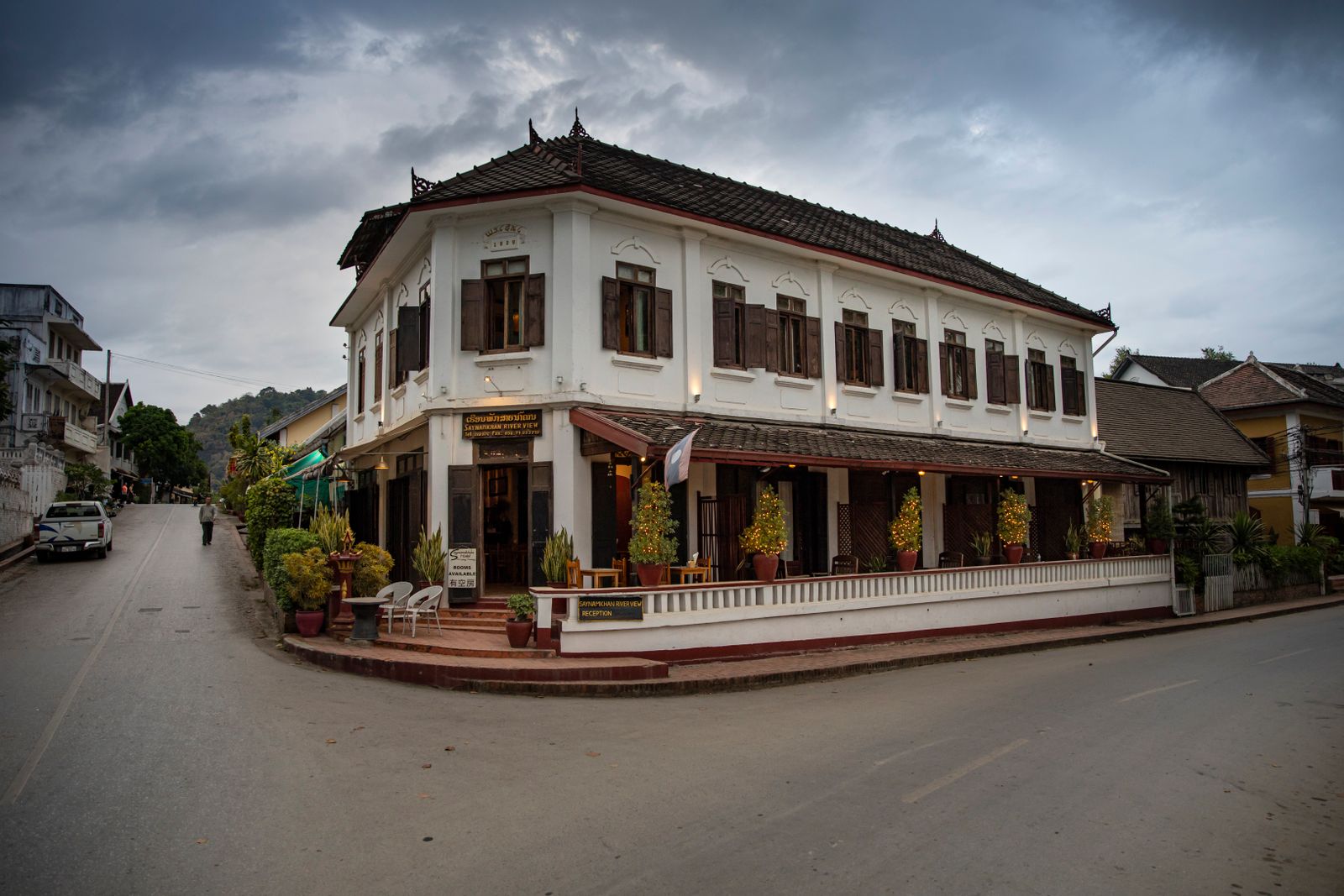
A serene UNESCO World Heritage town where the Mekong meets the Nam Khan — gilded Buddhist temples, elegant French-Lao architecture, the moving dawn alms-giving ceremony, the Kuang Si waterfalls, and a deeply relaxed atmosphere.
From the gilded temples of Luang Prabang to the Mekong islands of Si Phan Don, the karst peaks of Vang Vieng, and the ancient jars of Xieng Khouang.