LA
Laos
Untouched Buddhist kingdom on the Mekong
Untouched Buddhist kingdom on the Mekong

At dawn, saffron-robed monks file silently through the streets collecting alms from kneeling villagers: the most atmospheric Buddhist ritual in Southeast Asia. The Wat Xieng Thong temple complex is UNESCO-listed.

A tiered waterfall system of turquoise travertine pools in the jungle: swimming in the lower pools, a forest trail to the upper cascade and a sun bear rescue centre at the entrance.

A limestone karst valley with the Nam Song River: kayaking and cycling past rice paddies, the Tham Chang cave and the Blue Lagoon swimming holes.

The Mekong’s widest stretch (14km) near the Cambodia border: Khone Phapheng Falls (the largest waterfall in Southeast Asia by volume), the last surviving Irrawaddy river dolphins and hammock culture on Don Det island.

Thousands of stone funerary jars scattered across a plateau at 1,000m: between 1 and 3 metres tall, carved 2,000-3,000 years ago, and still poorly understood.

A limestone karst national park of underground rivers and cave kayaking: the Kong Lor Cave (7.5km of paddling through darkness with a headlamp) is Southeast Asia’s finest cave experience.

A village surrounded by the most dramatic karst limestone in Laos: the Nam Ou River, trekking to Hmong villages and the most untouched landscape on the tourist trail.

The Patuxai (a Laotian Arc de Triomphe), the riverside promenade on the Mekong and the Xieng Khuan Buddha Park: 200 Hindu and Buddhist statues by a visionary monk in the 1950s.
Minced meat (chicken, pork or fish) mixed with toasted rice powder, herbs, lime and chilli: the national dish of Laos, eaten at every celebration.
Glutinous rice steamed in a bamboo basket and eaten by hand: the dietary staple of every Lao meal. Carried in a small bamboo container (tiep khao).
Fish wrapped in banana leaves with lemongrass, galangal, spring onion and chilli, steamed over a fire: the most elegant Lao cooking method.
A slow-cooked stew of pork, vegetables and Sichuan pepper leaves: thick, fragrant and unique to Luang Prabang.
The national lager: clean, slightly malty and one of Southeast Asia’s finest standard beers. Drunk cold at every guesthouse.
Home-distilled rice whisky: 40-50% alcohol, served in a bamboo shot glass at every village celebration.
Grown in the Bolaven Plateau at 1,200m: a strong dark Robusta or Arabica blend, drunk sweet with condensed milk.
Rice noodles in a clear chicken or pork broth: Laos’s answer to pho, eaten for breakfast.
The Lao ride-hailing app. Tuk-tuks elsewhere by negotiation.
A Beerlao: LAK 15,000 (EUR 0.70). A guesthouse in Luang Prabang: USD 10-30.
“Baw pen nyang” (no problem, never mind) is the national philosophy.
A 2-day slow boat from Huay Xai (Thai border): the finest arrival into Luang Prabang.
Available at the airport. Unitel has the best 4G coverage in tourist areas.
Laos is the world’s most bombed country per capita (from Vietnam War): never leave marked paths in Xieng Khouang.
Sarongs are available for loan at all major temples.
“Sah-bye-dee” – hello and how are you. Always warmly received.
Vientiane Wattay (VTE) is the main hub; Luang Prabang (LPQ) has direct connections from Bangkok, Chiang Mai and Hanoi. Lao Airlines serves domestic routes. The slow boat on the Mekong is the classic overland arrival. For trip planning, see the official Laos tourism portal.
💡 Bangkok and Hanoi are the primary hubs for Laos — both have multiple daily connections to Vientiane and Luang Prabang. Bangkok Airways serves Luang Prabang direct from Bangkok in 1h40.
💡 Chiang Mai to Luang Prabang direct (1h) is one of Southeast Asia’s most underused connections — it links the two most pleasant small cities in the region without requiring a Bangkok transit.
💡 The Lao-China high-speed railway (opened 2021) connects Vientiane to Luang Prabang in 2h and Boten on the Chinese border in 3h20 — a transformative infrastructure project that has fundamentally changed Lao overland travel.
💡 Luang Prabang is entirely walkable or cyclable — the town is only 2km long and the main temple street runs from one end to the other. Bicycles (LAK 15,000–25,000/day) are the best way to reach the waterfalls on your own schedule.
November to April is the dry season — cool and clear in the mountains, the Mekong navigable, Luang Prabang at its most photogenic. October and November are ideal — still lush after the rains, not yet peak season. May to October is hot and wet but the waterfalls (Kuang Si) are at their most spectacular.
Luang Prabang for three days, the Kuang Si waterfalls for one, the Pak Ou Caves for one, Vang Vieng for one, Vientiane to close. Laos rewards extreme slowness — the whole country operates at a pace that makes Thailand feel hurried.
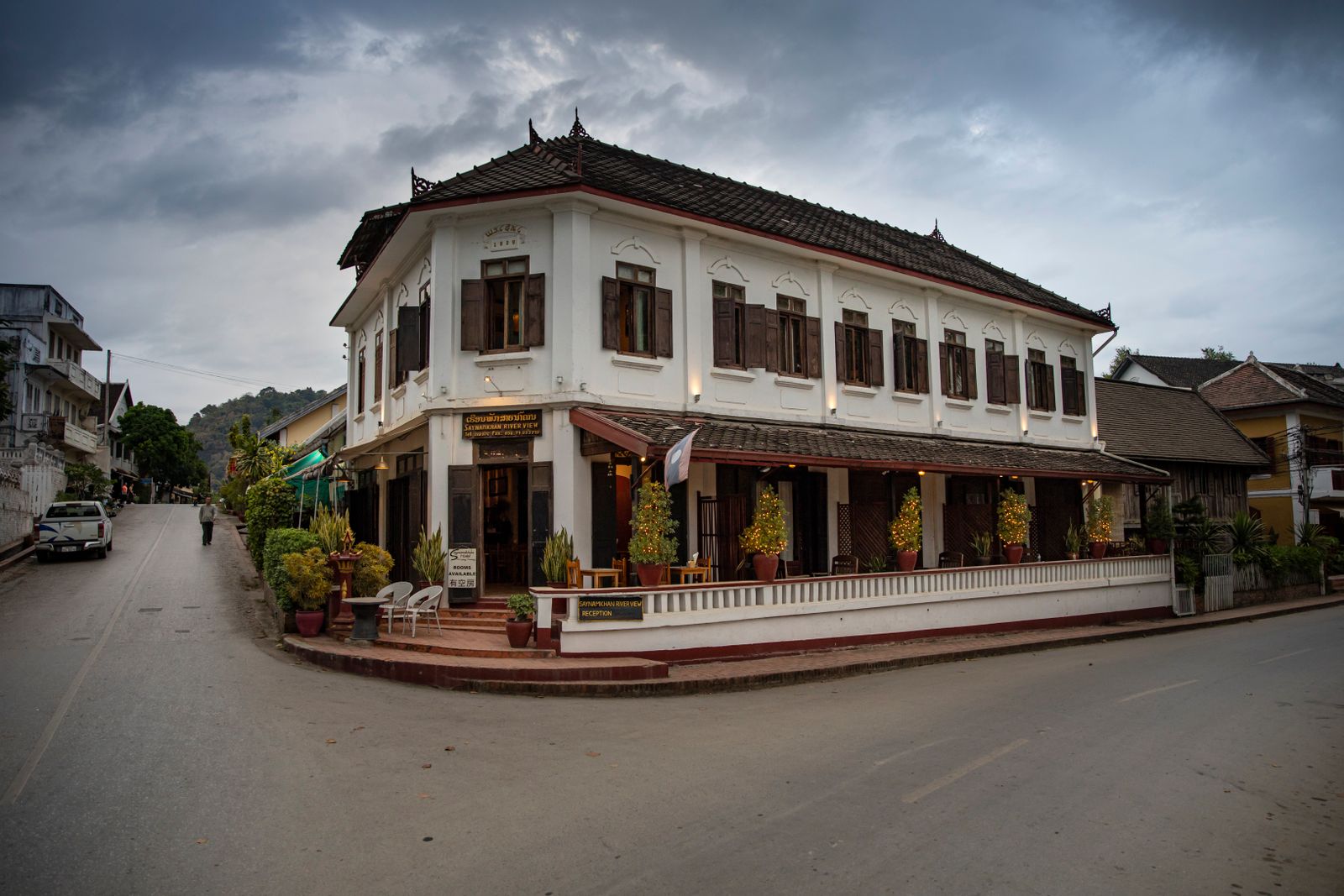
Luang Prabang — a UNESCO World Heritage town on a peninsula between the Mekong and the Nam Khan rivers — has 33 Buddhist temples and a population of 50,000. The tak bat (alms giving) procession at 5:30am: hundreds of monks in saffron robes walking barefoot in silence through the streets while residents and visitors offer sticky rice and food.
💡 The tak bat is a genuine religious practice, not a performance. Stand quietly at the side, do not use flash photography, and do not touch or block the monks. It takes 20 minutes and is the most atmospheric thing to see in Laos.
The Royal Palace Museum (built 1904, the Lao royal family lived here until the 1975 communist takeover) with the Phra Bang Buddha image — the most sacred object in Laos. Wat Xieng Thong (1560, the finest temple in Luang Prabang): the rear wall mosaic of the Tree of Life, the royal funeral chariot house and the gold-lacquered pavilions.
💡 Wat Xieng Thong at dawn before 8am is almost entirely empty — monks sweeping the courtyards, incense burning in the shrines, the gilded lacquerwork catching the early light. The afternoon brings tour groups; the morning is a different experience.
The climb to the summit of Mount Phousi (329 steps, golden stupa at the top, view over the peninsula and both rivers) at sunset — a Luang Prabang ritual. The Night Market along Sisavangvong Road: hill tribe textiles, Lao silk, silver jewellery from the Hmong and Mien tribes, sold from 5pm.
💡 The Night Market vendors are primarily hill tribe women from the villages in the Luang Prabang mountains — the embroidery is made by hand in their villages and is among the finest textile craft in mainland Southeast Asia. Bargaining is expected but not aggressive.
30km south of Luang Prabang. Kuang Si is a series of travertine terraced pools and a 50m main waterfall — the water is a milky turquoise blue from the calcium carbonate content. Swimming is permitted in the lower pools. The Tat Kuang Si Bear Rescue Centre at the entrance.
💡 The pools at Kuang Si are warmest and clearest in the dry season (November–April). In rainy season the water is brown from sediment but the waterfall volume is vastly more dramatic. Both seasons offer compelling visits.
2h upriver on the Mekong by slow boat. The Pak Ou Caves — two limestone caves at the confluence of the Mekong and the Nam Ou rivers, with thousands of Buddha images left by pilgrims over centuries: wooden Buddhas in every posture, lacquered gold, covered in spider webs and dust, stacked on every ledge.
💡 The slow boat journey up the Mekong to Pak Ou (2h each way) is half the experience — the river is 500m wide, flanked by limestone karst and bamboo villages on the banks, with fishermen in dugout canoes and loaded cargo boats passing.
4h from Luang Prabang. Vang Vieng sits in a valley of dramatic limestone karst with the Nam Song river running through it. The Blue Lagoon caves for swimming and rope swings, kayaking the river through the karst, and cycling among the rice paddy fields with the mountains above.
💡 Vang Vieng has cleaned up considerably from its backpacker-party reputation of the 2000s — the cave and karst landscape is genuinely extraordinary and best enjoyed by cycling or kayaking rather than the tubing scene.
3h from Vang Vieng. Vientiane is the world’s most relaxed capital city — wide boulevards, the French colonial Patuxai monument (a Lao Arc de Triomphe built with US-donated concrete meant for an airport), That Luang (the gold-covered national stupa, the most important religious site in Laos). Fly from Wattay International Airport (VTE).
💡 That Luang (Great Stupa) is at its most spectacular in late afternoon when the gold-covered surfaces reflect the setting sun. It was built in 1566 by King Setthathirath on the site of a Khmer temple — the gold you see was applied during a 1930s French-supervised restoration.
Laos is one of the cheapest countries in Southeast Asia — affordable guesthouses, excellent and very cheap local food, and a low-key pace that keeps daily spending modest.
Beerlao — the national beer, brewed in Vientiane, clean lager with a slight sweetness from the local rice — costs LAK 10,000–15,000 (US$0.50–0.70) at a local restaurant and is one of the better lagers in Southeast Asia.
Lao cooking class in Luang Prabang (half-day: market visit + cook 5 dishes + eat everything) costs US$25–40pp and is one of the best-value cooking experiences in Southeast Asia.
Amantaka in Luang Prabang (a former French colonial hospital, 24 suites around a pool in the UNESCO zone) is one of the finest Aman properties in Asia &mdash.
Ride-hailing in Vientiane — coverage is limited but growing; the most reliable app in the capital.
FreeSoutheast Asia train, bus and ferry tickets in one booking flow.
FreeBook Luang Prabang temple tours, Mekong slow boat experiences, Vang Vieng tubing and Laotian adventures.
FreeWidely used in Laos for contacting guesthouses, guides and tuk-tuk drivers.
FreeBook guesthouses and hotels across Laos — stronger inventory than Booking.com for smaller towns.
FreeTrack LAK (Lao Kip) rates — amounts in the millions are normal; this app prevents budgeting confusion.
FreeFrom UNESCO Luang Prabang’s gilded temples to the karst peaks of Vang Vieng, the ancient Plain of Jars, and the dreaming Mekong islands of Si Phan Don.
Laos sits within easy reach of several other destinations — each with a completely different character.

