LT
Vilnius
The Baroque Capital of Northern Europe
The Baroque Capital of Northern Europe
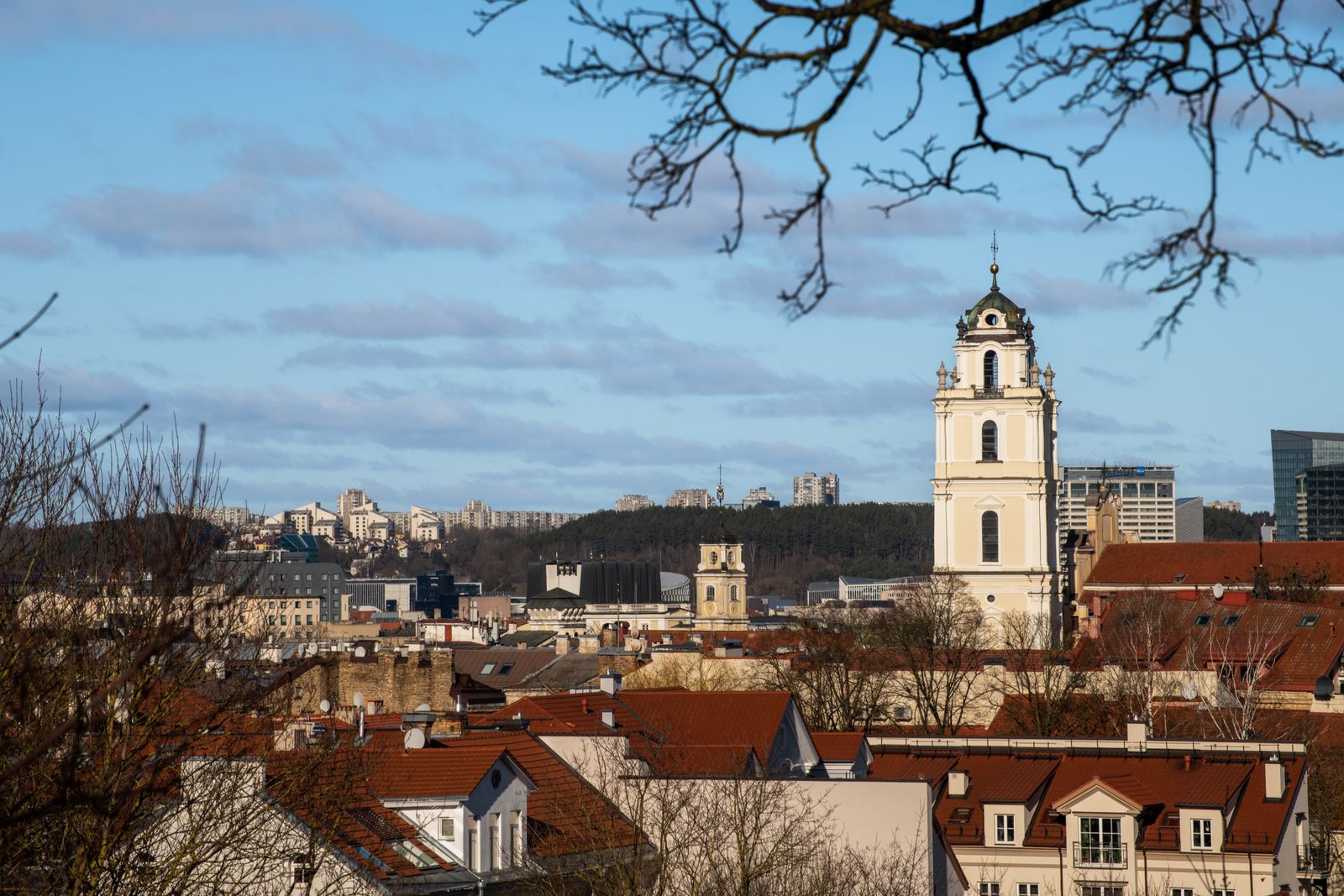
Vilnius Old Town (UNESCO World Heritage Site 1994; 4 km²; the largest medieval Old Town in Northern Europe; free to walk; a dense network of baroque churches, university courtyards, guild houses, and residential lanes largely intact from the 15th–18th centuries) is the finest historic city centre in the Baltic States. The Cathedral Square (Katedros aikštė; the neoclassical Cathedral of Vilnius; free; the most significant Catholic church in Lithuania; the Bell Tower adjacent; €5 for the tower), the Vilnius University courtyard complex (15th century; 13 courtyards; €5; the finest medieval university in Northern Europe), and the Church of St Anne (the finest Gothic brick church in Lithuania; free; the structure Napoleon allegedly wanted to carry back to Paris on his palm) are the three essential Old Town landmarks.
💡 Walk the Vilnius Old Town at 7am (the baroque church facades in morning light; the Cathedral Square empty; the Pilies street without tourists; the most atmospheric early morning in the Baltic States). Pilies gatvė (the main Old Town pedestrian street) and the branching lanes off it (Literatų gatvė — the poetry street; panels of literary quotations on every wall) are the finest free walking territory in Lithuania.
Gediminas Castle (Gedimino pilis; the hill above the Old Town; free access to the hill via the path from the Cathedral Square or cable car €2; the castle museum €5; the Upper Castle tower is all that remains of the 15th-century fortification; daily 10am–8pm in summer) provides the finest panorama of Vilnius: the Old Town rooftops, the Neris River, and the three-hills landscape of the Vilnius basin visible in a single view. The hill itself (Gediminas Hill; 48m above the Old Town; free; the most visited outdoor space in Vilnius) is a parkland accessible on foot from the Cathedral Square in 10 minutes.
💡 Climb Gediminas Hill for the panorama at sunset (8–9pm in summer; the Old Town baroque church towers catching the last light; the most photographed view in Vilnius). The cable car (€2 one-way; runs until 9pm in summer) saves 10 minutes of uphill walking and is pleasant but the hill path is straightforward. The Upper Castle museum (€5; the history of the Grand Duchy of Lithuania) is a 30-minute add-on inside the tower.
Užūpis (the bohemian riverside district across the Vilnelė River from the Old Town; 5 minutes walk from Pilies gatvė through the Old Town lanes; free to enter; a self-declared micro-republic with its own constitution inscribed on a wall in 23 languages; its own president; its own flag; and a population of artists, architects, and creatives who declared independence from Vilnius on April 1, 1997) is the most distinctive neighbourhood in the Baltic States. The Uzūpis constitution wall (Paupio gatvė 2; the 41-clause constitution inscribed in gold letters; free; a remarkable document of absurdist humanism: “Everyone has the right to be happy,” “A dog has the right to be a dog”) and the riverside cafes are the essential stops.
💡 Walk through Užūpis on any Sunday morning (the neighbourhood is most active; the angel statue — the Márū Angelas — stands at the entrance to the republic; the constitution wall in multiple languages is 5 minutes further; the Vilnelė River promenade has the finest weekend cafe scene in Vilnius). On April 1 (Ažūpis Independence Day), the micro-republic puts up a border crossing with passport stamping — the best civic joke in the Baltics.
The Vilnius Jewish Quarter (the area around Žydų gatvė and Gaono gatvė; the former Jewish district; Vilnius was known as the “Jerusalem of Lithuania” for its extraordinary Jewish intellectual and religious culture; the Vilna Gaon — the most celebrated rabbi in European history — lived here 1720–1797; the Great Synagogue of Vilna — destroyed by the Nazis in 1943 — stood at Žydų gatvė; the Paneriai Memorial — 10km south; the site where 100,000 Jews and others were murdered in 1941–1943 — is the most significant Holocaust memorial in Lithuania) is the most historically layered part of Vilnius.
💡 Visit the Vilna Gaon Jewish State Museum (Pamènkalnio 12; €4; Mon–Fri; the finest Jewish museum in the Baltic States; the history of the Vilna Jewish community from medieval origins to the Holocaust) and walk the Jewish Quarter lanes (Žydų gatvė; Gaono gatvė; the location of the Great Synagogue marked with a floor plan in the school playground at No. 3) for a 2-hour deeply significant experience.
Vilnius has the most creative restaurant scene in the Baltic States. Lokys (Stiklių 8; game restaurant in a Gothic cellar; wild boar, elk, and beaver; €20–40; the most theatrical dining experience in Vilnius), Sweet Root (the finest fine dining; seasonal Lithuanian tasting menu; €60–90; Michelin-recommended), and Etno Dvaras (Pilies 16; traditional Lithuanian cuisine; cepelinai — potato dumplings stuffed with minced meat and served with sour cream; the national dish; €8–15) cover the full Vilnius food range. Hales market (Pylimo 58; the finest covered market in Vilnius; fresh Lithuanian produce; dark rye bread; cheese; smoked sausage; daily 7am–5pm) is the essential morning food stop. Lithuanian craft beer (the Snekutis bar; the finest craft beer selection in the Old Town; €3–5 per glass; over 20 Lithuanian craft beers on tap) is the essential evening experience.
7am: Cathedral Square + Old Town baroque church walk (free; 1.5h; St Anne’s; St Casimir’s; Pilies gatvė; Literatų poetry wall). Gediminas Castle Hill (cable car €2 or walk; panorama; 30 mins). Hales market breakfast (rye bread + smoked sausage; €5). Vilna Gaon Jewish Museum (€4; 1h). Jewish Quarter walk (Žydų gatvė; Great Synagogue site; 45 mins). Cross into Užupis (constitution wall read; Vilnelė river; angel statue; cafe on the riverbank). Dinner at Lokys (wild boar; Gothic cellar; €30–40; book ahead).
9am: bus to Trakai (€1.50; 30 mins; island castle €8; 2h; the red-brick Gothic fortress on Lake Galvė; kayak on the lake optional). Return bus 1pm. Church of St Peter and St Paul (15 mins walk from Old Town; free; the 2,000 stucco figures; 1h). Old Town afternoon (University courtyard €5; 45 mins). Sweet Root dinner (tasting menu €60–90; book ahead). Craft beer at Snekutis (€3–5; 20+ Lithuanian craft taps).
Vilnius’s baroque quarter (the Church of St Casimir; St Anne’s; the Church of St Peter and St Paul; the finest concentration of baroque architecture in Northern Europe) is emptiest and most photogenic at 7–8am.
Paneriai (10km south; bus 8 from the train station; €0.90; 25 minutes; the forest site where 70,000–100,000 Jews were murdered 1941–1944) is essential context for understanding Lithuania. Allow 1.5 hours.
Bus from Vilnius bus station (every 30–45 mins; €1.50; 30 mins; drops at Trakai bus stop 5 minutes from the castle) makes Trakai Island Castle the most accessible major castle excursion in the Baltic region.
The Vilnius Christmas Market (Cathedral Square; late November–early January; the finest in the Baltics; free entry; amber jewellery stalls; Lithuanian mulled wine; the fried potato spiral) is the correct Baltic Christmas market.
The Church of St Peter and St Paul (Antakalnis; 15 minutes north of the Old Town; free; daily; 2,000 stucco figures covering every surface; the side chapel allegories) is the finest interior in Vilnius.
The Užupis constitution (41 clauses; inscribed in gold letters in 23 languages on a mirrored wall off the main Užupis square; free to read; includes “a cat is not obliged to love its owner”) is worth 15 minutes.
Ride-hailing and e-scooters throughout Vilnius. The fastest urban transport after walking in the Old Town.
Free
Download Vilnius offline. Transit integration for city buses.
Free
Book intercity buses to Riga (4h), Tallinn (8h), or Warsaw (10h).
Free
Baroque Vilnius, interwar Kaunas, the island castle at Trakai, and the Hill of Crosses — Lithuania rewards deep exploration.