SA
Saudi Arabia
Ancient deserts, Nabataean tombs & the Red Sea
Ancient deserts, Nabataean tombs & the Red Sea
⚠️ Travel advisory: check before you go
In September 2026 the US raised its advice to “reconsider travel” for this region because of tensions involving Iran. Flights and tourism are operating normally, but airspace closures and cancellations can happen at short notice, so keep plans flexible and travel insurance in place.
Latest official advice: UK FCDO · US State Department · Reviewed September 2026
Saudi Arabia has opened its doors to tourism in earnest since 2019, revealing a country of great depth and diversity to the outside world. This is the birthplace of Islam and custodian of the two holiest cities in the faith — Mecca and Medina — though the greatest surprise for many visitors is the pre-Islamic heritage. Al-Ula, an ancient oasis city in the desert, contains Hegra (Madain Saleh), a Nabataean city of rock-carved tombs carved into sandstone mountains that rivals Petra in Jordan. The Empty Quarter, the world’s largest continuous sand desert, fills the southern horizon with dunes of surreal scale and silence.
Saudi cities are transforming rapidly. Riyadh’s skyline changes by the year; Jeddah’s ancient coral-built historic district is a UNESCO World Heritage Site; and the Red Sea coast offers excellent diving largely unknown to outsiders. Saudi Arabia’s ambitious Vision 2030 programme is reshaping the country at speed.
The jewel of Saudi tourism, Al-Ula is an ancient oasis valley whose sandstone landscape holds the Nabataean city of Hegra — Saudi Arabia’s first UNESCO World Heritage Site. Over 100 monumental rock-carved tombs, many standing 20 metres high, are scattered across a lunar landscape of rust-red sandstone columns. Al-Ula’s old town, the rock formation of Elephant Rock and the Maraya concert hall (the world’s largest mirrored building) round out a destination.
Al-Balad, Jeddah’s old city, is a UNESCO-listed maze of coral-built merchants’ houses decorated with ornate wooden balconies (Rawasheen). Founded in the 7th century as the gateway to Mecca, it preserves centuries of Islamic architecture. The Corniche waterfront, the King Fahd Fountain (the world’s tallest at 312m) and Jeddah’s thriving arts scene make this Saudi Arabia’s most cosmopolitan and accessible city.
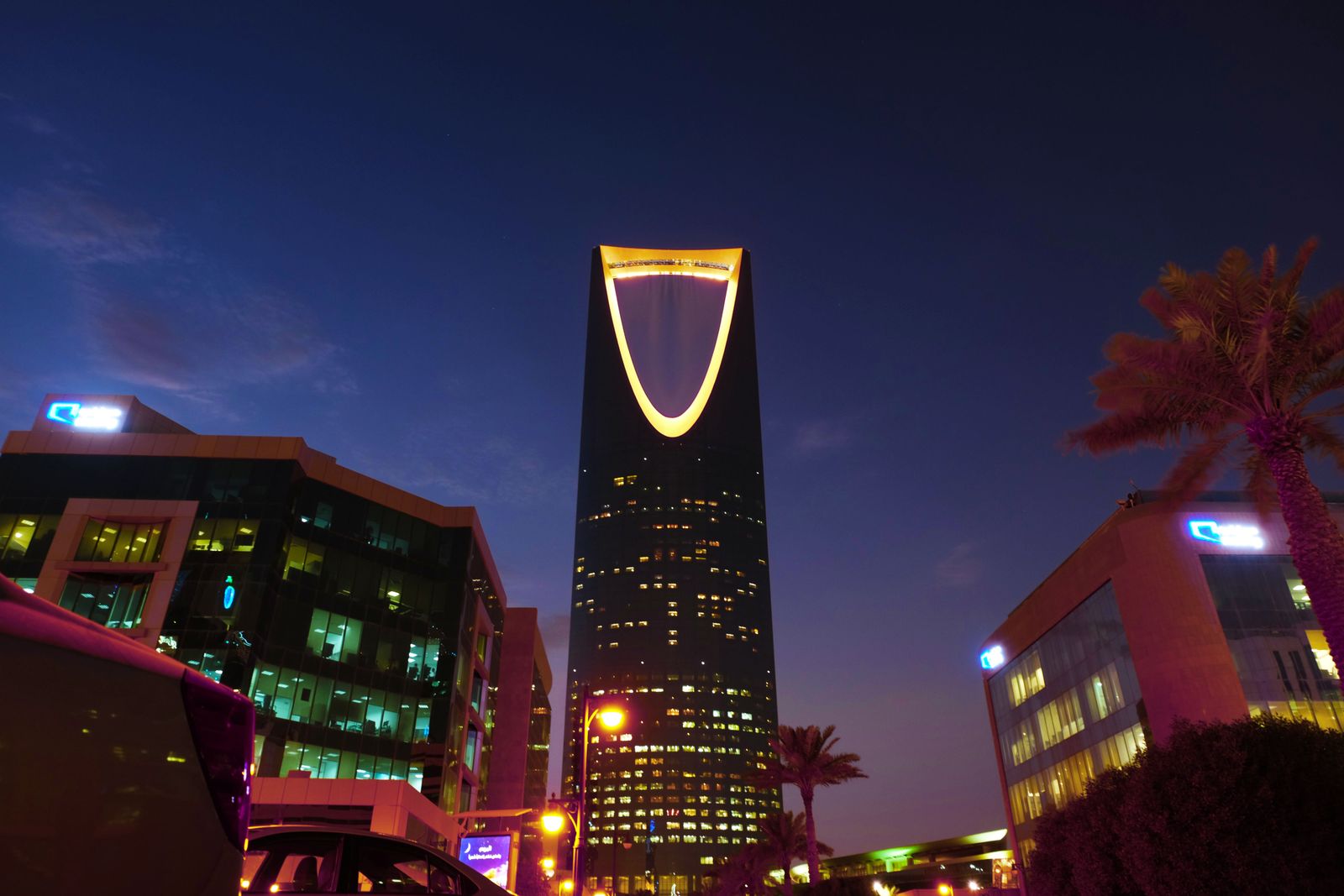
The Saudi capital is a city of extremes — the ultramodern Kingdom Centre Tower alongside the mud-brick Diriyah palace complex where the Saudi state was born. The National Museum is among the best in the Arab world. Edge of the World (Jebel Fihrayn), a dramatic escarpment 90 minutes from Riyadh, drops sheer 300 metres to the plain below — one of the great viewpoints in the Middle East.
Saudi Arabia’s Red Sea coastline is one of the world’s least-dived reef systems, preserving corals and marine life in excellent condition. The luxury NEOM development at Sindalah and the Red Sea Project are bringing international-standard resort infrastructure to what is already an excellent underwater wilderness. Snorkelling from the beach at Yanbu or Jeddah reveals a shallow reef.
The mountainous south-west of Saudi Arabia — the Asir region — is dramatically different from the rest of the country. Abha sits at 2,200 metres in cloud-draped mountains; the historic village of Rijal Almaa has a multi-storey stone fortress decorated with coloured glass; and Asir National Park offers hiking, cool temperatures and a Yemeni-influenced culture quite distinct from the Gulf cities.
Spiced rice with lamb, chicken or camel, fragrant with cardamom, cloves and dried lime — the national dish.
Whole lamb slow-cooked in a clay-sealed pit over smouldering wood, then served on saffron and spiced basmati rice — the signature feast food of the Arabian Peninsula. The smoke-steaming technique produces tender meat; a whole mandi is the centrepiece of Saudi hospitality.
Crushed wheat cooked with meat or yogurt and topped with fried onion — a traditional Najdi staple.
Flatbread served with every meal. Saudi Arabia is alcohol-free; coffee and juice bars fill the gap.
Arabic coffee, pale gold and flavoured with cardamom and saffron, poured into small cups as a sign of welcome.
Saudi Arabia grows many varieties, from Sukkari to Ajwa, and dates are served with every cup of qahwa.
King Khalid International (RUH) in Riyadh and King Abdulaziz International (JED) in Jeddah are the two main hubs. Saudia and flynas are the national carriers; Emirates, British Airways and Etihad serve major routes. For trip planning, see the official Saudi Arabia tourism portal.
British Airways and Saudia both operate direct Heathrow–Riyadh and Heathrow–Jeddah routes. Saudi Arabia is 6h30 from London — a surprisingly short hop to one of the most ancient destinations on earth.
Dubai is 2h from Riyadh and serves as the primary regional hub; multiple daily connections. Saudi Arabia also borders Jordan (Aqaba–Tabuk crossing) for overland entry from the north.
The Riyadh Metro (opened 2021, 6 lines, 85 stations) is the largest automated metro in the world and covers most of Riyadh efficiently. Careem (regional equivalent of Uber) is the standard car-hailing option.
flynas (the low-cost Saudi carrier) covers AlUla, Abha and all major domestic routes at competitive fares. AlUla is also accessible by road from Medina (4h) for those touring the Hejaz region.
October to March is the best window — Riyadh and AlUla pleasant (18–28°C), the desert accessible, Hegra and Diriyah at their finest. November to February is peak season. April to September is intensely hot (40–50°C in Riyadh); the holy cities of Mecca and Medina are accessible to Muslims year-round.
📅 Saudi Arabia is in its best season in January, February, March, November, December. See where else is good to go in those months, or browse where to go by month.
Saudi Arabia is mid-range to premium — high-quality accommodation and dining are available, and transport is affordable. Alcohol is prohibited. The Saudi Riyal (SAR) is the currency; USD is widely accepted.
Kabsa — long-grain rice cooked with whole spices (cloves, cardamom, cinnamon, black lime) in a meat broth, topped with roast chicken, lamb or camel and garnished with raisins and toasted almonds — is the national dish of Saudi.
Arabian coffee (qahwa — lightly roasted green coffee beans ground with cardamom, saffron and cloves, served in a small finjan cup and refilled continuously as a sign of hospitality — is the definitive social drink of Saudi Arabia.)
The Banyan Tree AlUla (tented camp beside the Hegra tombs, the finest accommodation in northwest Saudi Arabia, from SAR 1,500&ndash)
Riyadh for two days, AlUla and Hegra for two, Diriyah for one, the Edge of the World for one, Jeddah for one. Saudi Arabia opened to international tourism in 2019 — one of the most ancient and architecturally rich destinations in the world, now accessible for the first time.
Riyadh — a city of 7 million built almost entirely in the last 50 years — with the National Museum of Saudi Arabia (the finest overview of Arabian history from pre-Islamic civilisation through the Nabataean period to the founding of the Saudi state, twelve halls spanning 4.5 billion years), the Kingdom Centre Tower (302m, the most distinctive skyline in Saudi Arabia, with a sky bridge at 200m) and the Masmak Fortress (1865, the mud-brick fort that was captured by Abdul Aziz ibn Saud in 1902, founding the modern Saudi state).
The capture of the Masmak Fortress on 15 January 1902 by Abdul Aziz ibn Saud (with 40 warriors, having crossed 600km of desert from Kuwait) is the founding event of Saudi Arabia. Ibn Saud killed the governor in the gatehouse and established his authority over Riyadh in a single night. The notch in the gate from the spear thrown in the assault is still visible and preserved.
75km from Riyadh. Jebel Fihrayn (the Edge of the World — a 300m escarpment at the edge of the Tuwaiq plateau, dropping vertically to the desert plain below with an unobstructed view to a horizon 80km away, the most dramatic natural landscape near Riyadh) — technically part of the same geological formation as the Grand Canyon, formed by the same Cretaceous sea retreat.
The Tuwaiq Escarpment runs for 800km across central Saudi Arabia — a cliff edge formed when the Cretaceous Sea (which covered the Arabian Peninsula 100 million years ago) retreated and exposed the limestone plateau. The Edge of the World is the most accessible section; the full escarpment contains fossil sea creatures in its cliff face at 600m altitude.
1h30 flight from Riyadh. AlUla — a governorate in northwest Saudi Arabia with Hegra (Saudi Arabia’s first UNESCO World Heritage Site, 2008 — the southernmost Nabataean city, with 111 monumental rock-cut tombs comparable to Petra’s but in a more dramatic and solitary setting, far less visited), the old walled town of AlUla, and the rock formations of the Sharaan Nature Reserve.
Hegra (Mada’in Saleh, also called Hegra after its ancient name) was the second city of the Nabataean Kingdom after Petra. The tombs, cut directly into sandstone mountains by Nabataean craftsmen in the 1st century BCE to 1st century CE, are as large and elaborately carved as Petra’s — yet see a fraction of the visitors. For decades the site was off-limits to non-Muslims; it opened to tourists in 2019.
A full day at Hegra — the Jabal Ithlib (the ritual enclosure of the Nabataeans, with carved diwan rooms and inscriptions), the Jabal Unayza (a cluster of 27 tombs in a single sandstone outcrop, the finest in the necropolis), and the Siq of Hegra (a natural sandstone canyon corridor used as a processional route). AlUla’s night sky (one of the darkest in the world — 0.05% light pollution) for stargazing.
The Nabataeans were an Arab people who controlled the incense trade routes from southern Arabia to the Mediterranean from approximately 400 BCE to 100 CE. Their kingdom — from Hegra in the south to Petra in the north, Bostra in Syria — was the most commercially successful in ancient Arabia, growing rich on the taxing of frankincense, myrrh, spices and silk passing through their territory.
Diriyah — 20km from Riyadh, the birthplace of the Saudi state (the mud-brick At-Turaif district, UNESCO World Heritage Site, where Muhammad ibn Saud and Muhammad ibn Abd al-Wahhab formed their historic 1744 alliance that would eventually become the Kingdom of Saudi Arabia) now extensively restored and opened as a heritage destination with the Diriyah Gate cultural zone.
The 1744 alliance between Muhammad ibn Saud (the tribal leader of Diriyah) and Muhammad ibn Abd al-Wahhab (the Islamic scholar and reformer) is the foundational moment of modern Saudi Arabia — it combined political authority with religious legitimacy in a form that has characterised the Saudi state ever since. Ibn Abd al-Wahhab’s teaching became the theological basis of Wahhabism.
1h flight from Riyadh. Jeddah — Saudi Arabia’s most cosmopolitan city, the gateway to the holy cities, with Al-Balad (the UNESCO-listed historic district — a labyrinth of coral-built houses with elaborately carved wooden roshan (projecting lattice window bays) in the traditional Hejazi architectural style, the finest surviving example in Arabia) and the King Fahd Fountain (the world’s tallest fountain, 312m, visible 60km away).
Al-Balad’s roshan (projecting wooden lattice bay windows — constructed from teak imported from India and carved with geometric and floral patterns) served as air conditioning, light filter and privacy screen simultaneously in a hot, dusty city. The oldest surviving buildings date from the 17th century; the wood-frame construction on coral-block walls is unique to Hejazi architecture.
The Jeddah Corniche (30km of waterfront promenade along the Red Sea, with the Floating Mosque — Al-Rahma, built on pillars in the sea, accessible only at low tide by a walkway) and a diving trip to the Jeddah reefs (the Red Sea has the highest coral diversity in any enclosed sea — the reefs off Jeddah include several of the finest accessible walls in the northern Red Sea). Fly from Jeddah (JED) or Riyadh (RUH).
The Red Sea has the highest sea surface temperature and salinity of any major ocean body, and coral reefs that have adapted to these extremes over millennia. The corals of the Red Sea are more heat-tolerant than any others on earth — a consequence of millions of years of adaptation to one of the world’s most extreme coral environments.
Tourist e-visas are available online for 60+ nationalities — quick and straightforward. Valid for one year, multiple entry, 90 days per visit.
Dress modestly outside tourist resorts — shoulders and knees covered for both men and women. Women no longer need to wear an abaya though many choose to.
Strictly prohibited throughout the country. Non-alcoholic alternatives, especially Arabic coffee and fresh juices, are excellent.
Summers (May–Sep) are extremely hot — 40°C+ in the desert interior. Visit Nov–Mar for comfortable temperatures. Desert trips need sun protection and adequate water.
Renting a car is highly recommended outside major cities. Ride apps (Careem, Uber) work well in Riyadh, Jeddah and Al-Ula.
Quick answers to the questions people most often ask before visiting Saudi Arabia.
Yes — Saudi Arabia opened to tourism in 2019. Citizens of many countries can apply for a tourist e-visa online, usually quickly, and some can get one on arrival.
Fly into Riyadh (RUH) or Jeddah (JED), both with direct flights from London (about 6h30) and many other cities. AlUla has its own airport with domestic and some international flights.
Dress modestly, with shoulders and knees covered, for both men and women. Female visitors are not required to wear an abaya or headscarf, except at religious sites.
Alcohol is prohibited for the public, and it is not served in hotels or restaurants. Arabic coffee and fresh juices are everywhere.
November to March, when Riyadh and AlUla are pleasant (18–28°C). April to September is intensely hot, often 40–50°C inland.
— Official tourism app with destination guides, event listings and practical information for the country.
Free— The dominant ride-hailing app across Saudi Arabia and the wider Middle East, reliable and widely used.
Free— Government services app used for visa management, residency permits and official notifications during your stay.
Free— Popular Saudi delivery and errand app, useful for food delivery and local logistics.
Free— Works well across Saudi Arabia for navigation; offline maps recommended for desert regions.
FreePoint your camera at menus, signs or street text for instant translation. Download the language pack offline before you arrive for full use without data.
FreeSkyscraper Riyadh, Red Sea Jeddah, the Nabataean tombs of AlUla, misty-mountain Abha and the reefs of the Farasan Islands — five faces of Saudi Arabia.
Saudi Arabia sits within easy reach of several other destinations — each with a completely different character.


