BH
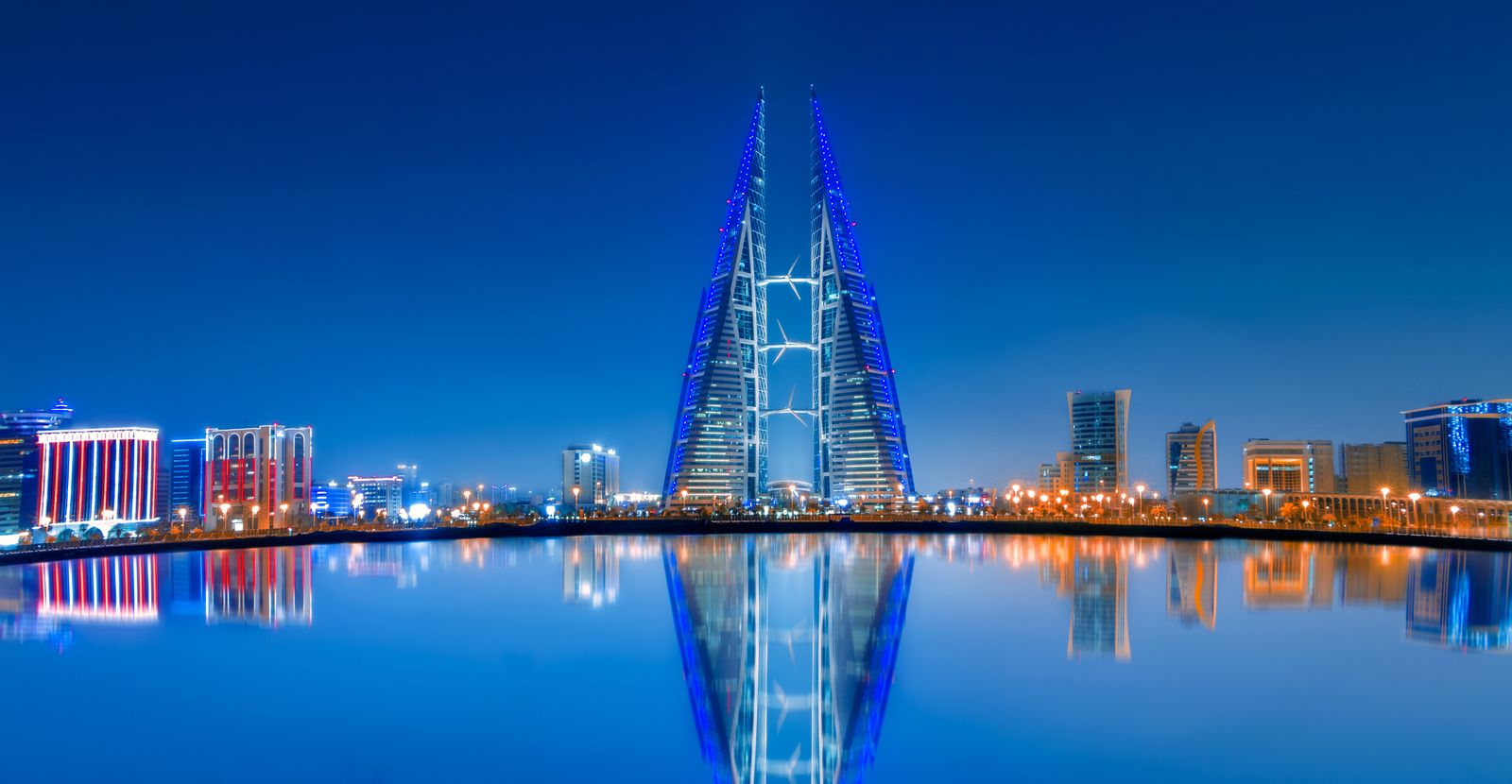
Bahrain
Pearl island between ancient Dilmun & the F1 circuit
Pearl island between ancient Dilmun & the F1 circuit
⚠️ Travel advisory: check before you go
In September 2026 the US raised its advice to “reconsider travel” for this region because of tensions involving Iran. Flights and tourism are operating normally, but airspace closures and cancellations can happen at short notice, so keep plans flexible and travel insurance in place.
Latest official advice: UK FCDO · US State Department · Reviewed September 2026
Bahrain is a small island kingdom in the Arabian Gulf — the most liberal and open of the Gulf states — with a history stretching back to the ancient Dilmun civilisation that once traded between Mesopotamia and the Indus Valley. The Bahrain National Museum, Formula 1 Grand Prix circuit, pearl-diving heritage inscribed by UNESCO, tree-lined Manama corniche and a restaurant and nightlife scene that draws visitors from across the conservative Gulf make this a surprisingly cosmopolitan destination. The 25-kilometre King Fahd Causeway connects Bahrain to Saudi Arabia, making it a popular weekend escape.
The finest museum in the Gulf covers 6,000 years of Bahraini history, from the mysterious Dilmun civilisation through the pearl-diving era to modernity. The Dilmun burial mounds — over 170,000 ancient tumuli scattered across Bahrain’s landscape — are among the largest prehistoric burial complexes in the world.
A UNESCO World Heritage Site, this archaeological complex has been continuously occupied for 5,000 years — from the Dilmun era through Kassite, Assyrian, Greek and Portuguese periods. The Portuguese fort sitting atop the ancient mound commands views across the Gulf and the surrounding excavations.
A single 400-year-old mesquite tree grows alone in the middle of Bahrain’s desert with no visible water source — a mystery and symbol that draws visitors from across the Gulf. The nearest settlement is kilometres away; its survival has never been fully explained and has given it an almost mythological status.
Bahrain’s old souk in central Manama retains its character with goldsmiths, spice merchants and fabric sellers. Muharraq island, the former capital, preserves traditional Bahraini coral-stone merchant houses and the pearling quarter inscribed by UNESCO — a well-preserved echo of the pre-oil Gulf economy.
Spiced rice with fish (often hammour, a local grouper), chicken or lamb — the national dish.
Bahraini-style chicken shawarma with garlic sauce and pickles in a thin flatbread — the street food served on the Adliya and Diplomatic Area restaurant strip.
A gelatinous saffron, cardamom and rose-water sweet made with cornflour and ghee — the traditional Bahraini sweet sold by weight at the Manama Souq.
Sweet rice cooked with date syrup or sugar and cardamom, traditionally served with grilled fish.
Bahrain International (BAH) is the hub. Gulf Air is the national carrier. Bahrain is connected to Saudi Arabia by the 25km King Fahd Causeway — the busiest land border crossing in the Gulf. For trip planning, see the official Bahrain tourism portal.
Gulf Air flies direct from Heathrow to Bahrain in 7 hours. Bahrain is often overlooked compared to Dubai — fares are typically lower and the airport is less congested.
Dubai is 1 hour by air or 3 hours by road via the King Fahd Causeway (Bahrain–Saudi Arabia) and on to the UAE. Many visitors combine Bahrain with a UAE circuit.
Bahrain is entirely driveable — the country is 55km from north to south. Car hire at BAH from BHD 10–20/day; roads are excellent and signposted in English.
Bahrain is small enough that a single day of car hire can cover the Fort, Tree of Life, Al Areen and the Pearling Trail. The island is 30km × 15km at its widest.
November to March is the prime window — comfortable temperatures (18–25°C), the souqs and Formula 1 circuit in the best conditions. The Bahrain Grand Prix (usually March) makes that month particularly lively. April to October is very hot (35–43°C) with high humidity.
📅 Bahrain is in its best season in January, February, March, November, December. See where else is good to go in those months, or browse where to go by month.
Bahrain is the most affordable Gulf destination — significantly cheaper than the UAE or Qatar, with alcohol available and reasonably priced, and a compact size that reduces transport costs.
Machboos — the spiced rice and meat dish shared across the Gulf — is Bahrain’s national food.
Bahrain’s Adliya restaurant district offers one of the most diverse and affordable dining scenes in the Gulf.
The Four Seasons Bahrain Bay (built on an artificial island connected to Manama by a bridge) is the finest hotel in Bahrain.
Manama for two days, Bahrain Fort and the Tree of Life for one, Al Areen Wildlife Park for one, Muharraq for one, and a day trip to the Formula 1 circuit or the pearling sites for the final two. Bahrain is compact and easily covered in 4–5 days.
The Manama Souq (the oldest trading district in Bahrain, gold, spices, textiles, the smell of oud incense at every corner) and the Bab al-Bahrain gateway — the British-built entrance arch to the old merchant quarter, now a National Museum annex. The Bahrain National Museum (the finest in the Gulf for archaeology) for the Dilmun civilisation collection.
The Dilmun civilisation (3000–800 BCE) was one of the ancient world’s most important trading intermediaries, connecting Mesopotamia with the Indus Valley. The objects from the Bahrain Museum — stamp seals, copper tools, Indus pottery — represent a trading culture that shaped the ancient Gulf world.
Bahrain Fort (Qal’at al-Bahrain, UNESCO World Heritage Site) — a 16th-century Portuguese fort built on top of 4,000 years of Dilmun, Kassite, and Tylos occupation, with the Gulf visible on three sides. The Tree of Life (Shajarat al-Hayat): a 400-year-old mesquite tree growing alone in the desert with no apparent water source, 2km from the nearest settlement.
The Tree of Life is a single Prosopis cineraria tree growing in open desert, 9.75m tall, drawing water from an unknown underground source. Carbon dating suggests it has grown here since 1582. Bahrainis regard it as miraculous; geologists attribute it to a deep aquifer.
20 min from Manama by bridge. Muharraq (UNESCO World Heritage Site, the Pearling Path) — a trail of 17 buildings along a 3.5km route: the merchant houses of pearl traders who made Bahrain the richest economy in the Gulf before oil, the oyster beds offshore, and the Bu Mahir Fort at the southern tip.
The pearl diving industry employed virtually the entire male population of Bahrain until the 1930s, when Japanese cultured pearls collapsed the market overnight. Bahrain’s natural pearls were the finest in the world — the Jirft formation beds produced a specific colour and lustre unmatched elsewhere.
45 min from Manama. The Bahrain International Circuit (host of the Bahrain Grand Prix since 2004, the first Formula 1 race in the Middle East) can be visited on non-race weekends — track tours and driving experiences. The circuit is lit for night races (since 2014) and the desert setting makes it one of the most visually distinctive in F1.
The Bahrain Grand Prix is held at the Sakhir Circuit, built in 2004 in the middle of the desert. The 2020 Bahrain GP featured one of the most dramatic crashes in modern F1 history — Romain Grosjean’s fireball at the first corner, from which he walked away after 28 seconds in the burning wreck.
30 min from Manama. Al Areen Wildlife Park — the only nature reserve in Bahrain, 8km², home to Arabian oryx (reintroduced after extinction in the wild), Arabian gazelle, sand gazelle, ostrich and flamingos on the salt flats adjacent to the reserve. The Arabian oryx — the national animal of Bahrain — was hunted to extinction in the wild by 1972.
The Arabian oryx (Oryx leucoryx) was extinct in the wild by 1972, hunted out of existence across its entire range. A captive breeding programme using zoo stock and private herds (the “World Herd”) produced enough animals to reintroduce to the wild in Oman in 1982. Bahrain’s Al Areen herd dates from the same programme.
Bahrain has the largest artificial reef in the world — 100 retired London double-decker buses, a Boeing 747 and numerous other structures sunk in the shallow Gulf waters, creating a habitat for reef fish in a sea that was naturally relatively barren. Snorkelling and PADI diving from Manama marina operators.
The London bus reef (70 Leyland double-decker buses sunk in 2019–2021) is one of the most unusual dive sites in the world — the buses are already encrusted with coral and barnacles, and Gulf grouper and snapper use them as shelter. Visibility is 10–20m on good days.
The Adliya Arts District (the creative quarter of Manama, converted warehouses with galleries, the finest coffee shops in Bahrain, street art) for the morning. Bahrain International Airport (BAH) for connections — Gulf Air is the national carrier and Bahrain is a major transit hub for Indian Subcontinent routes.
Adliya is Bahrain’s most international neighbourhood — a grid of 1970s houses converted to restaurants from 50 different cuisines, reflecting Bahrain’s demographics (only 48% of residents are Bahraini nationals; Indians, Pakistanis, Filipinos and Bangladeshis form the majority).
Many nationalities receive a free visa on arrival or can apply online. The process is among the most straightforward in the Gulf.
Most nationalities receive a visa on arrival at Bahrain International Airport (BAH) or can apply for an e-visa online. One of the most accessible Gulf states for tourists.
The King Fahd Causeway connects Bahrain to Saudi Arabia — a popular weekend destination for Saudis. The bridge and crossing are themselves a spectacle.
While more liberal than Saudi Arabia, dress conservatively outside hotels and tourist areas. Alcohol available in licensed hotel venues only.
The BHD is pegged to USD at roughly 2.65 BHD = 1 USD. Cards widely accepted; ATMs everywhere.
Available in licensed hotels and restaurants — more accessible than most Gulf neighbours.
The Bahrain Grand Prix (March) brings tens of thousands of visitors; book accommodation many months ahead if visiting during race week.
Taxis and Uber are the main options; the island is small enough that most sights are within 30 minutes of Manama.
Quick answers to the questions people most often ask before visiting Bahrain.
November to March is the prime window — comfortable temperatures (18–25°C), the souqs and Formula 1 circuit in the best conditions. The Bahrain Grand Prix (usually March) makes that month particularly lively.
Bahrain International (BAH) is the hub. Gulf Air is the national carrier. Bahrain is connected to Saudi Arabia by the 25km King Fahd Causeway — the busiest land border crossing in the Gulf.
Expect roughly BHD 15–25 a day on a budget and BHD 45–80 mid-range, or BHD 150+ for a more luxurious trip, per person and excluding flights.
Bahrain uses the Bahraini Dinar (BHD).
In September 2026 the US raised its advice to “reconsider travel” for this region because of tensions involving Iran. Flights and tourism are operating normally, but airspace closures and cancellations can happen at short notice, so keep plans flexible and travel insurance in place. Always check current official travel advice before booking.
— Operates throughout Bahrain and is the most reliable transport option for visitors.
FreeDownload offline maps before you travel so navigation works without mobile data — essential for walking, driving and finding local spots.
FreePoint your camera at menus, signs or street text for instant translation. Download the language pack offline before you arrive for full use without data.
FreeCapital Manama, heritage Muharraq, the ancient Bahrain Fort, the desert Tree of Life and the Amwaj Islands — the many sides of Bahrain.
Bahrain sits within easy reach of several other destinations — each with a completely different character.


