GF
French Guiana
Amazon rainforest, rocket launches & Devil’s Island penal colony
Amazon rainforest, rocket launches & Devil’s Island penal colony
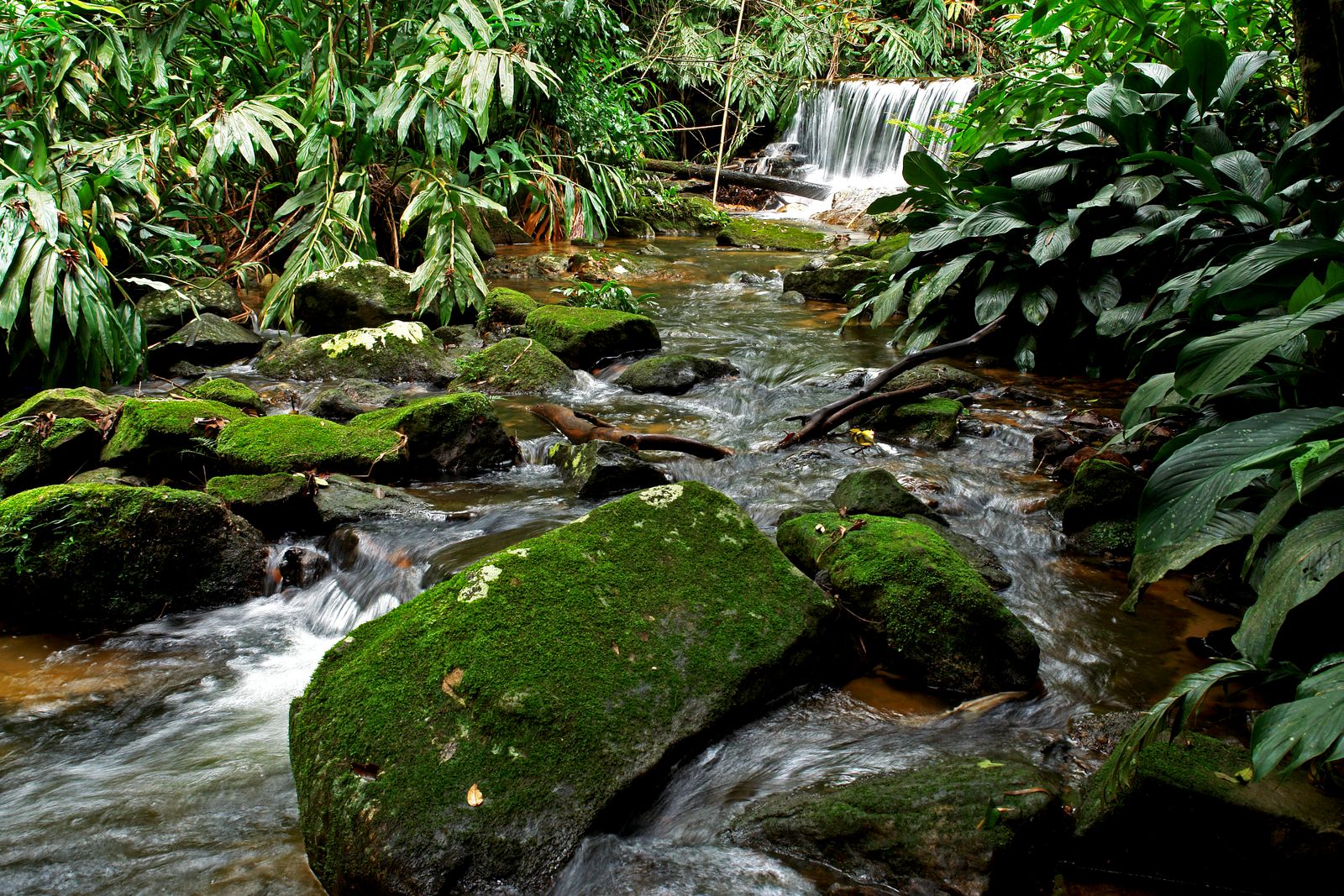
French Guiana is South America’s last remaining colony — an overseas department of France on the northeastern coast of South America, where the European Union’s borders technically extend to the Amazon jungle, and Ariane rockets launch from the Guiana Space Centre at Kourou in one of the world’s most dissonant juxtapositions of space-age technology and primeval rainforest. The interior is 90% intact Amazon rainforest, home to jaguars, tapirs, giant river otters and one of the highest bird densities in South America. Devil’s Island — the infamous French penal colony where Dreyfus was imprisoned and from which Henri Charrière (Papillon) escaped — is the most extraordinary historical site on the continent, accessible by boat from Kourou.
The Salvation Islands — Royale, Saint-Joseph and Devil’s Island — were France’s notorious tropical penal colony from 1852 to 1953, where political prisoners including Alfred Dreyfus were sent to die. The ruins of prisons, solitary confinement cells and the administrative buildings are preserved on Royale Island; Devil’s Island itself (Dreyfus’s exile) can be seen from the boat. Henri Charrière (Papillon) described his escape in his famous memoir. The islands have extraordinary wildlife and some of the best snorkelling in French Guiana.
The Ariane rocket launch facility is one of the world’s most active space ports — Ariane 5 and 6, Soyuz and Vega rockets launch from Kourou into geostationary orbit. The proximity of the equator (5° N) gives maximum efficiency for rocket launches. The launch viewing area (2km from the pad) is accessible to the public and watching an Ariane launch at night — illuminating the jungle in a pillar of fire — is extraordinary.
The Parc Amazonien de Guyane — one of Europe’s largest national parks (38,000 sq km of intact Amazon rainforest) — protects pristine forest inhabited by Amerindian (Wayampi and Teko) communities, jaguars, tapirs, giant anteaters and extraordinary birdlife. Access is by dugout canoe up the Oyapock or Maroni rivers from the coastal towns.
French Guiana (Wikipedia) →a rich stew of palm nut oil, salted meat, smoked fish, crab and vegetables — a Maroon and Creole tradition served communally at Easter) is the defining dish.
fresh chilli-based hot sauce) on everything is non-negotiable.
Steamed or fried dumplings from French Guiana’s substantial Hmong and Chinese communities — the Hmong settled here after the Vietnam War and their food culture (dumplings, noodles, stir-fries) has become part of the everyday Cayenne street food landscape.
Salt cod fritters — the French Caribbean standard appetiser, served here with Brazilian cachaca-based cocktails and Amazonian fruit juices. The cultural fusion of French Guiana on a single plate.
reflect French Guiana’s extraordinary diversity. Fresh Amazon river fish — piranha soup, pacu and matrinchã — are outstanding at riverside restaurants.
Cayenne Félix Ehoué Airport (CAY) is the gateway. Air France and Corsair serve the main routes. As French territory, there are no visa requirements for EU citizens. For trip planning, see the official French Guiana tourism portal.
💡 Air France (8h direct from Paris-CDG, daily) is the primary connection. EU citizens do not need a visa — French Guiana is French territory. Corsair offers cheaper Paris alternatives.
💡 Overland from Suriname (3h via the Saint-Laurent ferry crossing) is the cheapest route from South America. Belém, Brazil (1h30) allows a French Guiana + Amazon Brazil combination.
💡 Car hire (€50–90/day) from Cayenne is the most practical transport for the coastal sites (Kourou, Awala-Yalimapo, Trésor Reserve). Saül requires a light aircraft (Air Guyane or chartered Cessna, 45 min, €80–130).
💡 French Guiana is long and narrow; the coastal strip (where all main towns and sites lie) is accessible by car in 2–3 hours end to end. The interior is accessible only by river pirogue, foot or light aircraft.
July to November is the main dry season — best wildlife viewing, most accessible jungle trails (27–30°C). February to April is the short dry season, also good. The rainy seasons (May–June and November–January) bring heavy daily downpours but the forest is lush and wildlife is active.
French Guiana uses the euro. It is expensive for South America — French cost of living on an Amazon frontier, with everything imported from France.
Colombo de poulet (chicken colombo — a curried chicken dish made with colombo spice — a Caribbean spice blend of cumin, coriander, turmeric, mustard and fenugreek brought to French Guiana by Indian indentured labourers in the)
Awara stew (bouillon d’awara — a ceremonial thick orange stew made from awara palm fruit (Astrocaryum vulgare), simmered with smoked pork, smoked fish, dried shrimp, eggplant and hot peppers for 8–12 hours — only made)
The Guiana Space Centre rocket launches (public viewing from 10km at Kourou for Ariane 5 and Vega launches, free when available &mdash)
Cayenne for one day, Îles du Salut for one, Kourou for one, Awala-Yalimapo for one, Trésor Reserve for one, Saül for one, Cayenne market for one. French Guiana — a piece of France in the Amazon — has the world’s most important leatherback turtle beach, the ESA spaceport and the most biodiverse national park in the European Union.
Cayenne — the capital of French Guiana (an overseas department of France — constitutionally part of France and the European Union, on the northeast coast of South America between Suriname and Brazil, 84,000km², 300,000 people) with the Place des Palmistes (the colonial palm-lined square with the Maison du Bagne — the penal colony museum, recording the history of the Devil’s Island prison system 1852–1953) and the remarkable Creole architecture of Cayenne’s old city.
💡 French Guiana is simultaneously part of France and of the Amazon Basin — it is the only place on earth where France (an EU member, using euros, part of the Schengen Area) shares a land border with Brazil. French Guiana has been a French overseas department since 1946, giving it the same constitutional status as Normandy or Brittany — its residents are French citizens, vote in French elections and use the euro. The Guyanese rainforest is protected French territory.
The Îles du Salut (the Salvation Islands — three small islands 15km offshore from Kourou: Royale (the main island with the best-preserved prison buildings), Saint-Joseph (the solitary confinement island) and Devil’s Island (Diable — the most famous, where political prisoners including Alfred Dreyfus were held — the most notorious penal colony of the 19th and 20th centuries, made famous by Henri Charrière’s autobiographical novel Papillon (1969)).
💡 The Îles du Salut penal colony (operated 1852–1953, holding approximately 80,000 prisoners over its 101-year operation, of whom approximately 70,000 died from disease, punishment or escape attempts) was the French equivalent of Siberia — a deliberate place of exile from which return was extremely rare. Alfred Dreyfus (the French army officer falsely convicted of treason in 1894 in the most famous miscarriage of justice in French history) was held on Devil’s Island for 4 years before his conviction was quashed.
Kourou (the town that hosts the Guiana Space Centre — Europe’s main spaceport, from which Ariane 5 and Vega rockets launch commercial and scientific satellites into orbit — guided tours available, the launch pad visible from the public viewpoint 10km away, and the rocket assembly building 7km² in floor area, the largest building in France by floor area) in a town of 26,000 people surrounded by Amazon rainforest.
💡 The Guiana Space Centre (Centre Spatial Guyanais — operated by CNES and ESA, in continuous operation since 1968) uses Kourou’s near-equatorial location (5.3°N latitude) to take maximum advantage of the earth’s rotational speed for launching satellites into geostationary orbit — rockets launched near the equator receive a 460m/s boost from the earth’s rotation that reduces fuel requirements significantly. The site is the primary launch facility for European space missions.
Awala-Yalimapo (a Galibi Amerindian village at the northwest tip of French Guiana — the Plage Les Hattes, the most important leatherback sea turtle nesting beach in the world: in the March–August nesting season, up to 60,000 leatherback females nest here, with peak nights in April–May seeing hundreds nesting simultaneously by moonlight — one of the most extraordinary wildlife spectacles in South America).
💡 Plage Les Hattes at Awala-Yalimapo holds approximately 50–60% of the entire global leatherback sea turtle population’s Atlantic nesting. In a good season, up to 60,000 individual females nest here between March and August — a total nesting effort that dwarfs any other leatherback beach in the world. The leatherback (Dermochelys coriacea) can dive to 1,280m and travel 20,000km between nesting and feeding grounds in the North Atlantic.
The Réserve Naturelle de Trésor (a rainforest reserve 90km from Cayenne on the Kaw Road — one of the most biodiverse stretches of Amazon rainforest accessible from a road, with jaguars, giant anteaters, tapirs, giant river otters, 700+ bird species and the Kaw Marshes (the largest freshwater marsh in the Guianas — black caiman, anaconda, horned screamers and hoatzin visible from a pirogue at dawn) as the highlight.
💡 French Guiana has the highest biodiversity per km² of any French territory — the 84,000km² Amazon rainforest contains approximately 1,000 bird species, 200 mammal species, 300 reptile and amphibian species and an estimated 5,000–8,000 plant species, most of which are also found in Amazonian Brazil. The Kaw Marshes (Marais de Kaw) are the only large freshwater wetland system in the Guiana Shield, providing habitat for species not found elsewhere in French Guiana.
Saül (a small village at 200m in the interior highlands of French Guiana — accessible only by small aircraft or 4WD track from the coast, surrounded by the Amazon-Guiana rainforest, the centre of a network of jungle trails to waterfalls, river crossings and the highest concentrations of jaguar in French Guiana — the most ecotourism-oriented destination in the territory, with basic guesthouses and certified local guides).
💡 Saül is located at the edge of the Guiana Amazonian Park — the largest national park in France and the EU at 3.4 million hectares, larger than Belgium, with some of the least-disturbed Amazon rainforest in the world. The park has no roads and can only be entered by boat, foot or helicopter; Saül is the main access point for organised trekking into the southern wilderness.
The Marché de Cayenne (the most authentic and biodiverse food market in South America — Creole, Hmong (Laotian refugees from the 1970s), Amerindian, Brazilian and French food traditions sold side by side, with the finest Guianese specialities: bouillon d’awara (a thick, orange-coloured stew of awara palm fruit with smoked meats and fish — the most important ceremonial dish of the Creole Easter tradition) and the fresh forest fruits unknown in Europe). Fly from Cayenne (CAY).
💡 The Hmong community of French Guiana (approximately 2,000 Laotian Hmong refugees resettled by France after the Vietnam War in 1975, now living primarily in the village of Cacao 75km from Cayenne) are the dominant market gardeners of French Guiana, supplying 90% of the territory’s fresh vegetables. The Sunday market at Cacao (a Hmong village of 1,500 people in the Amazon forest) is the finest artisanal and food market in French Guiana.
French/EU territory — Schengen visa required for nationalities that need Schengen. UK, US, Australian citizens enter visa-free.
Direct from Paris (9h), Brazil and Suriname.
French Guiana is an overseas department of France and uses the Euro. Everything is imported and expensive.
The Guïane Space Centre (CSG) at Kourou is the European Space Agency’s primary launch facility. Free guided tours when launches are not imminent; launch viewing from nearby permitted.
Check the Arianespace schedule before visiting — launches happen several times a year and the public viewing is free.
Point your camera at menus, signs or street text for instant translation. Download the language pack offline before you arrive for full use without data.
FreeReal-time and offline exchange rates for all world currencies — converts prices instantly so you always know what you are paying in your home currency.
FreeFind and book hotels, guesthouses and apartments with free cancellation on most rates — one of the widest selections of accommodation worldwide.
FreeBrowse millions of traveller reviews for restaurants, attractions and hotels — helps identify the best local spots and avoid tourist traps.
FreeFrench Guiana sits within easy reach of several other destinations — each with a completely different character.