TH
Bangkok
The City of Angels
The City of Angels
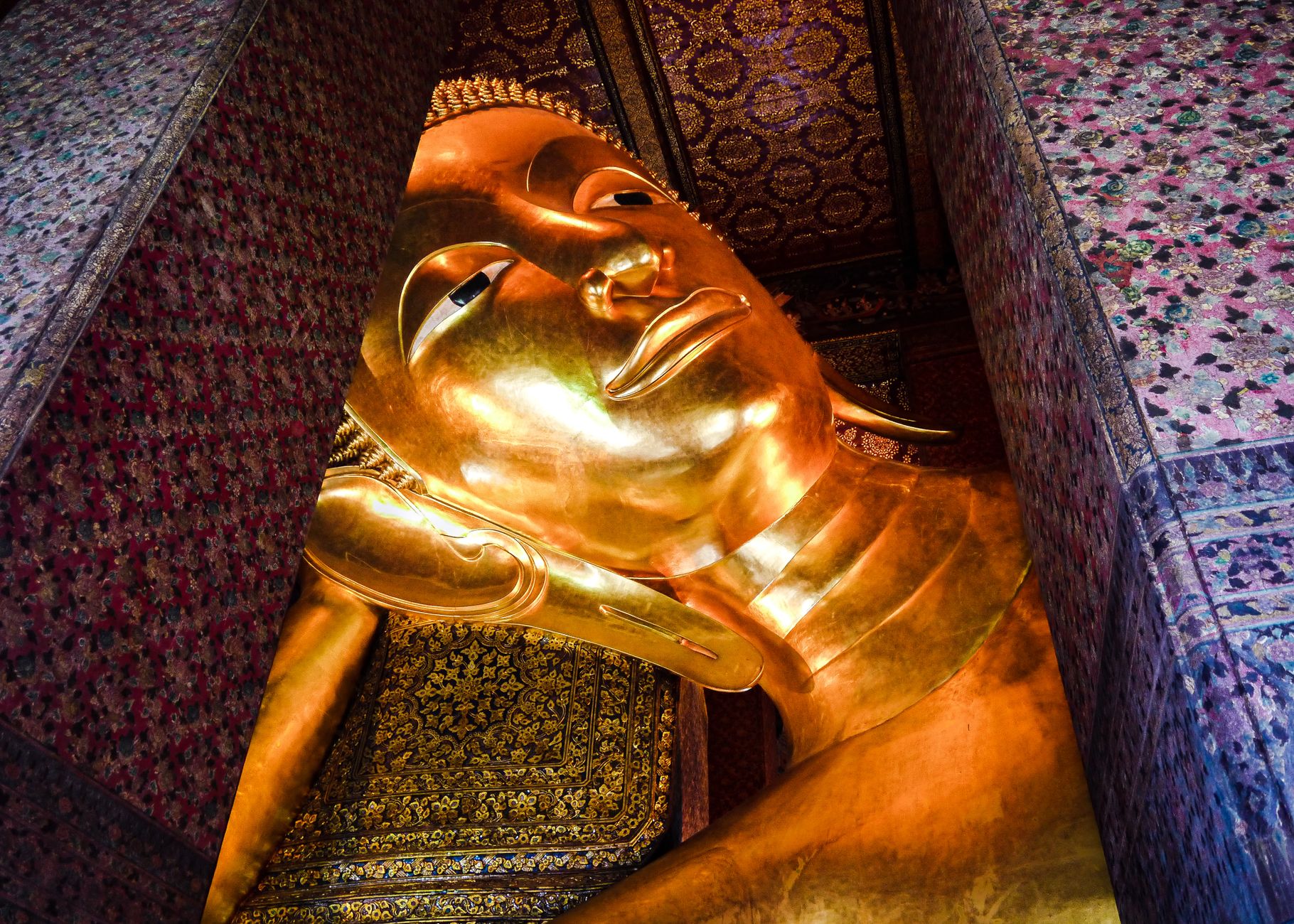
Wat Pho (the Temple of the Reclining Buddha; ฿200 entry; BTS Saphan Taksin then Chao Phraya boat to Tha Tien pier; open daily 8am–6:30pm) is the oldest and largest temple complex in Bangkok, predating the city itself: founded in the 16th century and significantly expanded by Rama I after 1782. The main attraction is the Reclining Buddha (46m long, 15m high, gold-leaf covered, mother-of-pearl inlaid feet depicting the 108 characteristics of Buddha) housed in its own building. Wat Pho is also the traditional centre of Thai massage — the temple school (on site, booking available) offers 1-hour traditional massages from ฿420. Allow 1.5–2 hours.
Wat Pho (watarun.net; 200 THB; 8am–6:30pm) has the finest collection of reclining Buddhas in Thailand — the main one is 46 metres long. The traditional massage school (also at Wat Pho) is the most reputable in Bangkok; 1-hour traditional massage from 420 THB. Remove shoes before entering any temple.

The Grand Palace complex (฿500 entry; includes Wat Phra Kaew and the Queen Sirikit Museum of Textiles; Tha Chang pier by boat; open daily 8:30am–3:30pm) is the most visited site in Thailand: the former royal residence (construction began 1782, expanded continuously until the 20th century) and the Temple of the Emerald Buddha (Wat Phra Kaew), which contains the most sacred Buddha image in Thailand (a 66cm Emerald Buddha, actually made of nephrite jade, dating to the 15th century). The complex is extremely crowded; arrive at opening (8:30am) or use the combined ticket to enter via the Queen Sirikit Museum which has a separate shorter queue. Dress code strictly enforced: shoulders and knees covered — sarongs available free at the gate.
The Grand Palace complex (royalgrandpalace.th; 500 THB; 8:30am–3:30pm; dress code enforced — sarongs available at the gate for 200 THB deposit) is the most visited site in Thailand. Arrive at 8:30am opening; the queue builds quickly. The Emerald Buddha in Wat Phra Kaew is the most sacred image in Thailand.
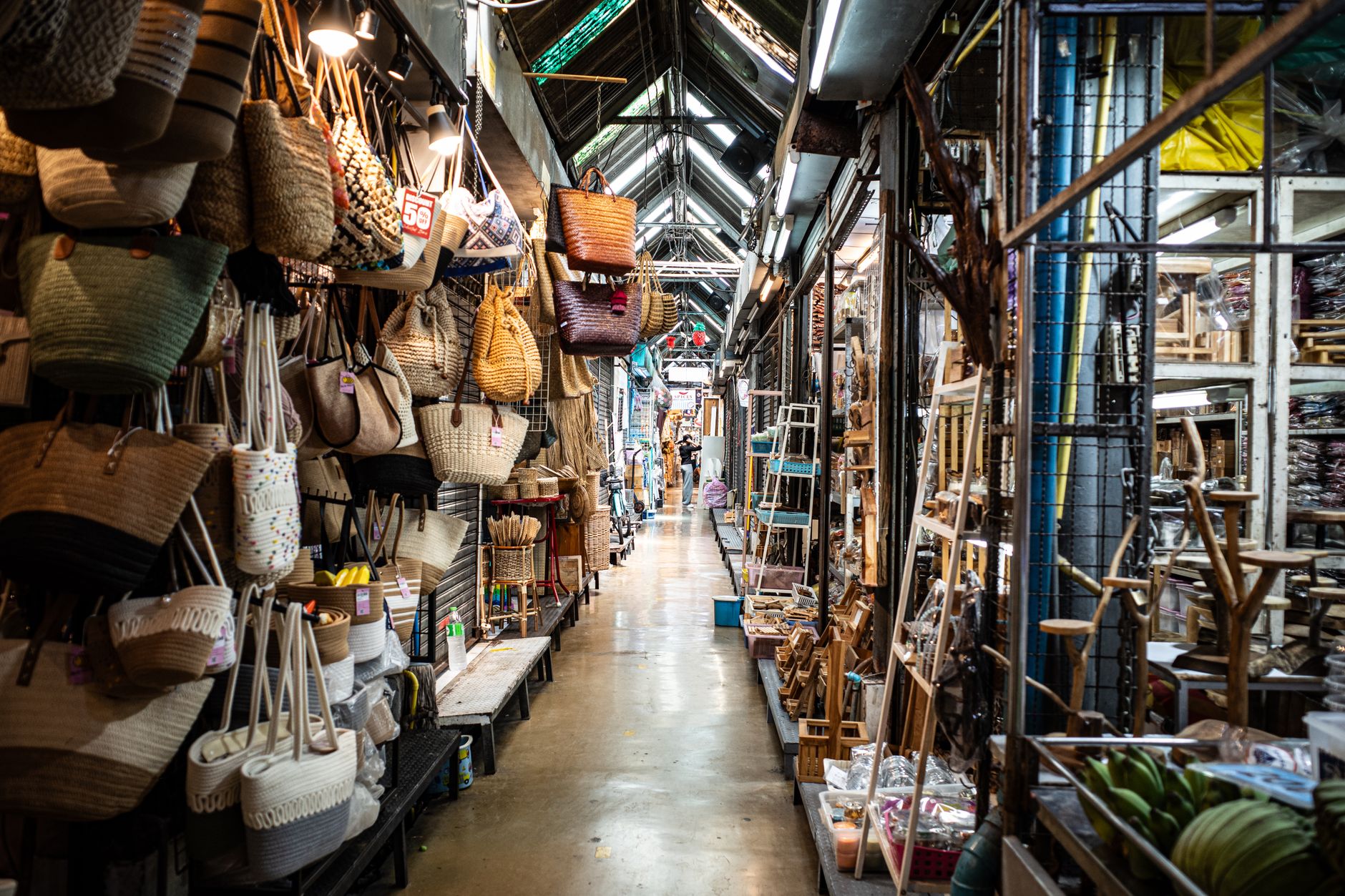
Chatuchak Market (JJ Market; free entry; BTS Mo Chit or MRT Chatuchak Park; open Saturday–Sunday 9am–6pm) is the largest weekend market in the world: 35 acres, 15,000 stalls organised into 27 sections, 200,000 visitors per weekend. The sections cover antiques, clothing, housewares, plants, art, street food and live animals (the live animal section is controversial). The best sections: Section 2–4 (antiques, vintage clothing, ceramics), Section 26 (food — the best market eating in Bangkok). Come before 11am before the heat and crowds peak; the layout is confusing without the free map available at the entrance.
Chatuchak Market (JJ Market; free to browse; Sat–Sun 9am–6pm; 8,000+ stalls; Mo Chit BTS or Chatuchak Park MRT) is the largest weekend market in the world. Come with a plan by zone: Section 2 for antiques; Section 8 for homeware; Section 26 for clothing. Arrive by 9am before the heat builds.

The Chao Phraya Express Boat (฿15–40 depending on the line; piers at most major landmarks) is the fastest transport between the Grand Palace, Chinatown, the Silom business district and the shopping malls of the Asiatique riverfront. The river at night — the illuminated wat spires and the Rama VIII Bridge reflected in the brown water, the dinner cruise boats with Thai classical dance performances — is the most atmospheric version of Bangkok. The floating markets (Damnoen Saduak, 1.5h by road; Amphawa, 2h; both best on weekends) are heavily touristic but photogenic and genuinely operational.
The Chao Phraya Express Boat (15–30 THB per stop; hourly; the main river transport system) connects all the major riverside wats at a fraction of the longtail boat tour price. The Damnoen Saduak floating market (100km south; organised tour from 600 THB) and the Amphawa floating market (80km south; weekends; free to browse; cheaper to reach) are the two options.
Bangkok has been ranked the world’s best street food city for 15 consecutive years by multiple travel publications, and the ranking is accurate. The correct introduction: pad thai from a street wok (฿50–80), tom yum goong (the spicy shrimp soup) at a Chinatown corner restaurant, mango sticky rice from a market stall (฿60–80), and a bag of fresh-cut fruit from a street cart (฿20). Yaowarat Road (Chinatown; most lively after 6pm) is the best single street for food in Bangkok: shark fin soup, roasted duck, fresh oyster omelettes and durian stands that operate well past midnight. The Or Tor Kor Market (near Chatuchak; covered, air-conditioned, upscale) is the finest fresh produce market in Thailand.
For serious dining: Gaggan Anand (Modern Indian-Thai progressive cuisine, consistently Asia’s top restaurant by the Asia’s 50 Best Restaurants list), Le Du (Chef Thitid Tassanakajohn, contemporary Thai using indigenous ingredients, typically €1 Michelin star), and Bo.lan (traditional Thai tasting menu from a husband-and-wife team, James Beard Award nominees) represent the finest end of Bangkok’s Michelin-starred scene.
The BTS Skytrain (two lines: Sukhumvit/On Nut to Mo Chit; Silom/National Stadium to Wongwian Yai; ฿16–59/ride; Rabbit Card for frequent use) and the MRT Metro (Blue Line, ฿16–42/ride) are the fastest way across the city and the only reliable way to predict journey times. Grab is essential for any journey not on the rail network: always use the app rather than hailing a street taxi (overcharging of tourists is the norm for street hails). The Chao Phraya Express Boat (฿15–40, Orange and Blue Flag lines) connects the river landmarks faster than road traffic. Tuk-tuks are for short distances only: negotiate a firm price before boarding and ignore any driver who offers a “free tour” (these lead to gem shops where commissions are earned).
Nov–Feb is the cool and dry season — the best time to visit with manageable heat (25–32°C) and clear skies. Mar–May is the hottest period (35–40°C) and the least comfortable for sightseeing. Jun–Oct is monsoon season: daily rain (usually afternoon thunderstorms rather than all-day downpours) with lower prices and fewer tourists.
Bangkok is one of the best-value major cities in the world at budget and mid-range. Street food is exceptional and extremely cheap; the Michelin-starred scene is excellent value by global standards. Per person per day.
The Grand Palace (฿500) and Wat Pho (฿200) combined is the main one-off cost. Street food breakfast and lunch can be ฿100–200 total. Chang beer at a Chinatown stall: ฿60.
Bangkok mid-range delivers exceptional value: a 4-star hotel on Sukhumvit costs ฿1,500–2,500/night and a proper Thai restaurant meal runs ฿400–800 per person with drinks.
Gaggan Anand (the India-born Bangkok chef who held the Asia’s 50 Best No.1 spot for 7 years; now in a new iteration; ฿4,000–6,000 per person) is one of the most innovative restaurants in Asia.
Three days covers the Grand Palace, the river temples, Chatuchak and a Chinatown night out.
Chao Phraya boat to Tha Chang pier (arrive Grand Palace at 8:30am opening). Grand Palace and Wat Phra Kaew (฿500; 2h). Walk to Wat Pho for the Reclining Buddha and a 1-hour traditional massage (฿420). Boat back downriver to the Asiatique night market for dinner (BTS Saphan Taksin, free shuttle boat). Rooftop bar: Sky Bar at Lebua for sunset (smart casual, pre-book online).
Grand Palace at 8:30am (arrive at opening; 500 THB; dress code enforced). Wat Pho across the road (200 THB; reclining Buddha; traditional massage). Chao Phraya Express Boat from Tha Tien pier north to Khao San Road (20 THB; 20 min). Khao San Road for street food in the evening.
BTS to Mo Chit: Chatuchak Weekend Market (Saturday or Sunday; arrive before 10am; 3–4h; best sections are 2–4 for antiques and Section 26 for food). Lunch at the market. Return to hotel, rest through midday heat. Chinatown (Yaowarat Road) from 6pm: walk from MRT Wat Mangkon, eat from street stalls — roast duck, oyster omelettes, fresh seafood. Back by midnight.
Chatuchak Market (MRT to Chatuchak Park; 9am–11am before the heat; 8,000 stalls). Chinatown (Yaowarat Road; MRT to Wat Mangkon) for the evening: the seafood stalls on the main street and the side-street dim sum are the two best cheap eating options in Bangkok.
Train from Hua Lamphong station (8am, 1.5h, ฿20) to Ayutthaya: the ancient capital of Thailand (1350–1767 AD), a UNESCO World Heritage Site with 400 temples spread across an island in the Chao Phraya river. Rent a bicycle at the station (฿50/day) and visit Wat Phra Si Sanphet, Wat Mahathat (the Buddha head in the tree roots) and Wat Chaiwatthanaram. Return to Bangkok by train in the late afternoon.
Train from Hua Lamphong station to Ayutthaya (2h; 15 THB; frequent; the former capital of Siam). The Ayutthaya Historical Park (50 THB; cycle rental at the station for 50 THB/day) has 3 major temple complexes within cycling distance. Return by train in the evening (last train around 7pm).
All Bangkok temples (wats) require covered shoulders and knees for entry.
Grab (the Southeast Asian Uber equivalent; book via app) prices are fixed, drivers are GPS-tracked and overcharging is impossible.
Yaowarat Road comes alive after 6pm when the street food stalls set up: roasted duck hanging in restaurant windows, fresh oyster omelettes fried on huge griddles, seafood by the kilo priced on ice.
Bangkok rooftop bars (Vertigo at the Banyan Tree, Sky Bar at Lebua, Octave at the Marriott) require smart casual dress and are best at sunset (6–7:30pm).
Wat Pho (the temple adjacent to the Grand Palace) houses the original school of traditional Thai massage.
Bangkok’s most persistent tourist scam: a friendly local (often well-dressed) tells you the Grand Palace is closed today for a special event, offers to show you a “lucky&rdquo.
The only reliable taxi/ride service in Bangkok: fixed prices, GPS-tracked, no overcharging. Also delivers food (GrabFood) and parcels. Install before arriving; set up payment in advance. Airport pickup: select the correct terminal door.
Free
Thailand’s leading restaurant review app: restaurant locations, menus in Thai and English, user reviews and the “Wongnai Elite” picks for street food. Better than Google Maps for finding specific Thai dishes in Bangkok.
Free
Download the Thai offline language pack before arriving. The camera translation function (point at a menu or sign; real-time translation) is essential at non-tourist restaurants and markets where no English text exists.
Free
Download Bangkok offline. The BTS/MRT overlay shows station connections; the Chao Phraya pier locations are the most useful offline feature when navigating between temple sites by boat.
Free
Quick answers to the questions travellers most often ask before visiting Bangkok.
The cool, dry season from November to February is the most comfortable. March to May is very hot, and the June-October monsoon brings heavy but often short downpours. Aim for November to February if you can.
Three to four days is enough for the Grand Palace and temples, the markets, a river trip, and a taste of the food and nightlife. Add more if you’re using the city as a base for day trips.
The BTS Skytrain and MRT metro are fast and beat the notorious traffic; Chao Phraya river boats are scenic and handy; taxis, tuk-tuks and the Grab app fill the gaps. Agree taxi and tuk-tuk fares before you set off.
Yes — it’s superb value, with world-famous street food for a few dollars, cheap transport and everything from hostels to grand hotels. It’s one of the best-value major cities anywhere.
Discover more of Thailand’s extraordinary destinations.
Planning a wider trip? Our Thailand travel guide covers getting there, costs, when to go and more.