KH
Siem Reap
Gateway to the Temples of Angkor
Gateway to the Temples of Angkor
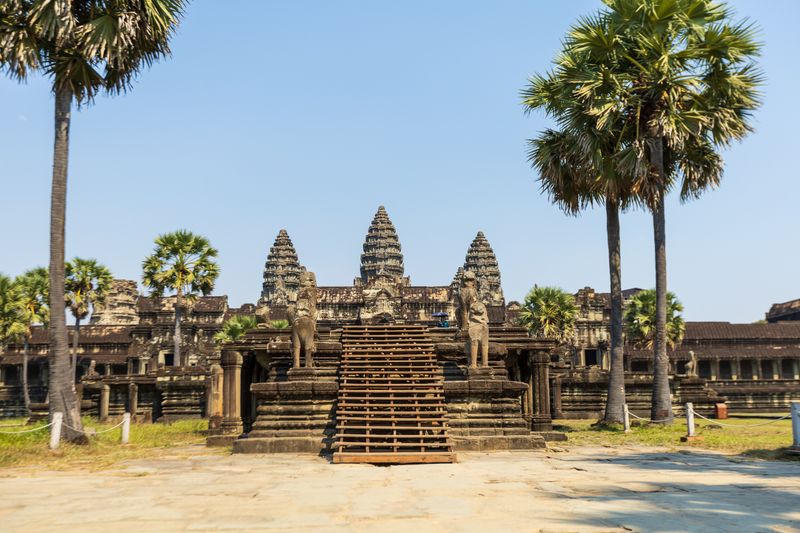
Angkor Wat ($37/day or $62/3-day pass; tickets at the Angkor Enterprise booth 5km from the main complex; sunrise entry from 5am) is a 12th-century Hindu-then-Buddhist temple complex built by Suryavarman II covering 1.6 square kilometres. The five towers, the 800-metre reflecting pool, and the 1,200 square metres of bas-relief carvings (depicting the Churning of the Cosmic Ocean and scenes from the Mahabharata) are the finest achievement of Khmer architecture.
💡 Sunrise at Angkor Wat (arrive at the reflecting pool by 5:15am) provides the classic silhouette shot. The inner sanctuary is less visited in the first hour after opening; explore it before the 9am tour group peak. Hire a tuk-tuk driver from your guesthouse the night before (from $15 for the full sunrise round trip).
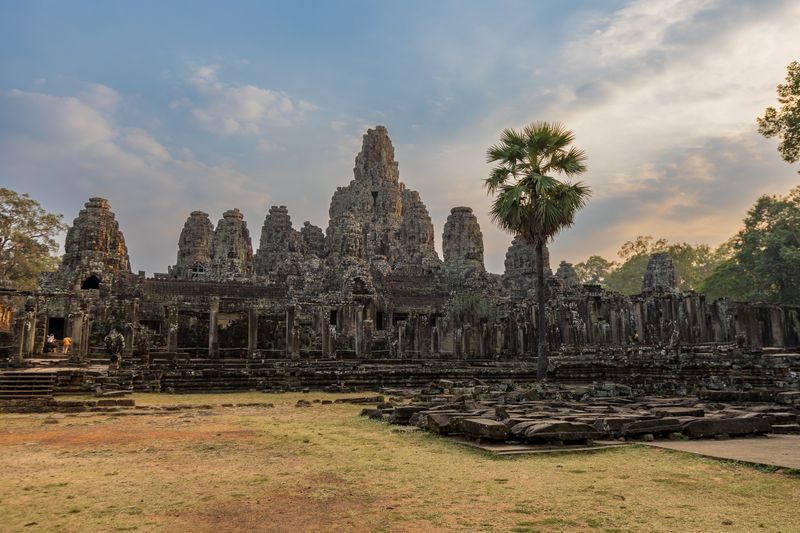
The Bayon (12th–13th century; within the Angkor Thom walled city complex; 8km north of Angkor Wat) features 216 carved stone faces on 54 towers — the serene, knowing smile of the Bodhisattva Lokesvara repeated endlessly in all directions. The effect at dawn is profoundly unsettling and wonderful. Angkor Thom itself is a 9-square-kilometre walled city containing the Bayon, Baphuon, Terrace of the Elephants, and the Royal Palace ruins.
💡 Go to the Bayon late afternoon (3–5pm) after the main crowd has departed and the low sun catches the faces from the west. The faces are at their most dramatic in raking light.
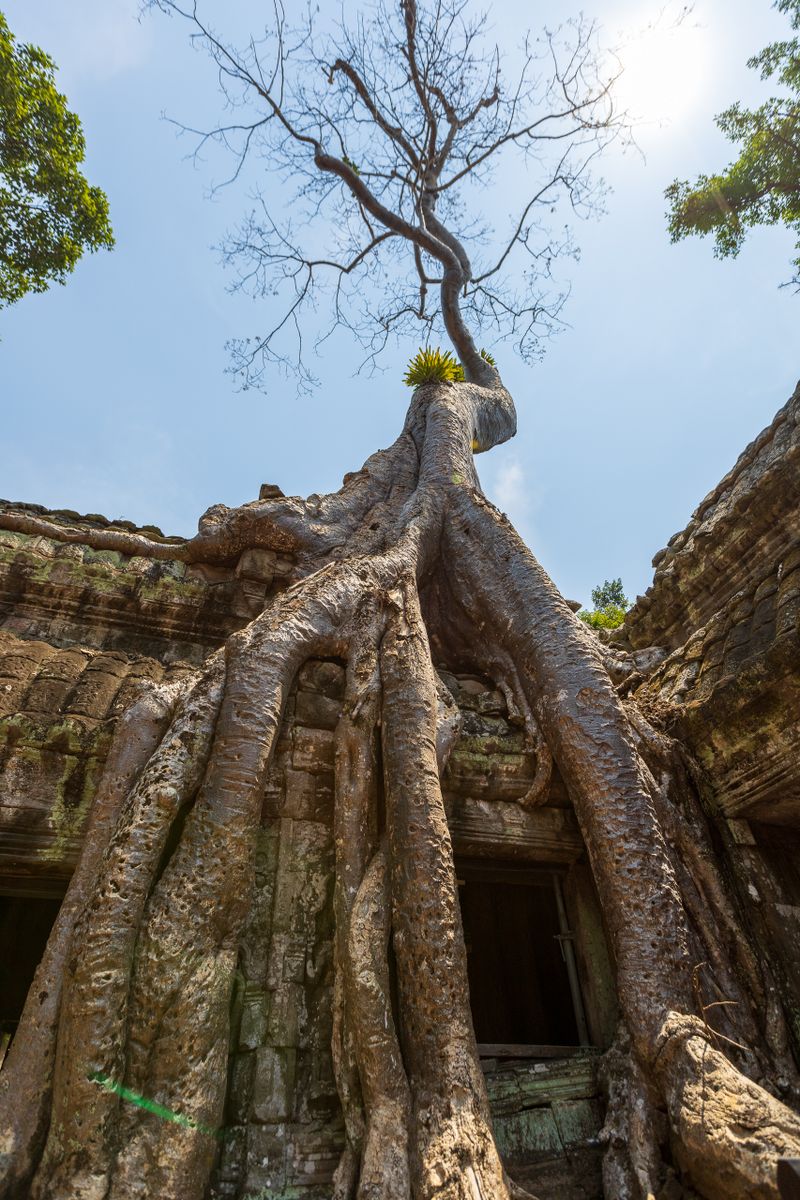
Ta Prohm (12th century; 1km east of Angkor Thom) is the temple where giant strangler figs and kapok trees have grown through and over the stone ruins for 600+ years. Tree roots wider than a person clasp towers and doorways in extraordinary organic architectures. Ta Prohm was used as a film location for Lara Croft: Tomb Raider (2001); the trees were protected during filming.
💡 Visit Ta Prohm either early (before 8:30am) or late (after 4pm) to avoid the most intense tourist density. The western entrance approach through the jungle — before you see the first tree roots — sets the atmosphere most effectively; go in the opposite direction from tour groups.
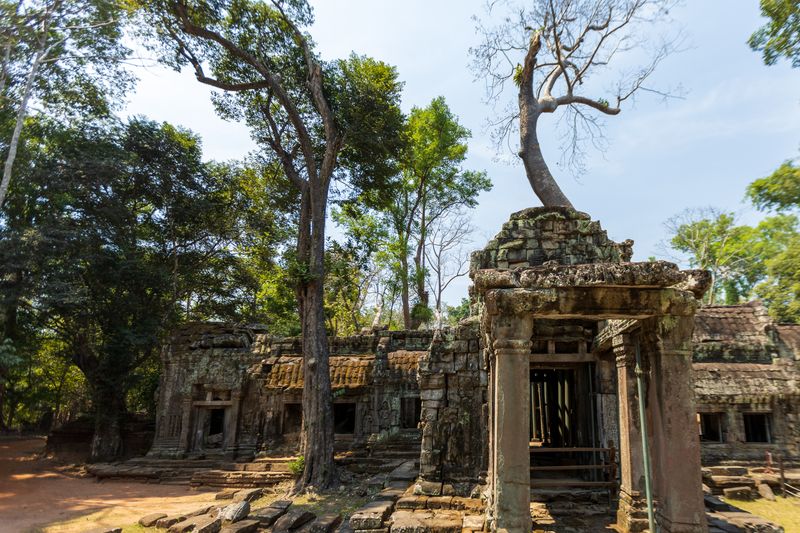
Beng Mealea (40km east of Siem Reap; by tuk-tuk $25–30 return; included in the Angkor pass; 1.5h each way) is a 12th-century temple complex entirely reclaimed by jungle — trees and roots cover 95% of the structure, and much of the interior is accessible only via boardwalks over collapsed stones. It is the Angkor complex at the state of maximum romantic decay, without restoration. Far fewer visitors than the main Angkor temples.
💡 Combine Beng Mealea with the Tonle Sap floating villages (30km south of Siem Reap) in a full-day excursion from Siem Reap. A tuk-tuk for both sites costs $30–40 for the day.
Siem Reap has the most developed restaurant scene in Cambodia. The Night Market and Old Market area have the best food at the lowest prices: amok (fish or chicken steamed in coconut milk and banana leaf; $4–6 at any Khmer restaurant), lok lak (stir-fried beef with lime-pepper sauce; $4–5), and num banh chok (Khmer noodles with green curry sauce; $1.50 from morning street stalls). Mahob (Wat Damnak area) is the finest contemporary Khmer fine-dining restaurant in the country. The Pub Street area has dozens of cheap bars ($1 beers at happy hour); the area behind the Old Market has better cocktail bars (Miss Wong, Picasso) for a calmer evening. Cambodian Angkor Beer ($0.50 at any restaurant) is the default local drink.
Tuk-tuk from hotel at 5am to Angkor Wat reflecting pool for sunrise (5:30am; 45-minute sunrise window). Inner sanctuary 6:30–8am (pre-crowd). Return to hotel for breakfast. 10am: Angkor Thom south gate (elephant terrace), then the Bayon (2h; the 216 stone faces). Lunch near the temples (restaurant north gate). Ta Prohm at 4pm (tree roots; afternoon light). Return to Siem Reap. Night Market or Old Market for dinner.
Full day tuk-tuk excursion (book driver night before; $30–35 for the day). Banteay Srei (38km north; 10th century; the finest pink sandstone carving in Angkor; most beautiful temple in the complex; 2h). Continue to Beng Mealea (jungle ruin; 40km east; 1.5h). Return via Tonle Sap floating village (optional; $15 boat ride). Dinner at Mahob or The Sugar Palm (authentic Khmer cuisine; $8–15 per person).
Tuk-tuk to Pre Rup for sunrise (a pyramid temple with the best sunrise view after Angkor Wat; fewer crowds). Breakfast. Rent bicycle and cycle the Petit Circuit independently (17km; all flat; stop at Preah Khan and Neak Pean). Return bikes by 3pm. Taxi to Phnom Bakheng (hill temple; 65m above the plain; sunset view across Angkor Wat and the Tonle Sap; arrive 1.5h before sunset; capacity limited to 300 visitors).
The Angkor complex receives 4,000+ visitors per day in peak season.
The Petit Circuit (main temples: Angkor Wat, Angkor Thom, Ta Prohm; 17km) is entirely cyclable on flat, well-maintained roads. Bicycle rental from Siem Reap town ($5–8/day; e-bikes $10–15).
A licensed Angkor guide (from $25–30/day; book through your hotel or the Angkor Enterprise office) provides the archaeological and historical context that makes the difference between seeing impressive stone and understanding what you are looking at.
The 1-day pass ($37) allows just enough time to see Angkor Wat, the Bayon, and Ta Prohm superficially.
Enforcement varies but most major temples (especially Angkor Wat itself) require covered shoulders and knees.
A good tuk-tuk driver is invaluable for Angkor: he knows the best sunrise positions, the minor temples worth stopping at, and when tour coaches are arriving at each site.
Southeast Asia’s dominant ride-hailing app. Fixed prices, no negotiation, available in Siem Reap and Phnom Penh. Book tuk-tuks or cars directly.
Free
Offline guide to all Angkor temples including opening hours, historical background, and GPS locations for navigation between the 300+ sites in the complex.
Free
Download Cambodia offline. Google Maps works with mobile data in Siem Reap; the offline map is essential for cycling the Angkor circuit without relying on a data connection.
Free
Essential for understanding the USD/KHR exchange in daily transactions. Cambodia’s dual currency system (USD for large purchases; KHR for change and small amounts) is confusing without a converter.
Free
Explore Cambodia’s remarkable destinations — from the ancient temples of Angkor to the rivers of Kampot and the islands of Koh Rong.