CL
Torres del Paine
Granite Towers and the End of the Earth
Granite Towers and the End of the Earth

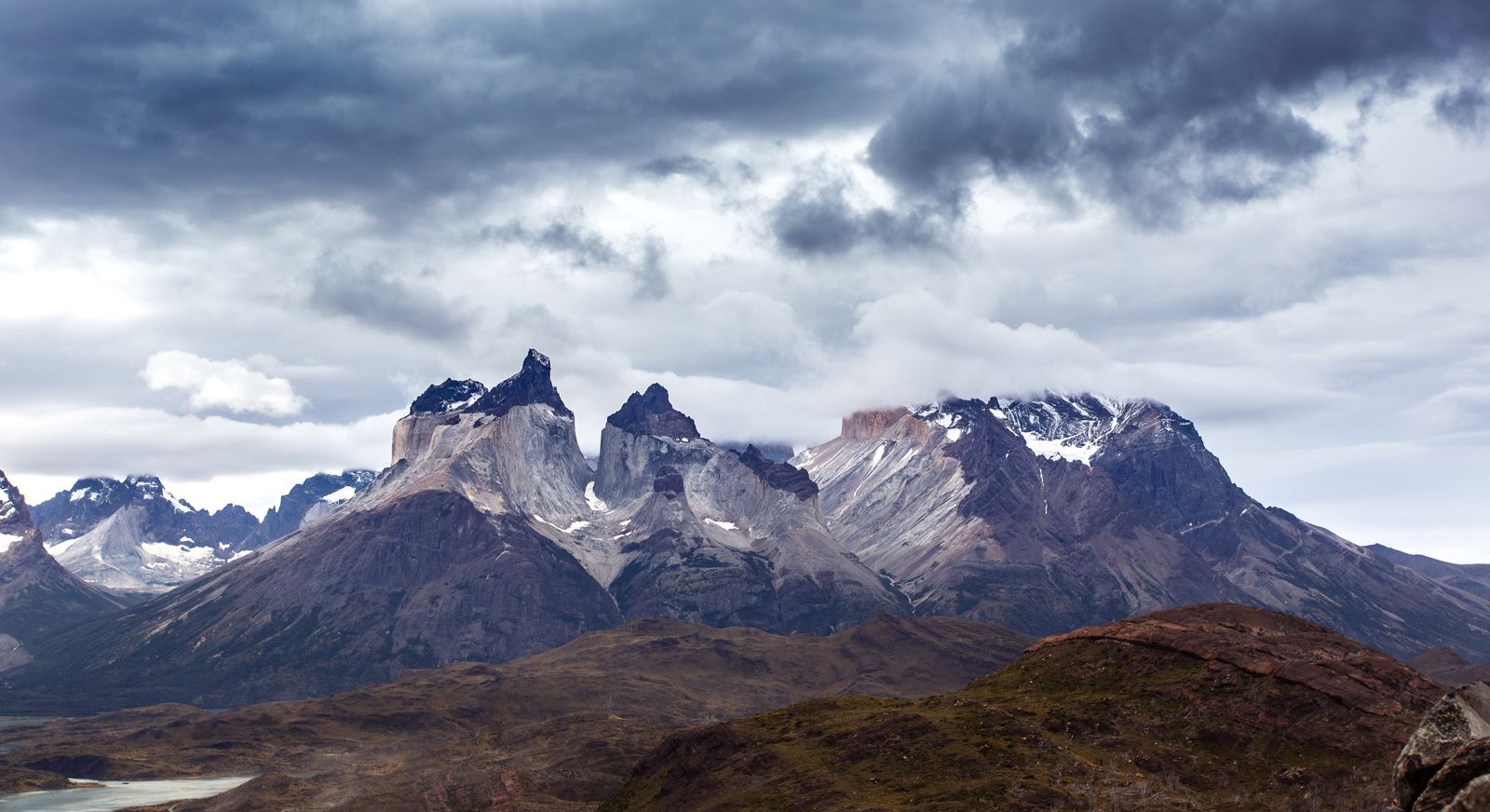
Los Torres (the three vertical granite spires; the central tower reaching 2,850m; the defining image of Patagonia; the viewpoint reached by a 4-hour hike from the Las Torres hotel on the park’s eastern edge) is the single most dramatic landscape in South America. The 19km return hike (8–9h return; +700m elevation gain; ends at a glacial lagoon directly below the vertical tower faces) is the most physically demanding but most rewarding single-day hike in the park.
💡 Hike to Los Torres in the very early morning (depart Las Torres hotel 5am; first catamaran or bus from Puerto Natales 6am; the towers catch sunrise light on the eastern face from 6:30–8am; the pink granite turns golden for approximately 1 hour). The lagoon at the base freezes in winter; in summer it is turquoise. This is the single most photographed natural landscape in Chile.
The W Trek (4–5 days; 75km; begins at Lago Pehóe catamaran dock on the west or Las Torres hotel on the east; refugios required throughout; booked 6–12 months in advance for peak season) covers: Day 1: Mirador Grey (Grey Glacier approach; 11km; the largest accessible glacier in southern Chile). Day 2: Valle del Francés (the suspended Francés glacier valley; 24km; condors overhead; the most dramatic valley in the park). Day 3: transfer to Las Torres. Day 4: Los Torres sunrise hike. A guide is not required but a GPS device is recommended for the first-time trekker.
💡 Book the W Trek refugio accommodation at vertice.com.cl and lastorres.com a minimum of 6 months ahead for December–January. The W route from west to east (starting at the Grey Glacier end) builds to the climax of Los Torres on the final day. Bring poles for the Valle del Francés descent; the trail is steep and uneven on the east side.
Grey Glacier (12km long; a tongue of the Southern Patagonian Ice Field — the third-largest freshwater reserve on earth; visible from the Mirador Grey viewpoint on Day 1 of the W Trek or by boat from Hotel Lago Grey; boat tours CLP 45,000) is one of the most accessible large glaciers in South America. The boat tour (Hotel Lago Grey; 1h; passes within 500m of the calving face; the turquoise-and-white ice wall rises 30m above the lake) is the most dramatic ice experience in the park without the full W Trek.
💡 The glacier boat tour from Hotel Lago Grey (departs 9am and 3pm; CLP 45,000–55,000; book at the hotel reception or through Puerto Natales tour agencies) provides a 30-metre-high glacier wall at close range and is accessible without the W Trek. Blue ice fragments float in the lake near the calving face. Bring waterproofs; the wind off the glacier is cold regardless of season.
Torres del Paine has the highest density of wild puma in Chile (the park is estimated to host 30–50 pumas) and is one of the best places on earth to observe wild pumas in their natural landscape. Puma sightings are most common at dawn and dusk near the Las Torres area and along the park’s eastern edge. The Andean condor (wingspan 3.1m; the world’s largest flying bird by wingspan) is regularly seen soaring above the Valle del Francés updrafts. Guanacos (the wild camelid; the Patagonian llama’s wild cousin) are present in groups of 20–50 throughout the park.
💡 Puma tracking (guided; 5am departs from Las Torres hotel; CLP 150,000–200,000 for a 4–6 hour guided search with a specialist guide; operated by Awasi and Explora Patagonia) is the most organised approach to puma sighting. Independent hikers most frequently spot pumas on the road between the park entrance and Las Torres at dawn. Dawn and dusk are the only practical viewing windows.
Food inside the park is expensive and limited. The refugio meals (included in most refugio packages; dinner + breakfast; hearty soups, pasta, and occasional lamb; the Las Torres restaurant is the finest inside the park) are the practical solution. Self-catering trekkers carry their own food; the Puerto Natales supermarkets (Unimarc and Aldis; the best provisioning point for multi-day treks) are the pre-trek resupply. Outside the park, Puerto Natales (2h) has excellent restaurants for the pre- and post-trek meals: El Living (the finest tapas and wine in Puerto Natales; CLP 12,000–20,000), Afrigonia (fusion cuisine; consistently recommended), and the Ultima Esperanza area restaurants along the waterfront.
The W Trek refugio network (Vertice Patagonia and Las Torres; operated separately; total approximately 500 bunk beds inside the park) is fully booked from December through February by October of the previous year.
Torres del Paine weather is genuinely unpredictable at any timescale: sunshine, horizontal rain, and snow can all occur within the same hour at any point in the season.
CONAF (Chile’s national parks authority) limits daily visitors to Torres del Paine.
The O Circuit (adding the “back side” of the park to the W; 8–10 days total; 130km; the John Gardner Pass crossing at 1,241m is the most dramatic section of any Patagonian trek) has roughly 15% of the W Trek’s traffic.
If the W Trek refugios are fully booked, day trips from Puerto Natales (Bus Sur or Turismo Zaahj; CLP 25,000–45,000; depart 7am; arrive at Grey Glacier or Mirador Las Torres by 9am) are viable alternatives.
CONAF (the park authority) enforces a strict zero-waste policy throughout Torres del Paine.
Bus or transfer from Puerto Natales to Pudeto catamaran dock (2h; CLP 20,000). Catamaran to Refugio Paine Grande (CLP 25,000; 30 mins). Hike to Mirador Grey (11km return; 4–5h; the Grey Glacier approach; first glacier views; return to Refugio Paine Grande for dinner and overnight).
Depart Refugio Paine Grande 7am. Valle del Francés (24km; 8–9h; the most dramatically beautiful valley in the park; Francés suspended glacier + condors overhead; the Mirador Brittánico viewpoint at the top). Overnight Refugio Los Cuernos.
Day 3: hike east along Lake Nordenskjöld (19km; relatively flat). Overnight Las Torres Hotel or Refugio Chileno. Day 4: depart 5am for Los Torres viewpoint (4h; arrive 9am; the three granite towers above the turquoise lagoon; the defining Patagonian image). Return Las Torres. Bus to Puerto Natales 5pm.
Download the Patagonia/Magallanes pack offline. Has the W Trek and O Circuit trails marked.
Free
Download Torres del Paine W Trek and O Circuit offline. GPS tracking for the trail without signal.
Free
Download the Torres del Paine summit weather forecast before leaving Puerto Natales. Patagonian weather windows rarely last more than 24h.
Free
Multi-currency CLP card. Buy all supplies in Puerto Natales before entering the park. Refugios have card machines but connectivity is patchy.
Free
From the Atacama Desert to Patagonia’s granite towers and Easter Island’s moai.