EE
Saaremaa
Estonia’s largest island: a medieval castle, a meteorite crater, windmills and juniper coast
Estonia’s largest island: a medieval castle, a meteorite crater, windmills and juniper coast

Begun around 1380 for the bishops of Ösel–Wiek, the castle is one of the best-preserved medieval castles in Estonia. It houses the Saaremaa Museum and is surrounded by a moat and park.
Photo: Stefan Hiienurm, CC BY-SA 4.0

Kaali is a group of nine meteorite craters; the largest is 110m across and holds a small lake. Estimates of its age vary, but it is commonly dated to several thousand years ago.
There is a small visitor centre nearby.
Photo: Fry72, Karel Frydrýšek, CC BY-SA 4.0

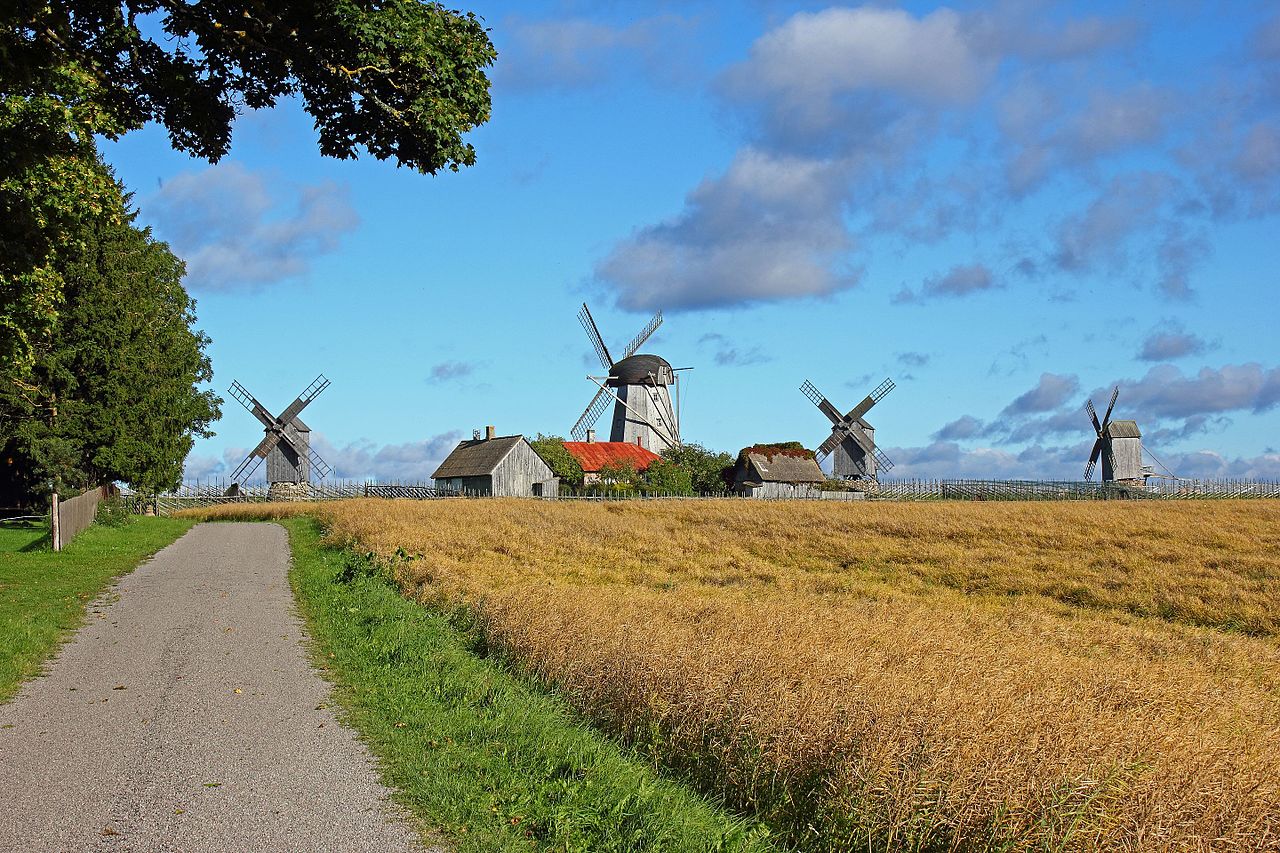
Windmills were once common across the island. At Angla, a group of wooden windmills stands by the road, the largest surviving cluster on Saaremaa, with a heritage centre beside them.
Photo: Ymblanter, CC BY-SA 4.0

On the north coast, this limestone cliff rises about 20m above the sea and runs for some 2.5km, the highest on Saaremaa and Muhu. It is especially beautiful at sunset.
Keep away from the edge; the rock is crumbly.
Photo: Kalervok, CC BY-SA 3.0

Off the west coast, Vilsandi and its surrounding islets form a national park known for seabirds and seals. Boat trips run from the coast in summer.
Photo: KalervoK, CC BY-SA 3.0
Look for smoked fish, sõir (a fresh curd cheese), dark rye bread and juniper-flavoured dishes. Saaremaa is known for its home-brewed beers, and the island’s farms and small breweries are part of the local identity.
Kuressaare has most of the island’s restaurants and cafés; elsewhere, farm restaurants and cafés open mainly in summer.
Ferries run from Virtsu on the mainland to Kuivastu on Muhu, a crossing of about 25 minutes, and a causeway connects Muhu to Saaremaa. Buses from Tallinn to Kuressaare take around four hours including the ferry. Kuressaare also has flights to Tallinn.
A car or bike is the best way to explore the island; public transport outside Kuressaare is limited.
Estonia uses the euro. Saaremaa is cheaper than Tallinn, but summer accommodation fills up.
Ferry tickets are cheap for foot passengers.
Many spa hotels include pools and saunas.
Book ferry slots for cars in summer.
Three days lets you see Kuressaare and the island’s highlights.
Cross on the ferry, stop at Koguva village on Muhu, then visit Kaali crater on the way to Kuressaare and its castle.
Drive to the Angla windmills and Panga cliff, ending with sunset at the cliff.
Bring a windproof jacket.
Head to the coast for Vilsandi or the Sõrve peninsula and its lighthouse, then relax in a Kuressaare spa.
🛂 Entry rules: EES and ETIAS
Estonia is in the Schengen area, which has two EU border systems for non-EU visitors.
EES (in force): since 10 April 2026 the EU’s Entry/Exit System registers non-EU visitors’ passport details, fingerprints and a photo the first time they enter the Schengen area, replacing passport stamps. Allow extra time at the border on your first trip; later crossings are quicker. EU, EEA and Swiss citizens are not registered.
ETIAS (not yet running): a €20 online travel authorisation for visitors who don’t need a visa, such as UK, US, Canadian and Australian citizens. It hasn’t started and no start date has been confirmed, so nobody can apply yet; ignore websites that offer to “pre-register” you for a fee.
Visa-free visitors can stay up to 90 days in any 180-day period across the whole Schengen area, not per country.
Official information: EU: Travel to Europe (EES & ETIAS) · Reviewed September 2026
Reserve car slots in summer, especially on weekends.
The island is flat and good for cycling.
Try one of the island’s small-batch beers.
Midsummer days are very long.
Quick answers for planning time in Saaremaa.
By ferry from Virtsu to Kuivastu on Muhu, then across the causeway, or by plane from Tallinn to Kuressaare.
2,673 sq km, the largest island in Estonia.
Kuressaare Castle, the Kaali crater, the Angla windmills, Panga cliff and Vilsandi National Park.
Two to three days to see the highlights.
June to August for warm weather and long days.
Planning a wider trip? Our Estonia travel guide covers getting there, costs, when to go and more.