LT
Kaunas
Interwar Modernism and Lithuania's Soul
Interwar Modernism and Lithuania's Soul

Laisvės alėja (the Freedom Avenue; 1.6km pedestrian boulevard; the main artery of interwar Kaunas; lined with the finest Art Deco and modernist facades in the Baltic States; the Resurrection Church at the eastern end; the War Museum and eternal flame at the centre) is the finest single street in the Baltic States for 20th-century architecture. The surrounding streets (Mickevičiaus gatvė; Donelaičio gatvė; the Central Post Office building — 1931; one of the finest functionalist buildings in Northern Europe) form the UNESCO-listed interwar modernism ensemble.
💡 Walk the full Laisvės alėja from the Old Town end to the Resurrection Church (1.6km; 30 mins at a walking pace; 2–3 hours with stops at individual buildings). The Kaunas City Museum and the Kaunas Architecture Museum (both on or near the boulevard; €3–5 each) provide the interwar context. The best building: the Central Post Office (1931; Laisvės alėja 102; the curved functionalist facade is the most purely modernist building in the Baltics).
The M.K. Čiurlionis National Museum of Art (V. Putvinskio 55; €7; 10am–6pm Tue–Sun; the finest art collection in Lithuania; the permanent collection of Mikalojus Konstantinas Čiurlionis — the most significant Lithuanian artist; 1875–1911; a composer and painter who created a unique symbolic visual-musical art form; 300+ paintings on permanent display) is the most important single cultural institution in Lithuania. Čiurlionis’s paintings (“Sonata” series; “The Creation of the World” cycle; paintings explicitly structured as musical movements) are unlike anything in European art history — a Lithuanian national treasure that is almost unknown internationally.
💡 Allow 2–3 hours for the Čiurlionis Museum. The permanent collection (Room 9 has the largest concentration of the major works including “Sonata of the Sea,” “Sonata of the Sun,” and “The Creation of the World” cycle) requires time — the paintings reward standing in front of them for 5–10 minutes each, processing the musical structure that underlies the visual organisation.
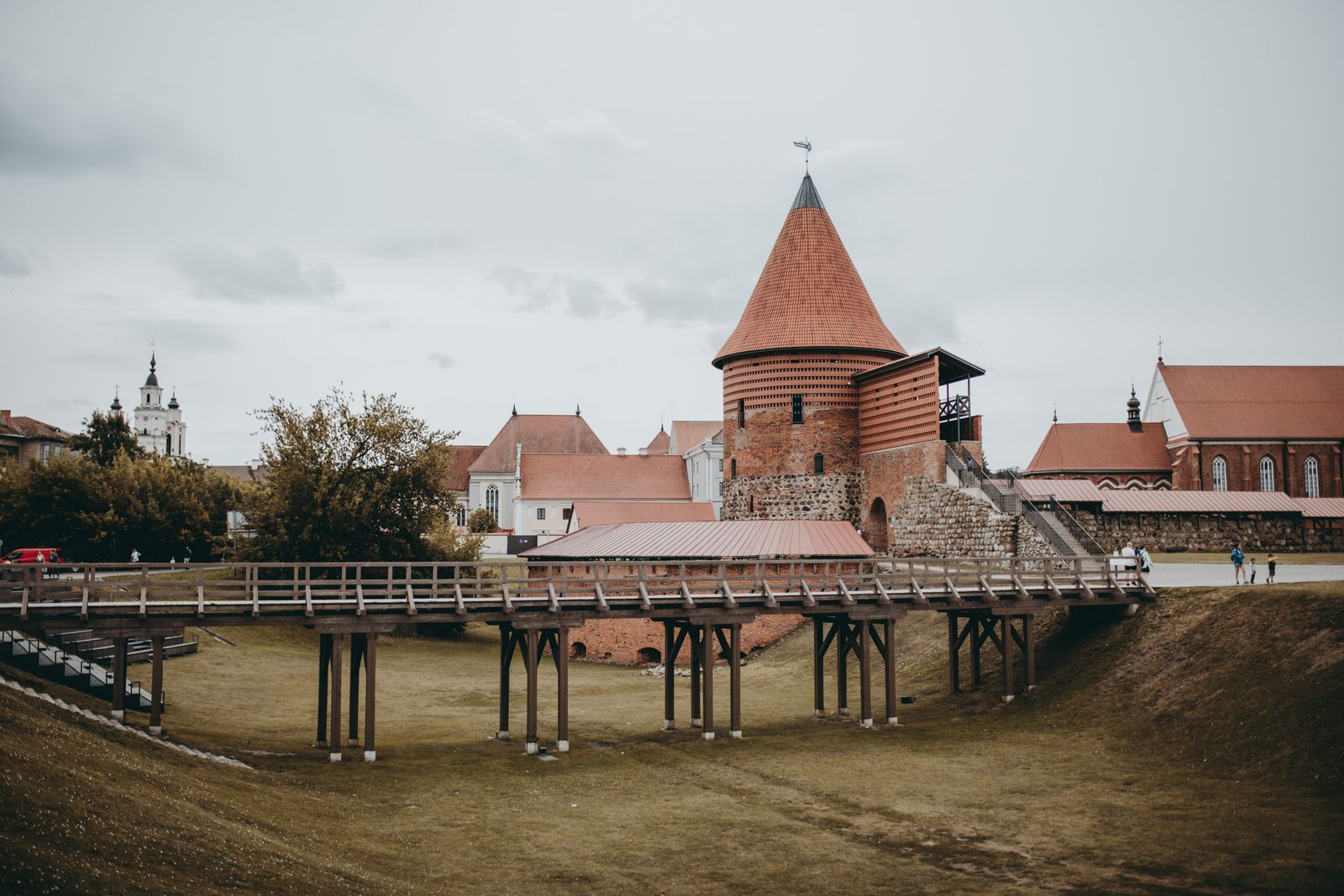
Kaunas Old Town (the medieval centre at the confluence of the Neris and Nemunas rivers; free to walk; the Town Hall Square — the most elegant civic square in Lithuania; the 15th-century Kaunas Castle ruins — the oldest castle in Lithuania; partially restored; free access to the ruins; the Perkūnas House — the finest Gothic secular building in Lithuania; the Vytautas the Great Church — the most historically significant Gothic church in Lithuania) is a compact medieval core that connects via Laisvės alėja to the interwar city.
💡 The Town Hall Square (the White Swan — the neoclassical Town Hall; free externally; the finest civic building in Kaunas; the wedding couples photographed here year-round; the most photogenic square in Lithuania after Vilnius Cathedral Square) is the best starting point for the Old Town. The Kaunas Castle ruins (5 minutes from the Town Hall; free; the remaining tower and section of wall from the 14th-century river fortification) are the oldest surviving masonry in Lithuania.
The Ninth Fort (IX Fortas; Žemaičių pl. 73; 7km north of the city centre; bus; €6; 10am–6pm Tue–Sun; one of the ring of Kaunas Fortress forts; used as a Soviet transit prison and then as a Nazi extermination site where 30,000+ Jews from Lithuania and across Europe were killed in 1941–1943) is the most significant Holocaust memorial in Lithuania after Paneriai. The fort itself (the original cell blocks, execution courtyard, and the enormous Soviet-era concrete sculpture memorial) is a profoundly important historical site.
💡 The Ninth Fort is 7km from the city centre (bus 23 from Laisvės alėja; 25 mins; €0.90; the memorial and museum require 1.5–2 hours). The museum (the original fort interior; the transit prison cells; the Jewish deportation history from Western Europe via Kaunas; the execution site; the Soviet memorial) is one of the most significant historical museums in the Baltic States for understanding the Second World War.
Kaunas has an excellent and increasingly ambitious food scene. Uoksas (Laisvės alėja 103; the finest restaurant in Kaunas; seasonal Lithuanian tasting menu; €35–55; book ahead) is consistently among the best restaurants in Lithuania. Motiejaus Kepykla (the most celebrated bakery in Kaunas; Lithuanian dark rye bread and pastries; the finest bread in the city; daily 7am–7pm; €2–5 for bread or pastry) is the essential morning stop. Kaunas’s craft beer scene (the Pas Kepurninką craft beer bar; the Laisvės alėja bars; €3–5 per Lithuanian craft beer) is the finest in Lithuania outside Vilnius. Lithuanian cepelinai (the national potato dumpling dish; the Bernelių Užeiga — the most authentic cepelinai restaurant in Kaunas; €7–10 per portion; sour cream sauce) is the essential Lithuanian food experience.
9am: bus from Vilnius (1h 30m; €4; arrives Kaunas bus station 5 mins walk from Old Town). Old Town walk (Town Hall Square; Kaunas Castle ruins; Perkūnas House; 1.5h; free). M.K. Čiurlionis Museum (€7; 11am; the symbolist paintings; 2h). Boulevard cafe lunch (€10–15). Laisvės alėja architecture walk (the full 1.6km; all 12 interwar buildings; 2h; the Central Post Office; State Theatre; the interwar residential facades). Resurrection Church (the largest interwar church in the Baltics; free; 15 mins). Cepelinai dinner at Bernelių Užeiga (€8–12). Bus back to Vilnius (5pm; 1h 30m).
Kaunas’s UNESCO-listed interwar modernism (Laisvės alėja boulevard; Central Post Office; Military Museum) dates from 1919–1940 when Kaunas was Lithuania’s provisional capital. The densest interwar modernism collection in Europe.
M.K. Čiurlionis (the composer-painter whose symbolist visual-musical paintings represent the peak of Lithuanian artistic achievement) is almost unknown outside Lithuania.
Ecolines, Lux Express, or Toks bus from Vilnius (1h 30m; €3–6; multiple daily; the most frequent intercity route in Lithuania) makes Kaunas an excellent day trip from Vilnius — arrive 9am.
The optimal Kaunas sequence: Old Town morning (Town Hall Square; Kaunas Cathedral; Perkunas House); Laisvės alėja modernism at noon; Aleksotas funicular and hilltop panorama in the afternoon. 1 day is sufficient.
The Ninth Fort (€6; bus 23; the fort where 30,000+ Jews were killed in 1941–1943; the cells, execution courtyard, and the powerful Soviet-era memorial sculpture outside the fort) requires 1.5–2 hours and is emotionally demanding.
Cepelinai (potato zeppelin dumplings; stuffed with meat; topped with sour cream and bacon; €5–8 at any traditional Kaunas restaurant) is Lithuania’s defining national dish. Order at lunch, not dinner.
Taxis and e-scooters throughout Kaunas. Essential for the Ninth Fort (7km) and if arriving by bus or train.
Free
Baroque Vilnius, interwar Kaunas, the island castle at Trakai, and the Hill of Crosses — Lithuania rewards deep exploration.