LA
Pakse
Gateway to the Bolaven Plateau
Gateway to the Bolaven Plateau
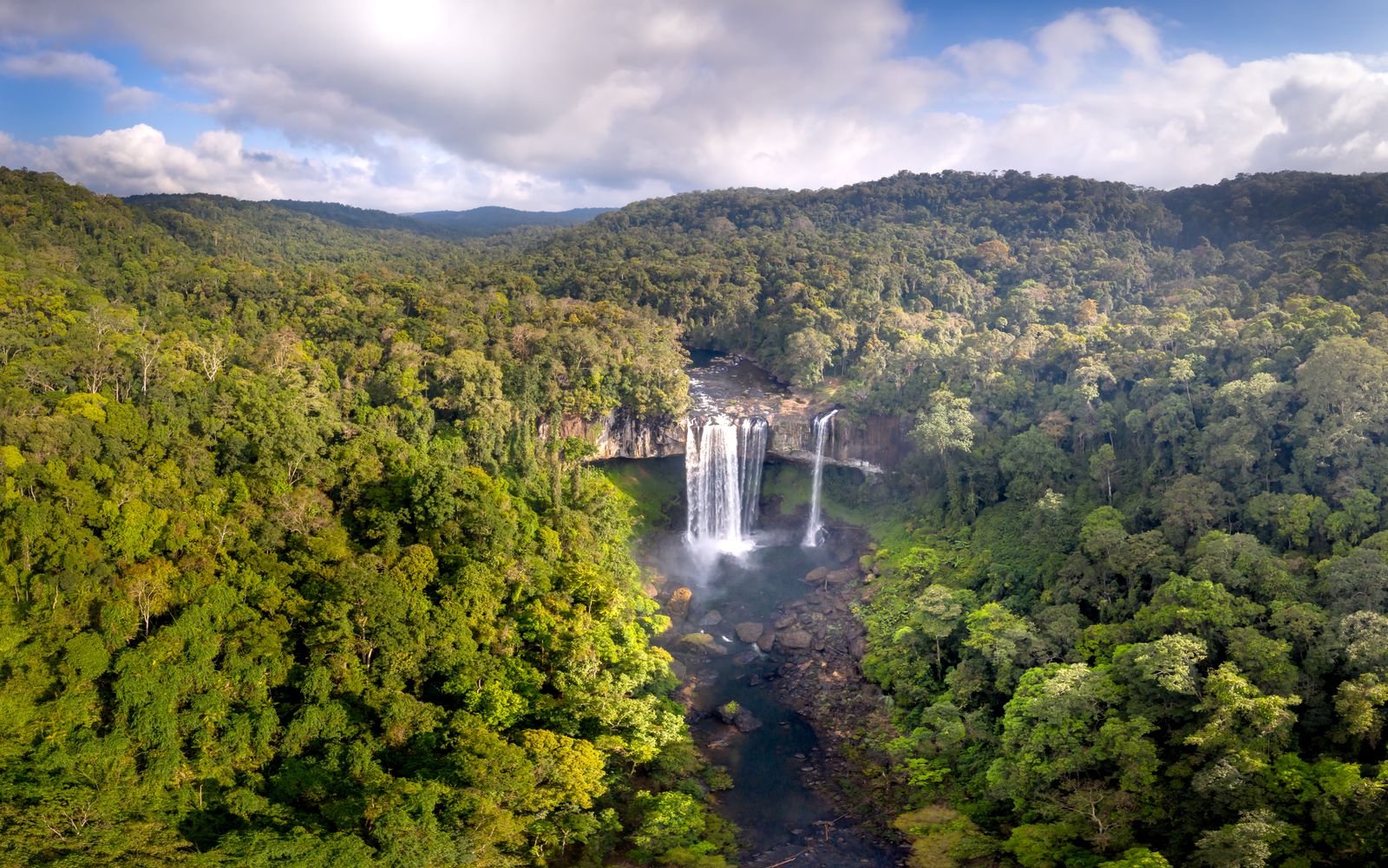
The Bolaven Plateau motorbike loop (the 3-day circuit from Paksé covering 350km; the plateau at 1,350m; the coffee and tea plantations; the ethnic minority Laven, Alak, Katu, and Tarieng communities; the 5 major waterfalls including Tat Fan (120m; the tallest and most dramatic in Laos; visible from a viewpoint 500m from the road), Tat Yuang (the widest; swimmable pool below), and Tat Champee (the most remote; the rope swing); the guesthouses at Paksong (Day 1 overnight; 85km from Paksé) and Tad Lo (Day 2 overnight; the waterfall guesthouse; the finest location on the loop); return to Paksé Day 3) is the finest independent motorcycle journey in Laos.
💡 The Bolaven Loop motorbike rental (100cc semi-automatic Honda or scooter; USD 10–15/day from any Paksé guesthouse; the standard map provided by guesthouses shows the full loop; GPS recommended as the signage is poor on the eastern loop section; a downloaded offline Maps.me map of the Bolaven area is essential). Go anti-clockwise (Paksong → Tat Fan → Tat Yuang → Sekong → Attapeu → Tad Lo → back to Paksé) for the finest scenery in the best order. The coffee (the Bolaven Arabica and Robusta; grown at 1,200–1,500m; the finest Lao coffee available directly from plantation shops for LAK 30,000–60,000 per 200g bag; significantly better than the instant coffee served in most Lao restaurants) is the finest single souvenir of southern Laos.
Wat Phu Champasak (50km south of Paksé; USD 8; daily 8am–5pm; UNESCO World Heritage 2001; the most important pre-Angkor Khmer archaeological site in Laos; a mountain-side Hindu temple complex built between the 5th and 13th centuries on the slopes of Phu Kao mountain; the stone causeway flanked by ancient boundary stones; the naga balustrade; the main sanctuary at the mountain base with the “Lingam Rock” (the sacred natural stone formation behind the sanctuary; the most sacred object at Wat Phu); the avenue of sandstone columns ascending to the upper terrace; the finest pre-Angkor Khmer site outside Cambodia) is the most significant historical site in southern Laos.
💡 Visit Wat Phu in the early morning (arrive by 8am for the opening; the site is 50km from Paksé — motorbike 1h or tuk-tuk USD 15–20 return; the morning mist on Phu Kao mountain behind the temple; the site quietest before 10am when the boat tours from Champasak village arrive; the upper terrace with the lingam rock and the elephant carvings in the best morning light). The Champasak Heritage Museum at the site entrance (included in the USD 8 entry; the Khmer sculptural collection; the finest single context exhibition for the Wat Phu site) is the essential 30-minute pre-visit.
Tat Fan (the twin falls; 120m; the tallest waterfall in Laos; on the Bolaven Plateau 90km east of Paksé; USD 1 entry; the viewing platform above the gorge with the full twin-fall panorama — two parallel waterfalls dropping simultaneously down a basalt cliff face in a rainforest gorge; the spray reaching the viewing platform in the rainy season; the most spectacular single waterfall in Laos and the finest natural spectacle accessible from Paksé) is the essential Bolaven Plateau stop.
💡 Tat Fan is most dramatic in the wet season tail (October–November; the falls at maximum volume; the gorge full of spray; the most powerful flow) and less dramatic in the dry season (March–May; significantly reduced flow; the falls visible but less impressive). The dry season visit (November–March; the falls still impressive at 120m even at reduced volume; the gorge vegetation clearest; the approach road driveable) is the most practical for the motorbike loop.
Champasak (the small riverside town 40km south of Paksé on the west bank of the Mekong; the old French colonial administrative centre; the temple at the water’s edge; the slow-moving Mekong; the flat islands visible in the river; the finest Mekong sunset outside of Si Phan Don; reachable by river boat from Paksé (1.5h; USD 3–5) or motorbike (45 mins on the east bank road and cross by ferry); the overnight guesthouses USD 10–20/night allowing a morning Wat Phu visit before the day tourists arrive) is the finest Mekong riverside town in southern Laos.
💡 Overnight in Champasak (the guesthouses on the Mekong bank; the temple bells at dawn; the fishing boats at 6am; the Wat Phu sunrise approach 6km south; the most atmospheric way to visit Wat Phu is to arrive independently at 8am opening before the Paksé day trippers). The Mekong sunset from Champasak main street (the flat river; the palm trees on the islands; the red sun over Cambodia; the most beautiful Mekong riverside evening in the Champasak region).
Paksé has a functional but pleasant food scene. The morning market at the Se Don/Mekong confluence (the most active market in southern Laos; 6–9am; the Lao noodle soup “feu”; the sticky rice; the Bolaven coffee served from plastic buckets with condensed milk; 10,000–20,000 LAK) is the essential breakfast stop and the best people-watching in the city. The Jasmine Restaurant (the most consistently recommended in Paksé; the Champasak set menu; the mok pa steamed fish; USD 5–12) and the Delta Coffee cafe (the finest Bolaven single-origin coffee available in Paksé; the espresso and filter coffee from the plateau farms; the best coffee shop in southern Laos) are the two essential urban food stops. Buy a bag of fresh Bolaven roast coffee at the Delta Coffee shop before departing.
Paksé is the transport hub of southern Laos and an ideal base. It has a small airport with domestic flights and some regional connections (Vientiane, and seasonally Bangkok and Siem Reap), and is a terminus for long-distance buses from Vientiane, Savannakhet, and across the borders with Thailand (via Ubon Ratchathani) and Vietnam. The compact town centre is walkable, and tuk-tuks (jumbos) handle short hops. To reach the surrounding highlights — the Bolaven Plateau coffee country and waterfalls, the Khmer temple of Wat Phou, and the 4,000 Islands (Si Phan Don) to the south — many travellers hire a motorbike for the popular Bolaven loop, join minivan day tours, or continue by bus and boat. Driving is on the right and the currency is the Lao kip (Thai baht and US dollars are sometimes accepted). Roads are reasonable but journeys can be slow, so allow extra time.
The Bolaven Plateau 3-day motorbike loop (350km; USD 10–15/day bike rental; free maps from any Paksé guesthouse) covers Tad Fane and Tad Yuang waterfalls and Arabica coffee farms.
Lao Airlines (Vientiane to Paksé; 1 hour; USD 60–90; daily) or the VIP sleeper bus (10 hours; USD 25) are both reliable. The Laos-China Railway does not yet extend south of Vang Vieng.
Bolaven Plateau Arabica (grown at 1,200m; full-washed process; very clean profile) is the best coffee in Laos. Sinouk Coffee in Paksé (Rd 38; open daily) offers tastings and beans to buy.
The Bolaven Plateau loop east section (Sekong–Attapeu road) can flood and become impassable June–September. The west section (Paksé–Tad Fane–Paksé) stays accessible year-round.
Wat Phu at 8am (site opening; mist on Phu Kao mountain; Khmer stonework in directional morning light; USD 8 entry) gives the most atmospheric Khmer experience outside Cambodia.
The Paksé to Champasak slow boat (USD 5; 2 hours; departs when full from the main pier) arrives at the Champasak waterfront directly below Wat Phu. The finest Mekong approach in southern Laos.
8am: river boat to Champasak (USD 4; 1.5h). Check in guesthouse. 11am: Wat Phu Champasak (USD 8; 3h; the Khmer temple; the Lingam Rock; the museum). Champasak riverside dinner (Mekong fish; USD 5). Mekong sunset. Overnight Champasak.
BOLAVEN: ferry back to east bank; motorbike north to Paksong (85km; 2h; Tat Fan 10km before Paksong). Paksong overnight. Day 3: Tat Yuang waterfall (swimmable; 30 mins south); Tad Lo (2h south; the guesthouse above the waterfall); return Paksé. OR 4,000 ISLANDS: minibus from Champasak to Ban Nakasang (2h south; USD 5) then boat to Don Det island (10 mins; 10,000 LAK).
Quick answers to the questions travellers most often ask before visiting Paksé.
Being the largest city and main gateway of southern Laos, set where the Mekong and Se Don rivers meet. It’s the launch point for the Bolaven Plateau (coffee plantations and waterfalls), the ancient Khmer temple of Wat Phou, and the 4,000 Islands (Si Phan Don) river archipelago further south.
Yes — while the town itself is a workaday river city, it’s the essential base for some of Laos’s finest scenery: the Bolaven Plateau, spectacular waterfalls, the UNESCO-listed Wat Phou, and the laid-back 4,000 Islands. Most travellers use it as a hub for exploring the south.
By air — a small airport with flights from Vientiane and some regional cities — by long-distance bus from elsewhere in Laos and neighbouring Thailand and Vietnam, or by boat and bus along the Mekong. It is the main transport hub of southern Laos.
The Bolaven Plateau loop (coffee farms and waterfalls such as Tad Fane and Tad Yuang), the UNESCO-listed Wat Phou temple, and the 4,000 Islands (Si Phan Don) with their slow pace and rare Irrawaddy river dolphins — all within easy reach of Paksé.
Essential for the Bolaven Plateau loop — the only offline map with full plateau road coverage including the eastern Sekong loop.
Free
Carry cash. One ATM in Paksé (BCEL; high fees). USD and LAK. No ATMs on the Bolaven loop.
Free
Lao offline. Southern Laos has less English than Luang Prabang; Lao essential in villages.
Free
From the gilded temples of Luang Prabang to the Mekong islands of Si Phan Don, the karst peaks of Vang Vieng, and the ancient jars of Xieng Khouang.