LA
4000 Islands
Hammocks, waterfalls and riverside villages where the Mekong splits into countless islands
Hammocks, waterfalls and riverside villages where the Mekong splits into countless islands

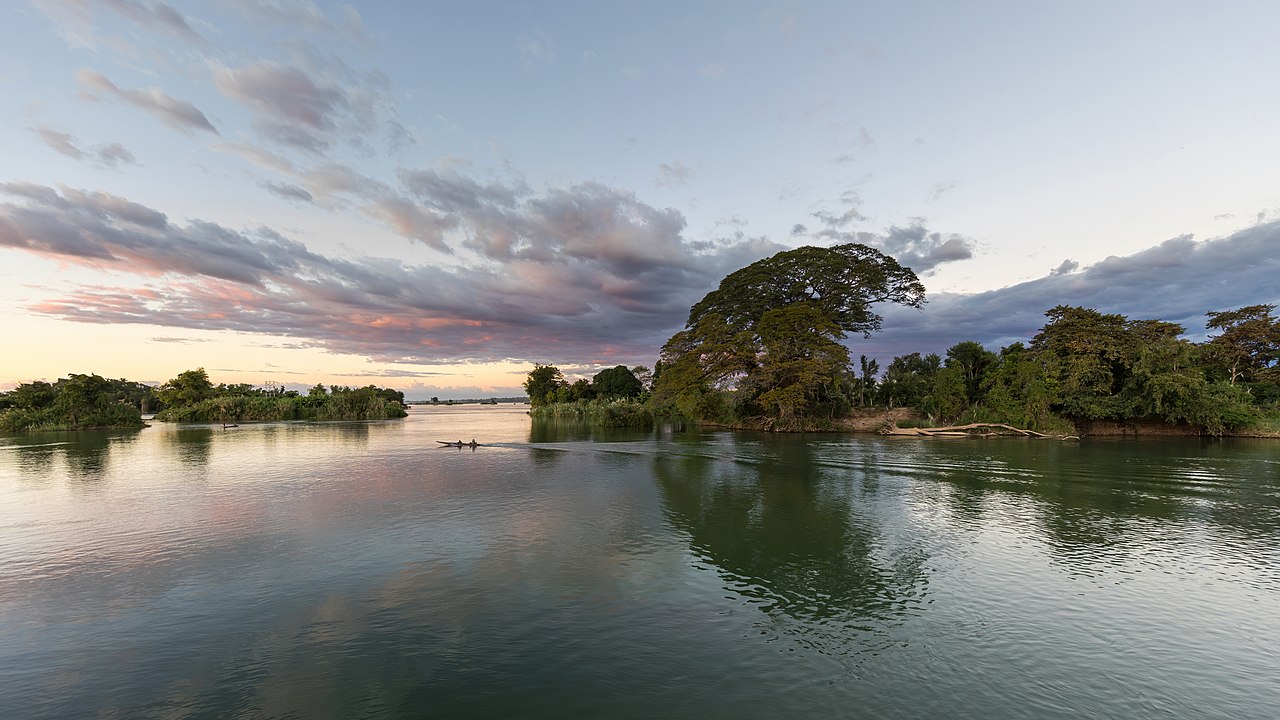
The busiest island has a loop path lined with guesthouses, restaurants and bars at its northern end, giving way to rice fields and villages further south. Its sunset and sunrise sides are the classic places to string up a hammock.
Rent a bicycle to ride the island loop and cross to Don Khon.
Photo: Basile Morin, CC BY-SA 4.0

From 1893 the French built a 7km railway across Don Khon and Don Det to haul boats and cargo around the impassable falls. The old bridge between the two islands still carries walkers and cyclists, and a 1911 steam locomotive is displayed in Ban Khon village.
A small fee is charged to cross onto Don Khon; keep the ticket for the waterfalls.
Photo: Basile Morin, CC BY-SA 4.0

On the western side of Don Khon, the Mekong forces its way through a series of churning rapids and channels. Paths and viewpoints lead along the falls, and there is a sandy beach nearby.
Do not swim near the falls; the currents are deadly.
Photo: Gorgo, Public domain

On the mainland east of the islands, Khone Phapheng is the largest waterfall in South-East Asia by volume. Up to 21 metres high, it is part of the Khone Falls system, which stretches over 10km across the river and has been described as the widest waterfall in the world.
Visit late in the wet season, around August to October, when the falls are most powerful.
Photo: Basile Morin, CC BY-SA 4.0

Guided kayak trips paddle between the islands and down towards the Cambodian border. Irrawaddy dolphins once lived in a pool on the border, but the last dolphin there died in 2022; the nearest remaining dolphins are around Kratie in Cambodia.
Ignore any tour still selling dolphin sightings on the Laos side.
Photo: Basile Morin, CC BY-SA 4.0
Island restaurants serve Lao classics such as larb, papaya salad, sticky rice and grilled Mekong fish, alongside fried rice and Western backpacker food.
Riverfront restaurants on Don Det and Don Khon are the place for sunset; for local food, try the small eateries in Nakasang market on the mainland.
Buses and minivans from Pakse take under three hours to Nakasang on the mainland, where small boats cross to Don Det and Don Khon in a few minutes. Don Khong is reached by a bridge and road from the mainland.
Many travellers arrive or leave via the Cambodian border just to the south, with bus connections to Stung Treng and beyond. On the islands, bicycles and walking are the only transport you need.
Laos uses the kip (LAK). Prices below are in US dollars because the kip’s value changes often. There are few ATMs on the islands, so bring cash from Pakse.
One of the cheapest places to stay in South-East Asia.
Air-conditioned rooms are worth it from March to May.
A few boutique hotels are on Don Khon and the mainland.
Three days lets you see the falls and still slow down.
Arrive from Pakse, settle into a riverside bungalow and cycle the Don Det loop. Sunset from the western shore.
Choose the sunrise or sunset side for your bungalow.
Cross the old railway bridge to Don Khon, see the locomotive, walk the trails at Li Phi Falls and relax on the beach nearby.
Bring water and sun protection; there is little shade on the paths.
Join a guided kayak trip through the islands, or take a boat and tuk-tuk to the Khone Phapheng Falls on the mainland.
Kayak trips are best in the dry season when currents are gentler.
There are few ATMs on the islands; withdraw kip in Pakse.
Bikes are cheap to rent and the islands are flat.
Only swim in calm, shallow spots well away from the falls.
From July to September some paths flood and the river rises sharply.
Quick answers for planning time in 4000 Islands.
Take a bus or minivan to Nakasang (under three hours), then a short boat to Don Det or Don Khon.
Don Det for the social scene and cheapest bungalows, Don Khon for a quieter stay near the waterfalls, Don Khong for local life.
No. The last Irrawaddy dolphin in the border pool died in 2022. The nearest remaining population is around Kratie in Cambodia.
November to February is dry and cooler. The waterfalls are most powerful late in the wet season.
Two to three days covers the main sights, but many travellers stay longer to relax.
Planning a wider trip? Our Laos travel guide covers getting there, costs, when to go and more.