AF
Afghanistan
Band-e-Amir lakes, Bamiyan niches & the Wakhan Corridor — Central Asia’s crossroads
Band-e-Amir lakes, Bamiyan niches & the Wakhan Corridor — Central Asia’s crossroads
⚠️ Travel advisory: most governments advise against travel
Most governments, including the US and UK, advise against all travel to Afghanistan. Consular help is extremely limited, and the risks include terrorism, kidnapping and arbitrary detention. This guide is kept for background and future planning only.
Latest official advice: UK FCDO · US State Department · Reviewed September 2026
Afghanistan is one of Central Asia’s great crossroads civilisations — a country of historical depth, immense mountain landscapes and a culture of legendary hospitality, currently under Taliban governance since 2021 and largely inaccessible to Western visitors. The Hindu Kush mountains, the Wakhan Corridor (the most dramatic valley in the world, where Afghanistan’s panhandle reaches China between Tajikistan and Pakistan), the turquoise Band-e-Amir lakes (the first national park in Afghan history), the ancient Silk Road cities of Balkh and Herat, and the Buddhas of Bamiyan — destroyed by the Taliban in 2001 but whose empty niches remain one of the world’s most haunting cultural voids — represent a heritage of global significance waiting for a time of peace and access. A very small number of adventurous travellers with specialist operators have visited in recent years; check current conditions and your government’s advisory carefully.
Afghanistan’s first national park — six deep-blue and turquoise crater lakes at 3,000 metres altitude in the Hindu Kush, their colour produced by high mineral concentration and separated by natural travertine dams. The lakes are one of Central Asia’s most beautiful natural wonders and have remained a destination for Afghan visitors even during difficult times.
The empty niches where the 55-metre and 38-metre Buddha statues stood before their Taliban destruction in 2001 remain one of the world’s most powerful cultural monuments — the absence itself an eloquent statement about cultural destruction. The surrounding Bamiyan Valley has rich Silk Road history, cave dwellings and the nearby Red City ruins of Shahr-e-Gholghola.
The ancient Timurid capital of Herat has one of Afghanistan’s finest old cities — the Friday Mosque with its turquoise tilework, the citadel and the Musalla Complex ruins are impressive. The Minaret of Jam — a UNESCO World Heritage Site, a 65-metre Ghurid minaret in a remote river valley, unreachable by road — is the finest surviving example of Islamic architecture in Central Asia.
Rice pilaf with lamb, caramelised carrots and raisins, often topped with nuts — widely considered the national dish.
Steamed dumplings filled with spiced minced beef and onion, topped with yogurt, a split-pea or tomato sauce and dried mint — a favourite for special occasions.
Thin flatbread stuffed with potato, leek or pumpkin and pan-fried — a common snack and street food.
Flat, spiced minced-meat patties fried with tomato and onion — a roadside favourite, especially in the east.
Pomegranates from around Kandahar are prized across the region for their size and deep red seeds; they are eaten fresh, juiced or dried as a spice (anar dana).
The Shamali plain north of Kabul grows table grapes that are also dried into raisins (kishmish), long one of Afghanistan's main exports.
A salted, tangy yogurt drink diluted with water and sometimes flavoured with dried mint or rose water — drunk daily with meals throughout Afghanistan and Central Asia. The essential digestive after rich rice and meat dishes.
Hamid Karzai International Airport (KBL) in Kabul is the main gateway. Turkish Airlines and Fly Dubai serve international routes; domestic flights connect major cities.
Istanbul (4h30, Turkish Airlines) and Dubai (2h30, Flydubai) are the main international connections. Pakistan (Islamabad, 1h) is the closest overland gateway.
Central Asian connections (Dushanbe, Tashkent) and Iran (Tehran) are practical gateways for regional travellers. Ariana Afghan Airlines operates domestically and some regional routes.
Kabul is 40 minutes from the airport by road. Domestic flights (Ariana, Kam Air when operating) connect Kabul to Herat, Mazar-i-Sharif and Kandahar in 1–2 hours.
All movement in Afghanistan in the current security environment requires a trusted local guide and, in most cases, a dedicated security vehicle. The Wakhan Corridor requires a specialist operator with Wakhi community contacts.
March to May is the most beautiful season — green landscapes, wildflowers and the Bamiyan valley in full bloom (10–22°C in Kabul). September to November is also pleasant. Summer (June–August) is very hot in Kabul (30–35°C) and extreme in the south. Winter brings snow to the mountains. Afghanistan is under Taliban control since August 2021; the security situation makes tourism extremely difficult. Always check current advisories.
📅 Afghanistan is in its best season in April, May, June, September, October. See where else is good to go in those months, or browse where to go by month.
The Afghan afghani (AFN) is the currency; USD widely used. Very affordable when accessible, but all visits require specialist logistics.
Qabili palao (the national dish of Afghanistan — Basmati rice cooked with lamb, raisins, carrots and whole spices (cardamom, cumin, cloves), the most important rice dish in Central Asian cuisine and the defining celebratory food of)
Afghan pomegranates (from the orchards of Kandahar and Nangarhar — the most prized pomegranates in the world, with great sweetness and deep ruby colour, exported to the Gulf States and Central Asian markets — available)
Afghan lapis lazuli (mined from the Sar-e-Sang mines of Badakhshan province for 7,000+ years)
Kabul for one day, Bamiyan for one, Band-e-Amir lakes for one, Herat for one, Mazar-i-Sharif for one, Wakhan for one, farewell for one. Afghanistan — the ancient crossroads of Central Asia — has the empty niches of the destroyed Bamiyan Buddhas, the turquoise lakes of Band-e-Amir, the Timurid Renaissance architecture of Herat and the most remote inhabited valley on earth in the Wakhan Corridor. Currently under Taliban rule; all governments advise against travel. Content is for future reference.
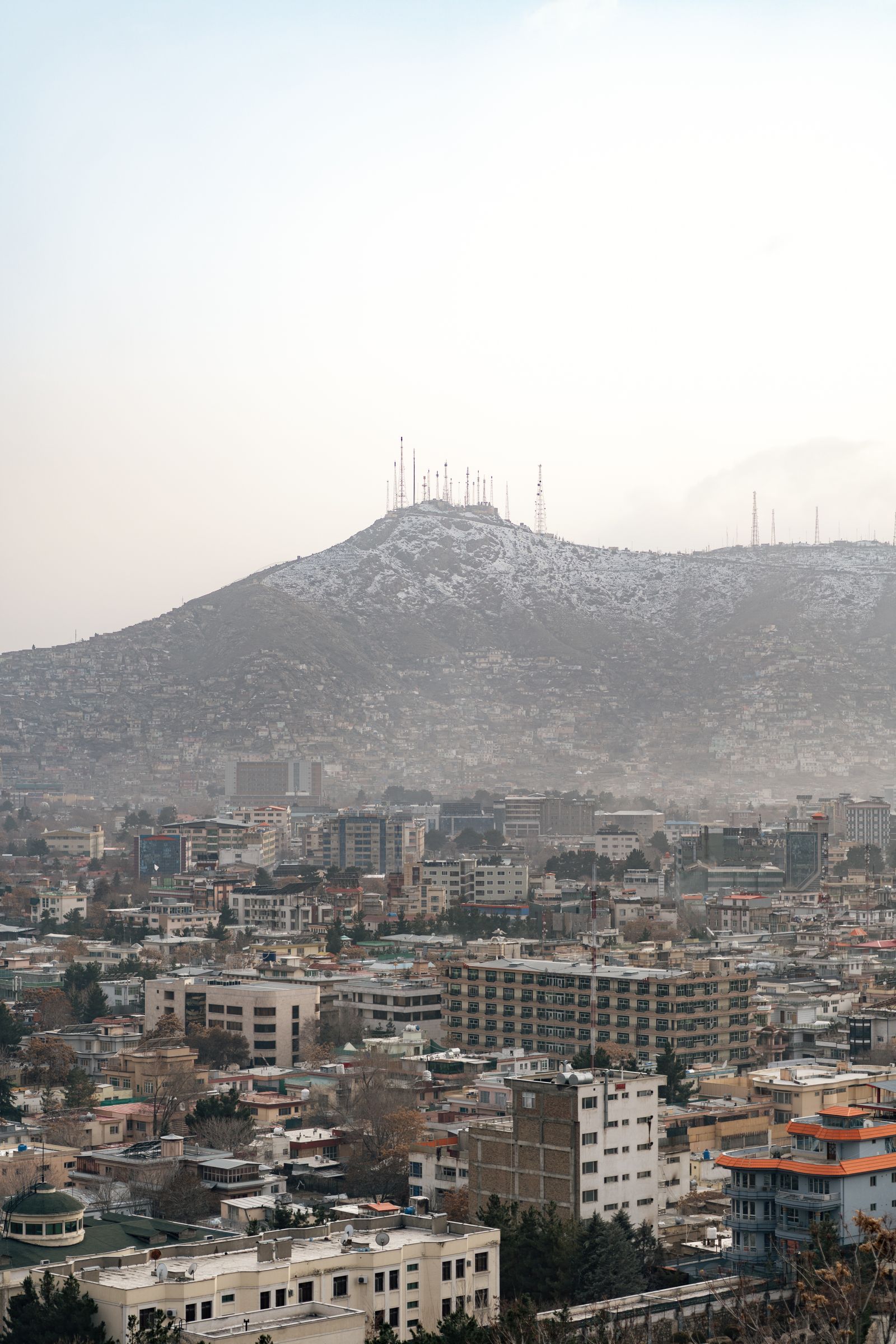
Kabul — the capital of Afghanistan (652,000km² at the crossroads of Central, South and Western Asia, population 40 million — ruled by the Taliban since their takeover in August 2021, following the US withdrawal after 20 years of NATO presence — a country of landscapes, archaeological richness and cultural depth that has been at war continuously since 1978 and whose people carry the accumulated trauma of five decades of conflict). The UK FCO, US State Dept and all major governments advise against all travel to Afghanistan. This content is for informational purposes about when conditions may improve.
The Taliban takeover (15 August 2021 — the day the Taliban entered Kabul without fighting as the US-backed Afghan government collapsed, ending 20 years of the NATO-backed Afghan republic — was the most significant geopolitical event of the decade, directly affecting 40 million Afghans and profoundly impacting millions of Afghan diaspora worldwide. The preceding 20-year period of US/NATO presence (2001–2021) was the longest war in US history, costing approximately US$2.3 trillion and killing 176,000+ people.
Bamiyan (the central Afghan valley at 2,590m — the site of the two colossal Buddha statues destroyed by the Taliban in March 2001, now a UNESCO World Heritage Site for the empty niches and the surrounding cave monastery complex of Foladi and Kakrak — with the extraordinary Band-e-Amir National Park (the first national park in Afghanistan — five brilliant turquoise crater lakes at 3,000m in the Hindu Kush, created by natural travertine dams, among the most strikingly beautiful natural landscapes in Central Asia).
The Bamiyan Buddhas (carved into the sandstone cliffs of the Bamiyan Valley between the 4th and 5th centuries CE — the largest standing Buddha statues in the world at 55m and 38m — were destroyed by the Taliban in March 2001 despite international protests from the UN, UNESCO, Islamic nations and world leaders. The destruction was described by UNESCO as “a crime against culture”; the empty niches remain as the defining archaeological loss of the 21st century.
Band-e-Amir National Park (six vivid turquoise lakes in the Hindu Kush at 2,900m — Afghanistan’s first national park, established 2009, with the deepest and most visually striking crater lakes in Central Asia, set against a landscape of red ochre mountains, green fields and white-capped peaks — the most beautiful natural landscape accessible in Afghanistan and one of the finest in the entire Central Asian region, comparable to the lake landscapes of Jiuzhaigou in China or Plitvice in Croatia).
Band-e-Amir (the “Dam of the Emir” — a series of six deep-blue lakes created by natural travertine dams, the calcium carbonate precipitated from spring water creating progressive cascading pools of colour — was the first area identified for national park protection in Afghanistan (established 2009 with US financial support), the result of the recognition that the Bamiyan-Band-e-Amir area represented Afghanistan’s most significant natural tourism asset.
Herat (the “Florence of the East” — western Afghanistan’s most culturally refined city, the centre of the Timurid Renaissance in the 15th century when it was the most sophisticated centre of art, architecture and scholarship in the Islamic world under Shah Rukh and Husayn Bayqara — with the Musalla Complex minarets (the surviving towers of the greatest mosque-madrassa complex of the Timurid period, partially destroyed by British forces in 1885), the Herat Friday Mosque and the Herat Citadel).
The Timurid Renaissance in Herat (1405–1507 — under the Timurid rulers Shah Rukh and Sultan Husayn Bayqara, Herat became the most important centre of art and intellectual life in the Islamic world — the miniature painting school of Bihzad, the poetry of Jami, the architecture of the Gowhar Shad Mosque — producing artistic and intellectual achievements considered the pinnacle of Persian cultural expression. The minarets of the Musalla Complex are the last surviving elements of this cultural moment.
Mazar-i-Sharif (the fourth-largest city of Afghanistan — the Shrine of Hazrat Ali (the Blue Mosque), the most important Islamic pilgrimage site in Afghanistan and one of the most important in the Islamic world, with its blue-tiled domes and the thousands of white doves that nest in the shrine complex — accessible from Kabul via Salang Pass or by flight — and the Nawruz celebrations (the Persian New Year, 21 March) when hundreds of thousands of pilgrims visit the shrine).
The Shrine of Hazrat Ali (Mazar-e-Sharif — “Tomb of the Exalted” — built in the 12th century on the claimed tomb of the Caliph Ali ibn Abi Talib, the son-in-law of the Prophet Muhammad, though the main Shia tradition places his tomb in Najaf, Iraq — is Afghanistan’s most important pilgrimage destination, visited by millions annually. The blue tilework of the shrine complex, repaired and restored multiple times, is considered one of the finest examples of Timurid tile decoration outside Samarkand and Bukhara.
The Wakhan Corridor (a narrow strip of Afghan territory extending 350km east to the Chinese border — one of the most remote inhabited areas on earth, the corridor was created by the 1873 Anglo-Russian agreement to create a buffer zone between British India and Tsarist Russia — with the Wakhi and Kyrgyz communities maintaining a pre-modern pastoral lifestyle at 4,000–5,000m altitude, the excellent trekking of the Pamir Mountains, the Zorkul Wildlife Reserve and the cultural isolation of the corridor communities).
The Wakhan Kyrgyz (approximately 1,000 nomadic Kyrgyz who have lived in the Pamir plateau of the Afghan Wakhan Corridor since the 1920s when their ancestors fled Soviet collectivisation — maintaining a pastoral yurt-based lifestyle at 4,200m altitude without roads, electricity or formal healthcare — are the highest-altitude permanently nomadic community in Central Asia. The corridor has historically been one of the safest parts of Afghanistan due to its extreme remoteness and the traditional hospitality of the Wakhi communities.
A final reflection on Kabul: a city of historical depth (the ancient Bala Hissar fortress, the Babur Gardens — the tomb and garden complex of Babur, founder of the Mughal Empire, laid out in 1528 and restored after 20 years of war — the Kabul Museum with its partially recovered collection) and the Afghan hospitality (pashtunwali — the Pashtun code of honour that places hospitality to guests as the highest social obligation — which has made individual travel in Afghanistan, in better times, among the most warmly received in the world) before flying from Hamid Karzai International Airport (KBL).
Afghan chai culture (the green tea (chai sabz) with cardamom served in every shop, teahouse and home throughout Afghanistan as the primary expression of hospitality — served in a small glass with sugar on the side, the ritual of tea-sharing being the most important social gesture in Afghan culture — is inseparable from the pashtunwali code of hospitality that has made Afghanistan, in periods of stability, one of the most welcoming countries for travellers in all of Asia.
Afghanistan is under Taliban governance since 2021. Most Western governments advise against all travel. A very small number of adventure travellers visit with specialist operators; this is an extreme undertaking requiring exceptional preparation and risk acceptance.
Afghanistan under Taliban rule since 2021 is not accessible for independent tourism. Most Western governments advise against all travel. Check current advisories; situation can change.
Under Taliban governance, women face severe restrictions on movement, dress and activities. Solo female travel is effectively impossible.
Band-e Amir (6 vivid blue crater lakes in Bamyan Province) is considered among the world’s most beautiful natural sites and was designated Afghanistan’s first national park in 2009. The Bamyan Buddhas site is nearby.
Visa required — the Taliban government processes visas; requirements and accessibility for Western nationals are very limited.
Quick answers to the questions people most often ask about travel to Afghanistan.
Afghanistan has been under Taliban rule since 2021, and most Western governments advise against all travel there. Independent tourism isn't practical; the few visitors who go travel with specialist operators. Check your government's current advice before considering any trip.
Women face severe restrictions on movement, dress and activities under Taliban rule, and solo female travel is not practical. Any female traveller should take specialist advice before considering a visit.
Yes. Visas are issued by the current authorities, and requirements — especially for Western nationals — change frequently. Specialist tour operators can advise on the current process.
International flights land at Kabul's airport (KBL), with routes via Dubai (about 2h30) and Istanbul (about 4h30) among the most used. Check the current status of all routes, as schedules change often.
Spring (March to May) and autumn (September to November) are the most pleasant seasons. Summers are very hot in Kabul and the south, and winters bring heavy snow to the mountains.
Download Afghanistan offline maps; reliable internet is not available in most areas.
FreeDownload offline maps before you travel so navigation works without mobile data — essential for walking, driving and finding local spots.
FreePoint your camera at menus, signs or street text for instant translation. Download the language pack offline before you arrive for full use without data.
FreeReal-time and offline exchange rates for all world currencies — converts prices instantly so you always know what you are paying in your home currency.
FreeFind and book hotels, guesthouses and apartments with free cancellation on most rates — one of the widest selections of accommodation worldwide.
FreeBrowse millions of traveller reviews for restaurants, attractions and hotels — helps identify the best local spots and avoid tourist traps.
FreeAfghanistan sits within easy reach of several other destinations — each with a completely different character.
Afghanistan is one of the world’s least-visited places. See all 90 in our guide to the world’s least-visited countries & territories.


