PK
Pakistan
K2, Mughal splendour & the world's most underrated mountains
K2, Mughal splendour & the world's most underrated mountains
⚠️ Travel advisory: check before you go
Governments advise against travel to parts of Pakistan, including areas near the Afghan border and much of Khyber Pakhtunkhwa and Balochistan, and the US asks travellers to reconsider travel to the country. The main cities and Gilgit-Baltistan see regular visitors; check route-specific advice.
Latest official advice: UK FCDO · US State Department · Reviewed September 2026
Pakistan is arguably the world’s most underrated travel destination — a country of staggering natural beauty and historical depth whose tourism potential has barely been touched. The Karakoram Highway, one of the world’s highest paved roads, climbs through some of the most dramatic mountain scenery on earth to the point where three great mountain ranges — the Karakoram, the Himalayas and the Hindu Kush — converge. Pakistan has more peaks above 7,000 metres than any other country on earth, including K2, the world’s second-highest and arguably hardest mountain.
Beyond the mountains, the Indus Valley Civilisation site at Mohenjo-daro is among the world’s most important archaeological sites — a city of 40,000 people built 4,500 years ago with running water and a grid street plan. Lahore’s Mughal architecture rivals Delhi and Agra. Pakistani hospitality is legendary: chance encounters with locals almost invariably end with tea and an invitation to someone’s home.
The Hunza Valley in the Karakoram is one of the world’s most striking mountain landscapes — a green-terraced valley of apricot orchards and stone villages backed by glacier-capped peaks rising to 7,800 metres. Karimabad, the main town, sits beneath the medieval Baltit Fort with views of Rakaposhi and Ultar II. The blossoming of the apricot trees in April transforms the valley into a sea of white and pink blossom.
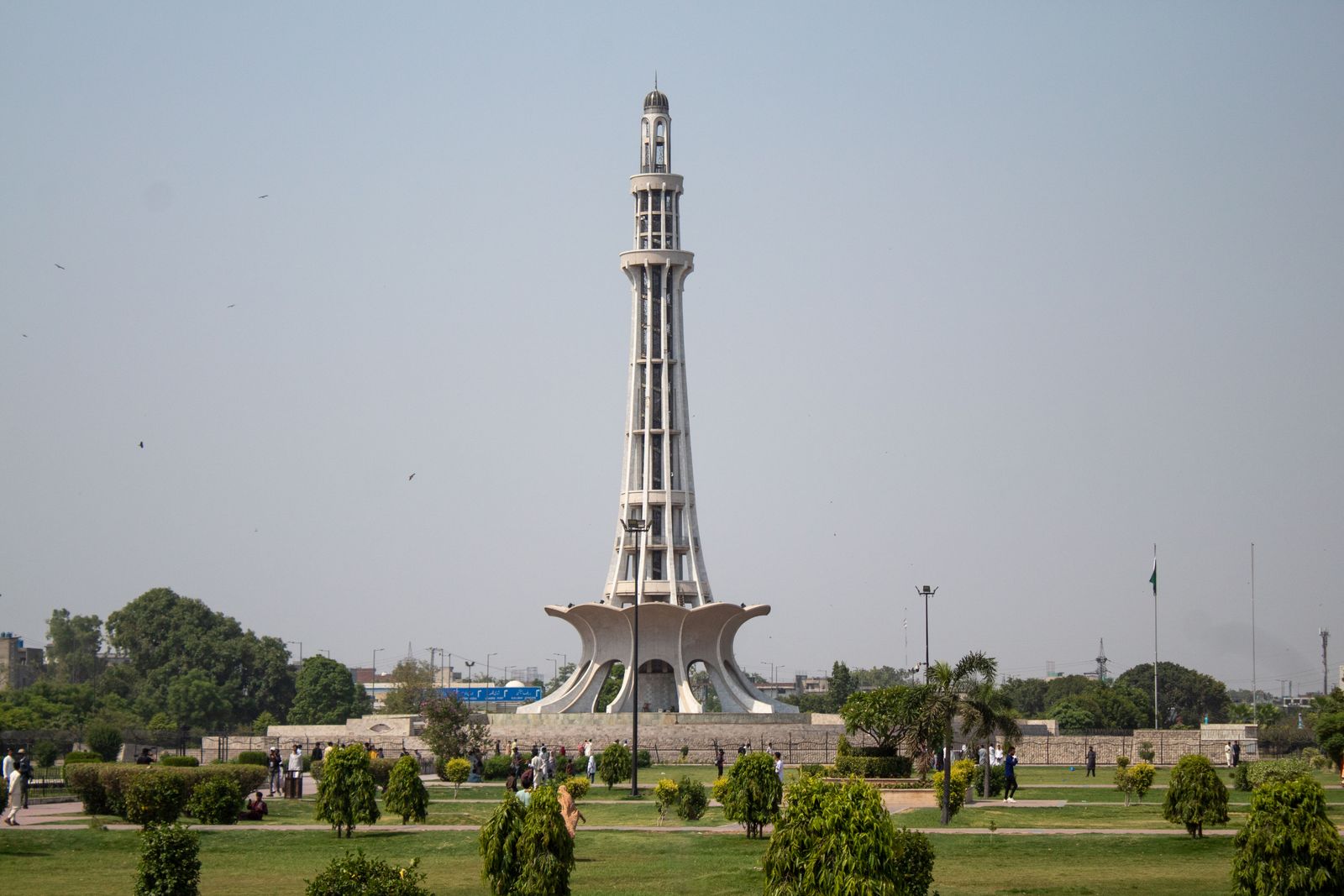
The heart of Pakistani culture and the former capital of the Mughal Empire is one of South Asia’s greatest cities. The Lahore Fort and the Badshahi Mosque — a masterpiece of Mughal architecture that was once the world’s largest mosque — are UNESCO World Heritage Sites. The walled city’s Food Street, the Shalimar Gardens and the packed bazaars of Anarkali make Lahore one of the subcontinent’s finest cities.
The “Eighth Wonder of the World”, built through 20 years of effort by Pakistani and Chinese engineers through the world’s highest mountains, runs from Islamabad to the Chinese border at Khunjerab Pass (4,693m). The views of the Karakoram — glaciers, vertical rock walls, turquoise lakes — are impressive throughout. The highway passes through Gilgit-Baltistan’s frontier landscapes.
One of the largest cities of the ancient Indus Valley Civilisation, Mohenjo-daro in Sindh province was home to 40,000 people in 2500 BC — with sophisticated drainage systems, public baths, grid streets and multi-storey buildings. The UNESCO-listed site, largely unexcavated, is among the most important archaeological discoveries of the 20th century.
The trek to K2 Base Camp in the Karakoram is one of the world’s great mountain journeys — weeks of walking through glacier moraines, past the world’s highest concentration of 8,000-metre peaks. Fairy Meadows, an alpine plateau beneath Nanga Parbat (the world’s ninth-highest), is accessible by jeep and offers the most accessible dramatic mountain vista in Pakistan.
Chicken or mutton cooked in a wok-like karahi with tomato, ginger and green chilli — every region has its own version.
A slow-cooked beef or mutton stew, traditionally eaten for breakfast in Lahore and Karachi.
Fragrant long-grain rice layered with spiced meat (chicken, beef or mutton), caramelised onions and whole spices, slow-cooked in a sealed pot (dum). Karachi, Lahore and Sindh each have distinct versions; collectively the most beloved dish in Pakistan.
Minced lamb or beef mixed with ginger, garlic, green chilli and fresh herbs, moulded onto a flat skewer and grilled over charcoal — eaten as street food in naan bread or as a restaurant starter with raita and green chutney.
Flat, spiced minced-meat patties from Peshawar. Naan, roti and paratha come fresh from tandoor ovens.
Sweet, milky tea, drunk throughout the day. Fresh mango and sugarcane juices are everywhere in summer.
A yogurt drink, sweet or salty — the summer staple.
Allama Iqbal International (LHE) in Lahore and Islamabad International (ISB) are the main hubs. Pakistan International Airlines (PIA), Turkish Airlines and Emirates serve the main routes. For trip planning, see the official Pakistan tourism portal.
PIA operates direct London Heathrow and Birmingham–Lahore/Islamabad services, reflecting the large British-Pakistani diaspora. Turkish Airlines via Istanbul is a strong alternative.
Dubai is the most convenient gateway — 2h30 from Lahore, with multiple daily Emirates and flydubai connections. The Gulf hubs (Dubai, Doha, Abu Dhabi) all serve Pakistan frequently.
The Islamabad–Gilgit flight (PIA, 55 min, over Nanga Parbat — rated one of the world’s most scenic commercial flights) is the most practical way to reach the Karakoram. Seats should be booked months in advance.
The KKH between Gilgit and Karimabad (Hunza) is magnificent and safe for tourists with a local jeep and driver. The road to Fairy Meadows (the Tato jeep track) is the steepest in the world; only experienced 4WD drivers and guides should attempt it.
March to May and September to November are the best windows — the Hunza Valley in spring blossom (March–April), the Karakoram trekking season (June–September), the Punjab pleasant. The monsoon (July–September) is intense in the south; the north stays drier. Winter brings deep snow to Hunza and Lahore’s finest weather.
📅 Pakistan is in its best season in April, May, June, September, October. See where else is good to go in those months, or browse where to go by month.
Pakistan is affordable — among the cheapest destinations in Asia for independent travellers. The Pakistani Rupee (PKR) is the currency; costs in the north are slightly higher due to remoteness.
Nihari — a slow-cooked beef or mutton shank stew with a complex spice base of cardamom, cinnamon, fennel and dried ginger, cooked overnight and served with naan, fresh ginger and fried onion — is the definitive Lahore.
Pakola (a Pakistani soft drink in green-bottle-ice-cream flavour, produced since 1950) is the defining non-alcoholic beverage of Pakistan.
The Pearl Continental Lahore (the finest hotel in Lahore, the meeting point of the city’s elite for 50 years, from PKR 20,000–80,000/night) and the Serena Hotel Islamabad are Pakistan’s most distinguished addresses.
Lahore for two days, the Karakoram Highway for two, Hunza Valley for two, Skardu and Fairy Meadows for one. Pakistan — one of the most underrated destinations in the world — has the greatest concentration of high mountains on earth, the finest Mughal architecture after India and a hospitality tradition that has astonished every traveller who has come.
Lahore — the cultural capital of Pakistan, the second city (13 million), the heart of Mughal architecture in South Asia — with the Badshahi Mosque (1673, the largest mosque in the world at time of construction, holding 100,000 worshippers, still the sixth-largest in the world), the Lahore Fort (UNESCO World Heritage Site, a complex of Mughal palaces, hammams and durbar halls spanning 1556–1707), and the Walled City’s Anarkali Bazaar.
Lahore was the capital of the Mughal Empire during its most culturally productive period — under Akbar, Jahangir, Shah Jahan and Aurangzeb (1556–1707), the city acquired its great mosques, gardens, forts and mausoleums. The Shalimar Gardens (1641, Shah Jahan’s pleasure garden with 410 fountains fed by the Hasli Canal — UNESCO WHS) and the Noor Jahan Mausoleum are the finest Mughal monuments remaining in Pakistan.
The Shalimar Gardens (UNESCO, the finest surviving Mughal garden outside India), Jahangir’s Tomb (the mausoleum of Emperor Jahangir, 1637, surrounded by the finest pietra dura inlay work in Pakistan — coloured stone flowers and geometric patterns inlaid in white marble using Indian semi-precious stones) and the Food Street of Gawalmandi (the most atmospheric night food market in Pakistan).
Lahore’s Food Street is one of the great street food experiences in the world — a colonial-era street of grilled kebabs, nihari (slow-cooked beef shank), halwa puri, lassi and the smoky air of tandoor ovens, operating from dusk to 2am. The kulfi falooda (frozen milk dessert with rose syrup and vermicelli) is Lahore’s signature sweet.
10h drive from Lahore to Gilgit (or 1h30 flight). The Karakoram Highway (KKH) — 1,300km from Rawalpindi to the Chinese border at Khunjerab Pass (4,693m), built over 20 years (1959–1979) by 15,000 Pakistani and Chinese workers at the cost of 810 lives, through the most tectonically active and geologically spectacular mountain terrain on earth.
The Karakoram Highway is the highest paved international road in the world — crossing the Khunjerab Pass at 4,693m, above the snowline for most of the year, through the confluence of three of the world’s greatest mountain ranges: the Himalaya, Karakoram and Hindu Kush. It was named one of the engineering wonders of the 20th century.
The Hunza Valley — a deep-cut valley surrounded by the Karakoram peaks (Rakaposhi, 7,788m, visible from the valley floor; Ultar Sar, 7,388m, directly above Karimabad town) — was isolated from the outside world until the KKH was completed in 1978. The spring blossom (March–April, when every apricot tree in the valley flowers simultaneously, turning the terraced hillsides white and pink) is one of the most striking natural spectacles in Asia.
The Hunza people have been the subject of multiple long-lived claims — including a 1977 book claiming they regularly lived to 120+, had zero cancer rates, and sustained vigorous health on a traditional diet. Subsequent research found no evidence of great longevity; the reputation was partly based on uncertain birth records in an isolated population.
Baltit Fort (a 700-year-old royal residence above Karimabad, restored with Aga Khan Trust funding — the finest surviving timber and stone mountain fortress in the Karakoram) and Altit Fort (900 years old, the oldest building in the Hunza Valley, on a cliff edge above the Hunza River gorge). The walk through the apricot orchards of Karimabad at blossom season.
The Aga Khan Trust for Culture has invested in the restoration of Baltit and Altit Forts and the Karimabad old bazaar since the 1990s — one of the most sensitive and successful heritage restoration programmes in South Asia. The Hunza people are predominantly Ismaili Muslim (followers of the Aga Khan), giving the valley a distinctly tolerant and progressive social culture compared to other parts of northern Pakistan.
4h from Hunza. Fairy Meadows (2,900m) — accessible by a 4WD track to Tato village (the steepest driveable track in the world, 14km of 45-degree unpaved switchbacks) and then a 3h hike through pine forest — a meadow directly below the southern face of Nanga Parbat (8,125m, “Killer Mountain” — the ninth-highest peak in the world, with the highest base camp-accessible view of an 8,000m peak from a meadow anywhere in the Karakoram).
Nanga Parbat (“Naked Mountain” in Urdu) was the most deadly 8,000m peak per summit attempt until the 2010s — 70 climbers died attempting the summit before the first successful ascent (Hermann Buhl, solo, 1953, after a final push of 41 hours without supplementary oxygen). The 4,500m Rupal Face (the south face) is the largest mountain face on earth.
45-min flight from Gilgit to Skardu. Skardu — the gateway to the Karakoram’s 8,000m peaks (K2, Gasherbrum I, Gasherbrum II, Broad Peak and Masherbrum are all visible from the Baltoro Glacier, reached by a 3-day jeep + hike from Skardu) — with the Skardu Fort, Kachura Lakes and the highest polo ground in the world at Shandur Pass (3,700m, July festival). Fly from Islamabad (ISB).
K2 (8,611m, the second-highest mountain in the world and the most technically demanding of the 14 eight-thousanders) was first climbed by an Italian expedition in 1954. It is considered significantly more dangerous than Everest — for every four successful summits, one climber dies. The Baltoro Glacier approach from Skardu is the most striking mountain walk accessible to non-technical hikers.
Many nationalities can apply for an e-visa online; on-arrival visa also available. The process has been significantly simplified to encourage tourism.
The KKH connects Islamabad to China via Gilgit-Baltistan, climbing through valleys of the world’s highest peaks. Gilgit (GIL) and Skardu (KDU) airports provide access to K2 and Nanga Parbat treks.
Azad Jammu & Kashmir and Gilgit-Baltistan require separate No Objection Certificates (NOC) obtained at a registration office in Islamabad. Plan 1-2 days for this process.
Pakistan has consistently ranked among the world’s most welcoming countries for foreign visitors. Random invitations for chai, home meals and guided walks are extremely common.
Most tourist areas — Lahore, Islamabad, Hunza, the KKH — are safe and welcoming. Check current advisories for specific regions, particularly near the Afghan border.
Dress modestly throughout — shoulders and knees covered. Women travellers often find a headscarf useful, though it is not compulsory except in mosques.
Carry cash — ATMs work in major cities but are unreliable in mountain areas. Pakistani rupees are best exchanged locally.
Quick answers to the questions people most often ask before visiting Pakistan.
Many travellers visit the north (Hunza, the Karakoram Highway) and cities like Lahore and Islamabad without problems, but some regions, particularly near the Afghan border and in Balochistan, are subject to government warnings. Check your government's current region-by-region advice.
Yes — many nationalities can apply for an e-visa online, and the process has been simplified in recent years. Some areas, such as parts of Gilgit-Baltistan and Azad Kashmir, may require additional permits.
Fly into Islamabad (ISB), Lahore (LHE) or Karachi (KHI). There are direct flights from London and connections via the Gulf and Istanbul.
March to May and September to November for most of the country; June to September for trekking in the Karakoram. Hunza is famous for its spring blossom in March and April.
One of the world's great road journeys, running from Islamabad through the mountains of Gilgit-Baltistan to the Chinese border, past some of the highest peaks on Earth.
Ride-hailing where you name a fare, widely used in Islamabad, Lahore and Karachi; Yango is the main alternative. Careem and Uber no longer run in Pakistan.
Free— Good in cities; offline maps essential for mountain regions and KKH travel.
FreePoint your camera at menus, signs or street text for instant translation. Download the language pack offline before you arrive for full use without data.
FreeReal-time and offline exchange rates for all world currencies — converts prices instantly so you always know what you are paying in your home currency.
FreeMughal Lahore, the capital Islamabad, the peaks of Hunza and Skardu, and the alpine Fairy Meadows below Nanga Parbat — Pakistan from plains to mountains.
Pakistan sits within easy reach of several other destinations — each with a completely different character.


