IN
India
Maharajas, mystics and a million colors
Maharajas, mystics and a million colors
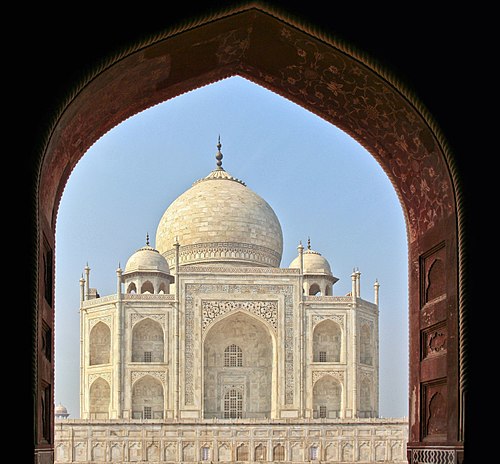
The ivory marble mausoleum built by Shah Jahan for Mumtaz Mahal (1632-1653): the most perfect building in the world, best visited at dawn on a clear day.
Photo: Diego Delso, CC BY-SA 4.0

The holiest city in Hinduism: 88 ghats (steps) descending to the Ganges, dawn boat rides past bathing pilgrims and the Ganga Aarti fire ceremony at dusk.
Photo: Vyacheslav Argenberg, CC BY 4.0

The Pink City’s Hawa Mahal and Amer Fort, the Lake Palace of Udaipur (on an island in Lake Pichola) and the golden Jaisalmer Fort rising from the Thar Desert.
Photo: Hemantraj8873, CC BY-SA 4.0

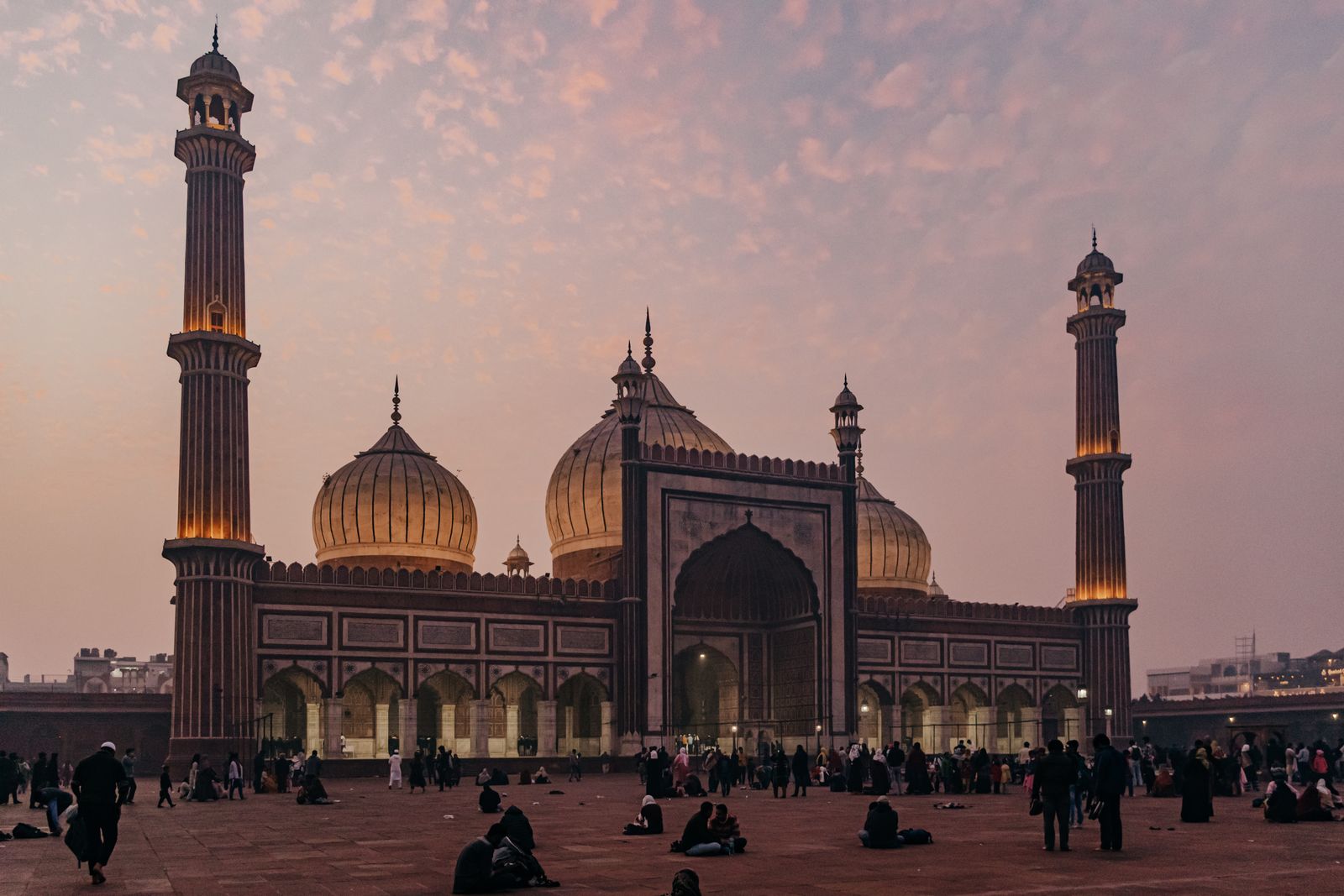
The winding lanes of Old Delhi’s Chandni Chowk market, Jama Masjid (India’s largest mosque), Humayun’s Tomb (the prototype for the Taj Mahal) and the 73m Qutb Minar minaret (UNESCO).
Photo: Athulvis, CC BY-SA 4.0

A network of lakes, canals and lagoons along the Kerala coast: houseboat (kettuvallam) overnight stays on the water, village life visible from the deck and the finest seafood in India.
Photo: Vyacheslav Argenberg, CC BY 4.0

A UNESCO World Heritage landscape of 1,600 monuments from the Vijayanagara Empire (14th-16th century) scattered among extraordinary granite boulder formations.
Photo: iMahesh, CC BY-SA 4.0

Ellora: 34 rock-cut caves including Kailasa Temple (the world’s largest monolithic sculpture, carved from a single rock face downward). Ajanta: 29 caves with 2nd-century BC Buddhist murals.
Photo: Dr Murali Mohan Gurram, CC BY-SA 3.0

A Himalayan high-altitude desert at 3,500m: Tibetan Buddhist monasteries (gompas) on clifftops, the Pangong Tso blue lake near the China border and the Nubra Valley’s sand dunes.
Photo: KennyOMG, CC BY-SA 4.0
Tandoor-cooked chicken in a spiced tomato and butter sauce. Invented in Delhi in the 1950s at Moti Mahal restaurant. The most internationally recognised Indian dish.
A fermented rice-and-lentil crepe filled with spiced potato and served with sambar and coconut chutney. South India’s national breakfast, eaten in tiffin restaurants across the subcontinent.
Basmati rice cooked with spiced meat (chicken, lamb, beef or vegetable) in a sealed vessel: Hyderabadi biryani uses dum (steam) cooking; Lucknawi is more fragrant with rose water.
A complete meal served on a metal tray: rice, bread, dal, two or three curries, pickle, papad and sweet. The definitive Indian meal format, with the composition changing by region.
Pani puri (hollow crispy spheres filled with spiced water), bhel puri (puffed rice with tamarind), aloo tikki (potato cutlets) and papdi chaat: the snack culture of Indian street corners.
Black tea brewed with milk, sugar, ginger, cardamom and spices in a single pot. Poured into small clay cups (kulhad) at chai stalls throughout India.
The Indian craft beer scene (Bira 91, White Rhino) has grown rapidly. Old Monk dark rum (produced since 1954) is the cultural spirit of Indian college culture.
Jalebi: deep-fried wheat spirals soaked in sugar syrup. Gulab jamun: milk-solid dumplings in rose-water syrup. The two most ubiquitous Indian sweets.
Delhi Indira Gandhi (DEL) and Mumbai Chhatrapati Shivaji (BOM) are the main international gateways. Chennai (MAA), Bengaluru (BLR), Kolkata (CCU) and Hyderabad (HYD) also receive direct long-haul flights. IndiGo, Air India and SpiceJet serve the extensive domestic network. For trip planning, see the Incredible India tourism portal.
Air India’s London–Delhi direct (9h) is the fastest routing. Emirates via Dubai and Qatar via Doha offer the most UK regional airport connections.
Air India’s New York–Delhi direct is one of the longer non-stops operated commercially. The Gulf carriers (Emirates, Qatar, Etihad) offer the most connections from North American cities.
IndiGo is India’s largest domestic carrier — reliable, cheap when booked ahead, and covers virtually every Indian city. Book at goindigo.in or MakeMyTrip.
Book Indian Railways at irctc.co.in (requires Indian phone number for registration — workaround: use Cleartrip or MakeMyTrip which accept international cards). Book 60+ days ahead for Shatabdi and Rajdhani.
India’s seasons vary dramatically by region. The cool dry season (October–March) is best for Rajasthan, the north and the Golden Triangle. Goa and Kerala are perfect October–April. The Himalaya is best May–October. Monsoon (June–September) is green and atmospheric but heavy in the south and west.
📅 India is in its best season in January, February, March, October, November, December. See where else is good to go in those months, or browse where to go by month.
India is among the best-value destinations in the world. Even mid-range travel feels luxurious compared to equivalent spending in Europe — the conversion rate in India’s favour is remarkable.
A full thali — rice, dal, two vegetable curries, chapati, raita, and pickle, refilled until you stop — costs INR 100–200 at a good local restaurant. This is daily eating for most Indians.
A heritage property in a converted Rajput haveli (mansion) costs INR 3,000–8,000 per night and is the best-value luxury accommodation in India — architecture at a fraction of Western hotel prices.
The Oberoi Udaivilas in Udaipur and the Taj Lake Palace (on a lake island, accessible only by boat) are two of the most celebrated hotels in Asia. Both start around INR 30,000/night — exceptional by any global standard.
The Golden Triangle — Delhi, Agra and Jaipur — is the classic first India trip. It covers Mughal architecture at its peak, Rajput palaces, and gives a manageable introduction to a country that requires several visits to begin to understand.
Old Delhi is a sensory assault — the spice market of Khari Baoli, the silver alleyways of Dariba Kalan, the Jama Masjid mosque and the Red Fort’s massive sandstone walls. Chandni Chowk’s cycle-rickshaw chaos. Take it slowly.
The Red Fort’s Sound and Light Show in the evenings gives the Mughal history in a suitably dramatic setting. The fort itself (open from 9:30am) takes 2–3 hours.
New Delhi was designed by Lutyens — the colonial capital’s wide avenues and Rajpath still impress. Humayun’s Tomb (1570, a UNESCO site and the prototype for the Taj Mahal) and the Qutb Minar complex (a 72.5m minaret from 1193, the oldest surviving tower in India).
The National Museum on Janpath has the finest collection of Indian art and antiquities in the country. Allow 3 hours. The Indus Valley Civilisation section (3000 BCE) is impressive.
2h by Gatimaan Express from Hazrat Nizamuddin. The Taj Mahal is most beautiful at sunrise — arrive at the East Gate at 6am when it opens. The white marble changes from pink to cream to white as the sun rises. Agra Fort in the afternoon.
The Taj Mahal entry is INR 1,100 for foreigners (including a free water bottle and shoe covers). Skip the touts outside — buy tickets online at asi.payumoney.com.
4h30 drive from Agra to Jaipur — consider the private taxi (the train is an option but slower for this route). Jaipur is Rajasthan’s capital — the old city is painted terracotta-pink. The Amber Fort (a 16th-century Rajput hilltop palace, 11km north) is the highlight.
Take a jeep or elephant ride up to Amber Fort at 8am — before the heat. The fort’s Sheesh Mahal (Hall of Mirrors) is one of the most dazzling interiors in India.
The City Palace complex is still partly occupied by the Maharaja’s family — the museum section shows the scale of Rajput royal life. Jantar Mantar (an 18th-century astronomical observatory with instruments 18m tall, a UNESCO site). The bazaars: Johari Bazaar for jewellery, Bapu Bazaar for textiles.
Jaipur’s block-printed textiles and blue pottery are the best shopping in Rajasthan. Prices in the bazaars are negotiable; the government-run Rajasthali emporium has fixed (fair) prices for comparison.
Take a morning flight from Jaipur to Varanasi. Varanasi is one of the oldest continuously inhabited cities on earth and Hinduism’s holiest site — the ghats (stone steps) leading to the Ganges, the dawn rituals, the cremation fires. A boat on the river at sunrise.
The evening Ganga Aarti ceremony at Dashashwamedh Ghat — priests, fire, flowers, chanting — begins at 6pm and lasts 45 minutes. Arrive by 5:30pm. Viewing from a boat is the best vantage point.
Varanasi airport connects to Delhi (2h) for international departures. If time allows, a final morning walk along the ghats before leaving.
The ghats at dawn — bathers, holy men, funeral pyres, flower sellers — is one of the most affecting experiences in India. Go before 7am when the light is soft and the crowds are smaller.
🛂 Entry rules: India e-Tourist Visa
Most visitors need a visa for India. Citizens of around 170 countries, including the UK, US, EU, Canada and Australia, can apply online for an e-Tourist Visa: a 30-day visa, or one-year and five-year versions that allow stays of up to 180 days per calendar year. The fee depends on your nationality and the visa length.
Apply at least four days before arrival (and up to 120 days ahead) on the official Indian Visa Online site; many look-alike sites charge extra. The e-Visa is only valid for entry through designated airports and seaports, not most land borders.
Official information: Government of India: e-Visa · Reviewed September 2026
Both work in all major Indian cities. Never enter an unmarked or unmetered taxi.
Drink only bottled or filtered water. Street food from busy stalls with visible turnover is generally safe.
A thali meal: INR 100-200 (EUR 1-2). A hotel room in Rajasthan: INR 1,500-5,000 (EUR 17-55).
Being invited for tea, food, a tour of a family home or a wedding happens frequently and sincerely.
The world’s second-largest rail network by employees: book via IRCTC at irctc.co.in. Book as early as possible; trains are in high demand.
Cover shoulders and knees at temples, mosques and gurudwaras. Remove shoes before entering any place of worship.
Both give excellent nationwide 4G data. Available at airports on arrival.
The sideways head wobble is a genuine Indian affirmative. It takes time to distinguish it from a head shake.
Quick answers to the questions people most often ask before visiting India.
India's seasons vary dramatically by region. The cool dry season (October–March) is best for Rajasthan, the north and the Golden Triangle.
Delhi Indira Gandhi (DEL) and Mumbai Chhatrapati Shivaji (BOM) are the main international gateways. Chennai (MAA), Bengaluru (BLR), Kolkata (CCU) and Hyderabad (HYD) also receive direct long-haul flights. IndiGo, Air India and SpiceJet serve the extensive domestic network.
Expect roughly INR 1,500–3,000 (about $18–36) a day on a budget and INR 6,000–12,000 (about $72–145) mid-range, or INR 20,000+ (about $241+) for a more luxurious trip, per person and excluding flights.
India uses the INR.
Plug types: Type C / D / M (mixed; bring universal adaptor).
India’s official rail booking app — book reserved seats on all Indian Railways trains; register in advance.
FreeIndia’s dominant ride-hailing app — covers autos, cabs and bikes across all major Indian cities.
FreeAlternative ride-hailing across India; useful in cities where Ola is less reliable.
FreeIndia’s leading restaurant discovery and food delivery app — reviews, menus and delivery in all cities.
FreeBook Taj Mahal sunrise tours, Kerala houseboats, Rajasthan desert safaris and Indian experiences.
FreeIndia’s primary messaging platform — essential for contacting hotels, guides and local transport.
FreeExplore India’s top city destinations — from Mumbai to Delhi, each with its own distinct character.
India sits within easy reach of several other destinations — each with a completely different character.


