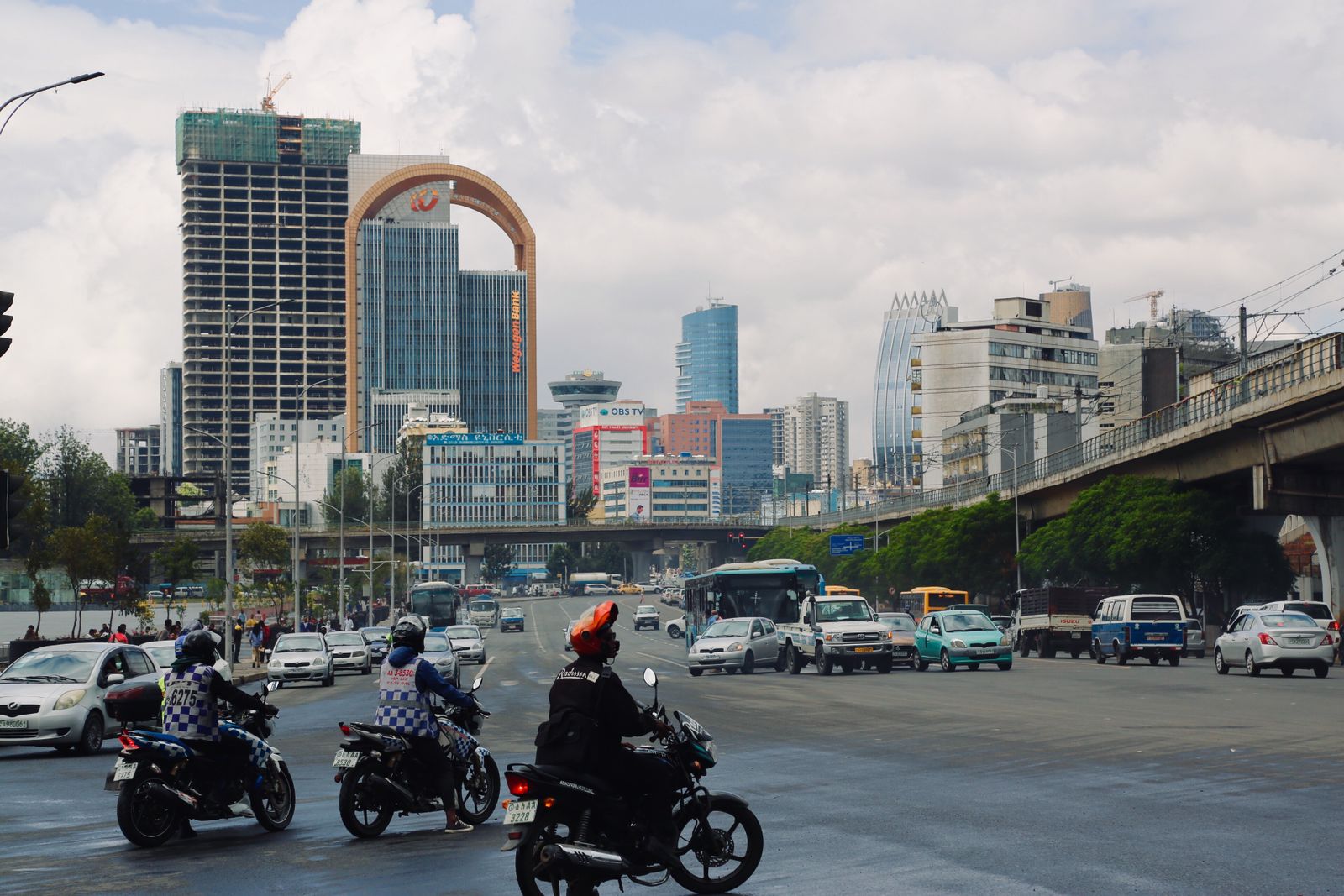
ET
Addis Ababa
Africa's diplomatic highland capital
Africa's diplomatic highland capital
⚠️ Travel advisory: check before you go
Governments advise against travel to parts of Ethiopia, including areas of Amhara, Tigray and regions near the borders, because of armed conflict and unrest. Check the latest advice for your route, especially for Lalibela and Gondar.
Latest official advice: UK FCDO · US State Department · Reviewed September 2026
Ethiopia’s National Museum holds one of the most famous fossils on earth — ‘Lucy’ (Dinkinesh), the 3.2-million-year-old Australopithecus skeleton that reshaped our understanding of human origins, found in the Ethiopian rift. Alongside her are other hominid finds, ancient artefacts and regal treasures, making this the essential primer on Ethiopia’s claim as a cradle of humankind.
The fossil hall with Lucy is the highlight (the displayed skeleton is a cast; the original is protected) — a small, cheap museum with an outsized story.
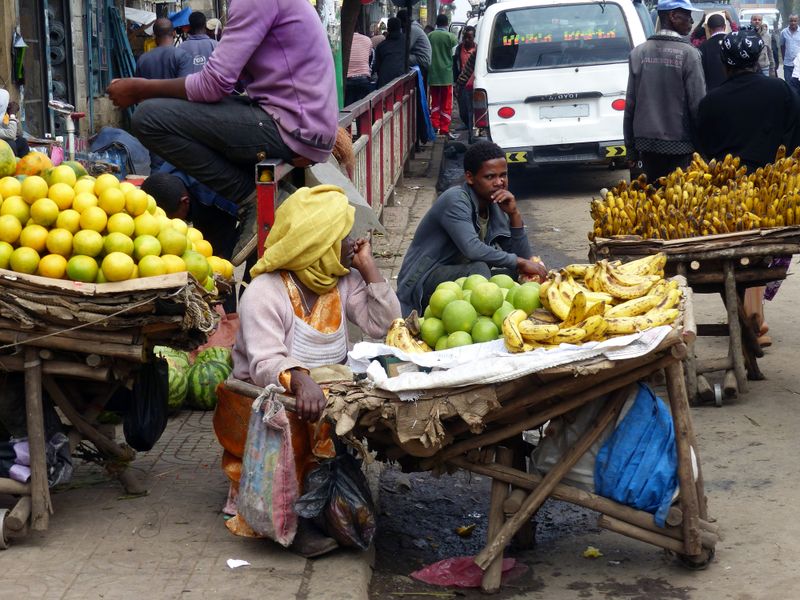
One of the largest open-air markets in Africa — a vast, teeming maze of stalls and alleys selling everything from spices, coffee and grain to textiles, recycled goods and livestock. It’s chaotic, overwhelming and utterly fascinating, the commercial engine of the city; go with a guide or local to navigate it, mind your belongings, and soak up the sensory overload.
Visit with a local guide for safety and context — the recycled-goods and spice sections are highlights; keep valuables secure and cameras discreet.
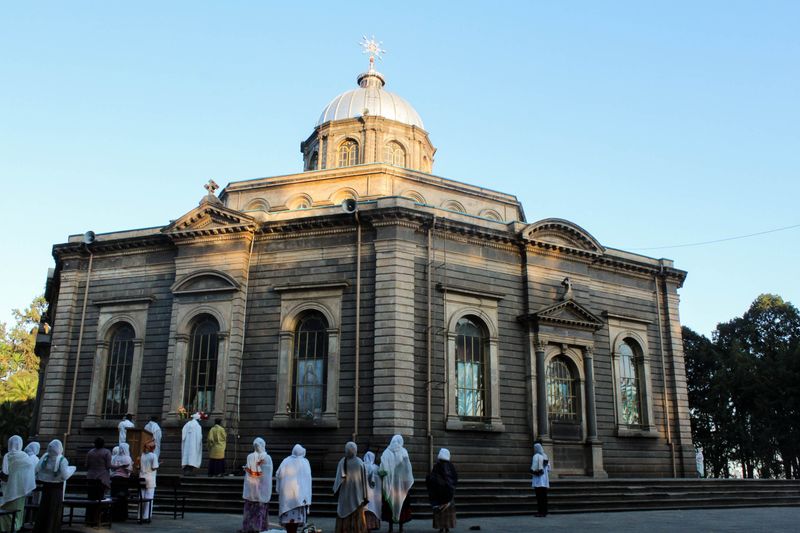
The grand Holy Trinity Cathedral is the most important Ethiopian Orthodox church in the capital — an ornate building where Emperor Haile Selassie is entombed, set among gardens and monuments. Ethiopia’s ancient form of Christianity is everywhere in Addis, from chanting monks to the many domed churches, offering a window into one of the world’s oldest Christian traditions.
The cathedral and Haile Selassie’s tomb are worth a visit; dress modestly, and you may witness colourful services, especially on Orthodox holy days.
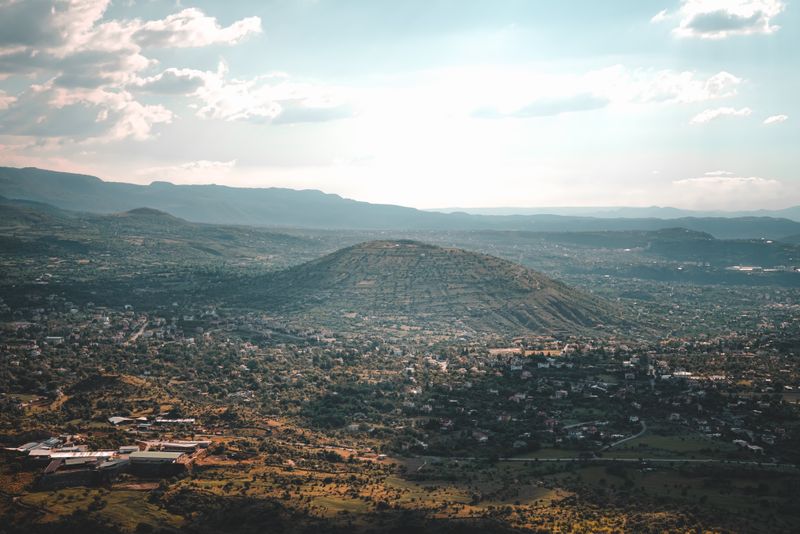
The Entoto hills rising north of the city — the original site of the capital — offer eucalyptus forests, historic churches, a palace museum and panoramic views over Addis, plus the new Entoto Park. Back in town, the real Addis experience is coffee: Ethiopia is the birthplace of the bean, and the ceremonial roasting, grinding and pouring of buna is a ritual of hospitality not to be rushed.
Drive up Entoto for the views and cool air, and don’t leave Addis without a full coffee ceremony — fresh-roasted, poured three times, with incense and popcorn.
Ethiopian food is one of the world’s great and most distinctive cuisines, and Addis is the place to feast on it. The foundation is injera — a large, spongy, slightly sour flatbread made from teff — used as both plate and utensil, torn to scoop up an array of spicy stews (wat). Try doro wat (chicken in a fiery berbere sauce, the national dish), tibs (sizzling fried meat), kitfo (spiced minced beef, often raw), and the vegetarian ‘fasting’ platters of lentils, greens and pulses that are superb and everywhere (Orthodox fasting days mean great veggie food). Eat with your right hand from a shared platter — it’s communal and convivial. Wash it down with the famous coffee, tej (honey wine), or St George beer, and finish with a coffee ceremony. Prices are very low, and a shared injera feast with friends is the heart of Ethiopian dining.
Start at the National Museum to meet Lucy, the 3.2-million-year-old ancestor, then the Holy Trinity Cathedral and Haile Selassie’s tomb — Ethiopia’s deep past in a morning.
Dive into the vast Merkato market with a guide for the sensory overload, then a shared injera feast — doro wat and a fasting platter — eaten with the right hand.
Drive up into the eucalyptus-scented Entoto hills for panoramic views over the highland capital, historic churches and the cool mountain air.
Experience a full coffee ceremony — roasted, poured three times — then a cultural restaurant with traditional music and dancing, or a lively azmari bet music bar.
Ethiopia is the birthplace of coffee — don’t rush the ceremony; fresh-roasted buna poured three times, with incense and popcorn, is the essence of hospitality here.
Ethiopia uses its own calendar (7–8 years behind, 13 months) and a 12-hour clock starting at dawn — confirm times carefully; it’s a fascinating quirk of the country.
At 2,400m Addis is cool year-round and you may feel the altitude — pack layers even near the equator, and take it easy on arrival.
Ethiopian food is unique and superb — eat communally from shared injera with your right hand; the vegetarian fasting platters are excellent for all.
Ethiopia’s regional security situation can change — check current travel advice, especially for the north, and use reputable local operators for wider travel.
Ethiopia is very cheap but largely cash-based (birr) — carry cash, as cards are limited; hotels and some restaurants take them in Addis.
Reliable walking and driving directions across Addis and to Entoto.
Free
How hotels, guides and drivers across Ethiopia communicate and take bookings.
Free
Multi-currency card for the region — but bring birr cash, as card acceptance is limited.
Free
The highland capital Addis Ababa, the rock churches of Lalibela, the castles of Gondar, Lake Tana at Bahir Dar and ancient Axum — Ethiopia’s historic north is one of Africa’s great journeys.
Planning a wider trip? Our Ethiopia travel guide covers getting there, costs, when to go and more.