ET
Ethiopia
Cradle of humanity and ancient empire heritage
Cradle of humanity and ancient empire heritage
⚠️ Travel advisory: check before you go
Governments advise against travel to parts of Ethiopia, including areas of Amhara, Tigray and regions near the borders, because of armed conflict and unrest. Check the latest advice for your route, especially for Lalibela and Gondar.
Latest official advice: UK FCDO · US State Department · Reviewed September 2026

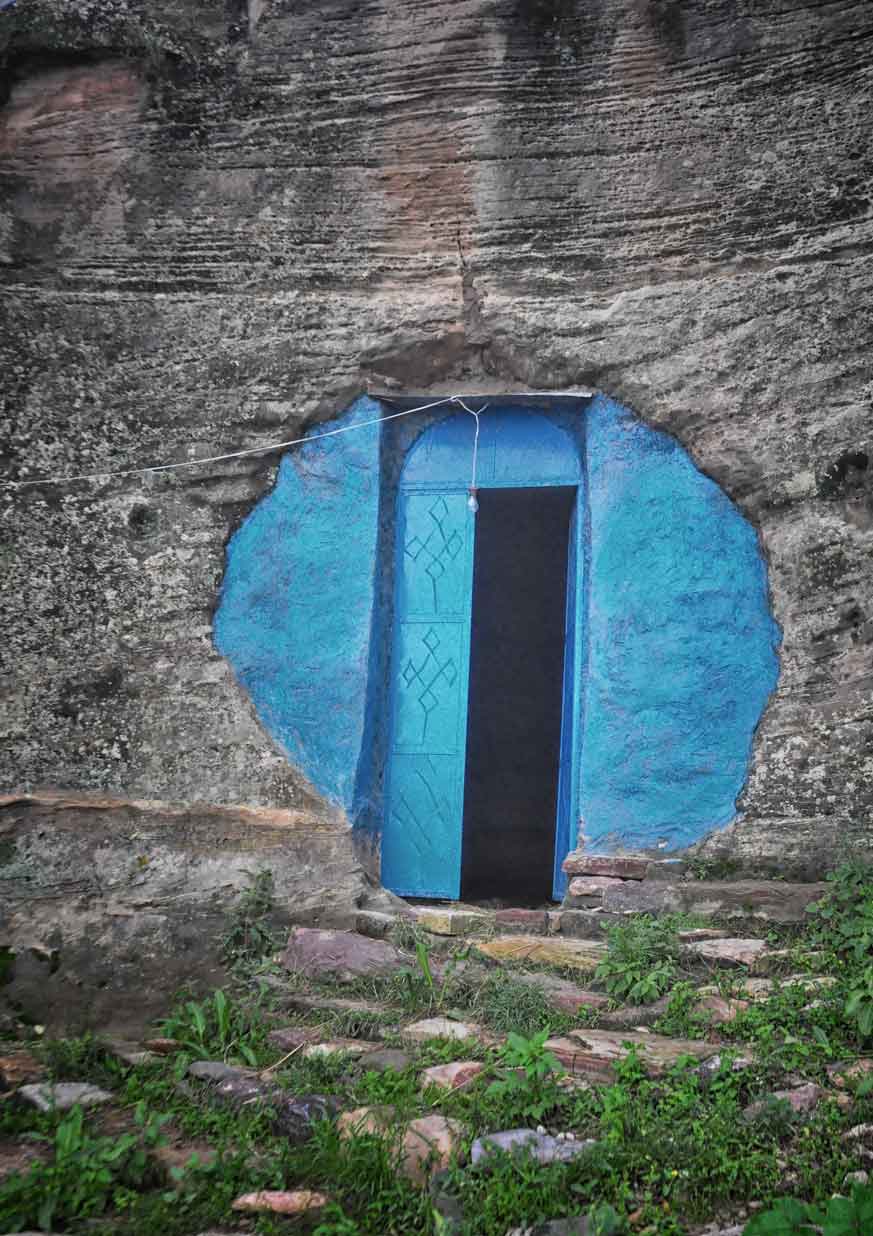
11 Orthodox churches carved from the living rock in the 12th century: the Church of St George (a perfect cross shape, cut 12m into the earth) is the most striking sacred building in Africa.
Photo: Radosław Botev, CC BY 3.0 pl

A UNESCO escarpment of 4,000m peaks: the gelada baboon (endemic to Ethiopia, the world’s only grass-eating primate), the Ethiopian wolf and the dramatic cliff-edge trekking.
Photo: Indrik myneur, CC BY 2.0

The ancient Aksumite Empire’s capital: the Obelisk of Axum (a 4th-century granite stele), the ruins of Queen of Sheba’s palace and the Church of Our Lady Mary of Zion where the Ark of the Covenant is believed to be kept.
Photo: gill_penney [2], modified by Fulviusbsas, CC BY 2.0

The medieval Fasil Ghebbi (Royal Enclosure): six Afro-Portuguese castles within a walled complex, UNESCO-listed, from the 17th-century Gondarine kings.
Photo: Adam Jones from Kelowna, BC, Canada, CC BY-SA 2.0

The lower Omo Valley’s indigenous communities: the Mursi (clay lip plates), the Hamar (bull jumping ceremony), the Karo and the Dasanach. A controversial but extraordinary cultural encounter.
Photo: Rod Waddington from Kergunyah, Australia, CC BY-SA 2.0

The Blue Nile’s largest waterfall: 400m wide in the rainy season, 2km downstream from Lake Tana (source of the Blue Nile).
Photo: CT Snow from Hsinchu, Taiwan, CC BY 2.0

The National Museum of Ethiopia (Lucy’s skeleton on display) and the Mercato: the largest open-air market in Africa.
Photo: Radosław Botev, CC BY 3.0 pl

A 16th-century walled Islamic city: the 90 mosques, the hyena feeding ritual (wild hyenas fed by hand at the city gate at dusk) and the colourful market.
Photo: A. Davey from Where I Live Now: Pacific Northwest, CC BY 2.0
Green beans roasted over charcoal, ground by hand, brewed in a jebena clay pot and served in tiny cups: a 45-minute social ritual. Three rounds (abol, tona, bereka) are the correct completion.
A large, spongy sourdough flatbread of teff flour: the plate, the utensil and the accompaniment for all Ethiopian food. Slightly sour, fermented for 2-3 days.
A slow-cooked chicken stew in a deeply spiced berbere sauce with hard-boiled eggs: the national dish of Ethiopia, eaten at every celebration.
Stir-fried beef or lamb with butter, rosemary, onion and chilli: the most ordered dish in Addis Ababa’s restaurants.
A powder of ground chickpeas and berbere slow-cooked with onion and oil: the everyday protein of most Ethiopians, eaten for lunch.
A traditional Ethiopian mead of honey, water and gesho (a bitter herb): the national alcoholic drink, served in a rounded flask (berele).
Two Ethiopian lagers brewed since the 1920s. St George is the older; Meta the lighter.
Shredded injera mixed with berbere, oil and sometimes meat: the Ethiopian breakfast, using leftover injera from the previous day.
Addis Ababa Bole (ADD) is the main hub and one of Africa’s busiest airports. Ethiopian Airlines is one of the best carriers in Africa, with an extensive domestic and international network.
Ethiopian Airlines is Africa’s best airline and flies direct from Heathrow to Addis Ababa in 8h30. The Addis hub connects to 130+ destinations across Africa, making it the primary gateway for sub-Saharan travel.
Ethiopian Airlines’ Washington Dulles–Addis direct (12h30) is one of the longest African routes from North America. The airline’s Star Alliance membership provides good connection options from most US cities.
Ethiopian Airlines dominates domestic routes with multiple daily connections. The Historic Route circuit (Addis–Lalibela–Axum–Gondar) can be done with a single-direction multi-city ticket at a fixed price — ask at the ticket office.
The Danakil Depression requires a mandatory armed scout and 4WD vehicle — independent travel is not permitted. Several agencies in Mekele operate reliable 3-day tours including transport, guide, food and camping.
October to June is the dry season — the best time for the Lalibela rock churches, the Simien Mountains, the Danakil Depression and the Omo Valley tribes. The main rains (July–September) make mountain roads difficult but the highlands turn green.
📅 Ethiopia is in its best season in January, February, March, October, November, December. See where else is good to go in those months, or browse where to go by month.
Ethiopia is moderate value — cheaper than Kenya for accommodation and food, but expensive for internal flights and the Danakil Depression tours (which require a mandatory guide and 4WD). The country uses the Ethiopian Birr.
Injera — a large spongy sourdough flatbread made from teff, fermented 3 days, used as both plate and utensil — is the foundation of Ethiopian cuisine. Every meal is eaten from a communal injera covered with stews and salads.
Ethiopian coffee is the birthplace of coffee culture — the coffee ceremony (jebena buna) takes 30–45 minutes, involves roasting the beans, grinding by hand, brewing in a clay pot and serving three rounds.
Wilderness Ethiopia and Remote Ethiopia operate high-end fly-camp expeditions to the Danakil and Bale Mountains — US$500–800pp/day all-inclusive, with private aircraft connections and the finest guides in the country.
Addis Ababa for one day, the Danakil Depression for one, Lalibela for two, the Simien Mountains for two, Axum to close. Ethiopia demands ambition and rewards it.
Addis Ababa sits at 2,355m — the third highest capital city in the world. The National Museum (Lucy — the 3.2 million-year-old Australopithecus afarensis skeleton, the most complete pre-human fossil ever found — is here). The Mercato — the largest open-air market in Africa.
Lucy (Australopithecus afarensis, discovered 1974 in the Afar Depression) walked upright 3.2 million years ago — the most significant fossil in the history of paleoanthropology. The original is at the National Museum; replicas travel internationally. Addis Ababa is the most accessible place on earth to see it.
1h30 flight from Addis to Mekele. The Danakil Depression is the hottest and lowest place in Africa — 125m below sea level, with active volcanoes, acid lakes and the Dallol hydrothermal field (alien yellow-green sulphur formations, 3km² of boiling multicoloured pools). Temperature: 35–55°C year-round.
Dallol is the most surreal landscape on earth that is actually accessible to visitors — a landscape of yellow sulphur chimneys, green acid pools and orange salt formations that looks like a planetary surface from science fiction. It is only visited as part of a multi-day Danakil tour from Mekele.
1h flight from Mekele. Lalibela — 11 monolithic churches carved from the living rock in the 12th–13th centuries under King Lalibela, who intended to create a New Jerusalem — is one of the most striking architectural achievements in the world. The churches are still active places of worship for Ethiopian Orthodox Christians.
Bete Giyorgis (St George’s Church) is the most famous — a cruciform church carved 12m down into the rock, with carved crosses on the roof visible only from the rim above. It is the image that appears on every Ethiopia travel article. The interior frescoes are from the 12th century.
The northern church cluster (Bete Medhane Alem — the largest rock-hewn church in the world — Bete Maryam, Bete Maskel) connected by tunnels and trenches cut into the rock. Ethiopian Orthodox pilgrims in white robes chanting, burning incense and praying at dawn — the religious atmosphere is entirely authentic and ancient.
Lalibela is at 2,630m altitude and pilgrims walk barefoot on cold stone in the morning. Bring warm layers for the dawn visit — the churches are in shadow until 8am and the combination of mist, chanting and the scale of the excavation is impressive.
1h flight from Lalibela to Gondar, then 3h drive. The Simien Mountains (UNESCO World Heritage Site) are a series of dramatic plateaus and gorges at 3,000–4,543m, with the main escarpment — vertical cliffs dropping 1,000m — and unique wildlife: gelada baboons (the only grass-eating primate), Walia ibex and Ethiopian wolves.
Gelada baboons live only in the Ethiopian highlands — troops of 200–400 individuals graze on the plateau, entirely unbothered by visitors at close range. The males have a distinctive patch of bare pink skin on their chest. They are not related to true baboons.
Day hike from Chenek camp toward Ras Dashen (4,543m, the highest peak in Ethiopia and the tenth highest in Africa). The gelada baboons are most active in the morning on the clifftop grasslands. Ethiopian wolves (the rarest canid in the world, 500 individuals) are occasionally seen hunting rodents.
The Ethiopian wolf is the most endangered carnivore in Africa — only about 500 individuals remain, most in the Bale Mountains (6h south of Addis) and some in the Simiens. Seeing one is not guaranteed but possible with an early morning positioned watch.
3h drive from Gondar or 45-min flight. Axum was the capital of the Aksumite Empire (1st–7th century CE), one of the four great empires of the ancient world alongside Rome, Persia and China. The stelae field — giant obelisks up to 33m tall, carved from single pieces of granite — and the Church of St Mary of Zion, which Ethiopians believe contains the original Ark of the Covenant.
The Church of St Mary of Zion (Axum) is said to contain the Ark of the Covenant — housed in a treasury guarded by a single monk whose life is devoted to its protection. No one outside the guardian is permitted to see it. The claim is taken entirely seriously by the Ethiopian Orthodox Church.
The strongest domestic network in Africa. Lalibela, Axum and Gondar all have airports.
A restaurant meal: ETB 150-400 (EUR 2.50-7). Hotel in Lalibela: USD 30-80.
Being invited to share a coffee ceremony is a profound expression of welcome.
Some regions (Tigray, Amhara) have had instability. Always check your government’s current advice.
New Year (Enkutatash) falls in September. Ethiopia is in the 21st century’s equivalent of 2017.
Hello and thank you in Amharic: immediately appreciated.
The only telecom provider in Ethiopia. Available at Addis airport.
The tartness of teff injera is an acquired taste. Give it two days.
Quick answers to the questions people most often ask before visiting Ethiopia.
October to June is the dry season — the best time for the Lalibela rock churches, the Simien Mountains, the Danakil Depression and the Omo Valley tribes. The main rains (July–September) make mountain roads difficult but the highlands turn green.
Addis Ababa Bole (ADD) is the main hub and one of Africa's busiest airports. Ethiopian Airlines is one of the best carriers in Africa, with an extensive domestic and international network.
Expect roughly ETB 1,500–2,500 a day on a budget and ETB 4,500–8,000 mid-range, or US$300+ for a more luxurious trip, per person and excluding flights.
Ethiopia uses the ETB.
Governments advise against travel to parts of Ethiopia, including areas of Amhara, Tigray and regions near the borders, because of armed conflict and unrest. Check the latest advice for your route, especially for Lalibela and Gondar. Always check current official travel advice before booking.
Ethiopia’s local ride-hailing app — the most widely used transport app in Addis Ababa.
FreeBook Lalibela rock-hewn church tours, Simien Mountains trekking, Omo Valley cultural visits and Ethiopian experiences.
FreeEthiopia’s widely used messaging platform — essential for contacting guides and accommodation.
FreeTelegram is widely used in Ethiopia alongside WhatsApp — many tour operators prefer it.
FreeBook hotels in Addis Ababa and lodges near Lalibela and the Omo Valley.
FreeA diplomatic capital, churches carved from rock, an African Camelot, a lake of monasteries and the cradle of an ancient empire — five sides of Ethiopia.
Ethiopia sits within easy reach of several other destinations — each with a completely different character.