GM
Gambia
The Smiling Coast of West Africa
The Smiling Coast of West Africa
A sacred freshwater pool in Bakau where over 80 Nile crocodiles live in complete harmony with local people — considered a fertility shrine and protected by the local community since the 17th century. Guides let visitors touch the crocodiles.

The Gambia’s oldest protected area — a 105-hectare pocket of gallery forest and dry woodland with green vervet monkeys, red colobus, western red colobus, crocodiles, 300+ bird species and the excellent Nature Education Centre.

A UNESCO World Heritage Site — a tiny island in the Gambia River that served as a major British slave trading post. Author Alex Haley traced his family’s roots to Juffureh village on the nearby mainland, connecting it to the story of ‘Roots’.

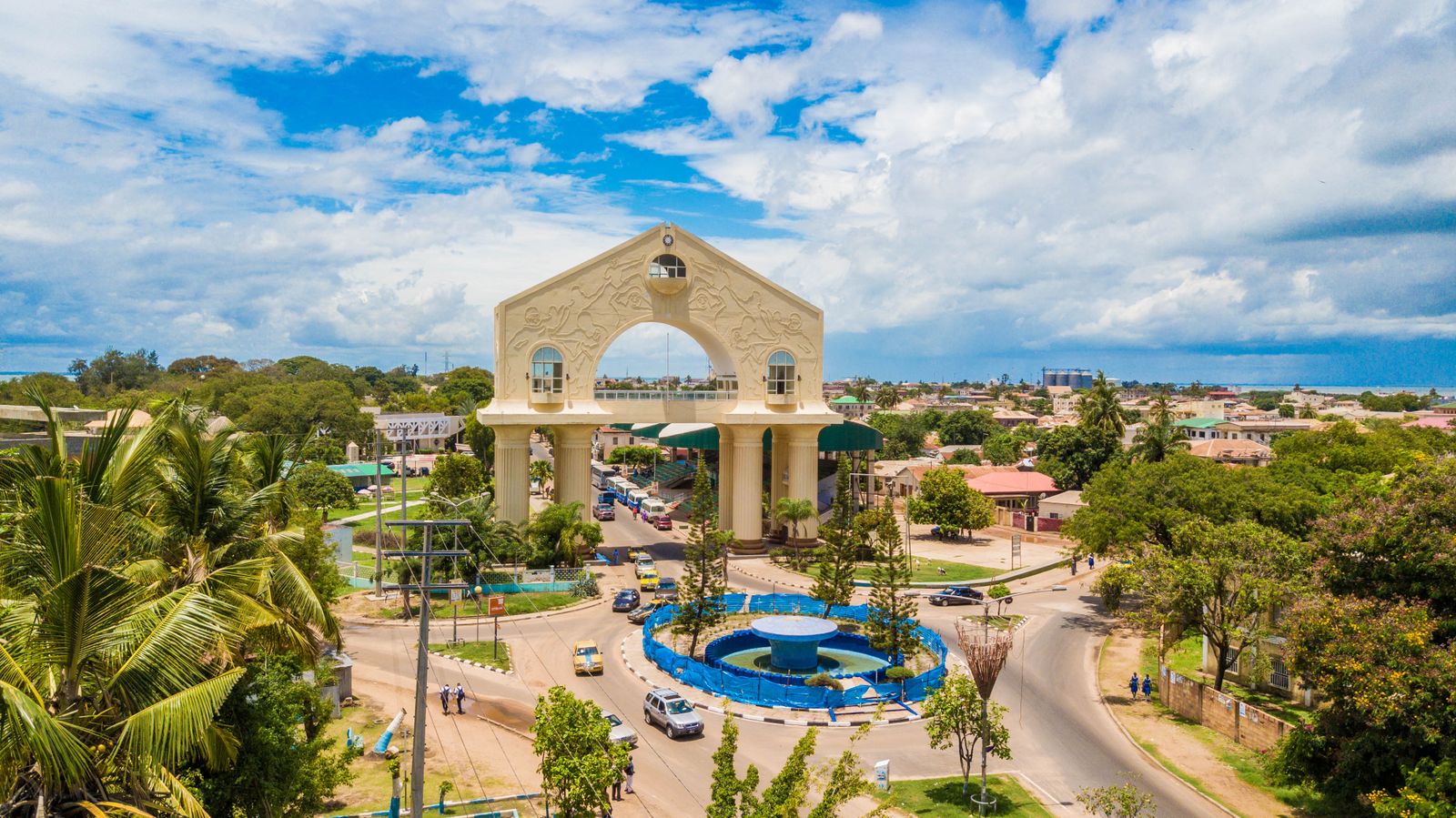
West Africa’s smallest capital — a quiet, low-rise city on a peninsula with a distinct colonial architecture, the colourful Albert Market, the Arch 22 monument and outstanding street food. Often overlooked by visitors rushing to beach resorts.

Five islands in the Gambia River that serve as a chimpanzee sanctuary — chimps relocated from around West Africa live here in large family groups. Reached by boat from Janjanbureh (Georgetown); one of the best chimpanzee experiences in West Africa.
The southernmost village in the Gambia — a relaxed community with sea turtle nesting beaches, a crocodile pool and superb birdwatching. The Stone Circles of Wassu (a UNESCO World Heritage Site) lie further inland in central Gambia, worth a separate day trip.
The Gambian national dish — rice slow-cooked in a thick tomato, fish and vegetable broth with bay leaves and scotch bonnet, producing intensely flavoured, slightly smoky rice. Every family has its own version; prepared communally for celebrations.
The defining Gambian stew — peanut butter (ground groundnuts) cooked with fish or chicken, tomato and sweet potato until it forms a thick, golden sauce. Eaten with white rice or findo (sorghum couscous). Deeply satisfying.
Chicken marinated in lemon juice and caramelised onions then braised until falling off the bone — a dish shared across West Africa that the Gambia does particularly well, especially at fish camps near the river.
Gambia’s own lager, brewed at the Julbrew Brewery in Kanifing since 1977 — a crisp, refreshing lager that is the default cold drink at every bar and hotel along the coastal strip. One of West Africa’s better domestic beers.
A slimy okra soup made with smoked fish, beef or chicken and palm oil — the texture is polarising but the flavour is extraordinary: intensely savoury and earthy. Considered a restorative food served to new mothers and the ill.
A brilliant crimson hibiscus drink made from dried roselle flowers steeped with ginger, sugar and lime — the ubiquitous street drink of The Gambia, served cold from large jars at every market stall.
Banjul International Airport (BJL) has good UK charter connections and regular African hub services. Brussels Airlines and easyJet (charter) serve the main routes. For trip planning, see the official Gambia tourism portal.
💡 The Gambia is one of the most popular winter-sun charter destinations from the UK — multiple charter flights from Gatwick, Manchester and Birmingham November–April. Brussels Airlines operates year-round via Brussels.
💡 Dakar (40km north by road or ferry — Senegal’s capital and the main West Africa hub) is the most convenient gateway from Europe for building a Gambia + Senegal itinerary.
💡 The Senegambia coastal strip (Bakau, Bijilo, Kololi, Kotu — the main resort beach area) is where most visitors stay and is served by taxis and geli-gelies. A car hire (US$25–60/day) is recommended for the upriver sites.
💡 The Gambia is uniquely flat — the entire coastal strip from Banjul to the beach resorts is bikeable. The interior upriver sites (Juffureh, River NP) require a car or shared taxi.
November to February is perfect — dry, sunny, pleasantly warm (25–30°C), the birdlife at its peak with Palearctic migrants. July to September is the rainy season (30–32°C, extremely humid, roads can flood) but the green season is spectacular for birders willing to endure the heat.
The Gambia uses the Dalasi (GMD, approx 65 GMD = 1 USD). It is one of the most affordable West African destinations for Western visitors.
Domoda (groundnut stew — beef or chicken slowly simmered in a rich peanut and tomato sauce with sweet potato and hot pepper — the national dish of The Gambia and one of the most popular dishes in West Africa, available at every)
The Gambia’s bird guides (certified by the Gambia Birding Group and GNTA — some of the most knowledgeable and experienced birding guides in Africa, having guided ornithologists from around the world for 30+ years) provide one.
Mandina River Lodge (a floating river lodge on the Gambia River with birdwatching from the decks at dawn &mdash)
Banjul for one day, Kachikally for one, Bijilo for one, Abuko for one, Juffureh roots pilgrimage for one, River Gambia chimps for one, Tanbi Wetland for one. The Gambia — the smallest African country — is the world’s best birdwatching destination per unit area, has sacred crocodile pools, the pilgrimage site of the Roots story and West Africa’s finest mangrove oysters.
Banjul — the capital of The Gambia (the smallest country on mainland Africa — a narrow strip of land 50km wide on either side of the Gambia River, 10,689km², population 2.7 million, entirely surrounded by Senegal except for the Atlantic coast) with the National Museum of the Gambia (the finest collection of Gambian history and culture, including the history of the transatlantic slave trade through which The Gambia served as a primary embarkation point) and the Albert Market.
💡 The Gambia is the smallest country on mainland Africa and one of the strangest geographically — it follows the course of the Gambia River for 480km inland from the Atlantic coast, at its widest only 50km, entirely surrounded by Senegal. This shape is the result of British colonial horse-trading: Britain secured a strip of river bank and the navigable river up to the range of a cannon-shot from a gunboat, giving it control of river trade, while France controlled everything else (Senegal).
Kachikally Sacred Crocodile Pool (a freshwater pool in Bakau, 12km from Banjul, considered sacred by the Mandinka people and containing approximately 80 Nile crocodiles that have been venerated and fed for generations — they are completely habituated to humans and allow visitors to touch them, walk among them and be photographed next to 3m+ crocodiles at close range — the most accessible crocodile encounter in West Africa without any barrier).
💡 Kachikally (named for a female Mandinka spirit associated with fertility and healing — women seeking children have visited the pool for 400+ years, bathing in the sacred water as a fertility ritual) is one of the most visited sacred sites in The Gambia. The crocodiles are considered the guardians of the spring; harming them is taboo. The 80 crocodiles are fed daily by the pool’s caretakers and are completely peaceful toward humans — though visitors are advised not to approach them from behind.
Bijilo Forest Park (a 51-hectare coastal forest reserve next to the beach resort strip at Kololi — one of the best accessible wildlife sites in The Gambia, with Western red colobus monkeys, green vervet monkeys and 55+ bird species in the coastal forest — walkable in 2 hours, the most wildlife-dense small reserve in West Africa) and the Kololi beach strip (the Atlantic resort coast of The Gambia, with beach bars, restaurants and the most lively nightlife in West Africa north of Lagos).
💡 The Western red colobus (Piliocolobus badius — a large, colourful arboreal monkey with a bright red-and-black coat, one of the most threatened primates in Africa — the subspecies in The Gambia is the Gambian red colobus, found only in Gambian coastal forests, with a total population under 1,000 individuals) at Bijilo are habituated to humans and approach within metres. The coastal forest of The Gambia represents the western extreme of the species’ range.
Abuko Nature Reserve (a 105-hectare patch of gallery forest on the banks of a stream 25km from Banjul — the finest accessible birdwatching in The Gambia, with 300+ species recorded including the African fish eagle, Verreaux’s eagle owl, the spectacled weaver and the little bee-eater — and the monkey habitat for vervet monkeys, colobus, West African red colobus and the rare spotted hyena — the most biodiverse small reserve in West Africa).
💡 The Gambia is considered one of the world’s finest birdwatching destinations per unit area — with over 570 recorded bird species in a country the size of Yorkshire, it has the highest bird diversity density of any country in continental Africa. The combination of the Gambia River providing habitat for aquatic birds and the forest reserves for forest species, with Palearctic migrants arriving November–March from Europe, creates extraordinary birding.
Juffureh (the village on the north bank of the Gambia River — the ancestral home of Kunta Kinte, the enslaved man whose story was traced by Alex Haley in the 1976 book Roots and the subsequent TV series — whether the historical identification is accurate or not, Juffureh has become the most important pilgrimage site for African Americans tracing their heritage, with 20,000+ visitors per year) and James Island (now Kunta Kinteh Island — the 18th-century British slave fort from which hundreds of thousands of Africans were shipped across the Atlantic).
💡 Alex Haley’s Roots (1976 — a genealogical novel tracing the author’s family history from the Gambian village of Juffureh to slavery in America and emancipation, adapted into an 8-part TV series watched by a record 130 million Americans — the largest audience for a miniseries in TV history) transformed Juffureh from an obscure Gambian village into an internationally significant site. The book’s historical accuracy has been disputed by historians, but its cultural impact was immense.
River Gambia National Park (540km² of forest along the Gambia River, 250km upstream from Banjul — the home of habituated chimpanzee communities on river islands, accessible by pirogue, and the finest undisturbed riparian forest in The Gambia, with hippos, crocodiles, 400+ bird species and the baboon and colobus communities of Baboon Island).
💡 The chimpanzees of River Gambia National Park’s Baboon Islands (Pan troglodytes verus — the West African chimpanzee, critically endangered with approximately 35,000 individuals remaining) were introduced to the islands in a rehabilitation programme by Stella Marsden in the 1970s, and the population has grown to approximately 100 individuals across 5 islands. The river islands provide excellent protection — chimpanzees cannot swim.
The Tanbi Wetland Complex (a 6,000-hectare mangrove ecosystem at the mouth of the Gambia River — the nursery for the river fishery and the feeding ground for thousands of migratory waders, accessible by pirogue from Banjul) and a final Gambian seafood lunch of fresh oysters from the mangrove creeks (the Gambia River produces the finest and most affordable oysters in West Africa, gathered by women from the mangrove roots for US$1–3 per dozen) before flying from Banjul (BJL).
💡 Gambian mangrove oysters (Crassostrea gasar — the West African mangrove oyster, grown naturally on the roots of red mangroves in tidal creeks, harvested by hand by women who wade through the mangrove at low tide — sold at roadside stalls and markets for US$0.50–2 per dozen, the cheapest seafood in West Africa and of excellent quality) are the most distinctive local food experience in The Gambia.
Thomas Cook, Jet2, TUI and other UK operators fly direct to Banjul International (BJL) in winter months (Oct-April). This makes the Gambia the most accessible West African country for British visitors.
The Gambia has one of the most liberal visa policies in Africa — British, American, EU and many other passport holders receive a free stamp on arrival for 90 days. No advance application required.
The Gambia uses UK-style three-pin plugs (Type G) at 230V — the same as the UK, making it easy for British visitors who need no adaptor.
As the only English-speaking country in West Africa, The Gambia is unusually accessible — all signage, menus and official communication is in English.
Over 560 bird species have been recorded — an extraordinary density for such a small country. Winter months bring European migrants; the Abuko Reserve, Bao Bolong and the river around Janjanbureh are the best sites.
Exchange USD or EUR on arrival; cards are accepted at resort hotels but cash is needed everywhere else. The exchange rate at bureaux is better than at the airport.
Camera translation of signs and menus. Download language pack offline.
FreeReal-time and offline exchange rates for all world currencies.
FreeHotels, guesthouses and apartments with free cancellation on most rates.
FreeMillions of traveller reviews for restaurants, attractions and hotels.
FreeThe most widely used messaging app worldwide for bookings and local contact.
FreeThe Gambia is almost entirely surrounded by Senegal, with Guinea-Bissau, Sierra Leone and Ghana within easy reach — a cluster of West African nations each with distinct colonial heritage and natural character.
