GN
Guinea
Fouta Djallon highlands, chimpanzee tool-use & West African jazz
Fouta Djallon highlands, chimpanzee tool-use & West African jazz
Guinea is West Africa’s great undiscovered natural and cultural destination — a country of waterfalls, mountains, chimpanzees and the magnificent Fouta Djallon Highlands, often called the “Water Tower of West Africa” because it is the source of the Niger, Senegal and Gambia rivers. The Fouta Djallon Plateau — a highland of sandstone escarpments, deep valleys, cascading rivers and traditional Fula villages — is one of West Africa’s finest hiking landscapes. The Bossou Hills near the Guinean-Liberian border host one of the world’s most studied and habituated chimpanzee communities. Conakry, the sprawling coastal capital, has the extraordinary Iles de Los just offshore and one of West Africa’s most dynamic music traditions — Guinea has produced legends including Miriam Makeba (by adoption), Mory Kanté and Bembeya Jazz.
A vast highland plateau of eroded sandstone escarpments, deep river gorges and traditional Fula (Peul) villages at 800–1,500 metres altitude. The waterfall of Kinkon and the Chutes de la Sala near Labé, the dramatic Douki canyon and the sacred També forest are the main highlights. Hiking between villages across the sandstone landscape is one of West Africa’s finest trekking experiences.
A UNESCO World Heritage Site on the tri-border of Guinea, Ivory Coast and Liberia — the Nimba mountains are a centre of extraordinary biodiversity, home to the viviparous toad (gives birth to live young), chimpanzees, pygmy hippos and hundreds of endemic plant and insect species in one of West Africa’s most biologically significant landscapes.
A short boat ride from Conakry, the Islands of Los (Room Island, Tamara and Factory Island) have white-sand beaches, coral reefs and a peaceful atmosphere completely different from the mainland chaos. Room Island in particular is popular for weekend escapes.
Rice cooked in a rich tomato, onion and palm oil broth with chicken or goat — the Sunday feast dish of Guinea, shared from a communal bowl. The palm oil gives it a red-orange colour and a depth of flavour that plain boiled rice cannot match.
peanut sauce with chicken or lamb) are the cornerstones.
cassava couscous) from the Fouta Djallon and fresh Atlantic fish at Conakry’s waterfront restaurants are outstanding.
Fresh ginger blended with lime and sugar into a fiercely cold drink — the most popular street refreshment in Conakry, sold ice-cold from vendors and considered an energy tonic that is simply the finest non-alcoholic drink in the heat.
Fresh sap tapped from oil palm trees at roadside stalls and village markets — drunk fresh when sweet and milky, or after a day of fermentation when gently alcoholic. Central to Guinean village social life and celebration culture.
Conakry International Airport (CKY) is the gateway. Air France, Brussels Airlines and Ethiopian Airlines serve the main routes. For trip planning, see the official Guinea tourism portal.
💡 Paris (6h, Air France) and Brussels (6h, Brussels Airlines) are the main European connections. Royal Air Maroc via Casablanca (4h) is a good alternative for UK and Spanish travellers.
💡 Dakar and Abidjan (both 1h30) are the most convenient West African gateways. Ethiopian Airlines connects East Africa directly.
💡 Conakry is 30 minutes from the airport by taxi. The Fouta Djallon highlands are 7–9 hours away by shared bush taxi on the paved road via Coyah.
💡 Guinea’s road network is poor outside the main Conakry–Labe highway. A 4WD with driver is strongly recommended for Bossou, Mount Nimba and forest region travel.
November to April is the dry season — the best time for the Fouta Djallon highlands and the forest zone (25–32°C). November to January is ideal. May to October is heavy wet season; roads flood and become impassable in many areas.
The Guinean franc (GNF) is the currency. Very affordable.
Sauce feuille (cassava leaf sauce cooked with palm oil and dried fish — the everyday meal of Guinea, eaten with rice at every meal, for US$1–4 at local restaurants — together with poulet y)
The Fouta Djallon hiking routes (the highland trails connecting the Fula villages, waterfalls and cattle markets of the massif &mdash)
A private pirogue charter to the uninhabited Islands of Lo.
Conakry for one day, Fouta Djallon highlands for two days, Bossou chimpanzees for one, Mount Nimba for one, Conakry music for one, Islands of Los farewell for one. Guinea — the water tower of West Africa — is home to the most culturally complex chimpanzees on earth at Bossou, the source of three major rivers, the birthplace of the djembe drum and one-third of the world’s bauxite reserves.
Conakry — the capital of Guinea (population 13 million, one of the world’s largest bauxite producers, independent from France since 1958 — the only colony to vote against de Gaulle’s Franco-African Community, leading France to withdraw all aid and technicians overnight in retaliation) — on the Kaloum Peninsula, with the National Museum (the finest collection of Guinean masks and ritual objects in the country), the Conakry Grand Mosque and the Sandervalia market.
💡 Guinea’s vote against de Gaulle (28 September 1958 referendum — all French African colonies voted on whether to join de Gaulle’s proposed Franco-African Community; every colony voted yes except Guinea, led by Sékou Touré who declared “We prefer poverty in freedom to riches in slavery” — France’s response was to withdraw all French technicians, remove all equipment, tear up French-drafted plans and terminate all aid within days, destroying administrative infrastructure that took a decade to rebuild).
The Fouta Djallon (a highland massif covering central Guinea at 900–1,500m — the source of the Niger, Senegal and Gambia Rivers, covering 81,000km², home to the Fula pastoral people and their extraordinary transhumant cattle culture — with the Kinkon Falls (the most dramatic waterfall in the highlands, on the Kokoulo River, accessible by 4WD from Dalaba), the Chutes de la Mariou and the ancient Fula trading towns of Labe and Dalaba).
💡 The Fouta Djallon is the source of three of West Africa’s major rivers — the Senegal, the Gambia and the upper Bafing and Bani tributaries of the Niger. The highland massif acts as the primary rainfall catchment for the entire Senegambia region; changes in the Fouta Djallon’s forest cover (which has been significantly reduced by charcoal production) directly affect downstream water availability in Senegal, Gambia, Guinea-Bissau and Mali.
Labé (the capital of the Fouta Djallon — the largest market town in the Guinean highlands, with the finest leather goods and cattle market in Guinea, the traditional Fula architecture of thatched clay compounds, the Fula embroidered robes and the kola nut trade that connected the highlands to the Atlantic coast for 500 years) and the nearby waterfalls and gorges of the central massif.
💡 The Fula people of the Fouta Djallon (one of the most widely dispersed ethnic groups in West Africa, present in every country from Senegal to Central African Republic — the Fouta Djallon Fula are the ancestral homeland group, with a pastoral and trading tradition stretching back to the 8th century, the founders of several West African states including the Sokoto Caliphate in northern Nigeria) maintain the most complete cattle-herding cultural complex in West Africa.
Bossou (a village in the Forest Guinea region near the border with Liberia, the site of a long-term primate research programme studying the most intensively studied group of wild chimpanzees in Africa — the Bossou chimpanzees have been studied continuously since 1976, exhibiting the widest range of tool-use behaviours documented in any wild chimpanzee population, including the use of stone hammers and anvils to crack oil palm nuts — the most important site in the world for chimpanzee cultural evolution research).
💡 The Bossou chimpanzees (a group of approximately 12–15 individuals, the most studied wild chimpanzee community in West Africa — observed continuously for 50+ years by the Primate Research Institute of Kyoto University — have demonstrated 39 different tool-use behaviours, the most complex tool culture documented in any non-human animal outside of captive settings. Their stone nut-cracking tradition (using specific hammer and anvil stones passed from mother to offspring) is the most compelling evidence of cultural transmission in wild primates.
Mount Nimba (the highest mountain in Guinea at 1,752m — a UNESCO World Heritage Site shared between Guinea, Ivory Coast and Liberia, with the most exceptional biodiversity concentration in West Africa: 2,000+ plant species, 120+ mammal species, the rare viviparous toad (Nimba toad, Nimbaphrynoides occidentalis — the only viviparous frog in Africa, giving birth to live young without a tadpole stage — and the Mount Nimba iron ore deposits that threaten the UNESCO site with mining concessions).
💡 Mount Nimba UNESCO World Heritage Site (listed 1981 — immediately added to the “In Danger” list in 1992 when iron ore mining concessions were granted inside the protected area, the site has been on both lists simultaneously for 30+ years, the longest continuous dual-listed status of any UNESCO property — the tension between the extraordinary biodiversity and the world’s highest-grade iron ore deposits (68% iron content, some of the richest in the world) has not been resolved.
Conakry’s music scene (Guinea is the birthplace of Afrobeat and West African highlife — the instruments and musical forms of the Mandé griots gave birth to most of West African popular music; the kora (a 21-string harp-lute played by Mandé griots), the balafon (a wooden xylophone) and the djembe drum are all Guinean instruments that now appear in global music — with live music at Conakry’s bars and the National Ballet of Guinea, the finest traditional dance company in Africa).
💡 The National Ballet of Guinea (founded 1958 by Sékou Touré as a vehicle for national cultural identity after independence — performing the traditional dances and music of the 24 ethnic groups of Guinea — is considered the finest traditional performing arts company in Africa, having toured globally since the 1960s. The djembe drum traditions of Guinea, exported worldwide by Guinean drummers, have become the foundation of the global world music djembe phenomenon.
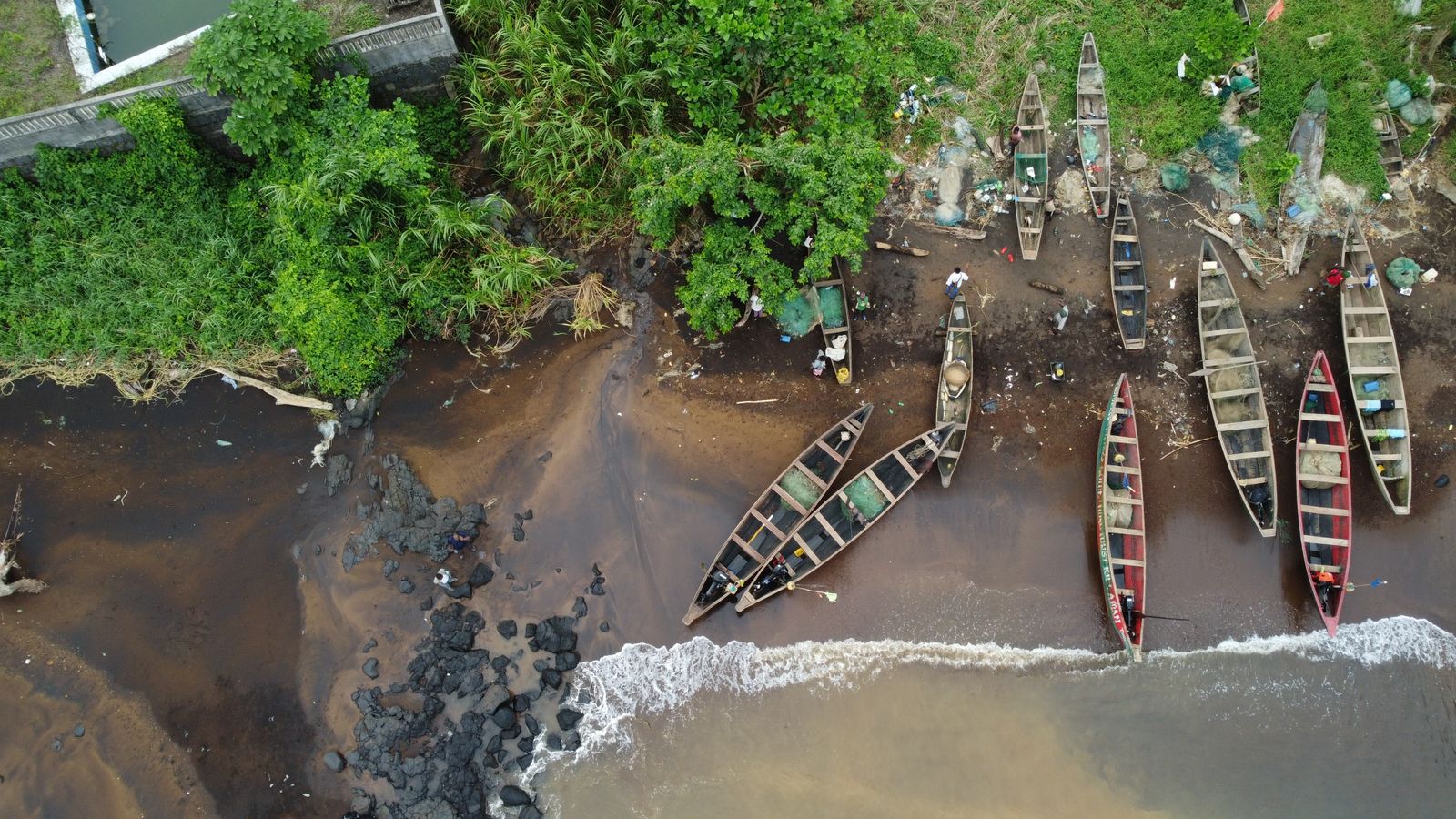
A final morning in Conakry (the Marche Madina — the largest market in West Africa by some estimates, covering 4km² with 10,000+ stalls — and the Conakry waterfront with views of the Atlantic Islands of Los — five uninhabited islands accessible by pirogue, with white sand beaches and the finest snorkelling in Guinea) before flying from Conakry (CKY).
💡 Guinea contains approximately one-third of the world’s proven bauxite reserves (approximately 7.4 billion tonnes — the world’s largest single bauxite deposit — making Guinea the most important source of aluminium raw material in the world. The bauxite is mined primarily by Rio Tinto, Alcoa and Chinese state companies; the revenue from bauxite exports has grown significantly since 2010 but reaches very few ordinary Guineans.
Visa required for most nationalities — apply at a Guinean embassy before departure.
Direct from Paris (Air France, 6h) and several African hubs.
A visa is required for most nationalities, available on arrival or in advance. Guinea has experienced political instability; check current travel advisories.
The GNF is the currency. Cards rarely work; bring USD or Euro to exchange.
Vaccination certificate required for entry.
Best accessed from Labé by bus or shared taxi from Conakry (8–10h); local guides essential for hiking routes between villages.
Point your camera at menus, signs or street text for instant translation. Download the language pack offline before you arrive for full use without data.
FreeReal-time and offline exchange rates for all world currencies — converts prices instantly so you always know what you are paying in your home currency.
FreeFind and book hotels, guesthouses and apartments with free cancellation on most rates — one of the widest selections of accommodation worldwide.
FreeBrowse millions of traveller reviews for restaurants, attractions and hotels — helps identify the best local spots and avoid tourist traps.
FreeGuinea sits within easy reach of several other destinations — each with a completely different character.
