HU
Pécs
Hungary's Mediterranean City
Hungary's Mediterranean City
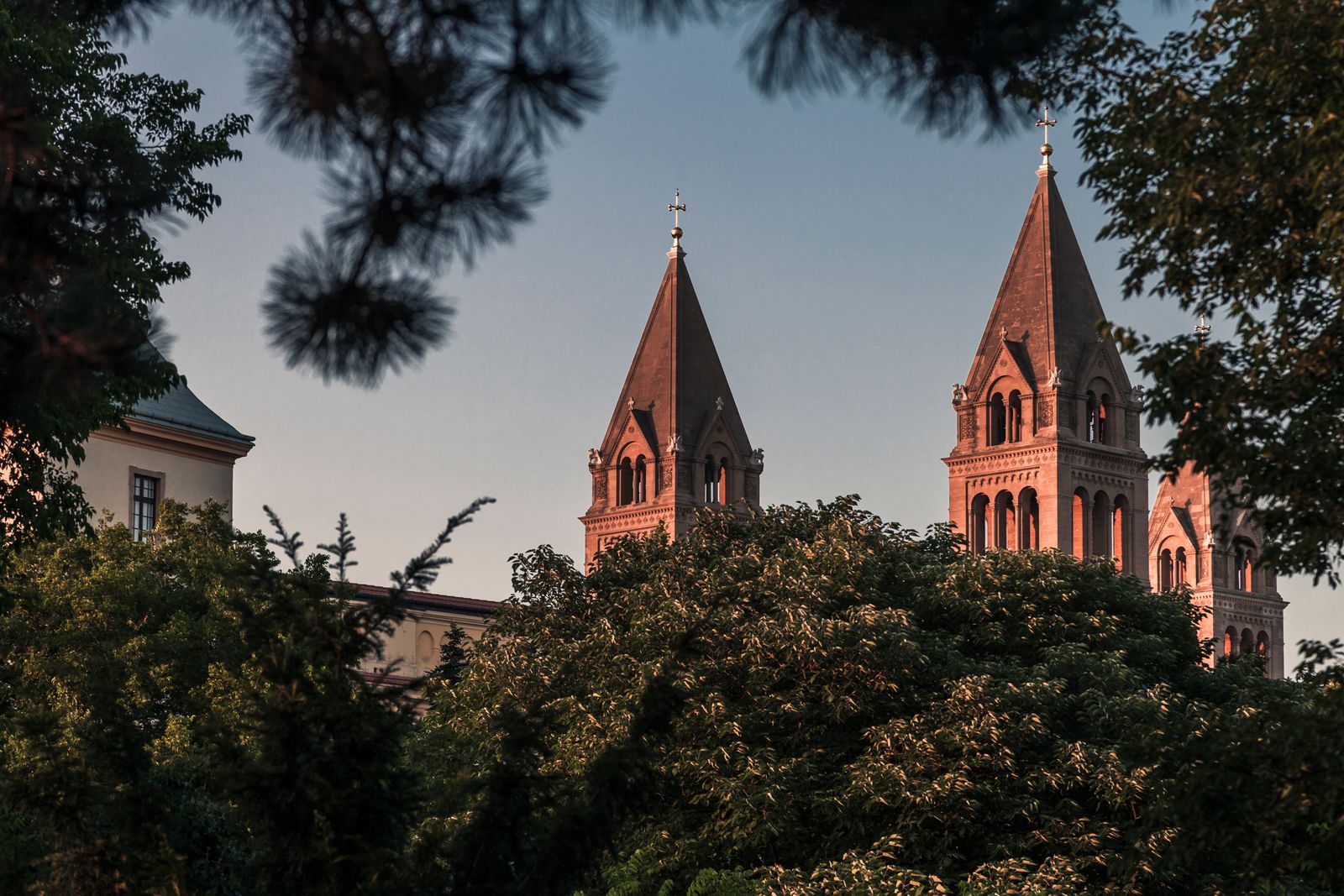
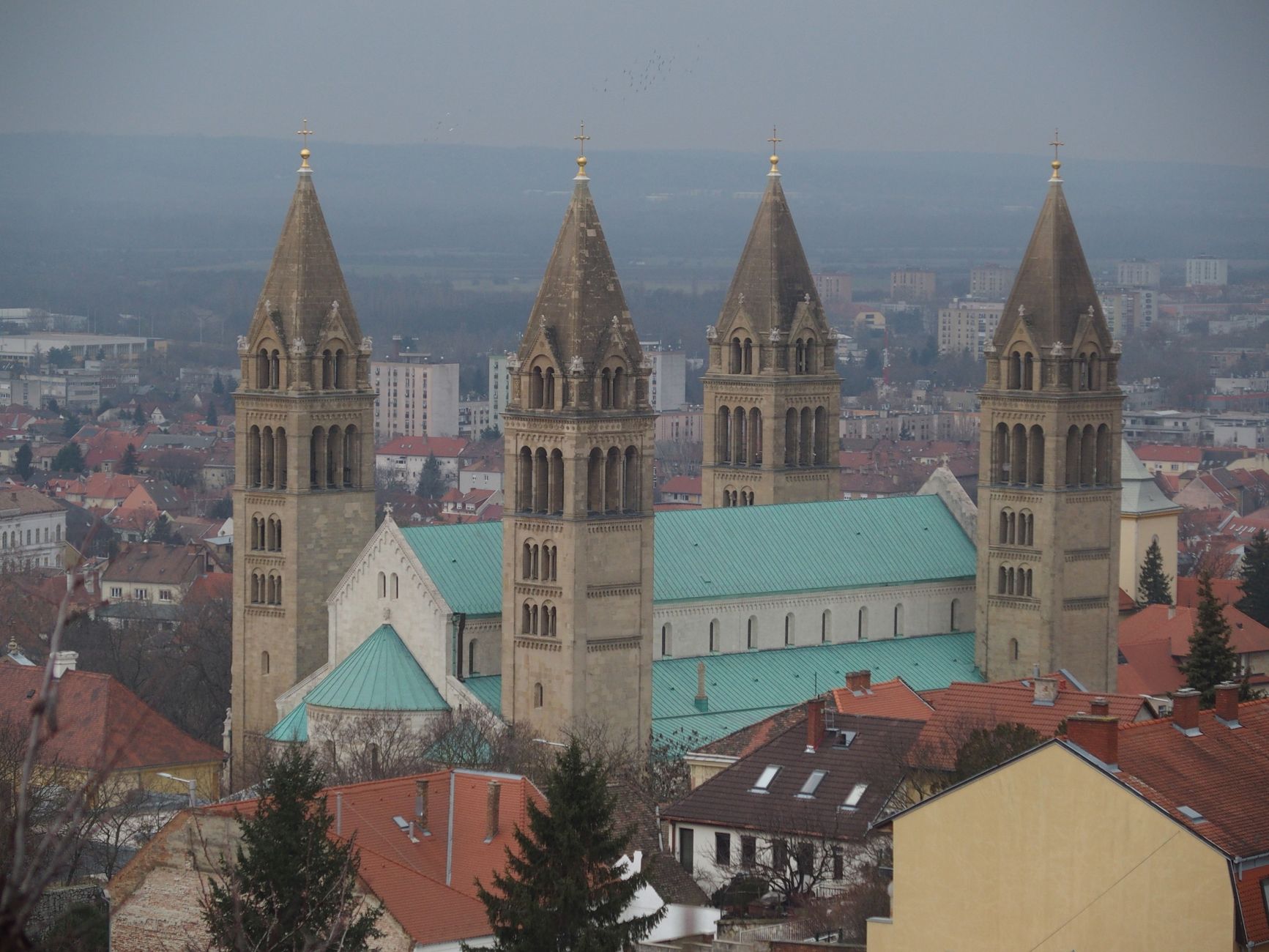
The Pécs Cathedral (the 11th-century basilica on the highest point of the city hill; Ft 1,500; the Neo-Romanesque rebuild by Friedrich von Schmidt 1882–1891; the Romanesque crypt with the finest early medieval carvings in Southern Hungary) and the Bishop’s Quarter (the Episcopal Palace, the Barbican tower, the city walls) are the finest architectural ensemble in Pécs.
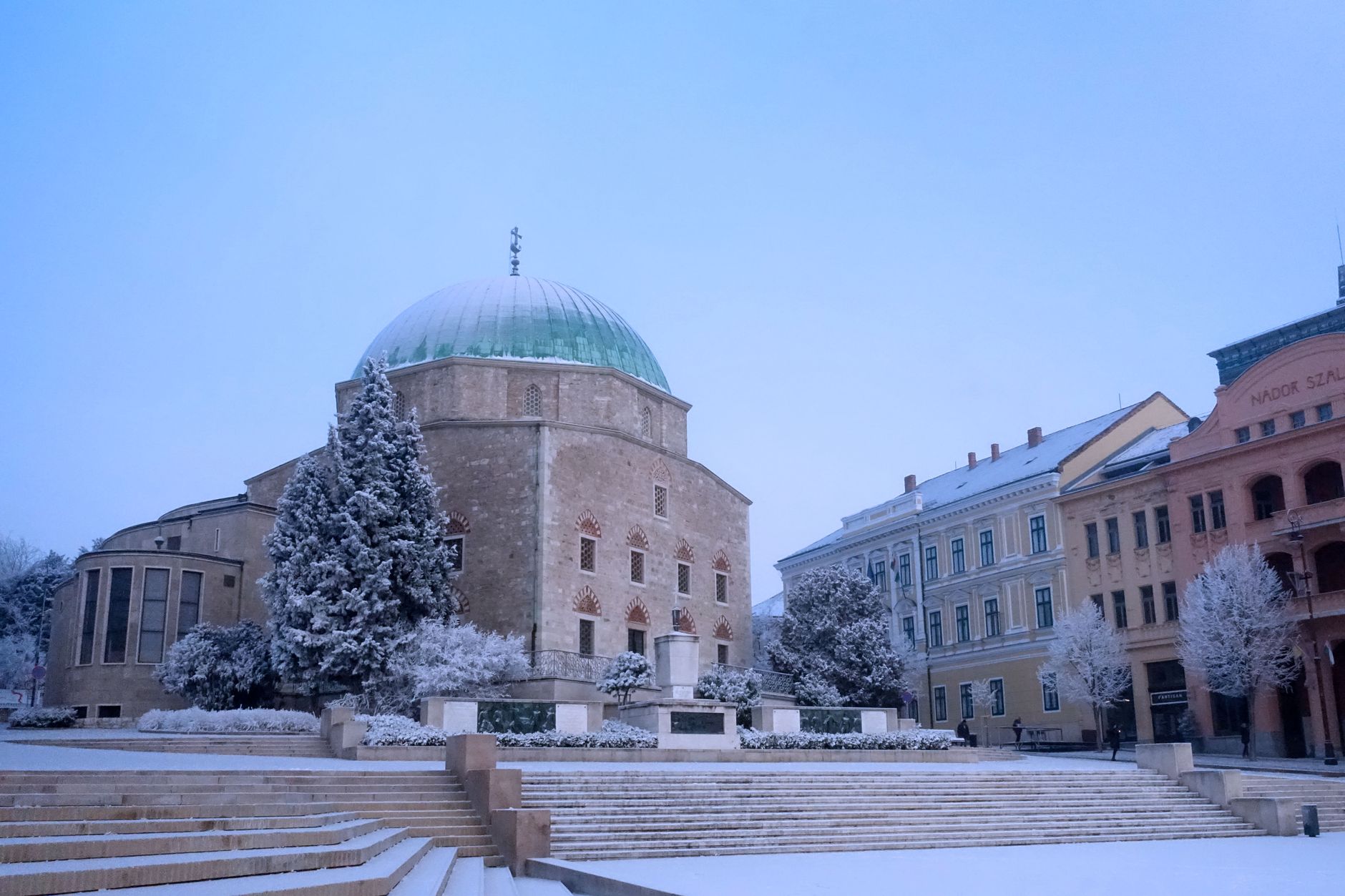
The Gazi Kasim Pasha Mosque (Inner City Parish Church; free entry; Mon–Sat 9am–4pm; Islamic calligraphy behind the Catholic altar) is the finest example of Ottoman-Christian architectural coexistence in Europe north of the Balkans.
The Gazi Kasim Pasha Mosque (Inner City Parish Church; 1543–1546; the largest surviving Ottoman mosque in Hungary; free entry; the Islamic calligraphy visible behind the Catholic altar; the finest example of Ottoman-Christian coexistence in architecture north of the Balkans) dominates the Széchenyi tér main square.
The Early Christian Necropolis (UNESCO; Ft 2,400; Tue–Sun 10am–6pm; the 4th-century underground painted tombs) is the most significant Roman Christian monument in Central Europe.
The Zsolnay Cultural Quarter (Ft 1,800; the ceramics factory museum; the working studio; the pyrogranite tile collection) is the finest afternoon in Pécs.
The Zsolnay Cultural Quarter (the 19th-century ceramics factory of Vilmos Zsolnay; Ft 1,800; the finest arts complex in Hungary outside Budapest; the Zsolnay Museum with the pyrogranite tile and iridescent eosin glaze collection; the working ceramics studio; the contemporary gallery) is on the western edge of the Pécs historic centre.

The Early Christian Necropolis (UNESCO World Heritage 2000; Ft 2,400; the 4th-century underground burial chambers; the finest Early Christian art north of Rome; the painted vine and pomegranate motif tomb frescoes; the mausoleum with the full fresco cycle) is the most significant Roman Christian monument in Central Europe — beneath the city centre of Pécs.
Széchenyi tér café terrace at dusk (the finest main square in Southern Hungary; the mosque-church above; the Mediterranean café culture until midnight) is the finest free evening in Pécs.
Pecs UNESCO necropolis →
Pécs cuisine is the most Balkan-influenced in Hungary: the çöfteli (the Turkish meatball — reflecting the 150-year Ottoman occupation; the street food in the old town), the házi pálinka (the homemade fruit brandy; the Pécs sour cherry and the Villány plum varieties are the finest; € 2–4 per glass at any traditional restaurant), and the Villány wine (30km south; the Cabérnet Franc from the Gere, Tamas Gere and Malatinszky estates; the finest red wine in Hungary; € 8–20 per bottle at the Villány winery cellars; € 5–9 per glass in Pécs restaurants) define the Pécs food and drink identity. The Dámóc restaurant (Janus Pannonius utca 9; the finest traditional Hungarian cuisine in Pécs; the házi pálinka selection; € 15–28 pp), the Elefánt restaurant (Janus Pannonius utca 6; the most atmospheric garden restaurant in the inner city; the Hungarian and Balkan mixed grill; € 12–22 pp) and the Domóc wine bar (the Villány wine selection; the Zsolnay ceramic serving dishes) define the Pécs restaurant scene. The Piac tér Saturday market is the finest local produce market in southern Hungary.
The Gazi Kasim Pasha Mosque (Inner City Parish Church; free entry; Mon–Sat 9am–4pm; the Islamic calligraphy still visible behind the Catholic altar) is the finest single room in Pécs.
Villány (30km south; 45 min by train from Pécs; Ft 700; the finest Hungarian red wine region) has cellar-door tastings at Gere, Bock, and Vylyan from Ft 1,500. Take the 10am train for the cellar circuit.
The Zsolnay Cultural Quarter (Ft 1,800; the 19th-century ceramics factory; the finest arts complex in Hungary outside Budapest; the Zsolnay Museum with the pyrogranite tile and iridescent eosin glaze collection; the working ceramics studio) is the finest afternoon in Pécs.
The Cathedral of St Peter and St Paul (Ft 1,500; Dóm tér; the 11th-century Romanesque-turned-Baroque interior) is finest photographed from outside between 5–7pm in the amber evening light.
May–Jun is ideal (warm; the university city animated; the outdoor cafés full). Sep–Oct for the Villány wine harvest. Jul–Aug: the hottest city in Hungary but also the most outdoor; the Zsolnay Festival in July.
Cathedral and the Bishop’s Quarter morning; the Ottoman Mosque; the Necropolis; Csóntvary Museum; Zsolnay afternoon — and the Villány wine evening.
Cathedral (Ft 1,500; the Romanesque crypt). Bishop’s Quarter walk (the Episcopal Palace; the Barbican). Gazi Kasim Pasha Mosque (free; the Islamic calligraphy behind the altar). Széchenyi tér café for the evening.
Pécs is 3h from Budapest by train (Ft 4,500) or bus (Ft 3,500) — the finest 2-night excursion in Southern Hungary, combining the Ottoman monuments, the Early Christian necropolis, and the Zsolnay Quarter.
Early Christian Necropolis (Ft 2,400; the painted underground tombs; 10am). Zsolnay Cultural Quarter (Ft 1,800; the ceramics museum; the working studio). Vilány wine tasting at a Pécs wine bar (the Vilányi Franc).
The Vilány wine day trip (25km south; the Bock, Tiffán, and Gere estates; self-drive or organised wine tour from Pécs) combines naturally with the Mohács battlefield (40km south; the 1526 Ottoman conquest site).
Pécs is the most affordable major cultural city in Hungary. The Gazi Kasim Pasha Mosque is free; the Cathedral is € 3; the Zsolnay Cultural Quarter is € 5; the Necropolis combined ticket € 8; the entire cultural programme costs less than a single museum entry in Vienna. Per person per day.
Pécs is the best-value cultural destination in Central Europe: the Gazi Kasim Pasha Mosque (free; the most visually extraordinary building in Hungary), the Early Christian Necropoli.
The Villány wine road day trip (taxi from Pécs € 20–30 each way; or the train € 2 to Villány then walking; 4 winery visits at Gere, Tamas Gere, Malatinszky and Polgár; € 8–15 per tasting; the most)
The Attila Gere winery estate dinner at Villány (the most acclaimed Hungarian winemaker; the estate cellar dinner with the vertical tasting of 8 vintages of the Kopár vineyard Cabernet Franc; € 60–90 pp with food pairing;)
🛂 Entry rules: EES and ETIAS
Hungary is in the Schengen area, which has two EU border systems for non-EU visitors.
EES (in force): since 10 April 2026 the EU’s Entry/Exit System registers non-EU visitors’ passport details, fingerprints and a photo the first time they enter the Schengen area, replacing passport stamps. Allow extra time at the border on your first trip; later crossings are quicker. EU, EEA and Swiss citizens are not registered.
ETIAS (not yet running): a €20 online travel authorisation for visitors who don’t need a visa, such as UK, US, Canadian and Australian citizens. It hasn’t started and no start date has been confirmed, so nobody can apply yet; ignore websites that offer to “pre-register” you for a fee.
Visa-free visitors can stay up to 90 days in any 180-day period across the whole Schengen area, not per country.
Official information: EU: Travel to Europe (EES & ETIAS) · Reviewed September 2026
Pécs restaurant and café discovery with Széchenyi tér, the Bishop’s Quarter, and Southern Hungarian cuisine filtering.
Free
Download the Pécs offline map before arrival — the historic centre’s lanes and the Zsolnay Quarter require offline navigation.
Free
Download the Hungarian offline pack and use camera mode for menus and signs.
Free
Quick answers to the questions travellers most often ask before visiting Pecs.
Late spring to early autumn is the most pleasant, when this sunny southern city is at its best, with the wine harvest a highlight of autumn. Winters are cold.
One to two days for the Early Christian Necropolis, the former mosque on the main square, the Zsolnay porcelain quarter, the cathedral, and the surrounding hills and wine country.
The centre is walkable, with trains and buses connecting it to Budapest in around 2.5 hours. No car needed for the city.
A sunny, cultured city in southern Hungary — the UNESCO Early Christian Necropolis, the former Ottoman mosque now serving as a church on the main square, the Zsolnay porcelain quarter, a fine cathedral, and nearby wine country and the Mecsek hills.
Explore more of Hungary’s extraordinary cities and landscapes.
Planning a wider trip? Our Hungary travel guide covers getting there, costs, when to go and more.