HU
Hungary
Thermal baths and baroque Budapest
Thermal baths and baroque Budapest

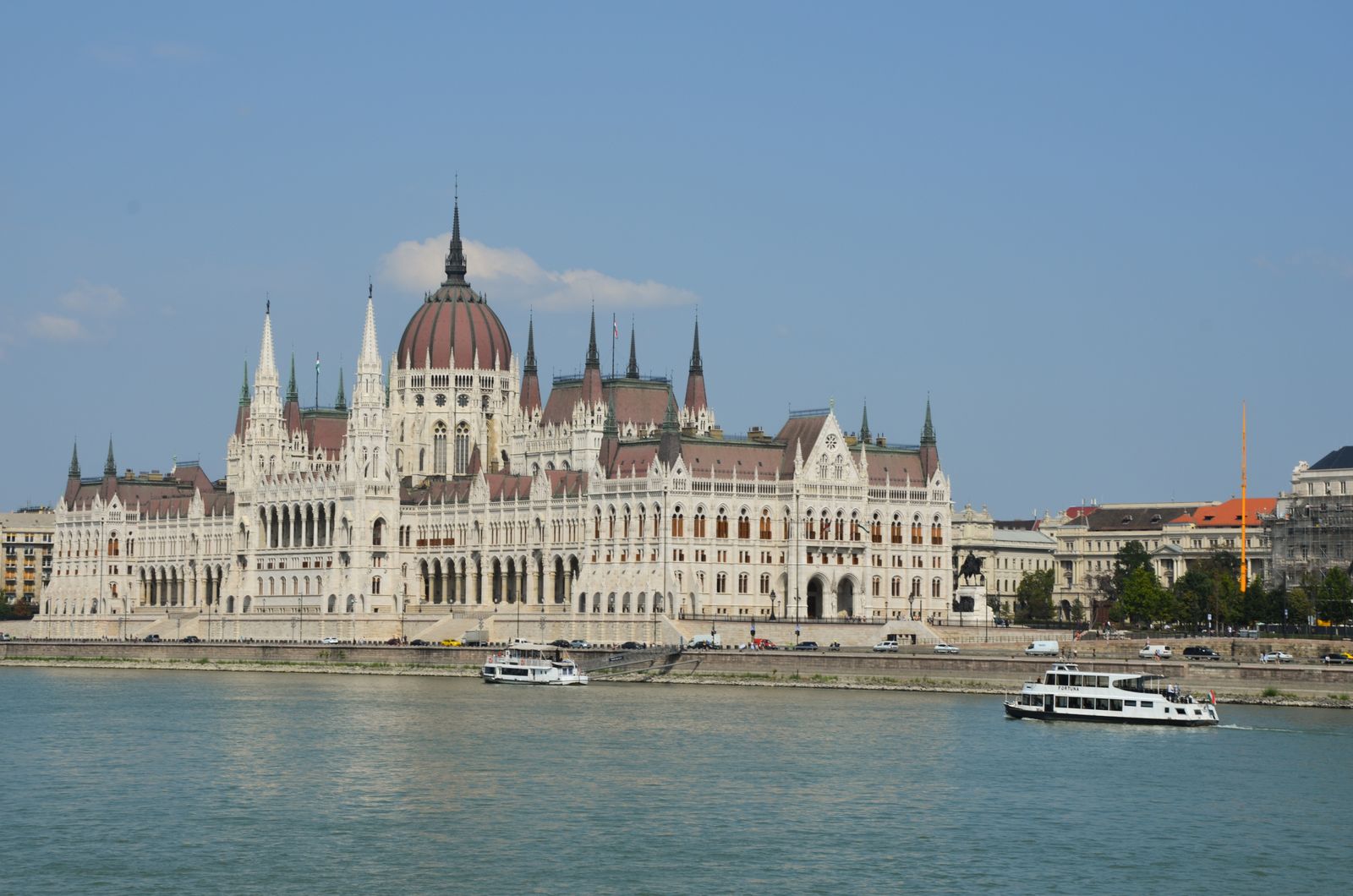
The Hungarian Parliament Building (the largest in the world when completed in 1904) reflected in the Danube at night, and the Chain Bridge connecting Buda and Pest. The city at night from Fisherman’s Bastion on the castle hill is one of Europe’s great urban views.
Photo: Tolga Bakı, CC0

The Szechenyi Baths: outdoor pools at 38C in a city park, played chess while submerged. The Gellert: a 1913 thermal palace of Jugendstil architecture and Zsolnay ceramic tiles, with a wave pool.
Photo: miketnorton, CC BY 2.0

Buda’s Castle Hill: Fisherman’s Bastion (a neo-Romanesque viewing terrace), Matthias Church (13th-century, with diamond-patterned roof tiles) and the Royal Palace (now a national gallery and history museum).
Photo: FOTO:Fortepan — ID 5832: Adományozó/Donor: Mészöly Leonóra., CC BY-SA 3.0

Eger’s Ottoman-era minaret (the northernmost in Europe), the castle and the Valley of the Beautiful Women: a hillside of wine caves where Egri Bikaver (Bull’s Blood) red wine is poured directly from barrels.
Photo: Andrew Bossi, CC BY-SA 2.5

A UNESCO World Heritage wine region producing Tokaj Aszu (the dessert wine the 17th-century French court called the wine of kings), with underground cellars black with Cladosporium mould below every house.
Photo: Pudelek, CC BY-SA 4.0

The Hortobágy National Park: the original Puszta grassland with Hungarian Grey cattle, Racka sheep and Csikos horsemen in traditional embroidered cloaks performing the ten-horse trick.
Photo: Krzysztof Ziarnek, Kenraiz, CC BY-SA 4.0

Central Europe’s largest freshwater lake: a sailing and cycling destination 100km southwest of Budapest, with thermal springs at Heviz (the world’s largest thermal lake) and Tihany’s lavender fields.
Photo: Peter Stehlik PS-2507, CC BY 3.0

A Roman city with an intact 16th-century Ottoman mosque (still functioning), early Christian mausoleum (UNESCO), the finest Zsolnay porcelain factory in Hungary and a relaxed university city atmosphere.
Photo: Elekes Andor, CC BY 4.0
A Hungarian beef and vegetable soup spiced with sweet paprika. Not the thick stew known internationally as goulash; the real gulyas is a broth. The thick stew is porkolt.
Braised beef or pork in a thick paprika and onion sauce. The dish the world calls goulash. Served with nokedli (egg drop noodles or small dumplings).
Deep-fried flatbread topped with sour cream and grated cheese. The definitive Hungarian street food, sold at markets, beaches and outdoor events throughout the country.
A five-layer sponge cake with chocolate buttercream and a caramelised sugar top: invented by Josef Dobos in 1884 and served to Franz Joseph I. The most technically demanding Hungarian dessert.
A botrytised dessert wine (affected by noble rot) from dried Furmint and Harslevelu grapes: amber, intensely sweet and concentrated, with decades of ageing capacity. The finest Hungarian wine.
A red blend from Eger: traditionally a full-bodied, peppery blend of Kekfrankos, Cabernet and Merlot. The wine that funded the successful resistance of Eger Castle against the Ottoman siege.
Hungary’s two national lagers. Cold and light; acceptable with langos at a Balaton beach.
A bitter herbal digestif produced by the Zwack family since 1790: 40 herbs and spices, drunk neat after dinner. The quintessential Hungarian shot.
Budapest Ferenc Liszt (BUD) is the main international airport, 16km east of the centre. Budapest is also a major rail hub — direct trains to Vienna (2h40), Prague (6h), Warsaw (10h) and Bucharest. For trip planning, see the official Hungary tourism portal.
Wizz Air is Hungary-based and serves Budapest from the most UK and Irish airports — often the cheapest option. Book at least 3 weeks ahead for fares under £40.
The Vienna–Budapest train via the Danube valley is one of Central Europe’s most scenic rail journeys — and a practical way to combine both cities in one trip.
Buy MÁV tickets at elvira.hu or the Elvira app. Intercity (IC) trains are significantly faster and more comfortable than regional trains — worth the small supplement.
Bus 100E from the airport to Deak Ferenc tér (city centre) costs HUF 1,100 (≈€3) — significantly cheaper than any taxi or shuttle service. Uses standard BKK tickets.
April to June and September to October are the best months for Budapest — warm, not too crowded, and the city’s outdoor life in full swing. December brings Vienna-quality Christmas markets. July and August are hot but the outdoor baths and Danube scene are at their best.
📅 Hungary is in its best season in April, May, June, July, August, September, October. See where else is good to go in those months, or browse where to go by month.
Hungary is excellent value — among the cheapest destinations in the EU. Budapest is the most expensive city but still significantly cheaper than Vienna, Prague or Warsaw.
A langos — deep-fried dough with sour cream and cheese — costs HUF 600–900 from a market stall. It’s the unofficial national snack and completely unavoidable.
A full Hungarian dinner (gulyásleves, pörkölt, rétes and tokaji wine) at a traditional Pest restaurant runs HUF 8,000–15,000pp (€21–40) — good value.
Onyxrestaurant and Salt — both Michelin-starred — offer tasting menus at HUF 35,000–50,000pp (€90–132). Among the best-value fine dining in Europe.
Budapest is large enough to hold a week easily. This plan mixes the city’s classical attractions with its singular thermal bath culture, Jewish history and Danube riverscape.
Take the funicular from Clark Ádám tér up to Buda Castle Hill. The Fisherman’s Bastion at dusk gives the famous view of the Parliament and Pest across the river. Walk down to the Chain Bridge and across to the Great Market Hall.
The Chain Bridge (Széchenyi Lánchíd) is free to walk across and provides the best eye-level view of both sides of Budapest. The view is particularly good at sunset.
The Hungarian Parliament Building (book tours at parlament.hu) is one of the most striking Gothic Revival buildings in Europe — its interior is overwhelming. St Stephen’s Basilica for the view from the dome. Váci Street and the Central Market Hall.
Book Parliament tours online — English tours run twice daily and sell out. The Crown Jewels (including St Stephen’s actual right hand, a national relic) are inside.
Hungary sits on 100+ thermal springs — Budapest’s bath culture is 450 years old. Széchenyi (outdoor pools in neo-baroque splendour), Gellért (Art Nouveau, under the hill) and Ruda (Ottoman domes, clothing-optional on some days). Choose one and spend the morning.
Széchenyi is the most famous — the outdoor pool with chess players in the water — but it’s the most crowded. Ruda and Veli Béj are more atmospheric and less photographed.
The seventh district (Erzsebétváros) is Budapest’s former Jewish quarter — now also the ruin bar district. The Great Synagogue (Europe’s largest) and the Hungarian Jewish Museum. Evening: Szimpla Kert — the original ruin bar, in a derelict building, extraordinary.
Budapest’s ruin bars (romkocsmák) are an original cultural invention — abandoned communist-era buildings reclaimed as bars and cultural spaces. Szimpla Kert opened in 2004 and spawned dozens of imitators.
40 minutes north by HÉV suburban train: Szentendre is a small Serbian Orthodox church-village on the Danube, now full of artists’ galleries and ceramic shops. Further north: the Danube Bend, where the river turns dramatically through hills, with Visegrád castle above.
The Danube Bend at Visegrád is one of the most scenic river landscapes in Central Europe. The castle ruins above give a view over several countries on a clear day.
2h by train: Eger is a baroque city famous for Egri Bikavér (Bull’s Blood red wine) and its Valley of the Beautiful Women — a row of wine cellars cut into hillside rock. The baroque castle and thermal baths are also excellent.
The Valley of the Beautiful Women (Szépasszonyvölgy) is a genuine wine experience — local winemakers sitting in their cellar doors, pouring for anyone who stops. Bring cash.
Hourly trains back to Budapest (2h). Airport transfer from Keleti or Nyugati station. If time allows, breakfast at the Central Market Hall — the top floor has the best traditional Hungarian lunch in the city.
Budapest Ferenc Liszt airport (BUD) is 30 minutes from the centre by bus 100E (BKK public transport). Cost: HUF 1,100 (≈€3). Much cheaper than the airport shuttle or taxi.
🛂 Entry rules: EES and ETIAS
Hungary is in the Schengen area, which has two EU border systems for non-EU visitors.
EES (in force): since 10 April 2026 the EU’s Entry/Exit System registers non-EU visitors’ passport details, fingerprints and a photo the first time they enter the Schengen area, replacing passport stamps. Allow extra time at the border on your first trip; later crossings are quicker. EU, EEA and Swiss citizens are not registered.
ETIAS (not yet running): a €20 online travel authorisation for visitors who don’t need a visa, such as UK, US, Canadian and Australian citizens. It hasn’t started and no start date has been confirmed, so nobody can apply yet; ignore websites that offer to “pre-register” you for a fee.
Visa-free visitors can stay up to 90 days in any 180-day period across the whole Schengen area, not per country.
Official information: EU: Travel to Europe (EES & ETIAS) · Reviewed September 2026
Both work in Budapest; Uber returned in 2024 and uses licensed taxis at the regulated fare. Street taxis are metered and regulated too.
A thermal bath entry: HUF 6,000-8,000 (EUR 15-20). A restaurant meal: HUF 3,000-7,000 (EUR 8-18).
Budapest’s VII district ruin bars (Szimpla Kert, Instant-Fogas) are in derelict buildings decorated with found objects. The concept has been copied worldwide; the original is still the best.
The Magyar identity is distinct and proudly maintained. An interest in Hungarian history and food produces genuine warmth.
Budapest to Miskolc: 2h; Budapest to Pecs: 3h. Book at mavcsoport.hu.
Szechenyi and Gellert are crowded on weekends. Weekday mornings give the best experience.
No European language is remotely similar. Learn “koszonom” (thank you) and “egeszsegedre” (cheers) and you’ll be appreciated.
Being offered palinka (fruit brandy) or food at any Hungarian home is an expression of genuine warmth.
Quick answers to the questions people most often ask before visiting Hungary.
Fly into Budapest Ferenc Liszt International Airport (BUD), about 16 km from the centre — roughly 2–2h30 from London and other UK airports. Budapest is also a major rail hub, with direct trains from Vienna (about 2h40) and Prague.
April to June and September to October bring pleasant weather and fewer crowds. July and August are hot but ideal for the outdoor baths, and December is Christmas-market season.
Entry to the big thermal baths such as Széchenyi or Gellért typically costs around HUF 6,000–8,000 (about €15–20), more at weekends. Bring flip-flops and a towel, or rent them there.
The Hungarian forint (HUF) — Hungary doesn't use the euro, though some tourist businesses accept it at poor rates. Cards are widely accepted.
No — it's among the best-value destinations in the EU. Expect around HUF 10,000–15,000 (€26–40) per day on a budget and HUF 30,000–50,000 mid-range. Budapest is cheaper than Vienna or Prague.
Hungarian State Railways app — buy intercity and IC+ train tickets between Budapest and major Hungarian cities.
FreeBook Budapest ruin bar tours, thermal bath entry, Danube river cruises and Hungarian experiences.
FreeExplore Hungary’s top city destinations — from Eger to Budapest, each with its own distinct character.
Hungary sits within easy reach of several other destinations — each with a completely different character.


