IL
Dead Sea
The Lowest Place on Earth
The Lowest Place on Earth
⚠️ Travel advisory: check before you go
Governments advise travellers to reconsider travel to Israel, and against travel to areas near Gaza, Lebanon and Syria, because of the ongoing regional conflict. Rocket and drone alerts and flight disruptions can occur at short notice.
Latest official advice: UK FCDO · US State Department · Reviewed September 2026

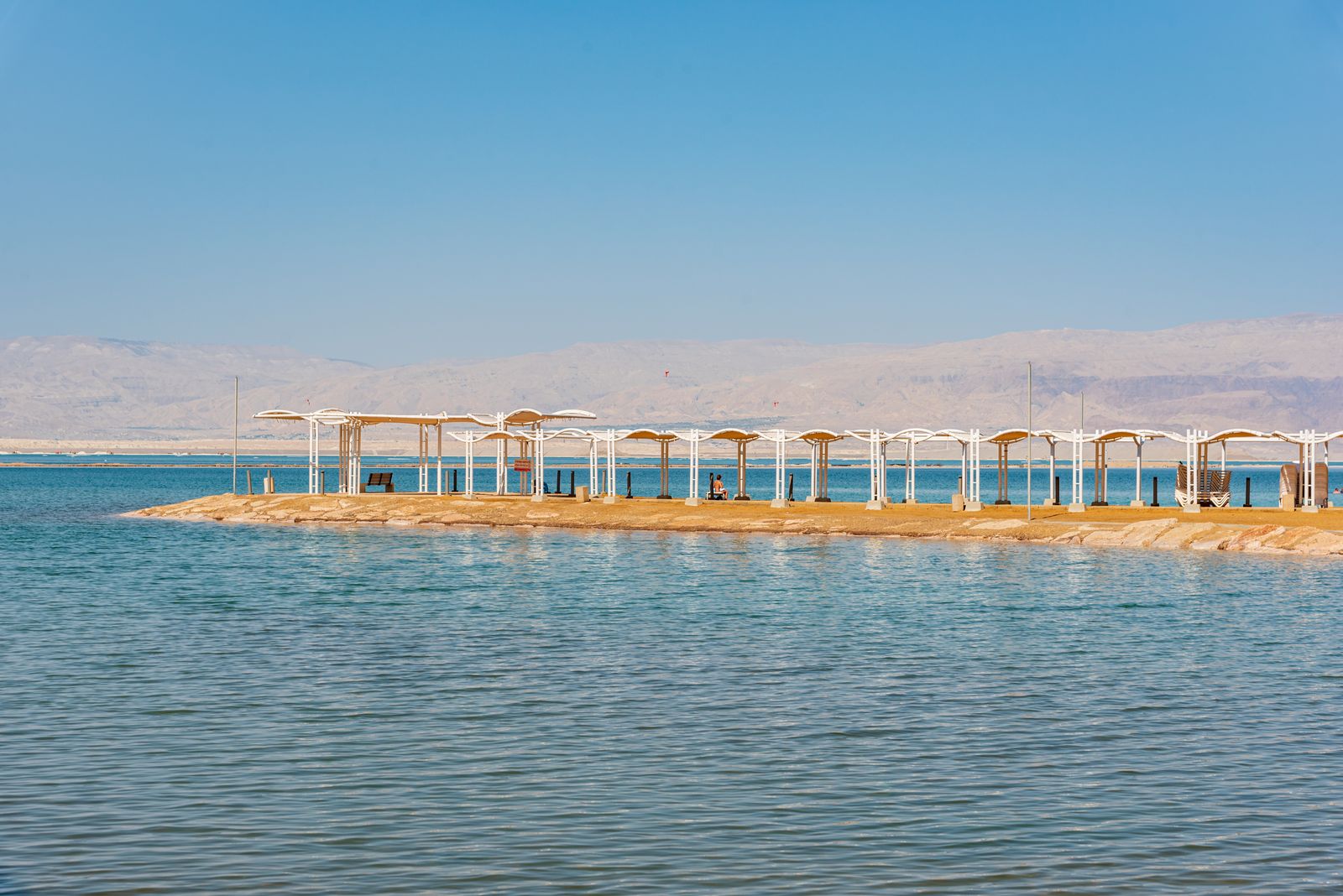
Ein Bokek (the main Dead Sea resort beach cluster; public beaches with changing facilities, showers, and cafes; free access to the public beach) is where most visitors experience the Dead Sea float. The buoyancy (caused by the 34% salinity — nearly 10 times denser than ocean water) makes it physically impossible to sink: you lie back in the water and float without effort, reading a newspaper if you choose, with the Jordanian mountains visible across the water and the white salt formations crystallised around the shoreline.
Do NOT shave for 48 hours before entering the Dead Sea water — the salt burns open cuts and freshly shaved skin intensely. Enter slowly; avoid any splash of water near the eyes (extremely painful; rinse immediately with fresh water at the beach showers). Float for 10–15 minutes maximum on the first visit; the mineral-rich water is powerful. The free public beach at Ein Bokek has showers and changing rooms; bring a pair of old sandals for the salt-encrusted beach floor.
Photo: Lizi Shanan (PikiWiki Israel), CC BY 2.5
Dead Sea mud (the black mineral-rich sediment from the lake bed; free to collect from the shoreline at any Dead Sea beach; also sold in hotel spas and gift shops for ₪20–50 per pack) contains magnesium, sodium, potassium, and calcium in concentrations used in dermatological treatments for psoriasis, eczema, and general skin conditions. The standard protocol: apply black mud to the skin, allow to dry in the sun (10–15 minutes), rinse in the Dead Sea water, then shower with fresh water. The skin effect (soft, clean, tightened) is immediate and lasts 24–48 hours.
The mud is free at the shoreline — scoop it directly from the lake bed at the water’s edge. The hotel spas charge ₪150–400 for the same treatment performed by a therapist and include additional minerals and oils. The self-service version at the public beach (free mud, 15 minutes, rinse in the sea) is genuinely effective and costs nothing beyond the beach entry or your hotel stay.

Masada National Park (18km south of Ein Bokek; ₪29 entry; cable car ₪25 one-way / ₪35 return; open 8am–4pm; the Snake Path on foot for the sunrise walk is 1h each way; 400m vertical climb) is the UNESCO-listed mesa fortress of Herod the Great (37–4 BCE) — a mountaintop palace complex of bathhouses, storerooms, cisterns, mosaic floors, and the siege ramp built by the Roman 10th Legion in 73 CE. The story of the Masada Zealots (960 Jewish rebels who held the fortress for 3 years against Rome before the mass suicide rather than enslavement) has become the central myth of modern Israeli identity.
The Masada sunrise hike is the non-negotiable experience: depart Ein Bokek by 4:30am for the Snake Path base (10 mins by car; free entry before official opening if hiking up; summit 1h), reaching the top for the sunrise over the Dead Sea and Jordan (— the finest panorama in the Judean Desert). The cable car opens at 8am; for visitors not hiking, arrive by 9am before tour groups.
Photo: Dr. Avishai Teicher, CC BY 2.5

Ein Gedi Nature Reserve (15km north of Ein Bokek on Route 90; ₪29; 8am–3pm; the David Stream trail with waterfalls is 2km return and takes 1.5h) is an oasis nature reserve in the Judean Desert — a freshwater spring system feeding waterfalls and natural pools in a desert canyon surrounded by Nubian ibex, rock hyrax, and migratory birds. The Nahal David waterfall (15m high; swimmable pool at the base) is the most photographed natural feature in the Dead Sea region.
Visit Ein Gedi in the morning (8–10am) before midday desert heat (35–40°C in summer). The David Stream trail (the primary trail; 2km return; 1.5h; well-signed; some scrambling over rocks) reaches the main waterfall and the upper pools. The natural spring water is clear, cool, and swimmable at the main pool — the finest wild swimming in the Dead Sea region.
Photo: Yuvalr, CC BY-SA 3.0
The Dead Sea has almost no independent restaurant scene outside the resort hotels. The practical food options: the hotel restaurant buffets (₪80–150/person; open to non-resident guests at all major Ein Bokek hotels; Israeli salads, grilled meats, and Dead Sea region produce), the beach kiosk food (sandwiches, cold drinks, and basic meals from ₪20–40 at the public beach facilities), and the Ein Bokek shopping centre (a small mall adjacent to the beach hotels; a supermarket and several cafe options for self-catering). For a proper restaurant dinner, the hotel restaurants are the most reliable option. The Isrotel Spa Hotel restaurant (open to non-guests; Mediterranean menu; ₪80–120 for a main course) is consistently the best in the resort strip.
The Dead Sea salt concentration (34%) causes intense burning on any broken skin: freshly shaved legs or face, cuts, scratches, or any open wound.
The Dead Sea’s position at the lowest point on earth means summer temperatures are consistently 5–7°C higher than Jerusalem (40km away and 450m higher).
Masada at sunrise (arrive at the Snake Path trailhead at 4:30am for a summer visit; 5am for winter; the climb takes 1h; the summit at dawn has the finest panorama in the Judean Desert) is the defining Dead Sea region experience.
The Dead Sea atmosphere (high oxygen content; higher atmospheric pressure at −430m) combined with the desert heat creates unusually rapid dehydration.
The salt crystal formations along the Dead Sea shoreline (white mineral deposits crystallised around rocks and debris emerging from the retreating water) photograph best in the low golden light of early morning (6–8am).
Jerusalem to Dead Sea: Egged Bus 444/486 from Jerusalem Central Bus Station (₪20; 1h 20 mins; runs every hour; stops above Ein Bokek).
9am: Dead Sea float at Ein Bokek public beach (free; bring old sandals; enter slowly; 10 mins floating maximum on first visit; rinse immediately after). Dead Sea mud treatment (scoop from the shoreline; apply; dry in the sun; rinse; shower with fresh water at the beach facilities; free). Lunch at a hotel beach club restaurant (the hotels are open to non-residents for food; ₪60–100 for lunch). 3pm: drive or taxi to Ein Gedi Nature Reserve (15 mins north; ₪29; David Stream trail; Nahal David waterfall; 1.5h). Return to Ein Bokek hotel for sunset over the Jordanian mountains. Dinner at the hotel (the hotel restaurants are the most practical option in the Dead Sea area; ₪80–150).
4:30am: depart Ein Bokek by car for the Masada Snake Path trailhead (18km south; 10 mins). Snake Path hike (1h; take headtorch; 400m vertical; the trail is well-signed; Masada summit at 5:30am). Masada sunrise (the finest panorama in the Judean Desert: the Dead Sea below, Jordan beyond, the Roman siege ramp visible on the far side). Explore: Herod’s Northern Palace (mosaic floors; intact cisterns; Byzantine church; 1.5h). Descend by cable car (opens 8am; ₪25 one-way; 3 mins). Drive north to Jerusalem (1h 20 mins; return via Route 1) or south to Eilat (2h on Route 90 along the Jordan Valley).
Israeli taxi app. Gett taxis run from Jerusalem and Beersheba to the Dead Sea area. Pre-book for the Masada 4:30am pickup.
Free
Download Israel offline map. Mobile signal is weak at the Dead Sea and Masada. Offline navigation is essential for Route 90 driving.
Free
Better than Google Maps for Dead Sea route traffic (Route 1 from Jerusalem to Route 90 junction). Widely used in Israel and actively maintained.
Free
Download the Hebrew offline pack and use camera mode for menus and signs.
Free
Quick answers to the questions travellers most often ask before visiting Dead Sea.
Spring and autumn are the most comfortable. Summers are extremely hot, while winters are mild and pleasantly warm thanks to the very low elevation.
One to two days to float in the salty water, enjoy the mineral mud and spas, and visit nearby highlights like the Masada fortress and the Ein Gedi oasis.
It’s an easy drive or organised tour from Jerusalem or Tel Aviv, with resorts and public beaches lining the shore; buses also serve the area. A car gives the most flexibility.
Being the lowest point on Earth’s land surface, where the hyper-saline water lets you float effortlessly — famous for its mineral-rich mud and spas, and for the nearby desert fortress of Masada and the Ein Gedi oasis.
From Tel Aviv’s beaches to Jerusalem’s sacred sites and Eilat’s Red Sea reefs.
Planning a wider trip? Our Israel travel guide covers getting there, costs, when to go and more.