IL
Nazareth
The Galilee City of the Gospels
The Galilee City of the Gospels
⚠️ Travel advisory: check before you go
Governments advise travellers to reconsider travel to Israel, and against travel to areas near Gaza, Lebanon and Syria, because of the ongoing regional conflict. Rocket and drone alerts and flight disruptions can occur at short notice.
Latest official advice: UK FCDO · US State Department · Reviewed September 2026

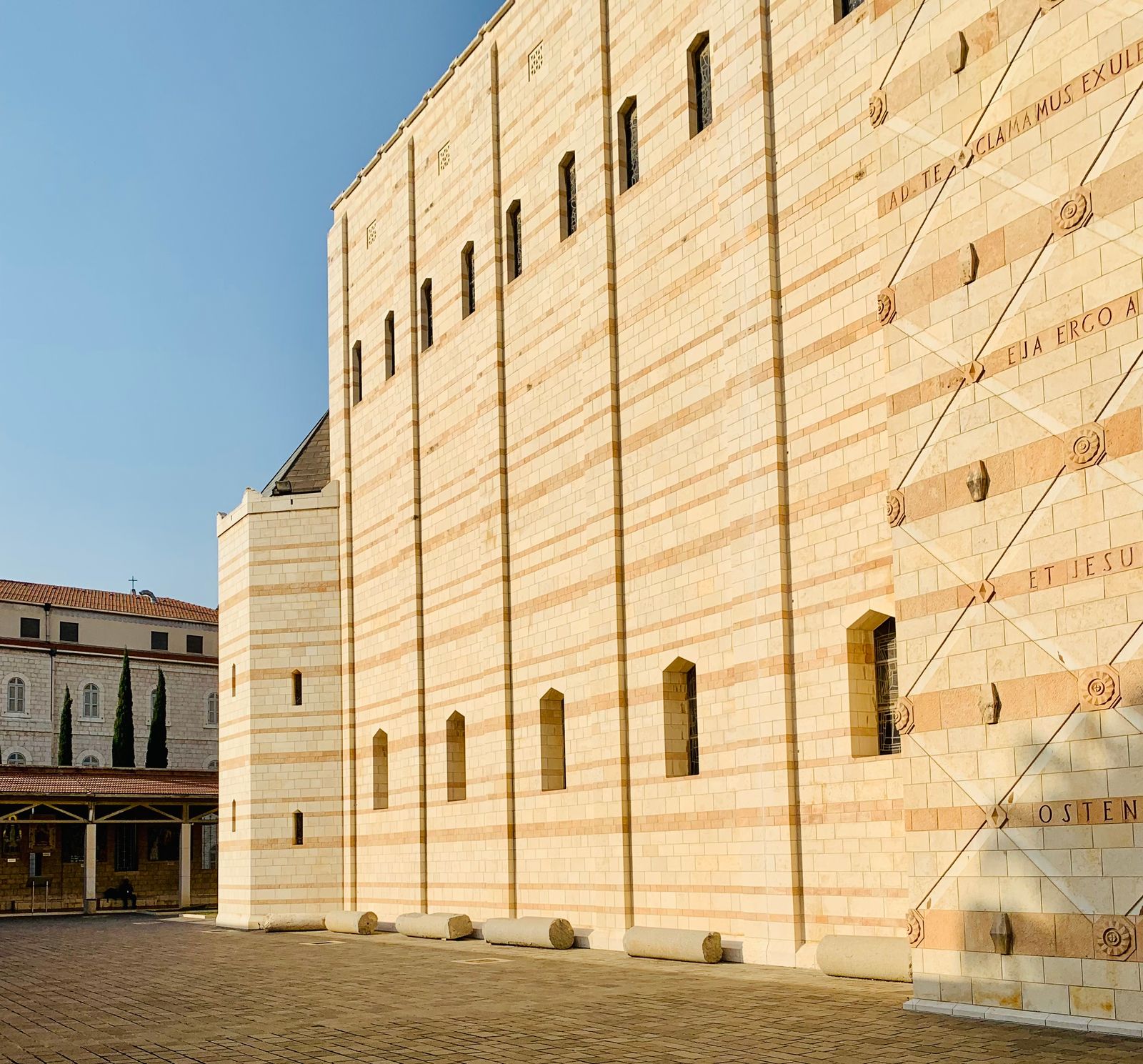
The Basilica of the Annunciation (free; Mon–Sat 7am–5pm; Sun from 2pm; Paulus VI Street; the largest church in the Middle East, built 1969 over a Byzantine and Crusader church) marks the traditional site of the cave dwelling of Mary and the Annunciation of Gabriel. The double-domed basilica has an extraordinary collection of mosaic panels from Catholic communities worldwide (each representing Mary in the artistic style of their country — the Japanese, Mexican, and Nigerian panels are the most striking). The lower church (access to the cave; the most sacred space) requires quiet and respectful behaviour.
Visit the lower church (the cave level; the holiest part of the basilica) in the early morning when it is quiet. The cave itself — a first-century dwelling rock-cut into the hillside — is accessible through the lower church floor. Bring a head covering if a woman, or a respectful attitude regardless.
Photo: someone10x, CC BY 2.0

Nazareth’s old city souk (the market area around the Church of the Annunciation and extending south along El-Bishara Street; free; daily except Shabbat for some stalls) is one of the finest working Arab markets in Israel — spices, olive oil, Arab pastries, fresh herbs, and traditional pottery in a dense Ottoman-era lane network. The market is also the location of the finest restaurants in Nazareth, several of which have achieved national and international recognition.
The Saturday morning (9am) is the finest time for the old city market: the full range of stalls is open, the fresh produce is at its best, and the food trail (from the pastry stall at the market entrance to the spice market at the far end) is the finest walking food experience in northern Israel.
Photo: שמוליק ש., CC BY 2.5

The Church of St Joseph (free; adjacent to the Basilica; marks the traditional site of Joseph’s carpentry workshop — a first-century house with a cistern and granary accessible through the church floor) and the Synagogue Church (the Greek Catholic church built over the traditional site of the synagogue where Jesus read from the Isaiah scroll and was rejected by his hometown community; free; daily) are the two most significant secondary biblical sites in Nazareth.
Visit both churches within the same 1-hour walk from the Basilica. The Synagogue Church (10 minutes east of the Basilica; ask any local for directions to the Greek Catholic church) is small, rarely crowded, and contains the most dramatic single site in Nazareth outside the Annunciation cave.
Photo: Britchi Mirela, CC BY-SA 4.0
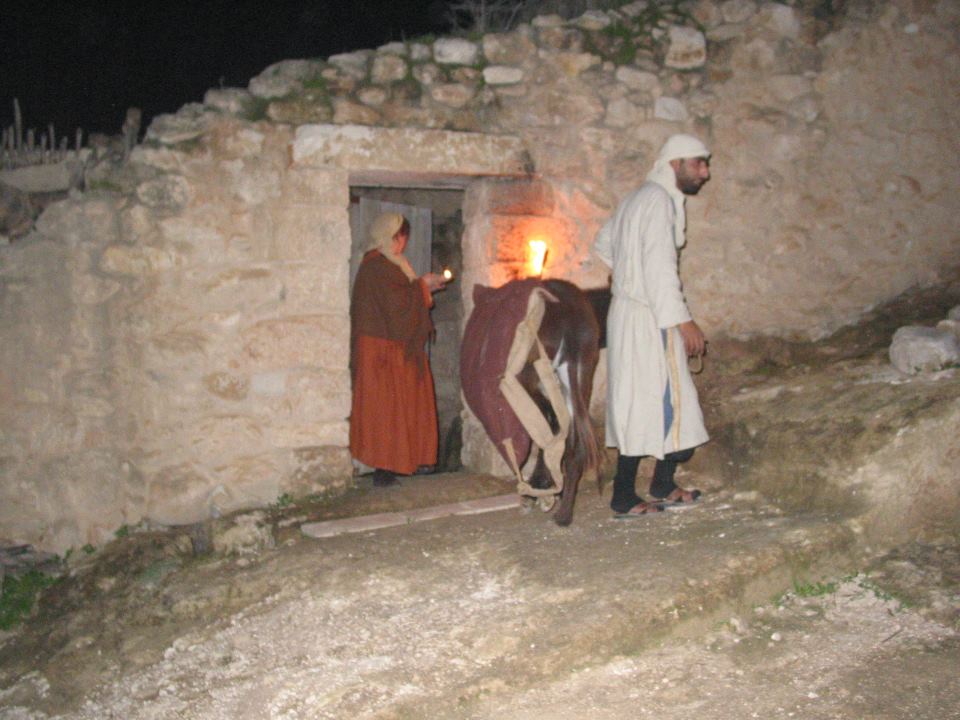
Nazareth Village (Rue de la Paix; ₪80 adult; guided tours daily 9am–5pm Mon–Sat; 1h guided; a reconstructed 1st-century Galilean village with live actors, an olive press, agricultural terraces, and a synagogue replica) provides the finest living-history context for understanding what Nazareth looked like in Jesus’s lifetime. The terraced hillsides around the village use first-century agricultural methods.
Book the Nazareth Village guided tour online in advance (nazarethvillage.com; group tours depart at fixed times; ₪80; 1h guided). The guide’s narration of first-century Galilean life provides the historical context that transforms the Basilica visit afterwards. The olive press and wine press demonstrations are the most viscerally memorable elements.
Photo: מוחמד מוסא שהואן, CC BY 2.5
Nazareth has the finest Arab restaurant scene in Israel. Tishreen (Old City; contemporary Palestinian and Arab cuisine from a celebrated chef; ₪80–140/person; book well ahead — one of the most sought-after reservations in Israel) is the non-negotiable destination restaurant. Mahroum Sweets (Paul VI Street; the finest Arab sweets shop in northern Israel; kanafeh, baklava, and mamoul; open from 7am; ₪5–10 per pastry; the original shop has operated since 1890) is the essential morning stop. The old city hummus restaurants (ask any local for the Jamal hummus shop on the main souk street; ₪20–30; cash only; open from 6am) serve the finest hummus in northern Israel. Arabic coffee (hel; cardamom-spiced; ₪5 at any old city cafe) and ka’ak bread rings (sesame pastry rings; ₪3–5 from street vendors) are the street food defaults.
7am: Mahroum Sweets for Arabic coffee and kanafeh (₪5–10). Old city souk walk (spice stalls, pastry shops, the hummus restaurant at the south end of the market; 1h). Basilica of the Annunciation (9am–11:30am; lower cave level + mosaic panels; free; 1h). Nazareth Village guided tour (₪80; book ahead; 1h; 1st-century Galilean life). Lunch at any old city Arab restaurant (hummus + ful + pita; ₪30–50). Synagogue Church and Church of St Joseph (free; 1h). Tishreen restaurant dinner (book ahead; 7:30pm; ₪80–140/person; the finest meal in northern Israel).
The old city of Nazareth is a mixed Muslim and Christian Arab community with conservative social norms for dress.
Tishreen (contemporary Palestinian and Arab cuisine; the most critically praised restaurant in northern Israel; ₪80–140/person; book via phone or in person; demand consistently exceeds availability) requires advance booking of at least 1–2 weeks, sometimes more.
The Basilica of the Annunciation closes at 11:45am and reopens at 2pm on weekdays (for the Franciscan midday prayer).
Egged buses from Tel Aviv Central to Nazareth (Bus 835; ₪28; 1h 30 mins) run every 30–60 minutes. From Haifa, buses run every 30 minutes (45 mins; ₪12).
Mahroum Sweets (Paul VI Street; established 1890; open from 7am; kanafeh — warm cheese pastry with sugar syrup and orange-flower water; ₪8 per portion; the finest in northern Israel) has been serving the same recipes for 130 years.
The old city lanes around the Basilica and the souk are a dense, partially unmarked network where smartphone GPS and instinct are more useful than signs.
From Tel Aviv’s beaches to Jerusalem’s sacred sites and Eilat’s Red Sea reefs.
Planning a wider trip? Our Israel travel guide covers getting there, costs, when to go and more.