IT
Bologna
The Food Capital of Italy
The Food Capital of Italy
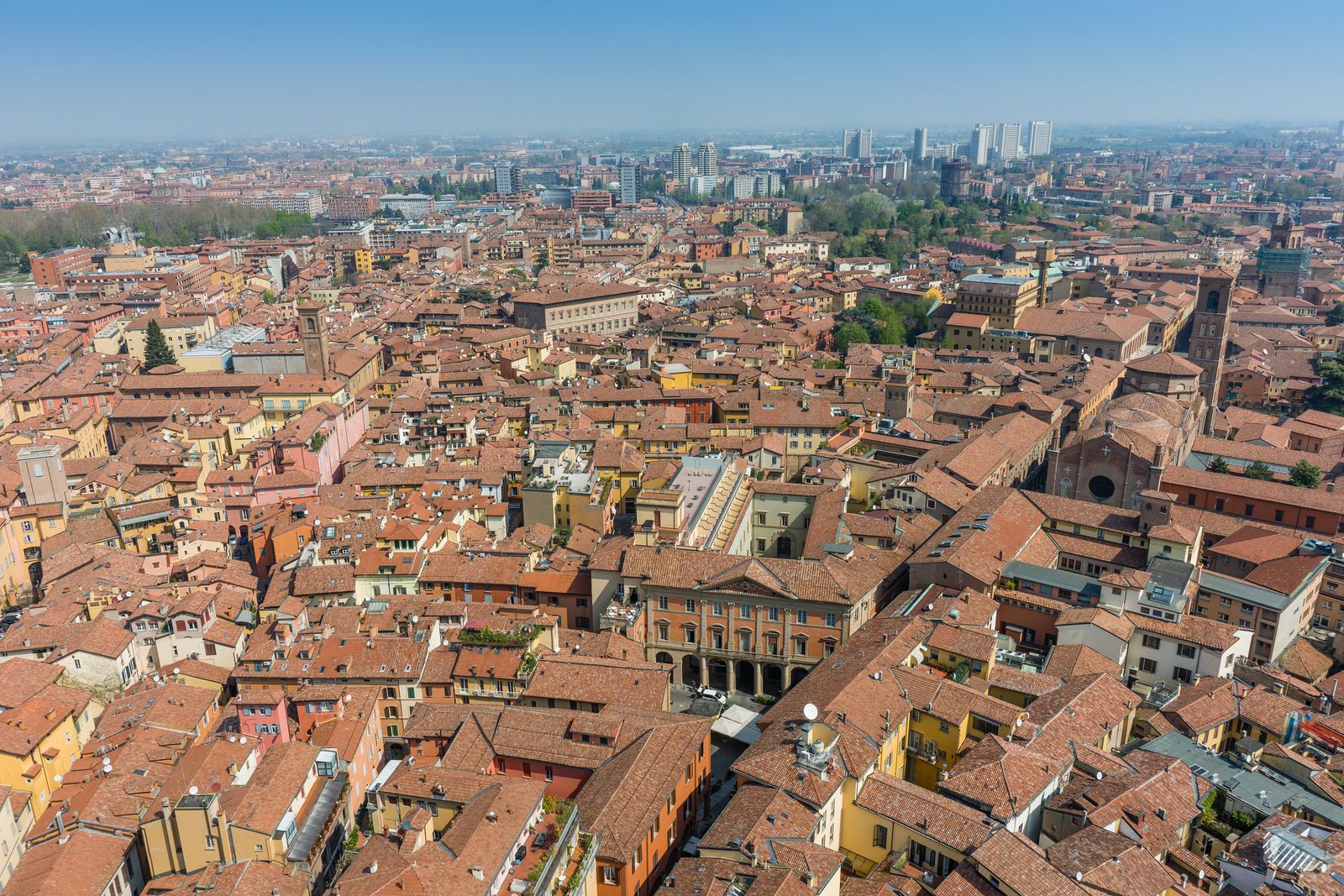
Le Due Torri (Piazza di Porta Ravegnana; Asinelli tower €5; daily 9am–5pm; Garisenda too short to climb) are the defining symbols of Bologna — medieval towers built by rival noble families in the 12th–13th centuries as status symbols. At its peak Bologna had nearly 200 towers; around 20 survive. The Asinelli (97.2 metres; 498 steps) provides the finest panorama over the city’s red terracotta roofscape and, on clear days, to the Apennines.
Climb the Asinelli Tower in the morning before 10am to avoid the longest queues (tickets at the base; €5; no advance booking). The 498 steps take about 20 minutes; the wooden staircase is steep. The panorama from the top — the terracotta roofs, the porticoes, the Apennines — is the finest in Emilia-Romagna.

Piazza Maggiore is Bologna’s finest civic space — a large medieval piazza enclosed by the Gothic Palazzo del Podestà, the Baroque Palazzo d’Accursio (the city hall), and the unfinished façade of San Petronio (begun 1390; if completed to the original plan would have been the world’s largest church; free entry). The piazza is at its most alive in the evening: aperitivo culture (Spritz from 6pm at any bar), an outdoor cinema in summer, and the constant flow of cyclists around its perimeter.
Visit San Petronio interior (free; the Bolognini Chapel has the finest Gothic frescoes in the city; a 1655 meridian line is the longest in the world; a 20-minute visit is worthwhile). The Fountain of Neptune (Giambologna; 1565; northeast corner of the piazza) is the best sculpture visible from street level in Bologna.
Photo: Paolobon140, CC BY-SA 4.0
The Quadrilatero (the rectangular street grid between Piazza Maggiore and Le Due Torri; daily market; butchers open 7am–1pm) is Bologna’s food heart — a dense network of market stalls, specialty food shops, and medieval-era butchers selling Parmigiano-Reggiano wheels, hand-sliced mortadella, fresh tagliatelle, and Bolognese ragù in terracotta jars. The Porticoes of Bologna (UNESCO World Heritage Site 2021; 38km of covered walkways covering most of the historic centre) are the finest urban infrastructure solution in Italy.
Buy a 250g wedge of genuine Parmigiano-Reggiano (36-month aged; from any Quadrilatero market stall; €5–7) and eat it with a glass of Lambrusco (the local sparkling red wine; €2–3 at any bar) standing under the porticoes. This is Bologna’s finest cheap food experience.
The Archiginnasio (Piazza Galvani 1; free entry for the courtyard and library; Anatomy Theatre €3; Mon–Sat 9am–7pm) was the main building of the University of Bologna — the world’s oldest university (founded 1088) — from 1563 to 1803. The Anatomical Theatre (1637) is a masterpiece of Baroque woodcarving: carved wooden seats surrounding a marble dissection table used for centuries of medical lectures, with statues of famous anatomists and a professor’s chair supported by two “skinned men.”
The Archiginnasio courtyard is covered in heraldic coats of arms of the student nations and rectors who attended the university across five centuries. The courtyard is free and open during library hours — possibly the finest free 15-minute stop in Bologna.
Bologna eating is a serious pursuit. Trattoria del Rosso (Via Augusto Righi 30; €9–14 for tagliatelle al ragù; arrive before noon; no reservations) is the most consistently praised neighbourhood trattoria. Trattoria Anna Maria (Via Belle Arti 17; the finest tortellini in brodo in the city; €10–15; book ahead) is the other non-negotiable. The Osteria del Solè (Vicolo Ranocchi; the oldest bar in Bologna; cash only; €3 per glass of local wine; no food served — bring your own from the Quadrilatero) is the finest aperitivo experience. Tamburini (Via Caprarie 1; the finest salumeria in Bologna; mortadella by the slice €2.50; Parmigiano tastings) is the top market stop. For dessert, gelato at Stefino (Via S. Stefano 45; €2.50–3) and a glass of Lambrusco (the local sparkling red wine; €2–4 anywhere) close any Bologna day correctly.
Quadrilatero market at 8am (mortadella, Parmigiano, fresh pasta; buy for a portico picnic). Asinelli Tower at 9am (€5; 498 steps; rooftop panorama; 1h). Archiginnasio and Anatomy Theatre (€3; 30 mins). Piazza Maggiore (San Petronio interior; free; 20 mins). Lunch: tagliatelle al ragù at Trattoria del Rosso (Via Righi 30; €10–14; arrive before noon for a table). Afternoon: portico walk to the Santuario di San Luca (4km; 666 portico arches; 45 mins each way). Aperitivo at Piazza Maggiore from 6pm (Spritz €5–7).
Morning pasta-making class (€60–80; 9am–noon; book via Airbnb Experiences; make tagliatelle and tortellini; eat lunch). Afternoon: train to Modena (17 mins; €4.40) for the Ferrari Museum in Maranello (bus from Modena; €5 return; €18 museum entry; allow 2h). Back to Bologna for dinner at Osteria del Solè (bring food from the market; buy wine there; €3 per glass; no food served). Or full-day Ravenna trip (1h; Byzantine mosaics; €11.50 combined site ticket).
🛂 Entry rules: EES and ETIAS
Italy is in the Schengen area, which has two EU border systems for non-EU visitors.
EES (in force): since 10 April 2026 the EU’s Entry/Exit System registers non-EU visitors’ passport details, fingerprints and a photo the first time they enter the Schengen area, replacing passport stamps. Allow extra time at the border on your first trip; later crossings are quicker. EU, EEA and Swiss citizens are not registered.
ETIAS (not yet running): a €20 online travel authorisation for visitors who don’t need a visa, such as UK, US, Canadian and Australian citizens. It hasn’t started and no start date has been confirmed, so nobody can apply yet; ignore websites that offer to “pre-register” you for a fee.
Visa-free visitors can stay up to 90 days in any 180-day period across the whole Schengen area, not per country.
Official information: EU: Travel to Europe (EES & ETIAS) · Reviewed September 2026
The ragù served in Bologna (slow-cooked for 3–4 hours; made with beef and pork, not spaghetti, not ground beef, and very little tomato) is served on egg tagliatelle (not spaghetti; Bolognesi regard spaghetti Bolognese as an Italian-American invention).
The 9am Asinelli Tower opening has the shortest queue. The 498-step climb takes 15–20 minutes and the terracotta rooftop panorama at 9am has the best morning light on the red city. Buy tickets at the base (€5; no advance booking available).
Half-day pasta-making classes (€50–80; taught by Bolognesi nonnas; find via airbnb.com experiences or directly at the market) are the finest culinary experience in the city: fresh egg pasta, tagliatelle, tortellini, and ragù.
Italian aperitivo (6–9pm; Aperol Spritz €5–7; many bars include free cicchetti/snacks) is at its best in Bologna’s Piazza Maggiore and the surrounding streets.
Bologna Centrale (10 minutes walk from the centre) has fast rail connections to: Modena (17 mins; €4.40; Ferrari Museum + Pavarotti hometown + the original ragù producer), Florence (37 mins by Frecciarossa; €10–19), Ravenna (1h; €7; the finest Byzantine mosaics in the world), and Milan (1h; €15–30).
A mid-range B&B in Bologna centro storico (€70–100/night) is 30–50% cheaper than equivalent rooms in Florence or Venice. Restaurant prices are 20–30% lower. The food quality is higher.
Book Bologna restaurants in advance — the best trattorias fill quickly, especially for lunch. TheFork has most Bologna restaurants listed with real-time availability.
Free
Book fast trains from Bologna to Florence, Milan, Venice, and Ravenna. Frecciarossa services need advance booking for best prices.
Free
Download Bologna offline map. The portico-covered streets are sometimes confusing; offline GPS saves data.
Free
Best multi-currency EUR card. Bring cash for the Quadrilatero market and the Osteria del Solè.
Free
Explore Italy’s most remarkable cities.
Planning a wider trip? Our Italy travel guide covers getting there, costs, when to go and more.