IT
Rome
The Eternal City
The Eternal City

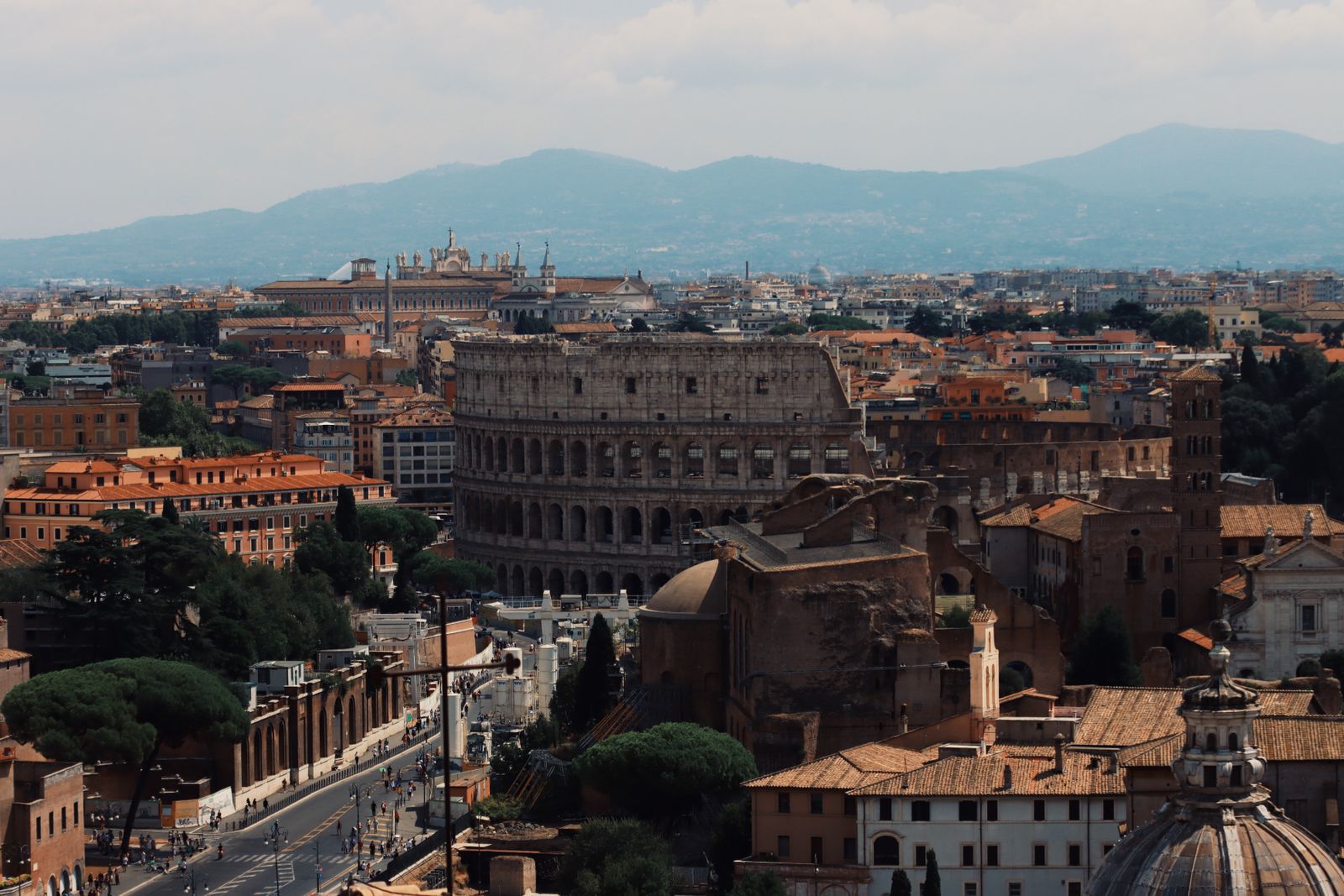
Book the Colosseum online at least a week ahead — walk-up queues are real and the timed-entry windows are non-negotiable. Include the Roman Forum and Palatine Hill in the same ticket (all three sites, single price). The Forum is more affecting than the Colosseum: 3km of ruins where Caesar was assassinated, Mark Antony delivered his speech, and Vestal Virgins tended a flame for a thousand years.
Book the Colosseum + Forum + Palatine Hill combo online (€18–24 at coopculture.it) — ticket office queues run 2 hours in summer. Enter via the Roman Forum on Via Sacra to bypass the main Colosseum crowd.
Photo: Wilfredor, CC0

Book three weeks ahead in summer — the Vatican is the world’s most visited museum and the queues without a reservation are extraordinary. Book the first morning slot. Go straight to the Sistine Chapel while the tour groups are still in the gallery halls. The ceiling is genuinely astonishing and takes about ten minutes to process. St Peter’s Basilica entry is free; the dome costs €8.
Book skip-the-line tickets at museivaticani.va at least 2 weeks ahead in summer (€17 + €4 booking fee). Head straight to the Gallery of Maps on the way to the Sistine Chapel — it’s as good as the destination and empty.
Photo: Sonse, CC BY 2.0

The medieval quarter on the west bank of the Tiber is where Romans actually eat and drink in the evenings. The streets around Piazza di Santa Maria in Trastevere are lively from 7pm. The basilica is 4th-century and always open. Wander without a plan: the neighbourhood is small enough to explore completely in an afternoon and large enough that you’ll keep finding corners you missed.
Trastevere at 7am is one of Rome’s finest hours: quiet alleys, the morning Santa Maria in Trastevere, and the Porta Portese flea market (Sundays only; 6am–2pm) — the largest in Rome.
Photo: Krzysztof Golik, CC BY-SA 4.0

The most important small museum in Italy. Bernini’s Apollo and Daphne and the Pluto and Persephone are here, along with a Caravaggio room. Entry is strictly timed and capped at 360 people per slot — book two weeks ahead, earlier in summer. The Villa Borghese park around it is Rome’s best free afternoon.
Borghese Gallery requires advance booking — entry is in strictly timed 2-hour sessions, only 360 visitors allowed (€15 + €2 booking fee; galeriaborghese.it). Book 3–4 weeks ahead in summer. This rule is absolute.
Borghese Gallery tickets →
Photo: Alessio Damato, CC BY-SA 3.0
Roman food is its own canon. The four canonical pasta dishes — cacio e pepe (cheese and pepper), carbonara (egg, guanciale, pecorino), amatriciana (tomato, guanciale), gricia (guanciale, cheese) — are all from here, and the best versions are uniformly in unremarkable-looking trattorias off the main piazzas. Rules: never order spaghetti bolognese in Rome (it’s Bolognese), never sit at a table with a laminated English menu and photographs of the food.
Suppli (fried rice balls, eaten standing) is the correct Roman street food. The Jewish Ghetto has the finest carciofi alla giudia (deep-fried artichokes). Testaccio — where slaughterhouse workers ate for generations — has the most honest and least touristic traditional food in the city. Rome also has over a hundred free drinking fountains (nasoni) fed by ancient aqueducts: the water is excellent and cold year-round.
Rome is more walkable than it appears on a map. Colosseum to Trevi Fountain is 20 minutes on foot; Trevi to the Vatican, 35 minutes. The Metro has two lines (A and B, intersecting at Termini) — useful for the Vatican (Line A: Ottaviano) and the Colosseum (Line B: Colosseo). Buses are slow but cover everywhere; Google Maps routing works reliably. Tram 8 from Largo Argentina runs to Trastevere in 10 minutes. Taxis have a €48 fixed rate from Fiumicino; within the centre, walking beats waiting in traffic.
Rome is tolerable in any month but magnificent in two windows: mid-April to June (mild temperatures, flowers on the Palatine Hill, golden evening light) and September to mid-October (still warm, the August crowds gone, the city returned to the Romans). July and August are genuinely difficult: 35°C+ with no shade at the major sites, and the queues are their worst.
Rome is expensive at the tourist tier and very affordable one layer below it. The Vatican and Colosseum cost €18–28 per site. Everything else — Pantheon, churches, walking, fountains, the Forum view from the Capitoline — is cheap or free. Per person per day, couple travelling together.
The nasoni drinking fountains are free and excellent. Stop buying bottled water.
The Borghese Gallery (€15) is better value than the Vatican; the Vatican is mandatory. Book both.
Pre-dawn Vatican access (€150–250/person) lets you photograph the Sistine Chapel empty. Worth it exactly once.
Five days is enough to see the major sites without feeling rushed, and to spend one afternoon completely unscheduled — which is the correct way to understand Rome.
Check in. Walk to Trastevere and have dinner in the neighbourhood — no reservation needed on a weekday. Piazza di Santa Maria in Trastevere at 9pm is the correct introduction to Rome at night. If the jet lag permits, walk to the Colosseum exterior after dark.
The first evening: walk from Campo de’ Fiori to Piazza Navona (10 min) for the Bernini fountains at night. Rome’s finest first evening stroll is this triangle.
First timed-entry slot at the Colosseum. Allow 3–4 hours for all three sites. Walk to Testaccio for lunch (try Flavio al Velavevodetto). Afternoon: Circus Maximus and the Aventine Hill (Orange Garden for the Colosseum view through a keyhole).
The Palatine Hill (included in the Colosseum combo ticket) has none of the crowds and gives the best elevated view of the Forum. Spend 45 minutes on the hill after the Forum.
First morning slot at the Vatican Museums. Go straight to the Sistine Chapel on arrival. St Peter’s Basilica after (free entry). Lunch in Prati. Afternoon: walk to Castel Sant’Angelo and the Tiber bridge.
The Sistine Chapel is emptiest right at museum opening (9am) before the group tours fill the room by 10am. Walk directly through the Gallery of Maps to get there first.
Borghese Gallery first slot (pre-book, strictly timed). Villa Borghese gardens. Spanish Steps. Trevi Fountain mid-morning (less crowded than afternoon). Pantheon (now charges €5 entry). Campo de’ Fiori evening — the neighbourhood comes alive at 7pm.
The Trevi Fountain is loudest at noon in summer. Go at 7am for the fountain nearly to yourself — or at midnight when the evening crowd has thinned but the illumination is best.
Morning in the Jewish Ghetto (Portico d’Ottavia, the best fried artichokes in Rome). Largo Argentina cat sanctuary. Monti neighbourhood in the afternoon — the most pleasant neighbourhood in Rome for an unscheduled hour. Or take the train to Ostia Antica (30 min each way) — better preserved than Pompeii and almost nobody goes.
Monti (Rione I) is the most liveable Roman neighbourhood for a slow afternoon. The Mercato Monti vintage market (weekends) and San Pietro in Vincoli (Michelangelo’s Moses; free) are highlights.
🛂 Entry rules: EES and ETIAS
Italy is in the Schengen area, which has two EU border systems for non-EU visitors.
EES (in force): since 10 April 2026 the EU’s Entry/Exit System registers non-EU visitors’ passport details, fingerprints and a photo the first time they enter the Schengen area, replacing passport stamps. Allow extra time at the border on your first trip; later crossings are quicker. EU, EEA and Swiss citizens are not registered.
ETIAS (not yet running): a €20 online travel authorisation for visitors who don’t need a visa, such as UK, US, Canadian and Australian citizens. It hasn’t started and no start date has been confirmed, so nobody can apply yet; ignore websites that offer to “pre-register” you for a fee.
Visa-free visitors can stay up to 90 days in any 180-day period across the whole Schengen area, not per country.
Official information: EU: Travel to Europe (EES & ETIAS) · Reviewed September 2026
The Vatican Museums and Sistine Chapel do not have same-day tickets available in any meaningful sense during peak season. Book a timed entry online.
The Colosseum-Forum-Palatine Hill ticket is sold in timed slots at coopculture.it. The combined ticket is €18 plus booking fee.
Every church in Rome enforces the dress code. A light scarf or sarong covers both. St Peter’s Basilica turns back tourists at the door.
Stand at the bar, order, pay first at the till (cassa), then present your receipt to the barista. Sitting down costs two to three times more.
The restaurants on the Piazza Navona, Campo de’ Fiori and near the Pantheon are tourist traps without exception.
Rome has 2,500 small drinking fountains (nasoni) fed by ancient aqueducts — the same water system, largely, that the Romans built. The water is cold, clean and free.
Quick answers to the questions travellers most often ask before visiting Rome.
Absolutely — both are among the most visited sites in the world. Colosseum tickets sell out days ahead in peak season at coopculture.it; Vatican Museums should be booked at museivaticani.va. Walk-up entry means 2–3 hour queues even when tickets are available at the gate.
Shoulders and knees must be covered to enter basilicas, including St Peter’s and the Pantheon. Guards at Vatican Museums are strict. Carry a light scarf or sarong — you’ll need it at multiple sites throughout the day.
Yes, and it’s exceptional. Rome has over 2,500 public nasoni (drinking fountains) across the city — free, cold, and clean. Bring a refillable bottle and skip paying for bottled water entirely.
Three days covers the highlights: Colosseum, Roman Forum, Vatican, Trevi Fountain, and the Pantheon. Add a fourth day for Trastevere, the Borghese Gallery (advance booking required), and the Testaccio market.
April–May and September–October offer mild weather (18–24°C) and manageable crowds. July–August is very hot (35°C+) and extremely busy, though evenings outdoors are lively and enjoyable.
High-speed train connections to Naples (70 min), Florence (1h30), Venice (3h40), Milan (3h). Essential for day trips and onwards travel.
Free
Real-time bus and Metro journey planner for Rome. ATAC routes and live delays. More reliable than Google Maps for local bus timing.
Free
Restaurant reservations across Rome. Useful for Trastevere and Testaccio restaurants on weekend evenings. Book 2–3 days ahead.
Free
Official Vatican app with audio tours for the museums, Sistine Chapel and St Peter’s Basilica. Download before entering; signal inside is poor.
Free
Download Rome offline before arriving. Useful in the narrow lanes of Trastevere and the Jewish Ghetto where signal can be unreliable.
Free
Discover more of Italy's great destinations.
Planning a wider trip? Our Italy travel guide covers getting there, costs, when to go and more.