KZ
Astana
A futuristic capital of glass and steel on the open steppe
A futuristic capital of glass and steel on the open steppe
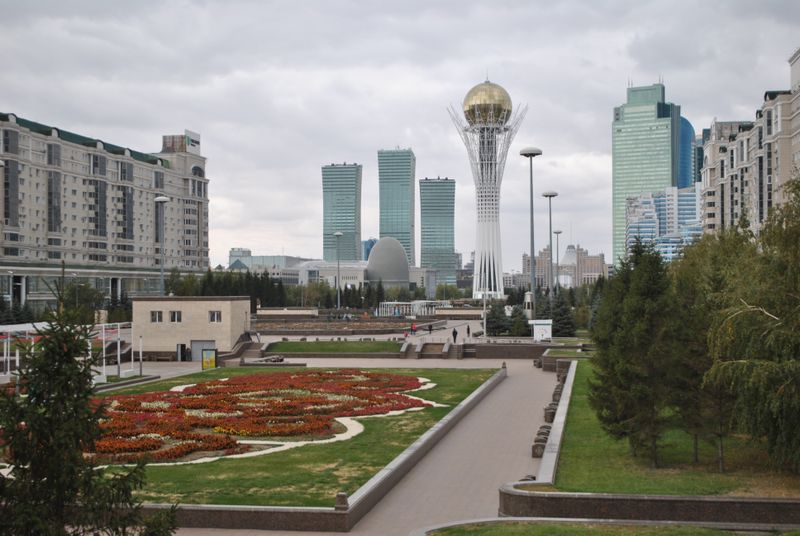
The 97-metre Bayterek, a golden orb cradled in white latticework, is Astana’s symbol, representing a poplar tree from Kazakh legend. An observation deck offers views along the ceremonial axis.
Place your hand in the gilded print of the president at the top for the classic photo.
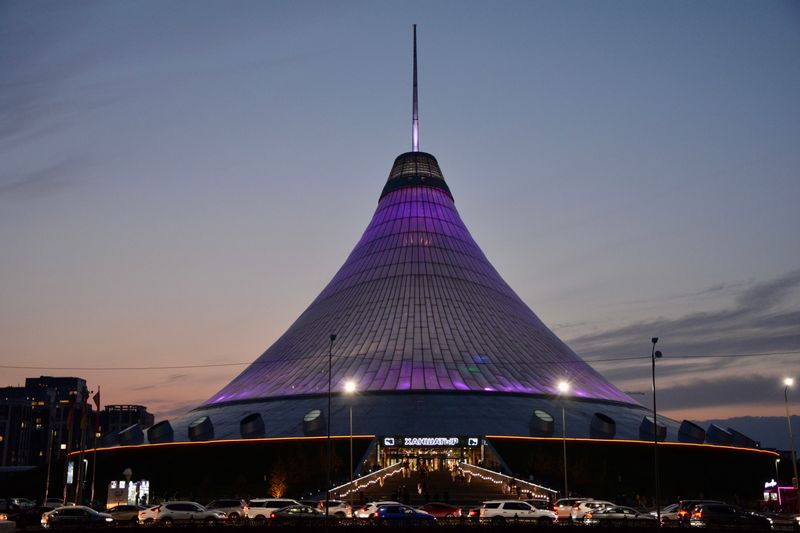
The world’s largest tent, this translucent 150-metre marvel by Norman Foster houses a shopping mall, gardens and even a sand beach with water piped from afar, all under one soaring canopy.
Ride to the top-floor beach club on a cold day for a surreal warm escape.
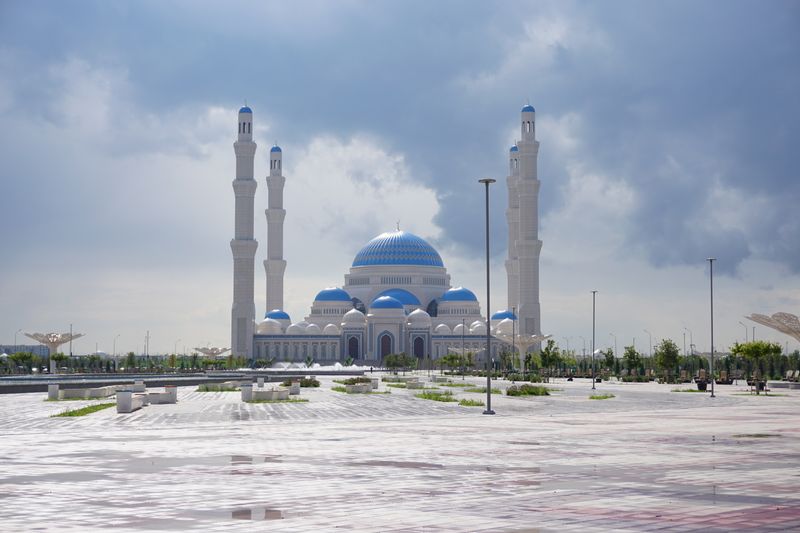
One of Central Asia’s largest mosques, this gleaming white-and-blue building with soaring minarets and intricate Islamic geometry can hold thousands of worshippers.
Dress modestly and cover your head to enter; visitors are welcome outside prayer times.
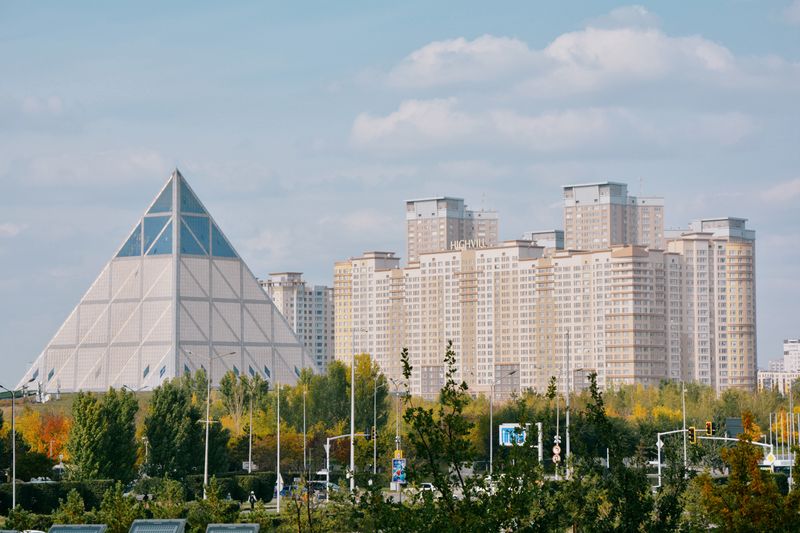
Another Foster creation, this 62-metre glass-and-steel Pyramid of Peace and Reconciliation hosts an opera hall and gatherings of world faiths beneath its stained-glass apex.
Book a guided tour to reach the sunlit dove-filled summit.
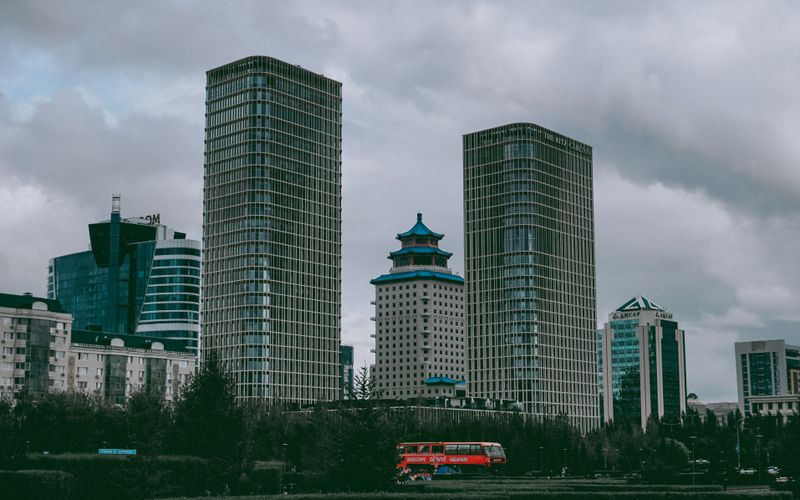
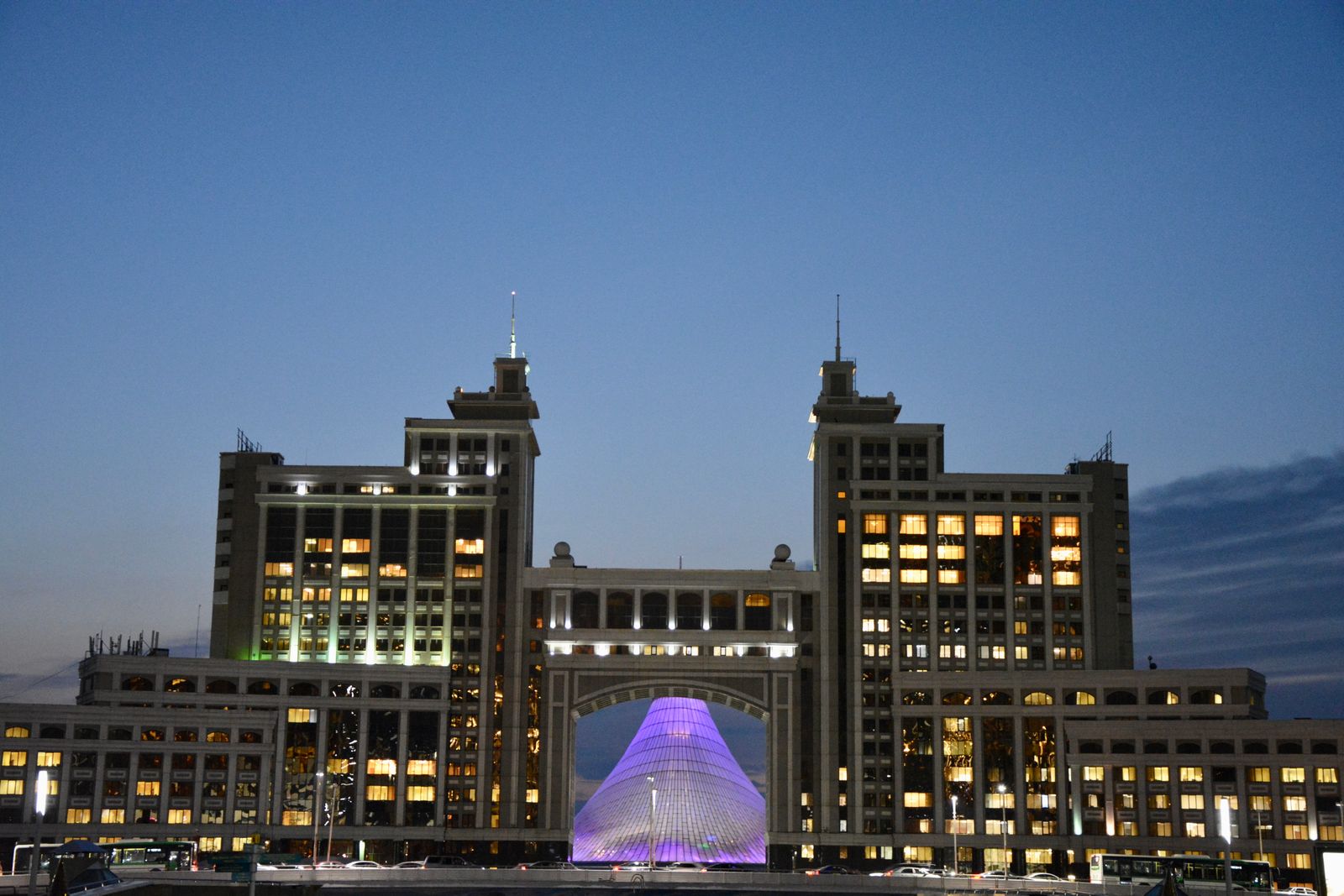
The city’s monumental pedestrian axis links Bayterek to the presidential palace, lined with golden twin towers, fountains and gardens, a showcase of Astana’s ambition.
Walk it in the evening when the buildings are floodlit.
Kazakh cooking is built for the steppe: beshbarmak (boiled meat, usually horse or mutton, over wide noodles with onion broth), plov, manty dumplings, kuyrdak (fried offal and potatoes) and baursak, puffy fried dough served with tea. Horse-meat sausages like kazy and shuzhuk appear on celebration tables, and kumys (fermented mare’s milk) or shubat (camel’s milk) are worth a curious sip.
Astana’s dining scene reflects a young capital full of officials and expats. Left Bank malls and Khan Shatyr have food courts and international chains, while the Right Bank’s older streets keep cheaper stolovayas (canteens) where a hearty lunch costs a few dollars. Georgian, Uzbek and Korean restaurants are popular, and specialty coffee shops are everywhere. Tea with milk is the national drink.
Nursultan Nazarbayev International Airport (NQZ) is about 15 km south of the centre. Since May 2026 the new automated LRT line has linked the airport with the Left Bank and Nurly Zhol railway station; city buses and taxi apps like Yandex Go are the alternatives. Astana has two main railway stations with overnight and fast trains to Almaty and other cities. Within the city, buses are cheap and paid by card or app, and the main landmarks along the Nurzhol Boulevard axis are walkable, although winter temperatures of minus 20°C or lower make walking tough.
Astana is affordable by European standards, though it is Kazakhstan’s priciest city after Almaty. Estimates are per person per day in USD.
Two days is right for Astana’s futuristic architecture. Allow extra time for walking the long distances between landmarks.
Start at the Palace of Peace and Reconciliation, then walk Nurzhol Boulevard west to Bayterek Tower and ride to the observation deck. Finish at Khan Shatyr, the giant transparent tent, for shopping and dinner.
Bayterek is especially striking lit up after dark.
Visit the vast Hazrat Sultan Mosque, then spend a few hours in the National Museum of Kazakhstan. In the evening stroll the Ishim River embankment as the skyline lights up.
In winter, plan indoor sights for the coldest part of the day.
Astana is among the coldest capitals on earth; visit June to September unless you want the extreme cold.
Ride-hailing is cheap and easy; distances between landmarks are large.
Even spring and autumn can be windy and chilly on the exposed steppe; bring warm clothing.
Astana is card-friendly, but carry some tenge for taxis and small kiosks.
Quick answers for planning a visit to Astana, Kazakhstan's capital.
June to September. Astana is one of the coldest capitals in the world, with long, harsh winters.
Two days is enough for Bayterek Tower, Khan Shatyr, Hazrat Sultan Mosque, the Palace of Peace and Nurzhol Boulevard.
Ride-hailing with Yandex Go is cheap and convenient, and useful because distances between landmarks are large.
It is moderately priced by European standards. Cards are widely accepted, but keep some tenge for taxis and kiosks.
Download the Astana area for offline navigation, walking directions and public transport routes.
Free
Leafy Almaty, futuristic Astana, the pilgrimage city of Turkistan, the red-rock Charyn Canyon and the alpine Kolsai Lakes — the many faces of vast Kazakhstan.
Planning a wider trip? Our Kazakhstan travel guide covers getting there, costs, when to go and more.