MU
Mauritius
Lagoons, sega and sugarcane hills
Lagoons, sega and sugarcane hills

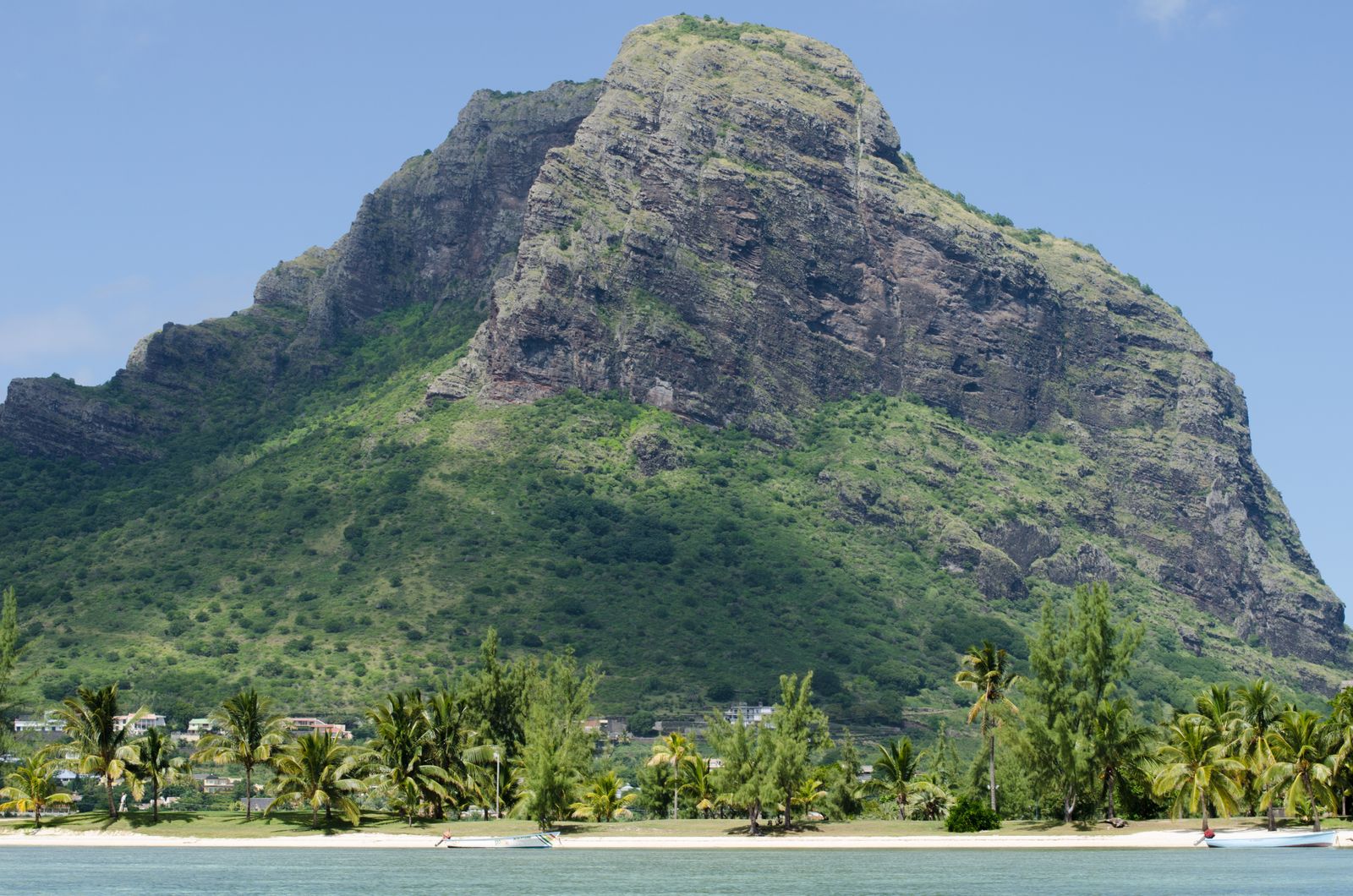
A UNESCO mountain on a peninsula with a turquoise lagoon: the excellent kite-surfing conditions at One Eye, the lagoon’s crystal clarity and the UNESCO heritage site of the runaway slave refuge on the summit.
Photo: "dronepicr", CC BY 2.0

The finest coral reef in Mauritius: 38 species of coral in a lagoon of 15m visibility, accessible by glass-bottom boat or snorkelling from the beach.
Photo: Lukas von Daeniken from Schweiz, CC BY-SA 2.0

Volcanic dunes of seven distinct colours (red, brown, violet, green, blue, purple and yellow) that never mix when churned: a geological curiosity in the upland forest.
Photo: Hansueli Krapf, CC BY-SA 3.0

The Central Market of Port Louis: a two-storey produce and spice market of colour, and the Caudan Waterfront’s restaurants and craft shops.
Photo: Thierry, CC BY-SA 3.0

A 6,574-hectare national park of endemic forest: the pink pigeon, echo parakeet and Mauritius kestrel (all rescued from near-extinction) in a landscape of waterfalls.
Photo: Adamina, CC BY 2.0

The north coast resort hub: catamaran excursions to swim with wild spinner dolphins off the coast in the early morning.
Photo: ZoschH, CC BY-SA 4.0

One of the oldest botanical gardens in the Southern Hemisphere (1770): the Victoria Amazonica water lily (2m diameter), the Talipot palm (flowers once every 40-80 years) and the breadfruit trees.
Photo: Benoît Prieur, CC0

A remote island 90 minutes by air from Mauritius: a lagoon twice the size of Mauritius’s, a coral reef walk accessible on foot at low tide and the most unhurried culture in the Indian Ocean.
Photo: B.navez, CC BY-SA 3.0
A thin flatbread of ground split peas, filled with rougaille (tomato-chilli-thyme sauce) and pickles: Mauritius’s definitive street food, sold from roadside stalls for MUR 15.
A Creole tomato sauce of thyme, chilli, garlic and onion: cooked with fish, sausage or octopus and served over white rice. The backbone of Mauritian home cooking.
An Indian-influenced biryani of chicken or lamb with saffron, cardamom and rose water: the Sunday celebratory meal of Mauritius’s Hindu and Muslim communities.
Octopus slow-cooked in a Creole curry with tomato, thyme and turmeric: the speciality of the east coast fishing villages.
Phoenix is the national lager. Chamarel distillery produces the finest sugarcane rum in the Indian Ocean.
A layered sweet drink of milk, basil seeds, agar-agar jelly and rose syrup: sold from mobile stalls in Port Louis’s market. Indescribably refreshing.
Deep-fried split pea fritters with chilli: MUR 5 each at morning market stalls. Eaten for breakfast.
A shortbread biscuit sandwich with jam and pink icing: the definitive Mauritian afternoon tea pastry.
Sir Seewoosagur Ramgoolam International (MRU) is one of the best-connected Indian Ocean hubs. Air Mauritius and British Airways operate direct flights from London. Dubai (4h30) is the best transit hub.
British Airways and Air Mauritius both operate direct Heathrow–Mauritius flights year-round. Mauritius is one of the best-connected Indian Ocean islands from the UK.
Dubai is the best non-European hub — Emirates operates DXB–MRU direct in 4h30, with excellent connections from the UK (via DXB) or Asia. Air Mauritius connects to Réunion (1h) and Madagascar (2h) for island circuits.
The public bus network (MUR 20–50 per trip) is excellent for inter-town travel. For beaches and out-of-town attractions, car hire (MUR 800–1,500/day) is the most practical option.
Mauritius is compact — 65km × 45km. Any two points are within 1h30 by car. The road network is excellent; drive on the left (British-inherited system). Fuel is approximately MUR 60/litre.
May to November is the best window — the southeast trade winds bring cooler, drier weather (24–28°C), the Indian Ocean clear and calm on the west coast. September and October are the most pleasant months. December to April is cyclone season — warm and humid, with the east coast rougher.
📅 Mauritius is in its best season in May, June, July, August, September, October, November. See where else is good to go in those months, or browse where to go by month.
Mauritius is mid-range to premium — an excellent luxury destination at the top but accessible budget options exist outside resort zones. The Mauritius Rupee (MUR) is the currency.
Dholl puri — a flat soft bread of split yellow peas ground into flour, served with curried chickpeas, chilli sauce and pickled mango — is Mauritius’s most important street food.
Rhumerie de Chamarel single estate rum — the first in Mauritius, grown and distilled in Chamarel — has received international awards. The Vanilla rum aged with Bourbon vanilla is the standout for visitors.
The One&Only Le Saint Géran (east coast, the grande dame of Mauritius luxury since 1975, from MUR 25,000–100,000/night) and Constance Belle Mare Plage are the island’s most storied addresses.
Port Louis for one day, Le Morne and the south for two, the east coast for one, Black River Gorges for one, Rodrigues for two. Mauritius combines extraordinary beaches, Creole food and one of the finest hotel industries in the world.
Port Louis has the Central Market (fresh fish, rougailles, curries from every community: Creole, Indian, Chinese, French), the Caudan Waterfront and the Natural History Museum holding the only complete dodo skeleton. The dodo — extinct by 1662, the world’s most famous extinction — was endemic to Mauritius.
The dodo evolved in the absence of mammalian predators and grew to 1m tall. The first Dutch settlers arrived in 1638; the last confirmed sighting was 1662. Introduced rats, hunting and habitat destruction from clearing forests for sugar caused the extinction within 24 years of Dutch arrival.
Le Morne Brabant (UNESCO World Heritage Site, a 556m basalt monolith above the finest kite-surfing lagoon in the Indian Ocean, used as a refuge by escaped Maroon slaves in the 18th century) — in 1835, refugees at the summit, believing the approaching British army had come to recapture them, jumped to their deaths on the very day abolition was announced.
The Le Morne tragedy became known to historians only in 2001 through oral traditions. It is now the most poignant monument to enslaved people in the Indian Ocean region.
The Chamarel Seven Coloured Earths (dunes of sand in seven distinct colours — red, brown, violet, green, blue, purple and yellow — formed by volcanic basalt cooling at different temperatures, producing different iron oxide compounds; the colours don’t mix despite erosion) and the Chamarel Waterfall (90m, the highest in Mauritius). The Rhumerie de Chamarel for rum tasting.
Chamarel rum is Mauritius’s finest spirit — the XT aged in French oak, the Expresso (with Arabica coffee), the Vanilla aged with Bourbon vanilla. The distillery is open daily for tours and tasting.
Belle Mare Beach (8km of powdery white sand, the finest on Mauritius, sheltered behind the reef) and the Blue Bay Marine Park (the finest coral reef on the island, a protected lagoon reserve near Mahebourg with brilliant snorkelling).
Belle Mare faces northeast, sheltered by the reef from the southeast trade winds in the best season. The sand has been accumulating from the breaking reef for thousands of years and stays cool to the touch.
Black River Gorges National Park (6,574 hectares of the last endemic forest on Mauritius) — the pink pigeon (reduced to 10 individuals in 1990, now 400+ after captive breeding), the Mauritius kestrel (4 individuals in 1974, now 400+) and the Alexandra Falls viewpoint. The most successful island bird conservation programme in the world.
The Mauritius kestrel recovery, the echo parakeet programme and the pink pigeon reintroduction are collectively considered the greatest island species rescue in conservation history. Gerald Durrell’s Durrell Wildlife Conservation Trust led the effort from the 1970s.
1h45 flight from Mauritius. Rodrigues — 560km east, a quieter island with an undeveloped lagoon, the finest diving in the Mascarene archipelago (hammerhead sharks October–December), and the most authentic Creole culture in the region. The octopus fisherwomen who wade the reef flat with homemade tridents are a celebrated Rodrigues tradition.
Rodrigues was home to the solitaire (Pezophaps solitaria) — a flightless bird related to the dodo, hunted to extinction by 1780. The island was uninhabited before the 17th century; the current Creole population descend from escaped slaves.
A full day diving the outer atoll (healthy coral, sea turtles) and the Friday market in Port Mathurin, where fishermen sell lobster, octopus and bourgeois fish directly from the quay. Fly from Rodrigues (RRG) to Mauritius, then international connections.
Rodrigues has no mass tourism — fewer than 100,000 tourists per year visit versus over 1 million for Mauritius. The diving is excellent precisely because of this low visitor pressure; fish behaviour near divers is completely uninhibited.
Uber doesn't operate in Mauritius. Use hotel or pre-booked taxis or local apps such as Yugo, and agree fares in advance.
A dholl puri street snack: MUR 15-30 (EUR 0.30-0.60). A luxury resort: EUR 300-1,000/night.
Hindu, Muslim, Creole and Chinese cultural events coexist throughout the year.
Public buses cover the coast but not Black River Gorges or Chamarel.
Check weather forecasts; cyclones can disrupt flights and outdoor activities.
Both give excellent 4G coverage.
Petty theft at beaches; otherwise very safe for tourists.
The flat water, pink sky and mountain silhouette at dusk.
Quick answers to the questions people most often ask before visiting Mauritius.
May to November is the best window — the southeast trade winds bring cooler, drier weather (24–28°C), the Indian Ocean clear and calm on the west coast. September and October are the most pleasant months.
Sir Seewoosagur Ramgoolam International (MRU) is one of the best-connected Indian Ocean hubs. Air Mauritius and British Airways operate direct flights from London. Dubai (4h30) is the best transit hub.
Expect roughly MUR 1,500–2,800 a day on a budget and MUR 6,000–11,000 mid-range, or MUR 25,000+ for a more luxurious trip, per person and excluding flights.
Mauritius uses the MUR.
Plug types: Type G (UK three flat pins, 230V).
Ride-hailing across Mauritius — significantly cheaper than licensed taxis and available island-wide.
FreeAlternative ride-hailing on Mauritius — negotiate fares directly with drivers.
FreeBook catamaran cruises, Chamarel Coloured Earth visits, dolphin swims and Mauritian island experiences.
FreeMauritius’ primary messaging platform — contact beach villas, local restaurants and tour operators.
FreeBook beach resorts and guesthouses across Mauritius — luxury resorts sell out during European winter.
FreeA market-spiced capital, a beach hub, a UNESCO freedom-mountain, the island’s finest sunset coast and a highland of coloured earth and rum — five faces of Mauritius.
Mauritius sits within easy reach of several other destinations — each with a completely different character.


