MG
Madagascar
Alien landscapes and unique island wildlife
Alien landscapes and unique island wildlife

Six species of baobab tree (the “trees of life” that store 120,000 litres of water): the Avenue of the Baobabs near Morondava is Madagascar’s defining landscape, particularly at sunset.
Photo: Pat Hooper from Chicago, IL, USA, CC BY-SA 2.0

A sandstone canyon landscape of rock pools, canyons and lemur families: the natural swimming pools (piscine naturelle) in the canyon, ringed by orchids.
Photo: JialiangGao www.peace-on-earth.org, CC BY-SA 4.0

UNESCO Ranomafana: a cloud forest of 29 lemur species including the critically endangered golden bamboo lemur. Night walks reveal mouse lemurs and chameleons.
Photo: Charles J. Sharp, CC BY-SA 4.0

A volcanic island of perfume ylang-ylang plantations: whale shark snorkelling (October-November) and the finest diving in Madagascar.
Photo: Krzysztof Golik, CC BY-SA 4.0

UNESCO: a UNESCO reserve of razor-sharp limestone needles (tsingy) up to 30m high, connected by suspension bridges: inhabited by ring-tailed lemurs.
Photo: Cactus0625, CC BY-SA 4.0

The easiest park from Tana (3h): the indri lemur (the largest living lemur) calls through the forest at dawn — the most haunting sound in the natural world.
Photo: Smiley.toerist, CC BY-SA 4.0

The largest remaining lowland rainforest in Madagascar: humpback whales calving offshore (July-September), sea turtles and a boat-only access to intact forest.
Photo: Didier Descouens, CC BY-SA 4.0

The hilltop Rova of Antananarivo (the queen’s palace complex) and the Zoma market: the largest open-air market in Africa, operated on Fridays.
Photo: Sascha Grabow www.saschagrabow.com, CC BY-SA 3.0
A clear broth of zebu (hump-backed cattle) with mixed greens (bredy) and tomato: the national dish of Madagascar, eaten at every Malagasy table.
Cassava leaves cooked in coconut milk with pork: the most beloved Malagasy comfort food.
White rice cooked with mixed vegetables (zucchini, tomato, ginger, garlic): the everyday one-pot dish of Madagascar.
Hump-backed cattle grilled over charcoal: Madagascar’s finest protein and a staple of roadside grill restaurants throughout the island.
Madagascan rum infused with vanilla, coconut, lychee or ginger: the local speciality. Three Horses Beer (THB) is the national lager.
Madagascar’s national lager since 1958: clean, light and cold. Drunk at every roadside hut.
Madagascar grows excellent highland Arabica coffee in the Itasy and Vakinankaratra regions.
A dense cake of rice flour, peanuts and brown sugar wrapped in banana leaves and steamed: the Malagasy sweet found at every market.
Ivato International (TNR) in Antananarivo is the only major hub. Air Madagascar (Madagascar Airlines), Ethiopian Airlines and Air Austral (Réunion) serve the main routes. Internal flights are essential given the road network. For trip planning, see the official Madagascar tourism portal.
Paris is the best European gateway — Air France and Corsair both serve Antananarivo directly. Johannesburg (2h30 from Tana) and Nairobi (4h) are the African hub options.
Johannesburg is the most practical African gateway. Combining Madagascar with Mauritius or Réunion (both 2h) makes a natural Indian Ocean circuit.
Internal flights are not optional in Madagascar — the road network is among the worst in the world for its size. A route that looks like 200km on the map can take 10–16h by taxi-brousse. Budget US$100–200 per internal flight leg.
The RN7 (Route Nationale 7, Tana to Tulear) is the one good road in Madagascar — paved, mostly passable in a standard vehicle, covering Antsirabe, Ranomafana, Isalo and Tulear. All other main routes require a 4WD and significant time.
April to November is the best window — the dry season, when the south and west are accessible, the Avenue of the Baobabs spectacular at sunset, the whale watching season on the east coast (July–September). July and August are coolest and clearest. The cyclone season (December–March) brings heavy rains to the east and can close roads.
📅 Madagascar is in its best season in April, May, June, July, August, September, October. See where else is good to go in those months, or browse where to go by month.
Madagascar is affordable to mid-range — accommodation and food are inexpensive, though park fees, domestic flights and guided tours add up. The Malagasy Ariary (MGA) is the currency; USD and euros are widely accepted.
Three Horses Beer (THB — “Trois Chevaux Bier”) has been brewed in Madagascar since 1958.
Air Madagascar (now Madagascar Airlines) connects Antananarivo to Morondava (gateway to baobabs + Kirindy) and Tulear (gateway to Isalo).
Anjajavy le Lodge (a private nature reserve on the northwest coast, accessible only by charter aircraft, with baobab forest, fossas habituated to night walks and the finest Indian Ocean beach in Madagascar) is the country’s most celebrated address.
Antananarivo for one day, the Avenue of the Baobabs for one, Kirindy Forest for one, Isalo National Park for two, Ranomafana for one, Andasibe for one. Madagascar — the eighth continent, separated from Africa 88 million years ago — has 90% endemic species. Nowhere else on earth is so evolutionarily isolated.
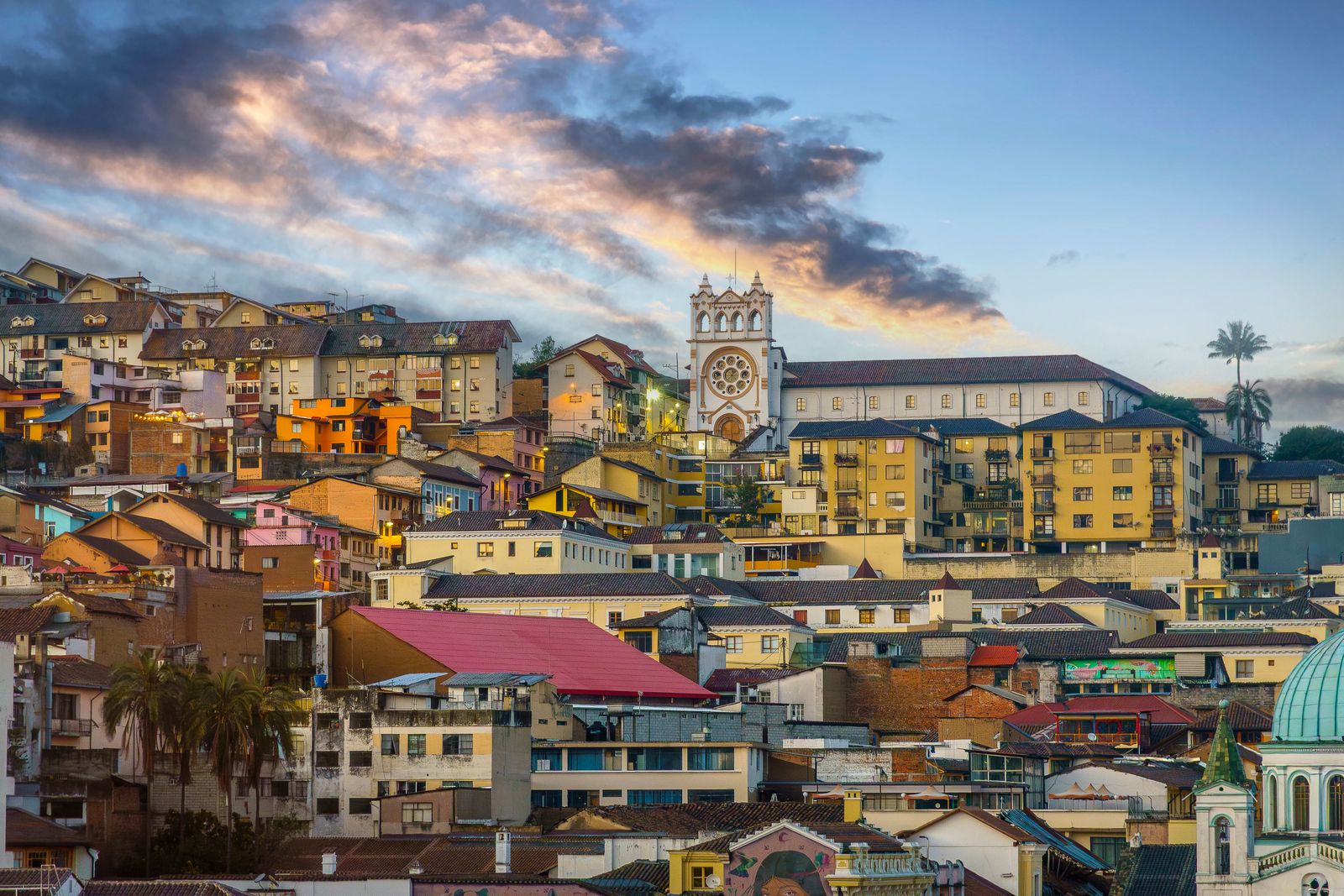
Antananarivo (“Tana”, “the city of a thousand warriors”) is built on 12 hills above the Betsimitatatra rice paddy plains — a dramatic, stacked city of Merina royal palaces (the Rova of Antananarivo, a 17th-century royal compound, burned in 1995 and partially restored) and French colonial architecture. The Zoma market (“Friday market”) continues as the largest open-air market in Africa.
Madagascar’s Malagasy people are genetically and linguistically Austronesian (from Borneo and the Indonesian archipelago) — their ancestors crossed 7,000km of open Indian Ocean in outrigger canoes around 650 CE and settled an island that had been uninhabited by humans throughout hominin evolution. There is no closer genetic relationship between Malagasy and mainland Africans than with Southeast Asians.
8h drive from Tana via Morondava. The Avenue of the Baobabs (Allee des Baobabs) — a 250m stretch of unpaved road lined with 20–30 Adansonia grandidieri baobabs, 800 years old, 30m tall, their massive silver trunks glowing orange at sunset — is the most photographed natural scene in Madagascar and one of the most striking on earth.
The Avenue of the Baobabs is a remnant of the dense dry deciduous forest that once covered this region — the trees survived because the surrounding forest was cleared for rice cultivation over centuries, leaving only the trees that were too large to remove. The baobabs are estimated to be 800–1,200 years old.
40km north of Morondava. Kirindy Forest — the finest dry deciduous forest in Madagascar, home to the fossa (Cryptoprocta ferox — Madagascar’s apex predator, a cat-like carnivore more closely related to the mongoose than any cat, 80cm long, capable of killing lemurs three times its weight, the strangest large predator on earth), seven lemur species and the giant jumping rat.
The fossa (pronounced “foo-sa”) is the only large carnivore on Madagascar — it evolved in total isolation from Africa’s mammalian predators for 88 million years and is the result of a completely independent evolutionary pathway from any other carnivore on earth. Its closest living relative is the Malagasy mongoose. Fewer than 2,500 adults remain.
5h from Morondava. Isalo National Park (81,540 hectares, a Jurassic sandstone massif eroded into canyon systems, natural swimming pools and bizarre silhouettes) — the “Window of Isalo” (a natural stone arch framing a perfect sunset), the Piscine Naturelle (a natural pool of ice-cold water in a canyon fed by a cascade) and ring-tailed lemurs on the canyon rims.
Isalo’s sandstone was deposited in the Jurassic period (180–150 million years ago) when Madagascar was still part of the Gondwana supercontinent. The erosion has exposed cross-bedded sandstone in canyon walls revealing the ancient river systems of a world before mammals. The shapes — pillars, arches, balanced rocks — are more reminiscent of Utah than Africa.
A full day in Isalo’s canyons — ring-tailed lemurs (Lemur catta, the most recognisable of Madagascar’s 100+ lemur species, with their long black-and-white striped tails and orange eyes) warming themselves on the canyon rocks at dawn, the Cascade des Nymphes (a 30m waterfall into a natural pool), and the Tomb of the Kings (Bara people burial sites in the cliff faces).
Ring-tailed lemurs are the most terrestrial of all lemur species — they spend more time on the ground than any other lemur, travelling up to 1km per day in social groups. Female ring-tailed lemurs are dominant over males — an unusual arrangement in primates. They communicate by scent-marking with specialised glands on their wrists.
6h from Isalo. Ranomafana National Park (43,500 hectares, eastern highland rainforest, 29 lemur species including the golden bamboo lemur — discovered in 1986, it feeds exclusively on giant bamboo shoots containing enough cyanide to kill any other mammal — and 12 species of tenrec).
The golden bamboo lemur (Hapalemur aureus, “the golden guardian of the bamboo”, discovered by Patricia Wright in 1986) consumes a daily dose of hydrogen cyanide from its bamboo shoots that would kill a human 12 times over. How its metabolism tolerates this is not fully understood. It is critically endangered with fewer than 1,000 individuals.
6h from Ranomafana. Andasibe-Mantadia National Park — the home of the indri (Indri indri, the largest living lemur, 70cm long, with no tail, and a territorial song audible 3km through the forest — a haunting, whale-like call that fills the cloud forest at dawn) — 45 minutes from Tana. The easiest accessible rainforest with the most reliable lemur encounters. Fly from Tana (TNR).
The indri’s territorial song — a high-pitched, otherworldly wail that begins with a falling note and rises to a chorus — carries 3km through the cloud forest and is used to delineate territories between family groups. The song lasts 1–3 minutes and is synchronised between groups across the forest. It is unlike any other animal sound on earth.
Roads are very rough. Air Madagascar and Tsaradia connect major tourist sites.
A restaurant meal: MGA 10,000-20,000 (EUR 2-4). A good guesthouse: EUR 15-40.
The fihavanana (solidarity and good relations) principle means guests are treated with care.
Most tourist routes require a 4WD vehicle. Hiring a local driver is the safest and most rewarding approach.
Best coverage in tourist areas.
Every region has specific local fady (forbidden actions). Ask your guide before photographing, pointing or eating certain foods.
Unlike most wild primates, Madagascar’s lemurs show little fear of humans: encounters are intimate.
Thank you and hello in Malagasy: warmly appreciated.
Quick answers to the questions people most often ask before visiting Madagascar.
April to November is the best window — the dry season, when the south and west are accessible, the Avenue of the Baobabs spectacular at sunset, the whale watching season on the east coast (July–September). July and August are coolest and clearest.
Ivato International (TNR) in Antananarivo is the only major hub. Air Madagascar (Madagascar Airlines), Ethiopian Airlines and Air Austral (Réunion) serve the main routes. Internal flights are essential given the road network.
Expect roughly US$40–75 a day on a budget and US$150–280 mid-range, or US$400+ for a more luxurious trip, per person and excluding flights.
Madagascar uses the MGA.
Plug types: Type C / E (two-pin, 220V).
The most popular ride-hailing option in Antananarivo — negotiate fares directly with drivers.
FreeBook Avenue of the Baobabs tours, Ranomafana lemur park visits, Tsingy de Bemaraha trips and Malagasy experiences.
FreeMadagascar’s primary messaging platform — essential for contacting lodges, guides and local transport.
FreeBook eco-lodges and guesthouses across Madagascar — book ahead in the dry season (May–October).
FreeBook private lodges and chalets in national park areas across Madagascar.
FreeTrack MGA (Malagasy Ariary) rates — large denominations are normal; this app prevents confusion.
FreeHillside-capital Antananarivo, beach-fringed Nosy Be, the rainforest of Andasibe, the baobab avenue at Morondava and the canyons of Isalo — Madagascar at its most varied.
Madagascar sits within easy reach of several other destinations — each with a completely different character.


