FM
Micronesia
Chuuk Lagoon wrecks, Yap manta rays & the Venice of the Pacific
Chuuk Lagoon wrecks, Yap manta rays & the Venice of the Pacific
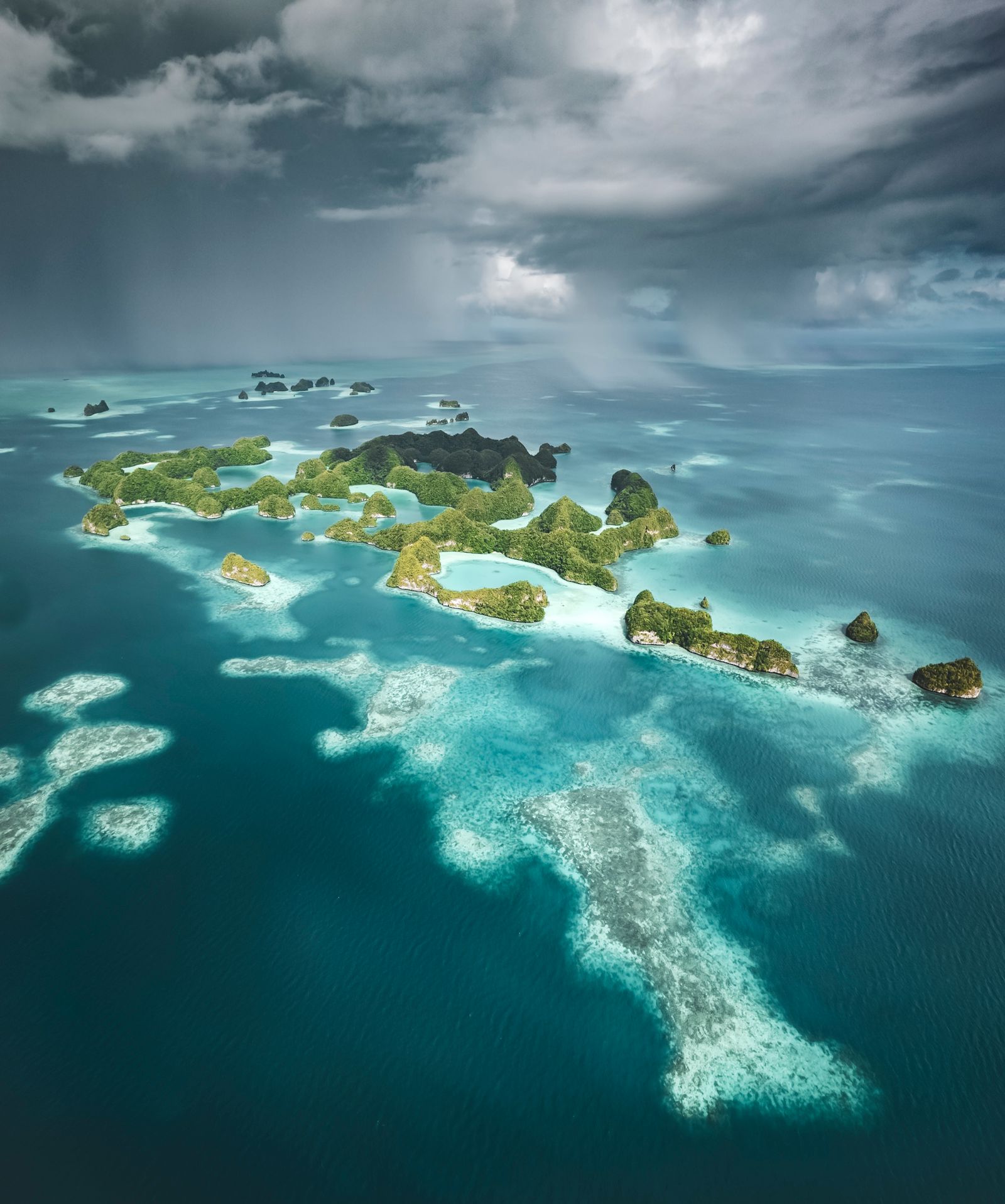
The Federated States of Micronesia is a nation of 607 islands spread across the western Pacific, best known to divers for the wrecks of Chuuk Lagoon (Truk Lagoon) — the world’s greatest wreck diving destination, where a surprise American air attack in February 1944 sank over 60 Japanese ships in the largest naval graveyard on earth. Battleships, aircraft carriers, submarines, cargo ships and aircraft rest between 15 and 65 metres in a lagoon of great visibility, draped in soft corals and inhabited by sharks and sea turtles. The four main island states of Yap, Chuuk, Pohnpei and Kosrae each offer completely different experiences: Yap’s manta ray aggregations and traditional stone money, Pohnpei’s mysterious Nan Madol (the “Venice of the Pacific”, a UNESCO World Heritage Site), and Kosrae’s healthy coral reefs and mangroves.
The world’s greatest wreck diving destination — Operation Hailstone (February 17–18, 1944) sank 60+ Japanese ships in a single surprise air attack. The Fujikawa Maru (aircraft carrier, 133m), Shinkoku Maru (tanker, 152m), and the Nippo Maru (cargo ship with tanks, guns and gas masks on the deck) rest in 15–65m of warm, clear water, thickly encrusted with soft corals and inhabited by sharks, barracuda and sea turtles. A moving experience.
Yap Island and its neighbouring channels are the world’s most reliable destination for manta ray encounters — resident oceanic mantas with wingspans up to 5 metres cruise the channels year-round, feeding on plankton. Yap’s traditional stone money (Rai — massive doughnut-shaped limestone discs up to 3 metres in diameter, still legally used) is the world’s most unusual currency.
A UNESCO World Heritage Site — a city of 92 artificial islands built on a coral reef off the coast of Pohnpei using basalt columns, constructed by the Saudeleur dynasty between 1200–1500 AD. Canals between the islands, megalithic temple platforms and the royal tombs of Nandauwas create a complex so improbable that it’s been called the Pacific’s Angkor Wat.
Pohnpei’s kava, made from pepper-plant roots pounded on flat stones and drunk communally — strongly relaxing.
Micronesia’s waters are among the Pacific’s richest fishing grounds for skipjack tuna — the basis of much of the global canned tuna industry. Locally eaten fresh, grilled over open fire or prepared raw in lime juice as a Pacific-style ceviche.
A staple crop across the Micronesian islands — roasted whole over open fire until charred and dense inside, boiled in coconut milk, or fermented in pits as a long-term food reserve. Micronesian varieties are seedless and particularly starchy.
The sacred crop of the Caroline Islands — boiled, baked in the underground umu, or cooked in coconut milk. The corm and leaves are both eaten; in some island cultures the quality of a family’s taro garden is a direct marker of social status.
A local delicacy; reef fish, breadfruit and taro are the everyday staples.
United Island Hopper is the lifeline connecting all FSM states. Pohnpei (PNI) is the main hub; Chuuk (TKK), Yap (YAP) and Kosrae (KSA) are all served.
The Island Hopper (United Airlines, Honolulu–Guam via all FSM states, 3x weekly) is the primary connection for all Micronesia visits. The full journey from HNL to GUM stops at Majuro, Pohnpei, Chuuk, Yap and Guam — 10+ hours across 3,700km of Pacific ocean.
Guam (GUM) is the western gateway — all routes from Asia connect through Guam, then take the Island Hopper eastbound to FSM. Tokyo to Pohnpei takes approximately 6 hours via Guam.
Kosrae is served by the eastbound Island Hopper (1 hop from Pohnpei). Outer island visits within each FSM state require the field trip ship or charter aircraft through Pacific Missionary Aviation.
Car hire is practical on Pohnpei and Yap; Chuuk visitors are primarily dive-focused and the dive boat serves as primary transport. Kosrae is best explored by kayak, on foot and by local boat.
December to April is the dry season — the best diving visibility, calmer seas (26–29°C). May to November is wetter with higher seas; Chuuk Lagoon wreck diving is excellent year-round. Typhoons occasionally affect the northern islands July–November.
📅 Micronesia is in its best season in January, February, March, April, December. See where else is good to go in those months, or browse where to go by month.
The US dollar is the currency. Affordable in Pohnpei and Kosrae; Chuuk and Yap are more expensive due to limited accommodation and dive-focused tourism.
Sakau (kava — the ceremonial drink of Pohnpei, made from the pounded root of Piper methysticum mixed with water and strained through hibiscus bark fibres, the most socially important substance in Pohnpei culture — consumed at)
The United Island Hopper (the 6-stop flight Honolulu–Majuro–Pohnpei–Chuuk–Yap–Guam — one of the world’s most striking commercial flights, crossing 3,700km of Pacific atoll-hopping over 10+ hours)
A full Chuuk wreck dive week (5 days of guided diving, 2 tanks per day, covering all major wrecks including night dives)
Pohnpei and Nan Madol for two days, Chuuk Lagoon for two days, Yap for one, Kosrae for two days. Micronesia — four island states across 2,900km of Pacific — has the greatest WWII wreck diving on earth at Chuuk Lagoon, the Venice of the Pacific at Nan Madol, stone money on Yap and the least disturbed island in Micronesia at Kosrae.
Palikir — the capital of the Federated States of Micronesia (an independent nation of 607 islands in the western Pacific, population 115,000, in free association with the USA, covering four island states: Yap, Chuuk, Pohnpei and Kosrae) on Pohnpei island — with the Nan Madol ruins accessible by boat (the ancient megalithic city built on 92 artificial islands in the tidal flat offshore — a UNESCO World Heritage Site and the most significant pre-European stone architecture in Micronesia).
Nan Madol (the ancient city of Pohnpei — a complex of 92 artificial stone islands built in the tidal lagoon offshore, with walls of basalt prisms up to 7.5m high, the seat of the Saudeleur dynasty ruling Pohnpei from approximately 1100–1628 CE — is the largest pre-European urban complex in the Pacific. The origin of the 250 million tonnes of basalt prisms used in construction (quarried from a coastal site 5km away and transported by raft) and the social organisation required to build such a structure on a coral atoll are still debated by archaeologists.
Nan Madol (UNESCO World Heritage 2016 — the “Venice of the Pacific,” a city of canals and stone walls built by the Saudeleur dynasty, the royal tombs and ceremonial centres preserved as they were abandoned in 1628 when the dynasty was overthrown by Isokelekel, a Kosraean warrior who became the source of the nahnmwarki chiefly system still in use today) accessible by boat through the mangroves with a local guide, the most striking archaeological site in the Pacific after Easter Island.
The Nan Madol abandonment (approximately 1628 CE, when the Saudeleur dynasty was overthrown by Isokelekel, a warrior from Kosrae who arrived with 333 warriors and killed the last Saudeleur ruler in combat) ended 500 years of centralised rule over Pohnpei. The stone city was abandoned, the mangroves advanced over the outer sections, and only the central core of the royal precinct remains visible above water. The entire site is slowly sinking into the lagoon.
Chuuk (formerly Truk) Lagoon — fly by United Island Hopper. The lagoon that contains the largest concentration of WWII wrecks accessible to recreational divers anywhere in the world: 60+ Japanese warships and merchant vessels sunk in Operation Hailstone (17–18 February 1944 — the US naval attack that destroyed the Imperial Japanese Navy base at Truk, considered the most important naval base in the Pacific) lying at 12–60m in warm, clear water, their holds still containing tanks, aircraft, trucks and personal effects.
Operation Hailstone (17–18 February 1944 — the US carrier task force attack on Truk Lagoon, sinking 12 Japanese warships, 32 merchant vessels and 249 aircraft in 2 days — destroyed the primary Japanese naval base in the western Pacific and accelerated the war’s end by 18 months. The wrecks include the aircraft carrier Fujikawa Maru with 6 Zero fighters in the hold, the Sankisan Maru with a cargo of torpedoes and artillery shells, and the Shinkoku Maru with operating theatres, medical equipment and the personal effects of the crew.
Two days of Chuuk Lagoon wreck diving — the Fujikawa Maru (the most-dived wreck, with Zero fighters in the forward hold, anti-aircraft guns on deck, a coral-encrusted bridge and great superstructure at 18m), the Shinkoku Maru (the fleet oiler with operating theatres and the most evocative personal effects — gas masks, boots, sake bottles, medicine jars — at 30–40m), and the Nippo Maru (the “museum ship” with a tank on the foredeck and field guns in the hold at 40m).
The Chuuk Lagoon wrecks (after 80 years underwater, the steel hulls are now marine habitats with coral growth — the Fujikawa Maru is covered with black coral, sea fans and soft corals that have transformed the ship into a reef, inhabited by lionfish, grouper, giant trevally and resident reef sharks. The wrecks are simultaneously war graves and marine parks, a duality that gives every dive a profound historical and aesthetic dimension.
Yap Island (the westernmost state of the FSM — famous for the rai, the largest currency in the world: stone discs up to 3.6m in diameter and weighing 4 tonnes, quarried from Palau 400km away and sailed back on bamboo rafts, used as currency for large transactions but rarely moved — the entire island is dotted with stone money banks, the discs too large to carry but their ownership tracked by community knowledge) and the Yap manta ray sanctuary (the finest manta ray snorkelling in Micronesia).
Yapese stone money (rai — large discs of aragonite limestone quarried in Palau and transported to Yap by outrigger canoe across 400km of open ocean, used as ceremonial currency for transactions involving land rights, bride wealth and political alliances — the largest pieces are 3.6m in diameter, too large to move, so ownership is tracked by community oral record: everyone knows who owns each stone, and ownership transfers by verbal agreement without moving the stone).
Kosrae (the easternmost FSM state — the least disturbed island in Micronesia, with 60% intact cloud forest, the best mangrove kayaking in the Pacific, the Lelu ruins (an ancient Kosraean stone city comparable to Nan Madol), the finest reef in all FSM for snorkelling and diving, and a traditional culture maintained largely intact through the island’s relative isolation — Kosrae receives fewer than 1,000 tourists per year and has the highest percentage of native-owned businesses in FSM).
Kosrae was the source of the warrior Isokelekel, who overthrew the Saudeleur dynasty at Pohnpei in 1628 with 333 warriors — the most significant military and political event in Micronesian history, which ended centralised rule and established the nahnmwarki chiefly system that still governs Pohnpei today. Kosrae’s isolation has preserved a traditional culture more intact than any other FSM state.
A final day on Kosrae: kayaking the mangrove channels (the most extensive intact mangrove system in the Pacific, accessible by wooden kayak through tunnels of mangrove root, with kingfishers, herons and the endemic Kosrae white-eye — one of the rarest birds in Micronesia) and the Walung village (accessible only by boat, the most traditional village in Kosrae, with no road access and a community of 200 living as their grandparents lived). Fly from Kosrae (KSA) via Pohnpei or Guam.
The Kosrae Island Resource Management Authority (KIRMA — the community organisation managing Kosrae’s marine and forest resources through traditional and scientific methods — has maintained coral reef coverage and fish biomass at levels documented as among the highest in Micronesia, using traditional tenure (fishing rights areas owned by clans) alongside scientific monitoring and enforcement by community rangers.
Visa-free for US citizens (Compact of Free Association); most Western nationalities enter visa-free for 30 days.
United Airlines’s Island Hopper service connects Honolulu to Guam via Majuro, Kwajalein, Pohnpei, Chuuk and Yap — stopping at each island. The flight itself is a Pacific adventure.
Chuuk (formerly Truk) is an excellent wreck diving destination but the wrecks are at depth. Open Water minimum; Advanced recommended.
Yap’s rai — giant carved limestone discs up to 3.6m diameter — are still the legal currency of the island. Their value is based on history and shared memory rather than physical possession.
United Airlines serves the “Island Hopper” route from Honolulu stopping at Majuro, Kwajalein, Kosrae, Pohnpei and Chuuk before continuing to Guam — one of the world’s great island-hopping routes.
Quick answers to the questions people most often ask before visiting Micronesia.
United's Island Hopper route between Honolulu and Guam links the Federated States of Micronesia, stopping at Kosrae, Pohnpei (the main hub) and Chuuk, with Yap reached from Guam. Services are limited, so plan around the schedule.
US citizens enter freely under the Compact of Free Association, and most Western nationalities can visit visa-free for up to 30 days.
Chuuk (formerly Truk) Lagoon holds dozens of Japanese Second World War shipwrecks, making it one of the world's best wreck-diving sites. Many wrecks are deep, so proper certification and experience are needed.
Yap's rai are huge carved stone discs, some over 3 metres across, that are still used in traditional exchanges. They can be seen in villages across the island.
December to April, the dry season, brings the best diving visibility and calmer seas (26–29°C). Chuuk's wreck diving is good year-round; typhoons can affect some islands from July to November.
Point your camera at menus, signs or street text for instant translation. Download the language pack offline before you arrive for full use without data.
FreeReal-time and offline exchange rates for all world currencies — converts prices instantly so you always know what you are paying in your home currency.
FreeFind and book hotels, guesthouses and apartments with free cancellation on most rates — one of the widest selections of accommodation worldwide.
FreeBrowse millions of traveller reviews for restaurants, attractions and hotels — helps identify the best local spots and avoid tourist traps.
FreeMicronesia sits within easy reach of several other destinations — each with a completely different character.
Micronesia is one of the world’s least-visited places. See all 90 in our guide to the world’s least-visited countries & territories.

