MA
Morocco
Spice markets & Sahara sunsets
Spice markets & Sahara sunsets

The world’s greatest open-air theatre: storytellers, snake charmers, acrobats and food stalls filling the square from dusk, with the Koutoubia Mosque minaret above it. The souks extend north: leather, spices, lamps, carpets.
Photo: Michal Osmenda from Brussels, Belgium, CC BY-SA 2.0

A UNESCO World Heritage medina of 9,000 streets unchanged since the 12th century: the Chouara Tannery (viewed from leather shop rooftops), the Bou Inania Madrasa and the Al-Qarawiyyin University (859 AD, the world’s oldest continuously operating university).
Photo: just_a_cheeseburger, CC BY 2.0

The orange dunes of Erg Chebbi near Merzouga rising to 150m: a camel trek at sunset, a desert camp under stars with no light pollution, and the dawn light painting the dunes pink and gold.
Photo: cattan2011, CC BY 2.0
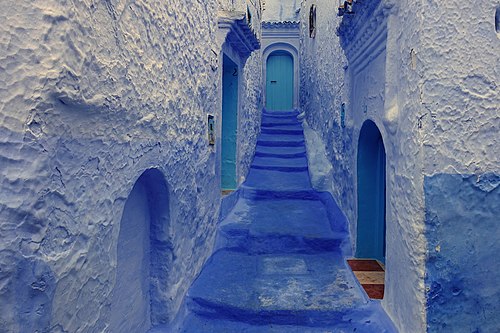
The Blue City of the Rif Mountains: streets painted every shade of blue from cobalt to powder, a mediaeval Spanish quarter and a relaxed atmosphere entirely distinct from the imperial cities below.
Photo: Fbrandao.1963, CC BY-SA 4.0

A UNESCO-listed ksar (fortified village) of clay architecture above the Ounila River: used as the filming location for Gladiator, Game of Thrones, The Mummy and Lawrence of Arabia.
Photo: C messier, CC BY-SA 4.0

A Portuguese-built walled city on the Atlantic coast: blue and white medina, Orson Welles’s former residence, windswept ramparts and the best surf school coastline in North Africa.
Photo: Mohamed Moustach, CC BY-SA 4.0

The imperial city of Meknes (Bab Mansour’s gate is the finest in Morocco) and the Roman city of Volubilis 33km north: the most complete Roman remains in Africa.
Photo: Zinelife05, CC BY 4.0

The Todgha Gorge: 300m red rock walls narrowing to 10m at the floor, with a stream running through. The Dades Valley of red casbah villages winding into the Atlas.
Photo: Yair Haklai, CC BY-SA 4.0
A slow-cooked stew of meat (lamb, chicken or fish) with preserved lemon, olives, prunes or apricot, cooked in the conical clay vessel that gives it its name. The definitive Moroccan main course.
Steamed semolina with a meat and vegetable broth, served communally from a shared dish on Fridays. The most socially important Moroccan dish.
Pigeon or chicken with almonds and cinnamon in crispy warka (paper-thin pastry), dusted with icing sugar. The paradox of sweet and savoury in one dish.
A thick soup of tomato, chickpeas, lentils, vermicelli and fresh herbs, seasoned with ras el hanout. Drunk to break the fast at Ramadan; drunk every day by most Moroccans regardless.
Gunpowder green tea brewed with fresh spearmint and sugar, poured from a height to create a foam. The first act of Moroccan hospitality; always offered in any shop or home.
A thin, spicy lamb and beef sausage spiced with harissa and cumin. Grilled and eaten in flatbread, from market stalls.
Freshly squeezed orange juice from the Djemaa el-Fna stalls: sweet Moroccan oranges, pressed to order.
M’semen (flaky pan-fried square flatbread with argan oil and honey) and beghrir (honeycomb pancakes with butter and honey): the two great Moroccan breakfasts.
Morocco’s main international hub is Marrakech Menara (RAK) for tourism — direct from most European cities in 3–4 hours. Casablanca Mohammed V (CMN) is the main long-haul hub. Fes (FEZ) and Agadir (AGA) also have good European connections. For trip planning, see the official Morocco tourism portal.
Marrakech is under 3h30 from London — a practical long weekend destination. Flying into Marrakech and out of Casablanca (or Fes) avoids backtracking on the circuit route.
Royal Air Maroc’s Casablanca hub makes it a competitive option for North American travellers — JFK–Casablanca direct at 7h30 is one of the shortest Africa-bound transatlantic routes.
ONCF train tickets at oncf.ma. For the Sahara and High Atlas, a private driver for 3–4 days (MAD 1,500–2,500 per day) is the most practical option — split between 2–4 people it’s very affordable.
Always agree the taxi fare before getting in — or use the Careem or InDriver apps where available. Unofficial airport taxis routinely overcharge arriving tourists significantly.
March to May and October to November are the best months: mild temperatures across the country, manageable crowds. June to September brings extreme heat inland (45°C+ in Marrakech in July). The Sahara and Atlas Mountains have their own patterns — cold desert nights are possible even in summer.
📅 Morocco is in its best season in March, April, May, September, October, November. See where else is good to go in those months, or browse where to go by month.
Morocco is extremely good value — one of the cheapest destinations accessible from Europe, with high-quality food and accommodation at all price points.
Moroccan mint tea — gunpowder green tea steeped with fresh spearmint and a lot of sugar — is poured from height for theatricality and drunk throughout the day. Refusing it is a small but genuine social slight.
A traditional riad in the Marrakech or Fes medina — courtyard fountain, rooftop terrace, tiled floors — costs MAD 300–700 per night (€27–64) and is the most atmospheric way to stay in Morocco.
The Royal Mansour Marrakech (private riads connected by underground passages, built by the King) starts around MAD 8,000 per night (€730) — one of the finest hotel experiences in Africa.
Marrakech for two days, the Atlas Mountains for one, the desert for two, Fes for two — the classic Morocco circuit. It covers the essential contrast between the imperial cities and the open landscape.
Get into the medina immediately — don’t try to navigate, just walk and get lost. The square (Djemaa el-Fna) transforms every few hours: musicians in the morning, acrobats at noon, food stalls at dusk. The Koutoubia mosque minaret is the correct orientation point.
Stay inside the medina walls if possible — the riads (traditional courtyard houses) are the most atmospheric accommodation and often no more expensive than hotels outside.
The souks: leather (northwest), spices (central), metalwork, carpets. Get deep in, get lost, buy nothing until you’re sure of the price. The Bahia Palace (19th century, interior courtyards). The Majorelle Garden — Yves Saint Laurent’s blue-walled oasis — requires advance booking.
The Maison de la Photographie (near the souks) has the finest collection of early 20th-century Moroccan photography in the country — underrated and uncrowded.
2 hours from Marrakech: the Ourika Valley and the foothills of the High Atlas, Berber villages built into the rock face, the 12th-century ksar (fortified village) of Aït-Benhaddou. Many films and series have been shot here — Gladiator, Game of Thrones.
Aït-Benhaddou is UNESCO-listed and extraordinary. Most visitors come on a day trip and rush through in 2 hours. Overnight in the village for a different experience.
6 hours east from Aït-Benhaddou across the dramatic Draa Valley and the desert to Merzouga and the Erg Chebbi dunes. Camel trek at sunset to a desert camp. Sleeping under the Sahara stars is the obligatory Morocco experience.
The Erg Chebbi dunes rise 150m and stretch for 30km. The tourist camps at the base are visible from the road — get a camp that’s actually in the dunes, not just next to them.
5 hours north from Merzouga to Fes. The Fes el-Bali medina is the largest intact medieval city in the world — 9,000 streets, no cars. The tanneries (best seen from above, from the leather shops — they’ll give you mint to hold to your nose) and the Al-Quaraouiyine mosque, founded in 859 AD.
The Al-Quaraouiyine mosque is the oldest continuously-operating university in the world (founded 859 AD). Non-Muslims can’t enter, but the courtyard can be seen from the doors.
Fes needs a full day to begin to understand. The Bou Inania Madrasa (14th-century Islamic school, tilework). The Nejjarine Fountain and Museum of Wooden Arts. Just walk — the medina is the attraction.
Hire a licensed guide for at least one morning in Fes — the medina requires one. The guides approved by the ONMT (tourist office) are good; avoid unofficial guides at the gates.
2h from Fes: Chefchaouen is a mountain town in the Rif where everything is painted blue — originally to deter mosquitoes, now entirely photogenic. Stay overnight or return to Fes for your flight.
Chefchaouen is the most Instagrammed town in Morocco — which means it’s busy with photographers. Go early morning or late evening for emptier streets.
Fixed-rate city taxis (petit taxi) are the correct transport in all Moroccan medinas and cities. Negotiate the fare before entering.
A tagine meal: MAD 60-120 (EUR 6-12). Accommodation in a riad: MAD 300-600 (EUR 30-60).
Initial souk prices are 2-5x the final price. Engage with good humour; never start a negotiation without intending to complete it.
Leather shop rooftops overlooking the Chouara Tannery give the best view. You will be given a sprig of mint to hold against the smell.
Covered shoulders and below-the-knee clothing is appropriate in medinas and rural areas.
Available at the airport. Maroc Telecom has the best rural coverage.
Being invited for tea in any shop or home is entirely sincere.
CTM is the most comfortable intercity bus operator. Marrakech to Fes: 8h.
Quick answers to the questions people most often ask before visiting Morocco.
March to May and October to November are the best months: mild temperatures across the country, manageable crowds. June to September brings extreme heat inland (45°C+ in Marrakech in July).
Morocco's main international hub is Marrakech Menara (RAK) for tourism — direct from most European cities in 3–4 hours. Casablanca Mohammed V (CMN) is the main long-haul hub. Fes (FEZ) and Agadir (AGA) also have good European connections.
Expect roughly MAD 200–400 (about €18–36) a day on a budget and MAD 600–1,000 (about €55–91) mid-range, or MAD 2,000+ (about €182+) for a more luxurious trip, per person and excluding flights.
Morocco uses the Moroccan Dirham (MAD).
Plug types: Type C / E (two-pin, 220V).
Ride-hailing across Casablanca, Rabat and Marrakech — safer and more transparent than street taxis.
FreeMorocco’s official train app — book Casablanca, Marrakech and Fès rail tickets online.
FreeBook Sahara desert tours, medina walking tours, Atlas Mountain day trips and camel treks.
FreeMorocco’s dominant messaging platform — use it to contact riads, local guides and transport.
FreeBook riads, hotels and guesthouses across Morocco — a wide selection not always on Airbnb.
FreeExplore Morocco’s top city destinations — from Fes to Marrakech, each with its own distinct character.
Morocco sits within easy reach of several other destinations — each with a completely different character.


