SX
Sint Maarten
Two nations, one island — jet wash beach, French dining & Caribbean duality
Two nations, one island — jet wash beach, French dining & Caribbean duality
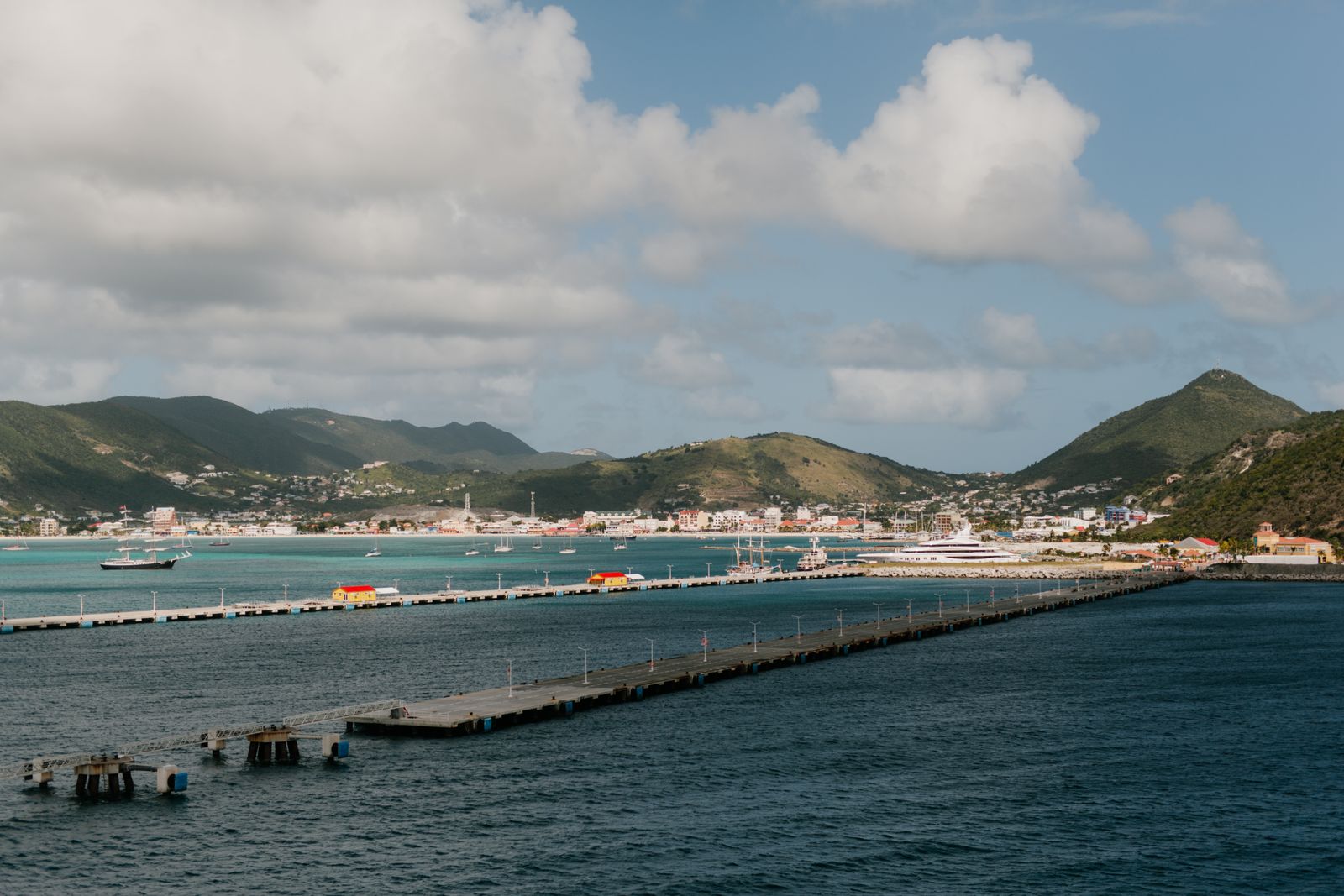
Sint Maarten / Saint-Martin is the world’s smallest island territory shared between two nations — the Dutch Sint Maarten and the French Saint-Martin, divided since 1648 by a border that requires no passport control. The island of 88 square kilometres hosts a wide range of experiences across its two sides: the Dutch side has the casino strip of Philipsburg, the legendary Maho Beach (where planes of Princess Juliana International Airport fly just metres above sunbathers’ heads on approach), and round-the-clock nightlife; the French side has Marigot’s French village atmosphere, Grand Case’s “Restaurant Row” (the finest concentration of Creole and French cuisine in the Caribbean) and Orient Bay (the island’s best beach). Despite the devastating impacts of Hurricane Irma (2017), the island has largely rebuilt and found its Caribbean confidence again.
Maho Beach is one of the Caribbean’s most unusual experiences — the runway approach path for Princess Juliana Airport passes directly over the beach at 10–20 metres altitude, bringing 747s and A340s roaring over sunbathers in a spectacle that has made this the world’s most filmed plane-spotting beach. The blastoff from departing jets (clinging to the fence is an extreme sport) is equally striking and dangerous.
The French village of Grand Case is the food capital of the Caribbean — a single street of wooden Creole houses converted into French and Creole restaurants where the quality per metre is excellent. Fresh langoustines, bouillabaisse, Creole accras and French-trained cuisine at tourist-free prices make this one of the Caribbean’s best dining destinations.
The French side’s finest beach — a wide, east-facing bay with turquoise water, excellent offshore water sports and the island’s most lively beach bar scene. The northern section of the beach is clothing-optional by tradition.
Sint Maarten (Wikipedia) →Fried cornmeal flatbreads served with salt fish, butter or jam — the breakfast staple of the Dutch Caribbean, eaten every morning and available from bakeries and roadside stalls throughout Sint Maarten’s villages.
A rich, buttery soup of queen conch with thyme, onion, carrots and hot peppers — the traditional Antillean recipe shared across the French Caribbean islands.
Fried cornmeal flatbreads served with salt fish or butter — eaten for breakfast across the Dutch Caribbean, a direct descendant of English “journey cakes” brought by English colonists.
Shredded salt cod mixed with onion, Scotch bonnet pepper and flour, shaped and pan-fried — the shared culinary heritage of the Caribbean shared between the Dutch and French sides of the island. Eaten for breakfast or as a mid-morning snack.
roadside BBQ shacks serving grilled chicken and ribs with peas and rice) are the island staples.
Princess Juliana International (SXM) is one of the busiest airports in the Caribbean. American, Delta, United, KLM and Air France serve the main routes. For trip planning, see the official Sint Maarten tourism portal.
SXM is one of the best-connected islands in the Caribbean from the US East Coast — direct services from New York (3h30), Miami (2h45), Atlanta and Boston. It serves as a hub for onward connections to smaller Leeward Island destinations.
KLM (9h from Amsterdam, direct to the Dutch side) and Air France (8h30 from Paris, direct to the French collectivity of Saint-Martin) both serve the island, reflecting its dual sovereignty.
Sint Maarten’s central position in the Leeward Islands makes it the hub for island-hopping — Anguilla (25 min ferry), St Barts (45 min ferry or 10 min plane), Saba and Sint Eustatius are all within easy reach by Winair or ferry.
No passport or visa is needed to cross the Dutch-French border — the unmarked boundary is open to all. A car hire (US$45–80/day) is the most practical way to explore both sides and reach Orient Bay, the French side restaurants and the remote beaches.
December to April is peak season — dry, sunny, 25–28°C, the island at its liveliest. January through March is ideal. June to November is hurricane season; the island was catastrophically damaged by Hurricane Irma in September 2017 and has largely rebuilt since.
📅 Sint Maarten is in its best season in January, February, March, April, December. See where else is good to go in those months, or browse where to go by month.
Sint Maarten uses the US dollar; Saint-Martin uses the euro. Both are accepted on both sides. One of the more expensive Caribbean islands due to its popularity.
The dollar bus (shared minibuses running fixed routes between Philipsburg, Marigot and the main beaches)
Saint-Martin’s French side restaurant scene (Michelin-trained chefs, classical technique with Caribbean ingredients, prix-fixe menus at US&dollar)
La Samanna (a French colonial-style luxury resort on the French side’s Baie Longue)
Philipsburg for one day, Maho Beach for one, French side for one, Orient Bay for one, Simpson Bay Lagoon for one, Anguilla for one, St Barts for one. Sint Maarten — an island split between France and the Netherlands — has the world’s most famous airport beach, the gastronomic capital of the Caribbean and day trips to the finest beaches (Anguilla) and most exclusive island (St Barts) in the Leeward Islands.
Philipsburg — the capital of Sint Maarten (the Dutch half of the island of Saint Martin — a single 87km² island divided between the Netherlands (Sint Maarten — a Dutch constituent country since 2010) and France (Saint-Martin — a French overseas collectivity) with no border controls between the two sides, making it the smallest land mass in the world shared between two sovereign nations) with the Front Street shopping strip and the Great Bay Beach.
The island of Saint Martin/Sint Maarten is the smallest in the world divided between two nations — 87km² shared between France (53km², the northern Saint-Martin) and the Netherlands (34km², the southern Sint Maarten). The border (a stone monument on the road between Marigot and Philipsburg, established by the 1648 Treaty of Concordia) has no passport control; residents and visitors cross freely. The legend of the border’s placement involves a Frenchman and a Dutchman walking in opposite directions while a Frenchman drank wine and a Dutchman drank jenever (gin) — the wine-walker covered more ground.
Maho Beach (the most famous airport beach in the world — a narrow strip of sand at the end of the runway of Princess Juliana International Airport, where aircraft land so low they pass 20m overhead, the jet blast from departing planes sends spectators flying across the sand, and the experience is simultaneously terrifying and exhilarating — the KLM 747 and Air France A330 arrivals are the signature spectacle).
Maho Beach’s jet blast (the exhaust from Boeing 747 and Airbus A330 engines at full reverse thrust during landing roll) reaches wind speeds of 185km/h at the beach fence — force 12 hurricane equivalent. Warning signs at the beach are explicit about the danger: multiple visitors have been injured or killed by holding the fence during departures. The beach attracts thousands of aviation enthusiasts (planespotters) from around the world who consider it the best aircraft viewing location on earth.
Across the (unmarked) border: Marigot — the capital of the French side — with the Fort Louis (a small fort on the hill above Marigot with the finest view of the lagoon) and the Marigot Market (the finest market in the Dutch/French Caribbean — Wednesday and Saturday mornings, with fresh produce, spices and local crafts). Saint-Martin has one of the highest restaurant-to-resident ratios in the Caribbean and the finest French-Creole cuisine in the Lesser Antilles.
Saint-Martin (the French side) has earned a reputation as the gastronomic capital of the Caribbean — the combination of French culinary culture (Michelin-trained chefs, proper wine lists, classic sauces) with Caribbean ingredients (fresh lobster, mahi-mahi, conch, plantain, local herbs) produces a cuisine that stands out in a region where food is rarely the primary draw. The density of quality restaurants per capita on Saint-Martin is among the highest in the world for a community of its size.
Orient Bay (Baie Orientale — the finest beach on Saint-Martin, on the Atlantic side of the French territory — a 2km arc of golden sand with water sports, beach bars, the Club Orient naturist section and the most animated beach scene in the French Antilles, the Caribbean equivalent of a Saint-Tropez beach, with restaurants and loungers directly on the sand) and Ilet Pinel (a small uninhabited island 5 minutes by water taxi, with the best snorkelling near the French capital).
Orient Bay’s combination of Atlantic surf, French beach culture and the naturist tradition of Club Orient (the oldest nudist beach resort in the Caribbean, established 1971) creates the most distinctively French beach atmosphere in the Caribbean. The beach featured in the opening sequences of the 1995 film GoldenEye (James Bond).
The Simpson Bay Lagoon (the largest lagoon in the Caribbean — 45km², straddling the Dutch-French border, the main anchorage for charter yachts in the northern Caribbean, with 2,000+ yachts at any time — the Lagoon is the social centre of the island, with the bars and restaurants of Simpson Bay on the Dutch side and the gourmet restaurants of Marigot on the French side facing each other across the water) and the island’s famous sunset Happy Hour circuit.
Simpson Bay Lagoon (45km² — the largest saltwater lagoon in the Caribbean, connected to the sea by two bridges) is the primary reason Sint Maarten/Saint-Martin is the charter yachting capital of the northern Caribbean. The anchorage provides protection from the Trade Wind swell while remaining close to the finest sailing waters of the British and Dutch Leeward Islands; the lagoon can accommodate 2,000+ yachts simultaneously.
25 min ferry from Marigot. Anguilla (a British Overseas Territory — a flat coral island with 33 beaches consistently ranked among the finest in the world: Shoal Bay East (the finest beach in the Caribbean by many rankings), Meads Bay and Barnes Bay — the least developed and least crowded high-quality beaches in the northeastern Caribbean, with ultra-luxury villas and the most exclusive address in the northern Leeward Islands).
Shoal Bay East (Anguilla’s finest and most celebrated beach — a 2km crescent of powdery white sand and clear turquoise water, backed by low beach bars and palm trees, with no high-rise development visible in any direction) has been consistently ranked the best beach in the Caribbean by Condé Nast Traveller, Travel + Leisure and the BBC. The beach’s quality is largely the result of Anguilla’s strict building codes that prohibit any structure taller than a palm tree near the waterfront.
45 min ferry or 10 min plane. Saint-Barthélemy (St Barts — a French overseas collectivity, 25km², population 10,000, the most expensive island in the Caribbean and one of the most expensive destinations in the world — a rocky, hilly island with a Swedish colonial heritage (Sweden owned it 1784–1878, hence the capital Gustavia), French culture, excellent beaches and the highest concentration of luxury fashion boutiques outside Paris and Monaco). Fly from Sint Maarten (SXM).
Saint-Barthélemy was a Swedish colony from 1784 to 1878 (when Sweden sold it back to France for 320,000 francs) — the only Caribbean island ever owned by Sweden. Gustavia (the capital, named after King Gustav III of Sweden) still has Swedish street names and the Swedish flag on its coat of arms. The island’s tax-free status (maintained from the Swedish period through to the present) combined with its small, intimate scale attracted the ultra-wealthy in the 1970s and 1980s, and it has remained the most exclusive address in the Caribbean since.
No passport required to cross the Dutch-French border — just drive across. Both sides use different currencies (USD Dutch, Euro French) but most places accept both.
The southern half is Sint Maarten (Dutch), the northern half is Saint-Martin (French). One island, two countries, no border formality — switch freely between French restaurants and Dutch casinos.
Sint Maarten was severely damaged by Hurricane Irma in 2017. Recovery is ongoing; check current conditions for your resort area.
Both sides use USD in practice. The Dutch side’s official currency is the Netherlands Antillean Guilder; the French side uses the Euro. USD accepted everywhere.
Dutch side follows Netherlands visa policy; French side follows Schengen. Most nationalities enter visa-free.
Quick answers to the questions people most often ask before visiting Sint Maarten / Saint-Martin.
Fly into Princess Juliana International Airport (SXM), one of the Caribbean's busiest. There are direct flights from Miami (about 2h45), New York (about 3h30), Atlanta and Boston, and from Amsterdam and Paris.
Yes. One island is split between two countries: the southern half is Dutch Sint Maarten and the northern half is French Saint-Martin. There's no border control between them — you simply drive across.
In practice the US dollar is used across the island. The French side officially uses the euro, and both currencies are widely accepted on both sides.
December to April is peak season — dry, sunny and 25–28°C, with January to March ideal. June to November is hurricane season; the island was badly damaged by Hurricane Irma in 2017 and has since largely rebuilt.
It is one of the pricier Caribbean islands: around US$80–140 per day on a budget, US$200–350 mid-range and US$500 or more at the top end.
Point your camera at menus, signs or street text for instant translation. Download the language pack offline before you arrive for full use without data.
FreeReal-time and offline exchange rates for all world currencies — converts prices instantly so you always know what you are paying in your home currency.
FreeFind and book hotels, guesthouses and apartments with free cancellation on most rates — one of the widest selections of accommodation worldwide.
FreeBrowse millions of traveller reviews for restaurants, attractions and hotels — helps identify the best local spots and avoid tourist traps.
FreeSint Maarten sits within easy reach of several other destinations — each with a completely different character.
Sint Maarten is one of the world’s least-visited places. See all 90 in our guide to the world’s least-visited countries & territories.

