SL
Somaliland
Laas Geel rock art, camel markets & Africa’s most surprising unrecognised republic
Laas Geel rock art, camel markets & Africa’s most surprising unrecognised republic
Somaliland is one of the world’s most extraordinary unrecognised states — a self-declared republic in the northwestern horn of Africa that has maintained its own government, currency, passport and armed forces since 1991 without a single country officially recognising its independence. Despite that, Somaliland is remarkably stable and safe for visitors, with a proud, democratic and welcoming society, ancient frankincense trade routes, the UNESCO-listed Laas Geel cave paintings (among the best-preserved prehistoric rock art in Africa — 9,000 years old and painted in vivid colour) and Berbera on the Red Sea coast, with a new deep-water port and extraordinary diving. For the very adventurous traveller, Somaliland is Africa’s most surprising and rewarding off-the-beaten-path discovery.
Discovered only in 2002 by a French archaeological team, the Laas Geel shelters contain some of the best-preserved prehistoric rock art in Africa — 9,000-year-old paintings of cattle, humans and wild animals in vivid reds, whites and browns, in near-perfect condition due to the granite overhangs’ protection from weather. The colours are so fresh they seem almost contemporary. Located 50km from Hargeisa.
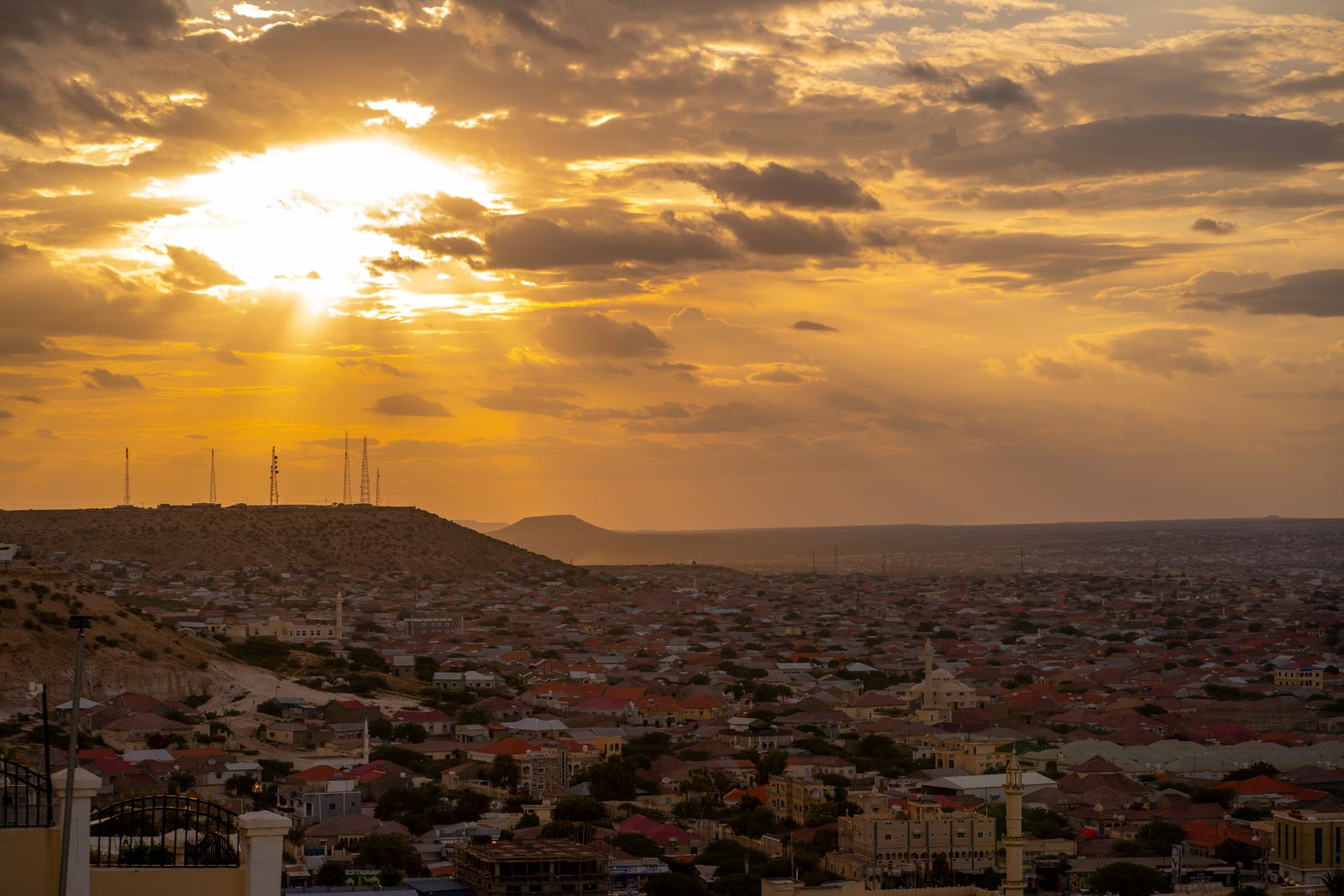
The capital of Somaliland is a fast-growing, self-confident city with a crashed MiG-17 jet displayed as a war memorial in the central square (a reminder of the 1988 bombing by the Somali government that killed 50,000), a lively camel market and money exchange (where stacks of Somaliland shillings are traded in the open street) and a genuine pride in the self-made republic’s stability.
A historic Ottoman port city on the Gulf of Aden with colonial architecture, a developing beach scene on Silver Sands Beach and excellent diving on pristine Red Sea reefs largely unexplored by the wider world. The new DP World-operated deep-water port has transformed Berbera’s economic significance.
Somaliland (Wikipedia) →fragrant spiced rice with camel or goat meat — the celebratory dish) is extraordinary.
spongy sourdough flatbread similar to Ethiopian injera) accompanies liver stews for breakfast.
in soups, grilled or dried) is a Somali staple of great importance. Fresh Red Sea fish at Berbera’s harbour restaurants is excellent.
sweet, nutritious, slightly salty) is Somaliland’s most important drink;
sweet spiced tea with cardamom) is social glue.
Hargeisa Egal International Airport (HGA) is the main gateway. Ethiopian Airlines and Flydubai serve the main routes. Entry is on a Somaliland visa, not a Somali visa.
💡 Addis Ababa (1h30, Ethiopian) and Dubai (3h, Flydubai) are the most practical gateways. Ethiopian Airlines connects Hargeisa to the global network via Addis.
💡 All European routes connect through Addis Ababa (Ethiopian) or Dubai (Flydubai). The large Somali diaspora in North America, Europe and Australia provides strong demand for the routes.
💡 Somaliland issues its own visas completely independently of Somalia — a Somaliland visa does not grant entry to Somalia and a Somali visa does not grant entry to Somaliland. Most nationalities get visas on arrival at HGA or online.
💡 A 4WD with driver-guide is strongly recommended for Laas Geel, Sheikh and upcountry travel. Hargeisa is safe to navigate independently; arrange 4WD through hotels or the Somaliland Ministry of Tourism.
October to April is the drier, more comfortable period (25–32°C in Hargeisa; hotter on the coast). May to September brings some rain and higher humidity. The climate is desert-Sahelian; heat year-round.
The Somaliland shilling (SLSH) is the currency; USD widely accepted. Very affordable.
Canjeero (the Somali sourdough flatbread — a spongy, crepe-like fermented bread made from sorghum or teff flour, the daily staple of Somaliland, eaten with goat meat, bean stew or camel milk for breakfast — baked fresh every)
The Berbera whale shark season (October to February — whale sharks aggregate in the Gulf of Aden waters off Berbera, accessible by speedboat for US$40–80 per person for a guided 3-hour snorkel — is the most)
The Sanaag expedition (a 5–7 day 4WD circuit to the frankincense groves of northeastern Somaliland, the Laas Geel caves, the ancient cities of Amoud and Maydh on the Gulf of Aden coast — US$300–600 for a private)
Hargeisa for one day, Laas Geel rock art for one, Berbera for one, Burao livestock market for one, Sheikh bird watching for one, Hargeisa culture for one, departure for one. Somaliland — the world’s most successful unrecognised state — has the finest prehistoric rock art in Africa at Laas Geel, the most important livestock market in the Horn of Africa, the best frankincense in the world and 30 years of democracy with no UN seat.
Hargeisa — the capital of Somaliland (a self-declared independent republic since 1991 — unrecognised by any UN member state but functioning as a stable, democratic country with its own currency, passport, military and elected government, carved out of the former British Somaliland protectorate after the collapse of the Somali state — population 4.5 million, operating for 30+ years with functioning elections, no UN recognition and remarkable stability compared to Somalia) with the MiG monument and the Hargeisa cultural centre.
💡 Somaliland declared independence from Somalia on 18 May 1991, as the former British Somaliland Protectorate that had united with Italian Somalia in 1960. Despite 30+ years of de facto independence, stable governance, multiple peaceful democratic elections and a functioning economy, no UN member state formally recognises Somaliland as an independent country — making it the world’s most successful unrecognised state and a unique case study in international law and state legitimacy.
Laas Geel (the most important and best-preserved prehistoric rock art site in Africa — a series of cave shelters 50km northeast of Hargeisa containing extraordinary naturalistic paintings of cattle, humans and animals dating from 9,000–3,000 years ago, the finest rock art in the Horn of Africa and among the finest in the world, discovered by French archaeologists in 2002 and not yet widely known outside the specialist community — accessible by 4WD from Hargeisa in 2 hours).
💡 Laas Geel (meaning “camel watering hole” in Somali — discovered 2002 by a French archaeological team from CNRS, published 2006 — contains approximately 10,000 individual painted figures in caves sheltered by granite rock overhangs, the paintings preserved by the dry climate in extraordinary vivid colour: red and orange cattle with decorated horns, white-robed humans performing rituals, and stylised animals painted with exceptional anatomical precision — the most technically accomplished Neolithic rock art in the Horn of Africa.
Berbera (the main port of Somaliland on the Gulf of Aden — one of the oldest continuously inhabited cities in the Horn of Africa, a strategic port used by the Ottoman Empire, Egyptian Khedives, the British East India Company and the British colonial administration — with the Ottoman-era buildings, the British colonial architecture, the finest beaches in the Horn of Africa and the remarkable Red Sea reef ecosystem accessible from the beach, plus whale shark encounters October–February) and the Berbera Tukul traditional village.
💡 Berbera port was the most important anchorage in the Gulf of Aden for the eastern Red Sea trade for 2,000 years — the natural harbour (the deepest natural harbour between Djibouti and Aden) was used by Arab, Ottoman, Indian and British traders. The DP World Berbera Port development (a 30-year concession signed in 2016 with the UAE) has transformed Berbera into a modern port handling Ethiopia’s growing export trade, giving Somaliland significant new economic leverage.
Burao (the second city of Somaliland — the livestock trading capital of the Horn of Africa, where hundreds of thousands of camels, cattle, sheep and goats are assembled for export to the Gulf States — the most important single livestock market in eastern Africa, with 5 million animals exported annually from Berbera port to Saudi Arabia, Yemen and the UAE — accessible by paved road from Hargeisa in 2 hours) and the traditional Somali nomadic culture of the surrounding plateau.
💡 Somaliland exports approximately 5 million head of livestock (camels, cattle, sheep and goats) to Gulf countries annually through Berbera port — making livestock the primary export earner and the backbone of the Somaliland economy. The export of live animals to Mecca for the Hajj (approximately 2 million animals per year in the weeks before the pilgrimage) is the most important single commercial event in Somaliland’s annual economic cycle.
Sheikh (a small highland town in the Golis Mountains, 65km east of Berbera — the former British colonial hill station at 1,300m, built to escape the coastal heat, with the most intact British colonial architecture in Somaliland including the Sheffield School and the colonial administrative buildings — the finest birdwatching site in Somaliland, with the Somali starling, Somali pigeon and several range-restricted Somali endemics in the juniper forest of the escarpment).
💡 The Sheikh escarpment birdwatching (the juniper and acacia forest of the Golis Mountains — a range of mountains running parallel to the Gulf of Aden coast at 1,000–2,000m — is a recognised Endemic Bird Area (EBA) with 15 bird species found only in the Somali-Masai arid zone, including the Somali starling, the Somali pigeon and the long-tailed cormorant. The Golis range is the most accessible Somali endemic birdwatching site in the entire Horn of Africa.
Hargeisa’s cultural scene (the National Museum of Somaliland, the Hargeisa Cultural Centre (an internationally supported arts and literature centre hosting annual book fairs and literary events — the most active literary culture in the Horn of Africa), the camel milk cafes (the finest camel milk in the world, drunk fresh or fermented, the most important food product in Somali nomadic culture) and the colourful Hargeisa market with frankincense, myrrh and traditional Somali silver jewellery).
💡 The Hargeisa International Book Fair (established 2008 — the only international literary festival in the Horn of Africa, held annually in July, attracting Somali diaspora writers from around the world, international publishers and authors — is the most remarkable cultural institution of the Somali-speaking world and an extraordinary demonstration of civil society functioning in an unrecognised state. The fair attracts 50,000+ visitors annually.
A final morning in Hargeisa: the camel market (the world’s largest daily camel auction, 1,000+ camels traded every morning from 6am in the dedicated market north of the city), the Hargeisa frankincense market (Somaliland exports Boswellia sacra — the finest frankincense resin in the world, used in the highest-quality church incense and perfumery globally, grown on the dry limestone hills of the Sanaag region) and the Hargeisa airport lounge before flying from Egal International Airport (HGA).
💡 Somaliland frankincense (Boswellia sacra — harvested from the frankincense trees of the Sanaag and Sool regions of Somaliland, the highest-grade frankincense resin in the world, the same resin offered by the Magi at the Nativity and still used in Catholic, Orthodox and Coptic church ceremonies — is sold at the Hargeisa market for US$5–20 per kg raw, representing one of the world’s most undervalued luxury commodities.
Visa on arrival at Hargeisa’s Egal International Airport — straightforward for most nationalities. Somaliland issues its own tourist visa on a separate piece of paper (not in your passport), useful to note.
Somaliland declared independence from Somalia in 1991 and has maintained its own government and relative stability since. Most Western countries advise caution; the country is accessible with preparation and local contacts.
Connected to Dubai (FlyDubai), Nairobi, Addis Ababa and Djibouti. Entry visa available on arrival for most nationalities.
The Laas Geel cave complex near Hargeisa has vivid polychrome paintings of cattle, humans and wildlife dating to around 9,000 BC — UNESCO experts call them among the best-preserved prehistoric paintings in Africa.
Somaliland is significantly safer than Somalia proper and has its own functioning government, police and army. Standard urban vigilance applies; travelling with a local guide is recommended for the interior.
Ethiopian Airlines flies to Hargeisa from Addis Ababa; small regional carriers also serve the route.
The main mobile money transfer service in Somaliland and the Horn of Africa.
FreeDownload offline maps before you travel so navigation works without mobile data — essential for walking, driving and finding local spots.
FreePoint your camera at menus, signs or street text for instant translation. Download the language pack offline before you arrive for full use without data.
FreeReal-time and offline exchange rates for all world currencies — converts prices instantly so you always know what you are paying in your home currency.
FreeFind and book hotels, guesthouses and apartments with free cancellation on most rates — one of the widest selections of accommodation worldwide.
FreeSomaliland sits within easy reach of several other destinations — each with a completely different character.