TN
Djerba
The island of the lotus-eaters
The island of the lotus-eaters
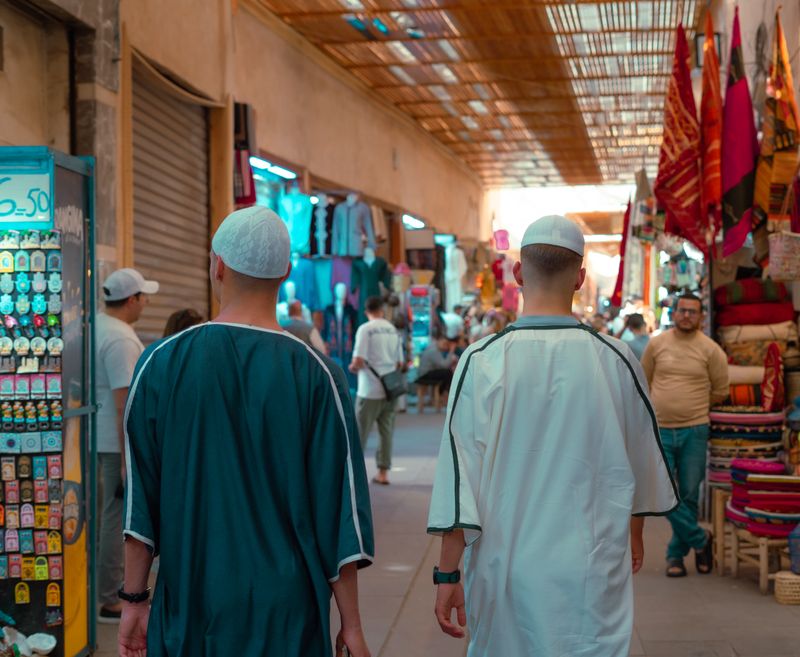
The island’s main town and its beating heart — a whitewashed maze of souks, former caravanserais (fondouks) now turned into cafes and hotels, and a lively daily market of fish, spices, pottery and crafts. An old Spanish fort, the Borj el-Kebir, guards the harbour. It’s the best place to feel everyday Djerban life and to shop for the island’s ceramics and basketwork.
💡 The morning fish and produce market is liveliest; the fondouk courtyards make atmospheric cafe stops, and the pottery and basketware are good, cheap buys.
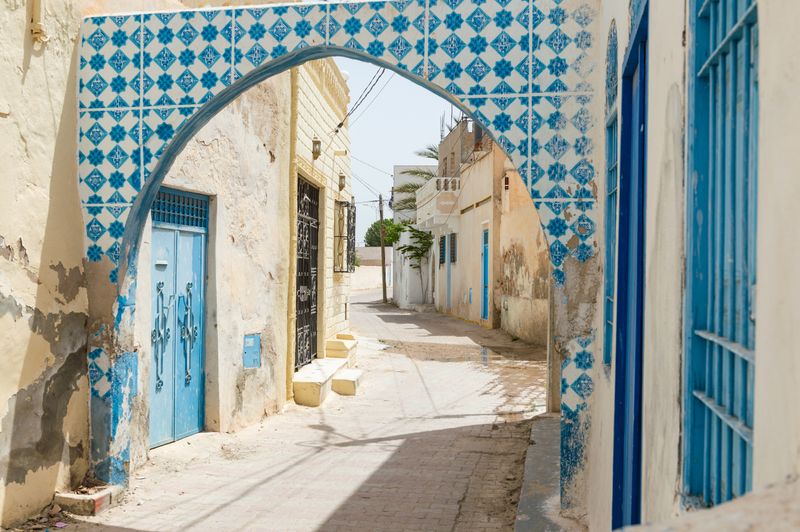
In the village of Erriadh stands El Ghriba, one of the oldest synagogues in the world and Africa’s most important Jewish pilgrimage site, its interior a jewel-box of blue tilework, arches and hanging lamps. It reflects Djerba’s ancient, still-living Jewish community, and each spring draws pilgrims from around the world for the Lag BaOmer festival.
💡 Dress modestly and men should cover their heads (kippahs provided); the blue-tiled interior is beautiful — a moving reminder of the island’s centuries of coexistence.
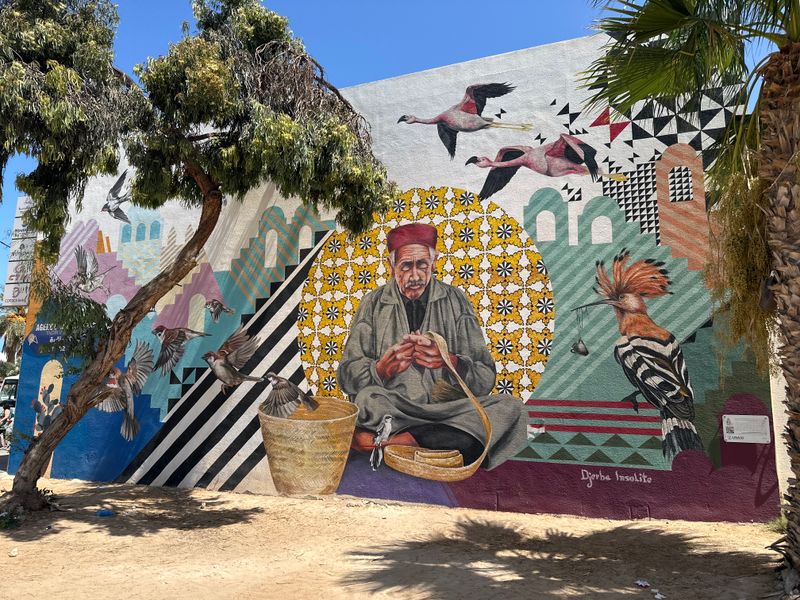
The old village of Erriadh was transformed in 2014 when 150 artists from around the world painted its whitewashed walls, turning the lanes into ‘Djerbahood’, a spectacular open-air street-art gallery. Vivid murals, calligraphy and installations wrap around traditional Djerban houses — a striking, Instagram-famous fusion of ancient village and contemporary art.
💡 Wander the Erriadh lanes to hunt down the murals (some have faded, new ones appear) — it’s free, atmospheric, and pairs naturally with the nearby El Ghriba synagogue.
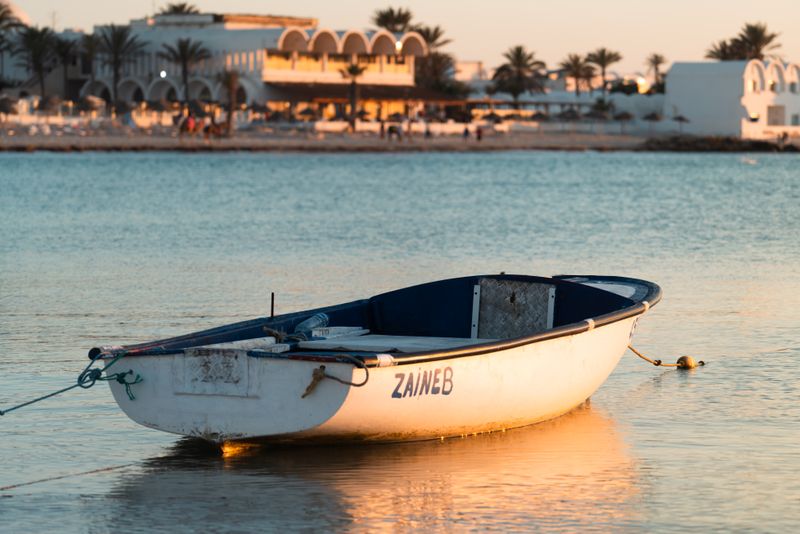
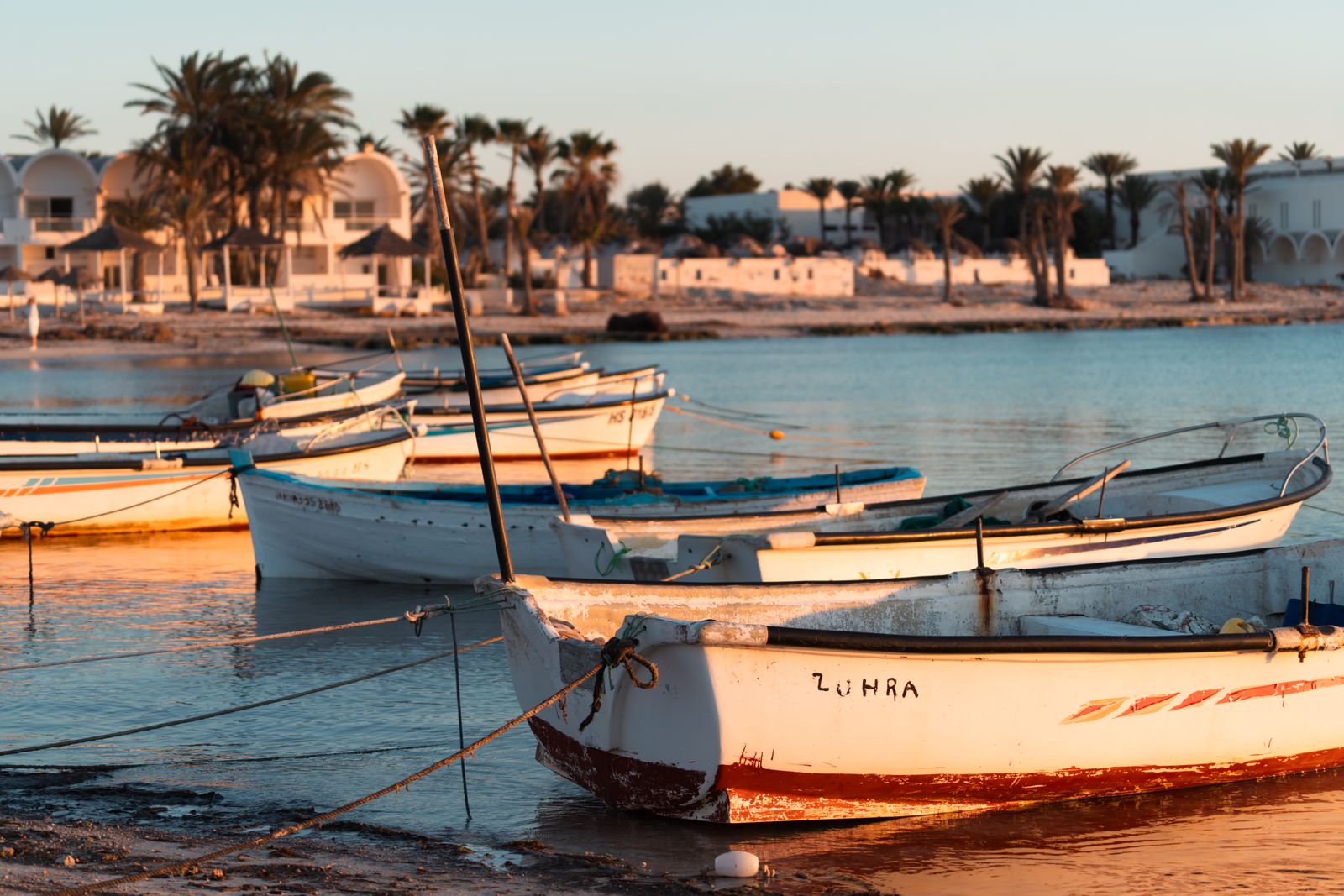
Djerba’s northeast coast is one long soft-sand beach fringing warm, shallow, gently shelving sea — the heart of the island’s resort strip and ideal for easy swimming and watersports. Boat trips run to Flamingo Island (Île aux Fla… Ras Rmel) for its birdlife and sandbars, and quieter beaches and lagoons reward exploring away from the hotels.
💡 The resort beaches are calm and family-friendly; for something wilder, take a boat to the Flamingo Island sandbar or seek out the quieter southern lagoons.
Djerban food leans on the sea and the island’s own produce — olives, dates, figs and fish — with a distinct local character. Seafood is the strength: grilled fish, calamari, and the island specialty of poulpe (octopus) prepared many ways, alongside the Tunisian staples of couscous (here often with fish), brik, salade méchouia (grilled-pepper salad) and harissa-spiced stews. Look for local dishes like the hearty Djerban fish couscous and rosto. Houmt Souk’s restaurants and the fondouk cafes serve it cheaply and well, while the resorts offer buffets and international options. Dates and figs from the island’s palm groves, and the local olive oil, are excellent. Mint tea and strong coffee fuel the day. Eat in Houmt Souk or a village rather than only at the resort for the real, and far cheaper, taste of the island.
Explore the whitewashed market town of Houmt Souk — the fish market, the fondouk courtyards, the old Spanish fort — and shop for the island’s pottery and basketware.
Head to Erriadh for the ancient, blue-tiled El Ghriba synagogue and the open-air murals of Djerbahood, then a seafood or fish-couscous lunch.
Relax on the soft-sand northeast beaches with a swim in the warm shallow sea, or take a boat out to Flamingo Island’s sandbars and birdlife.
A sunset over the palm groves and domed houses, then grilled octopus and a mint tea in Houmt Souk — the mellow, timeless close to a day on the lotus-eaters’ island.
Djerba has its own airport with international and domestic flights, and a causeway (and ferry) to the mainland — far quicker than the long southern drive.
Djerba’s Muslim, Jewish and Ibadi communities have coexisted for centuries — the synagogue, mosques and villages reflect a rare tolerance; visit respectfully.
Djerbahood’s street art in Erriadh is free and spread through the lanes — some faded, some new; pair it with the El Ghriba synagogue next door.
Unlike a pure resort island, Djerba mixes easy beaches with real culture — rent a car or take a tour to see the towns, synagogue and pottery villages inland.
Djerba is the warmest corner of Tunisia — pleasant even in winter and hot in summer; spring and autumn are ideal for combining beach and sightseeing.
The all-inclusives are good value, but eating and staying in Houmt Souk or a village is cheaper and far more authentic.
Driving directions around the island’s villages, beaches and Houmt Souk.
Free
Multi-currency card with strong rates — useful for the region; carry dinar cash on the island.
Free
The medina capital of Tunis, ancient Carthage, the blue-and-white village of Sidi Bou Saïd, the holy city of Kairouan and the island of Djerba — Tunisia layers Mediterranean, Roman and Saharan worlds.