TN
Sidi Bou Saïd
The blue-and-white village on the cliff
The blue-and-white village on the cliff
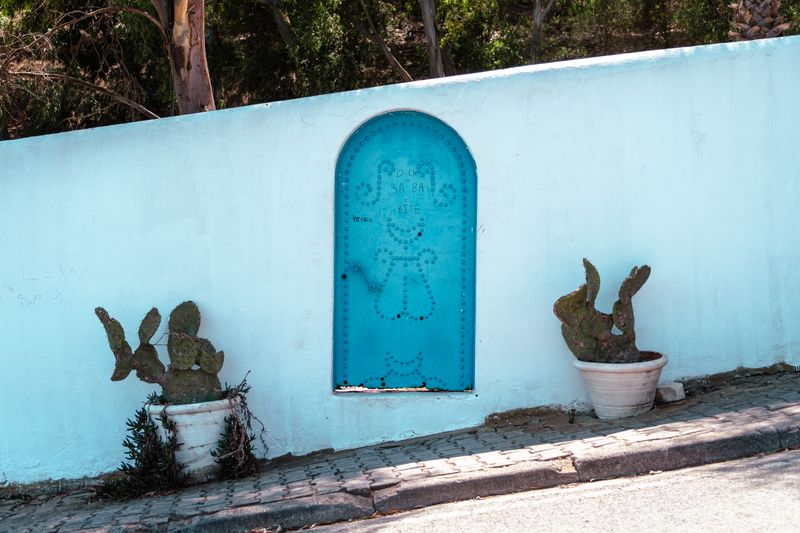
The village itself is the sight — steep cobbled lanes of brilliant-white houses trimmed in the same cobalt blue, framed by bougainvillea and jasmine, climbing to the main street and its craft shops. Ornate studded doors, latticed ‘moucharabieh’ windows and bursts of flowers make every corner a photograph; simply wandering and getting lost is the whole point.
💡 Come early morning or late afternoon to beat the crowds and catch the best light; the higher lanes off the main drag are quieter and just as pretty.
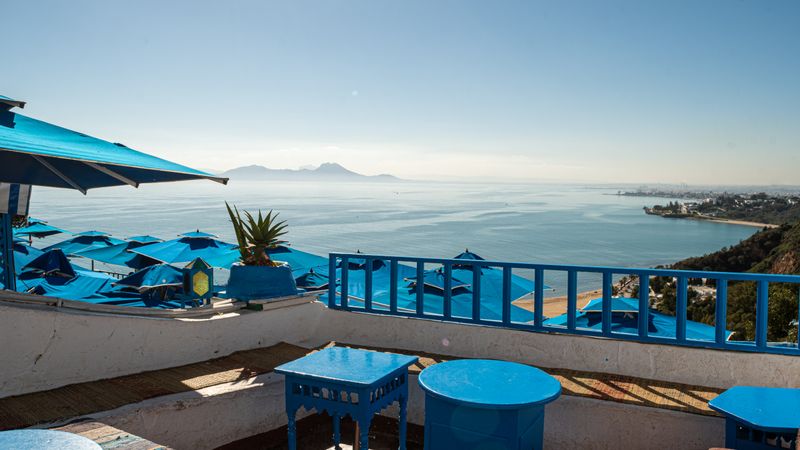
The village’s clifftop cafes are its social heart, none more famous than the terraced Café des Délices (immortalised in a French song) and the old Café Sidi Chabaane, their tiered terraces cascading toward the sea. Order a mint tea with pine nuts, watch the boats in the marina below, and soak up one of the most beautiful cafe views in the Mediterranean.
💡 Grab a terrace seat at a clifftop cafe for sunset over the marina and Gulf — the mint tea with pine nuts (thé aux pignons) is the local ritual.
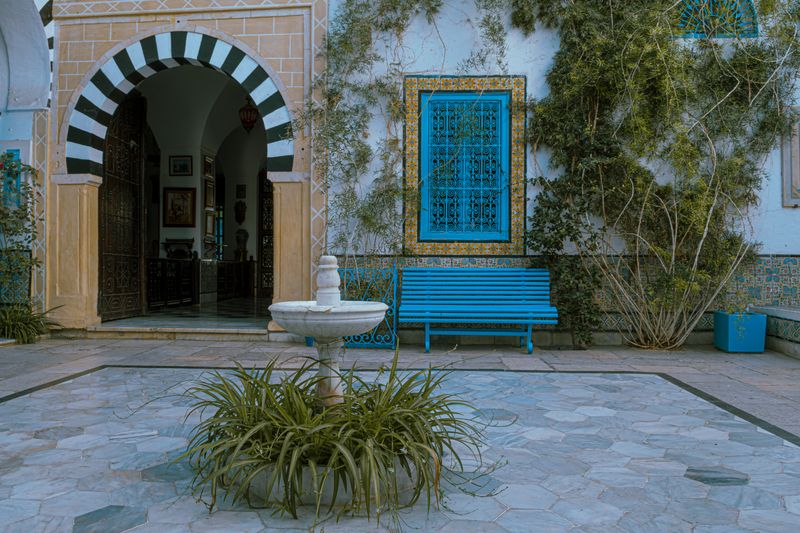
Two house-museums reveal the village’s history and art. Dar el-Annabi is a traditional family mansion open to visitors, its rooms furnished in period style around tiled courtyards. Below the village, the palace of Ennejma Ezzahra — built by the French baron Rodolphe d’Erlanger, who set the village’s colours — is a gorgeous Arab-Andalusian villa and museum of Arab music, with sublime sea-view gardens.
💡 Ennejma Ezzahra’s Arab-Andalusian architecture and clifftop gardens are a highlight and far quieter than the lanes — well worth the short walk down.
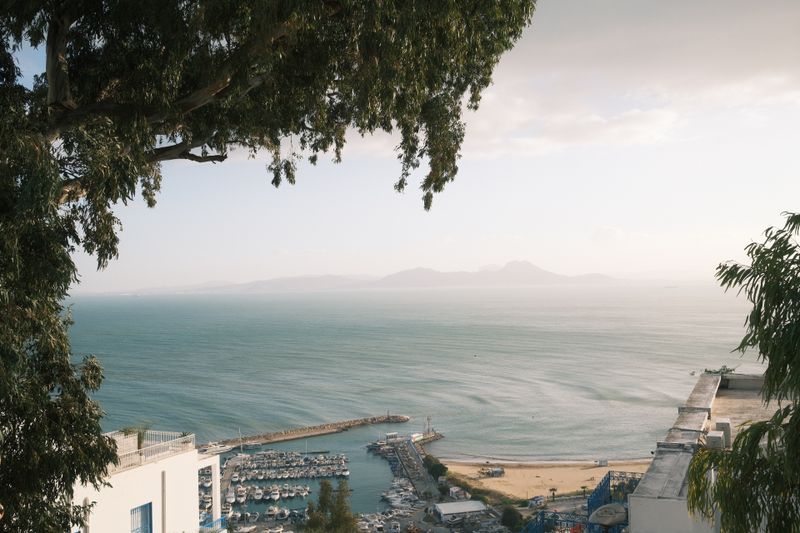
Below the cliffs, a small marina of gleaming yachts and fishing boats sits beside a modest beach, reached by a path or road down from the village. It’s a pleasant place for a seafood lunch by the water, a swim in summer, or simply to look back up at the blue-and-white houses stacked on the cliff above — the classic view of the village from the sea.
💡 Walk down to the marina for a fresh-fish lunch and the best view back up at the cliff village; the beach is small but fine for a summer dip.
Sidi Bou Saïd is made for gentle grazing with a view. The village’s signature is thé aux pignons — sweet mint tea crowned with toasted pine nuts — sipped on a clifftop cafe terrace, ideally alongside a bambalouni, the hot, sugar-dusted ring doughnut fried at a famous little stand near the entrance. For a proper meal, the village and the marina below serve Tunisian and Mediterranean fare — grilled fish and seafood, brik, salade tunisienne, couscous and tagines — with sea views to match. It’s pricier than central Tunis, being a tourist favourite, but still reasonable, and the setting is unbeatable. Time a visit around sunset for tea and doughnuts as the light turns golden on the blue-and-white houses, then dinner by the marina — a perfect, easy Mediterranean evening.
Arrive early to wander the blue-and-white lanes before the crowds — studded doors, bougainvillea, latticed windows — with the best light for photographs.
Visit the traditional Dar el-Annabi mansion and, below the village, the exquisite Arab-Andalusian palace of Ennejma Ezzahra with its sea-view gardens.
Claim a clifftop cafe terrace for mint tea with pine nuts and a hot bambalouni doughnut, watching the marina and the boats far below.
Stay for sunset turning the white houses gold, then walk down to the marina for a fresh-fish dinner with the cliff village lit up above.
Sidi Bou Saïd is a cheap TGM ride from Tunis and one stop from Carthage — pair the ancient ruins in the morning with the blue village in the afternoon.
It’s deservedly popular and busy midday — come early morning or stay for the evening to enjoy the lanes and cafes at their most magical.
The village rituals are mint tea with pine nuts on a clifftop terrace and a hot bambalouni doughnut from the stand near the entrance — don’t miss either.
The blue-and-white houses and the bougainvillea glow in early and late light — plan photography for the start or end of the day.
As a tourist favourite it costs a bit more than central Tunis — still reasonable, and the setting justifies the mint-tea premium.
The lanes are steep, cobbled and climb the cliff — wear comfortable shoes, and the walk down to the marina and back is a decent little hike.
TGM and walking directions to and around the village and to Carthage.
Free
The main ride-hailing app in the Tunis area — handy for reaching the village or getting back after dark.
Free
Multi-currency card with strong rates — useful for the region; carry dinar cash in the village.
Free
The medina capital of Tunis, ancient Carthage, the blue-and-white village of Sidi Bou Saïd, the holy city of Kairouan and the island of Djerba — Tunisia layers Mediterranean, Roman and Saharan worlds.