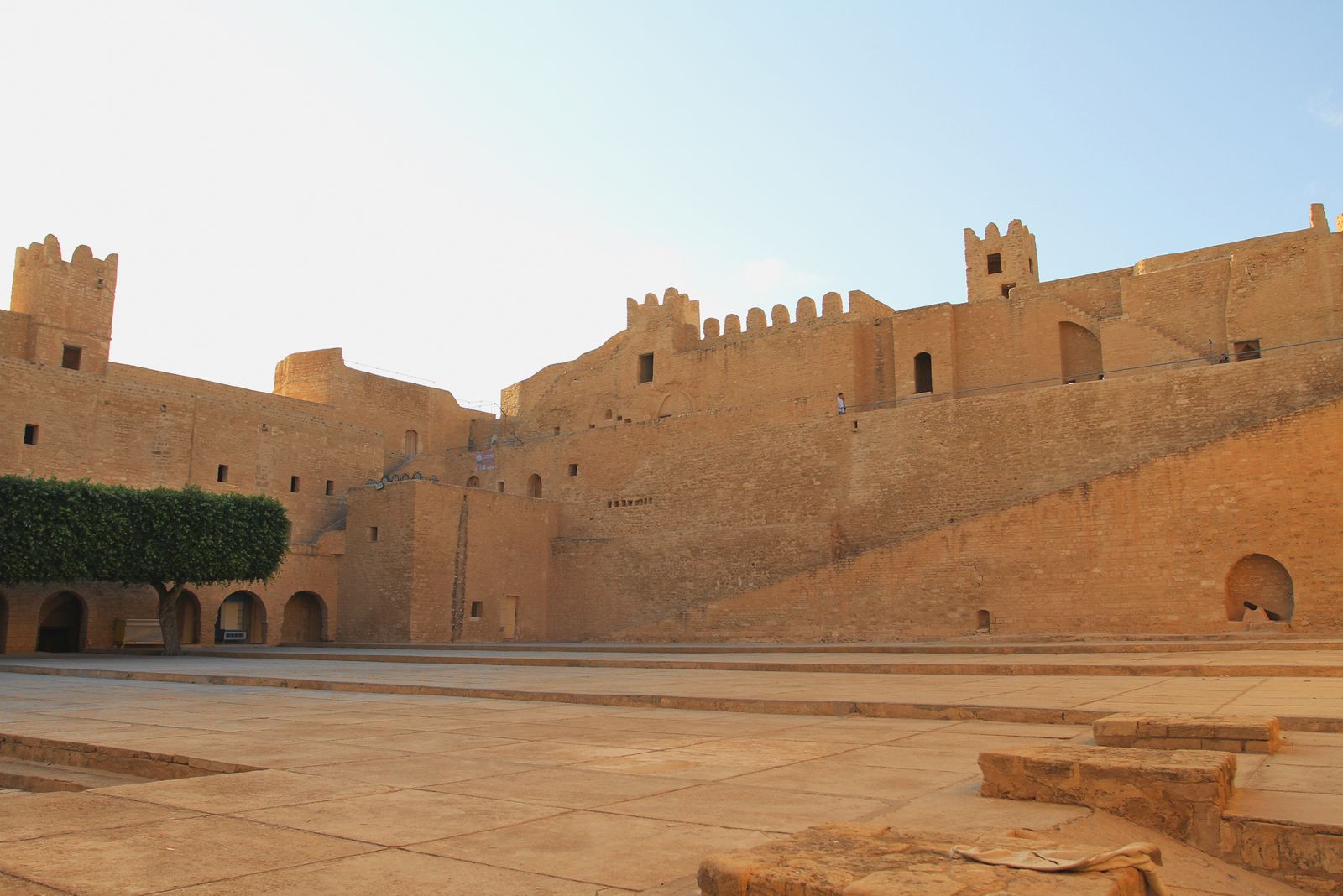
TN
Kairouan
The holy city of the Maghreb
The holy city of the Maghreb
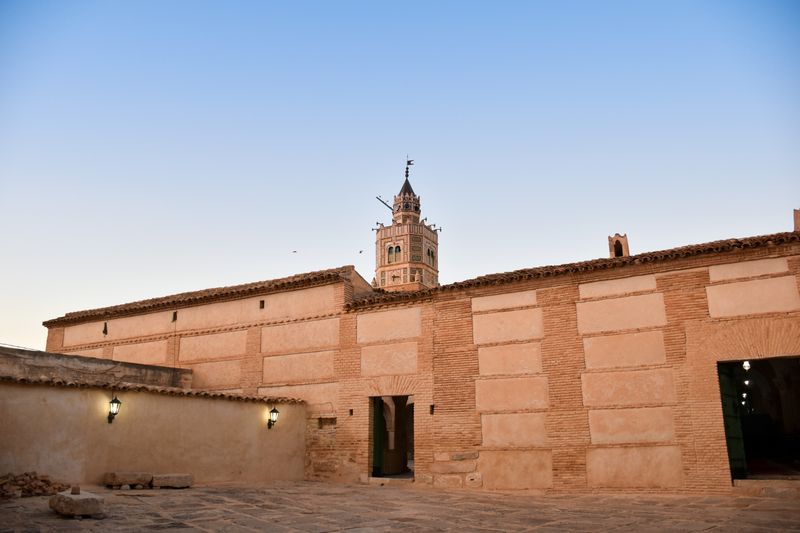
One of the oldest and most significant mosques in the world — founded in 670 and rebuilt in the 9th century — its vast, austere courtyard, forest of ancient columns (many salvaged from Roman and Byzantine sites) and massive square minaret make it a masterpiece of early Islamic architecture. It set the model for mosque-building across North Africa and Spain, and remains a major pilgrimage site.
💡 Non-Muslims can visit the courtyard (not the prayer hall) outside prayer times — dress very modestly; the huge marble-paved courtyard and minaret are the highlights.
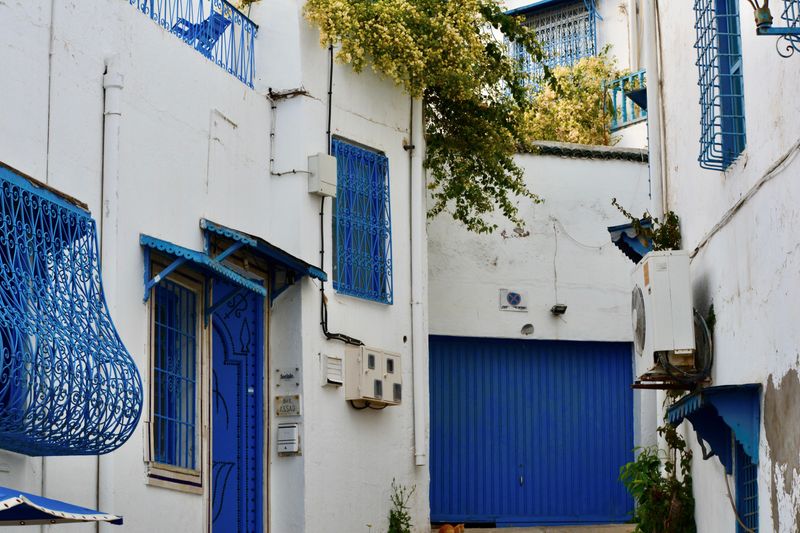
Kairouan’s walled medina is a UNESCO World Heritage Site — a maze of whitewashed lanes, blue doors, small mosques and, above all, carpet workshops and showrooms, for the city is Tunisia’s carpet-making capital. It’s a working, lived-in old town rather than a tourist stage, and wandering its quiet streets is atmospheric and rewarding.
💡 Kairouan is famous for knotted carpets — you’ll be invited to watch weaving and to buy; enjoy the mint tea and the show, and haggle hard if you’re tempted.
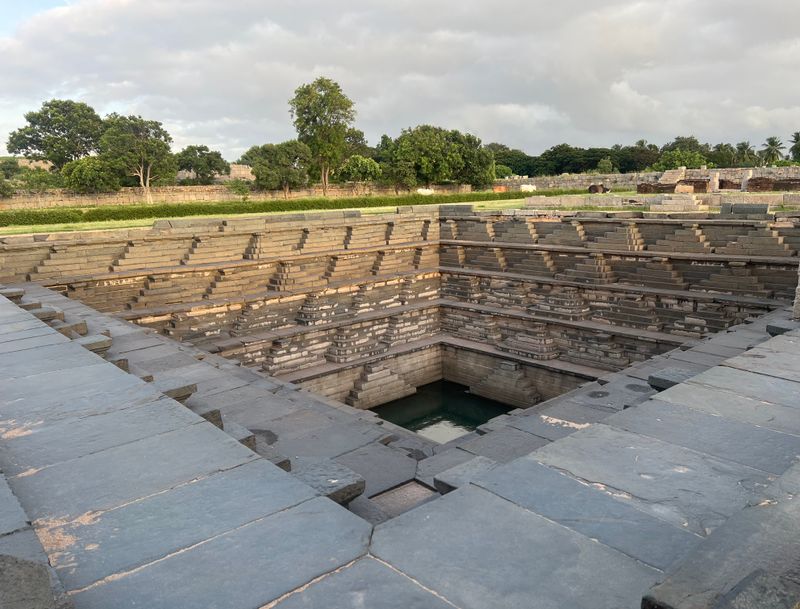
On the edge of town lie the great Aghlabid Basins — vast 9th-century circular reservoirs that stored water carried by aqueduct across the arid plains to supply the medieval city, a remarkable feat of early Islamic hydraulic engineering. A viewing platform lets you take in the scale of these ancient pools, still holding water over a thousand years on.
💡 A quick but impressive stop — the scale of the medieval waterworks is striking; there’s a small interpretation area to explain the ingenious system.
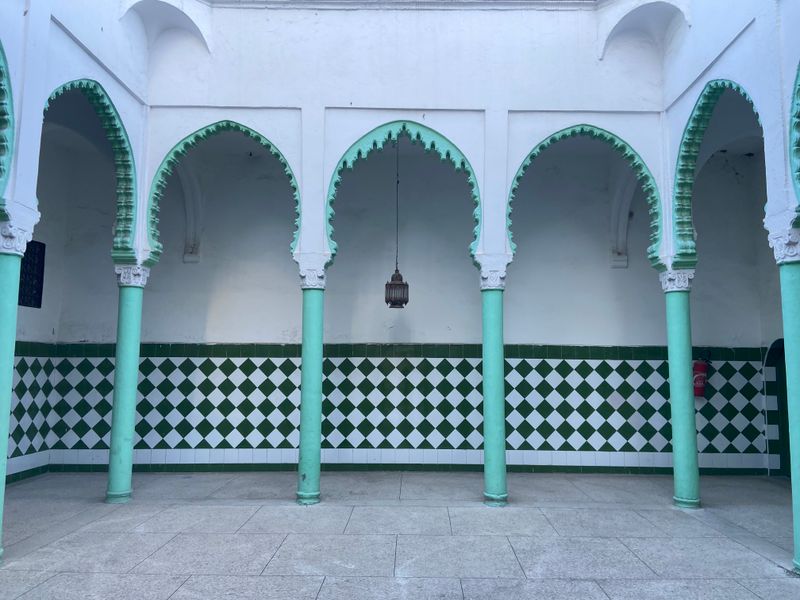
The Zaouia of Sidi Sahbi — the ‘Mosque of the Barber’, honouring a companion of the Prophet said to have kept three hairs of his beard — is Kairouan’s most beautiful interior, a 17th-century complex of dazzling tilework, carved stucco and painted ceilings around serene courtyards. Along with other zaouias (saints’ shrines), it shows the city’s role as a centre of Sufi devotion.
💡 The Sidi Sahbi zaouia’s tiled courtyards are the prettiest interiors in Kairouan and open to respectful visitors — a lovely, tranquil contrast to the austere Great Mosque.
Kairouan’s most famous taste is sweet: makroudh, the city’s signature diamond-shaped semolina pastry stuffed with date paste and soaked in honey or syrup, sold fresh from tiny bakeries all over the medina — a genuine local specialty worth seeking out. Beyond that, the food is hearty inland Tunisian: couscous (often with lamb), spicy stews and tagines, brik, grilled meats and merguez, and lablabi (garlicky chickpea soup) for a cheap, warming lunch, all fired up with harissa. Simple medina restaurants and street stalls keep prices very low. Mint tea, sometimes with pine nuts or almonds, is the social drink, poured strong and sweet. It’s a modest but authentic food town rather than a fine-dining destination — come for the makroudh, the couscous and the atmosphere of eating in one of Islam’s holy cities.
Start at the vast, austere Great Mosque — one of Islam’s oldest and most important — for its column-forest courtyard and mighty minaret, in the cool of the morning.
Wander the walled medina’s whitewashed lanes and carpet workshops, buying a fresh date-stuffed makroudh pastry — the city’s famous sweet — and a mint tea.
Visit the dazzling tiled courtyards of the Sidi Sahbi ‘Barber’s Mosque’, then the great Aghlabid Basins on the edge of town — medieval waterworks on an epic scale.
As the day cools, enjoy the quiet of the medina and a simple couscous or lablabi dinner — the atmospheric close to a day in the Maghreb’s holy city.
Kairouan is a deeply religious city — cover shoulders, arms and legs (women may want a scarf), especially at the Great Mosque and shrines; visit outside prayer times.
The city’s honey-soaked, date-stuffed makroudh pastries are a genuine specialty — buy them fresh from a medina bakery; they make great gifts too.
Kairouan is Tunisia’s carpet capital — you’ll be warmly invited to watch weaving and buy; enjoy it, but haggle hard and only buy if you truly want to.
Kairouan is reached by cheap louage (shared taxi) or bus from Tunis and Sousse in a couple of hours — doable as a day trip, better with an overnight.
Inland Kairouan bakes in summer — do the sights early, carry water and sun cover, and the shoulder seasons are far more comfortable.
Away from the coastal resorts, Kairouan is among the cheapest places in Tunisia — simple rooms, medina food and mint tea for very little.
Walking directions around the medina and to the Aghlabid Basins and shrines.
Free
How guesthouses, guides and drivers communicate and take bookings.
Free
Convert Tunisian dinar prices for the medina, food and any carpet purchase.
Free
Multi-currency card with strong rates — useful for the region; carry dinar cash in the medina.
Free
The medina capital of Tunis, ancient Carthage, the blue-and-white village of Sidi Bou Saïd, the holy city of Kairouan and the island of Djerba — Tunisia layers Mediterranean, Roman and Saharan worlds.