VN
Hanoi
The Ancient Capital on the Red River
The Ancient Capital on the Red River
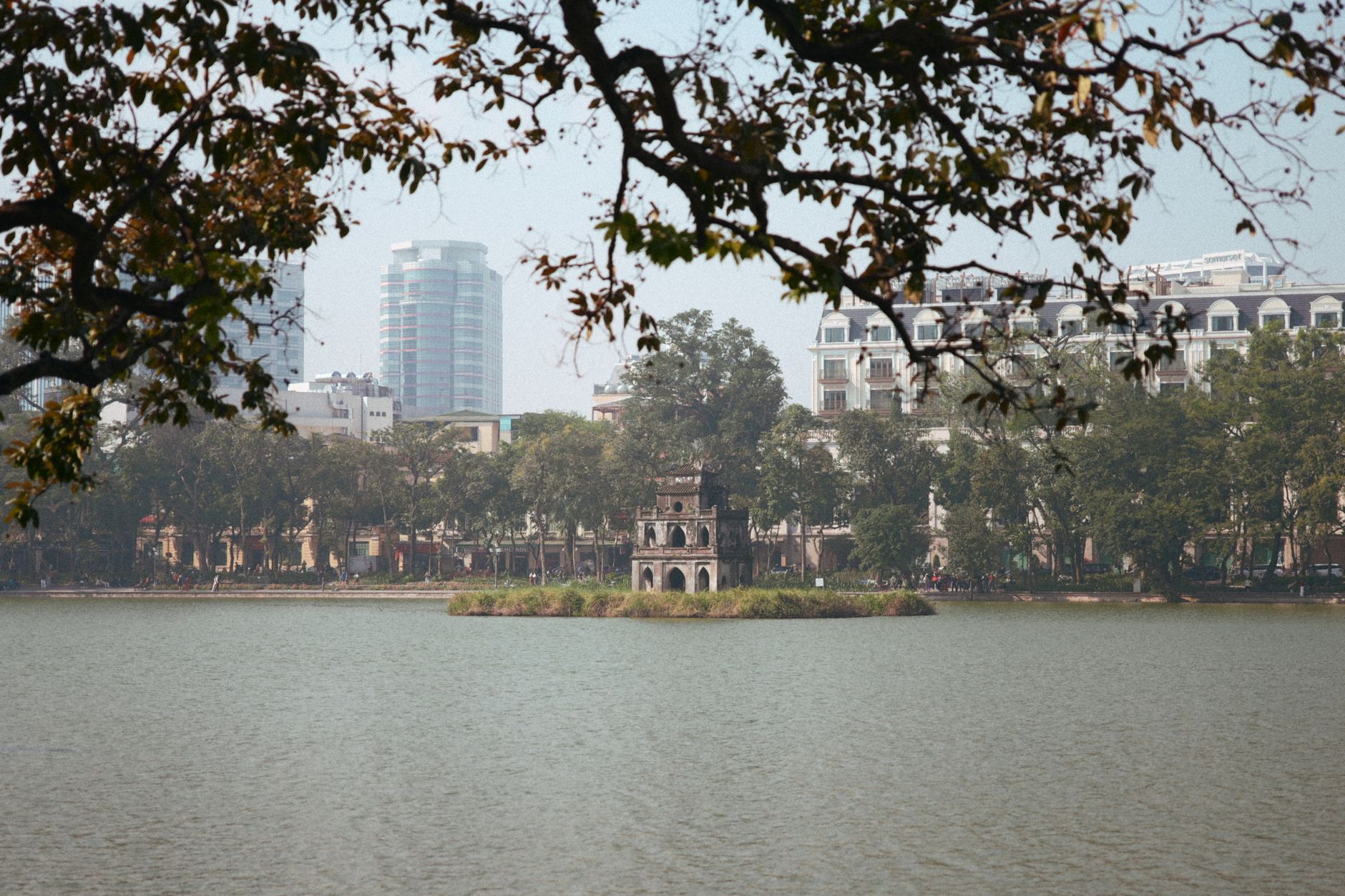
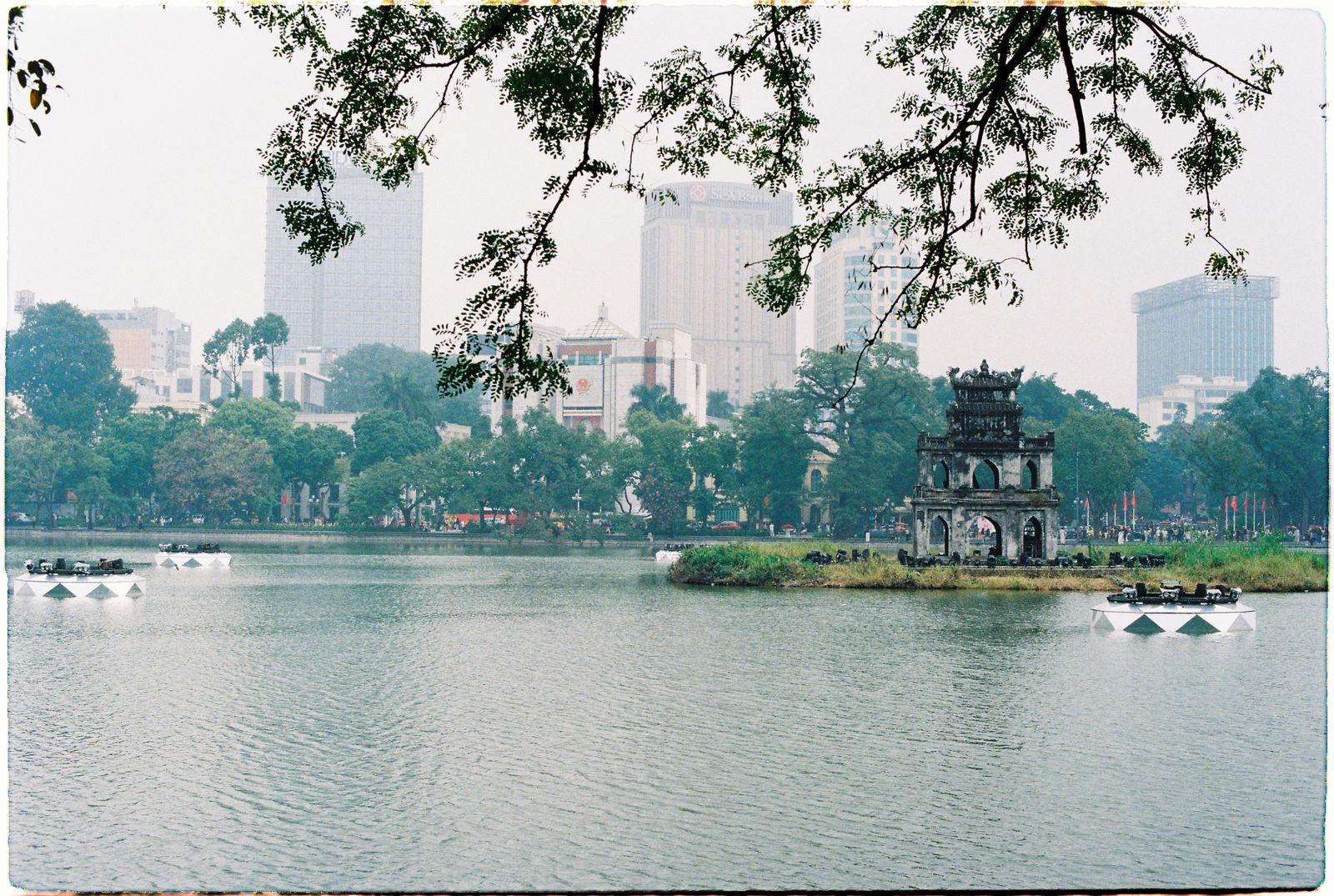
The lake at the heart of Hanoi holds the Turtle Tower on a small island and the red Húc Bridge leading to Ngoc Son Temple. The Old Quarter’s 36 trade streets pack a medieval merchant city into half a square kilometre, each street named after its historic craft.
💡 Pho Gia Truyen on Bat Dan opens at 6am and serves the most revered bowl of pho in Hanoi — arrive before 7am or it sells out. The broth is cooked for 12 hours and the tendon is the cut to order.
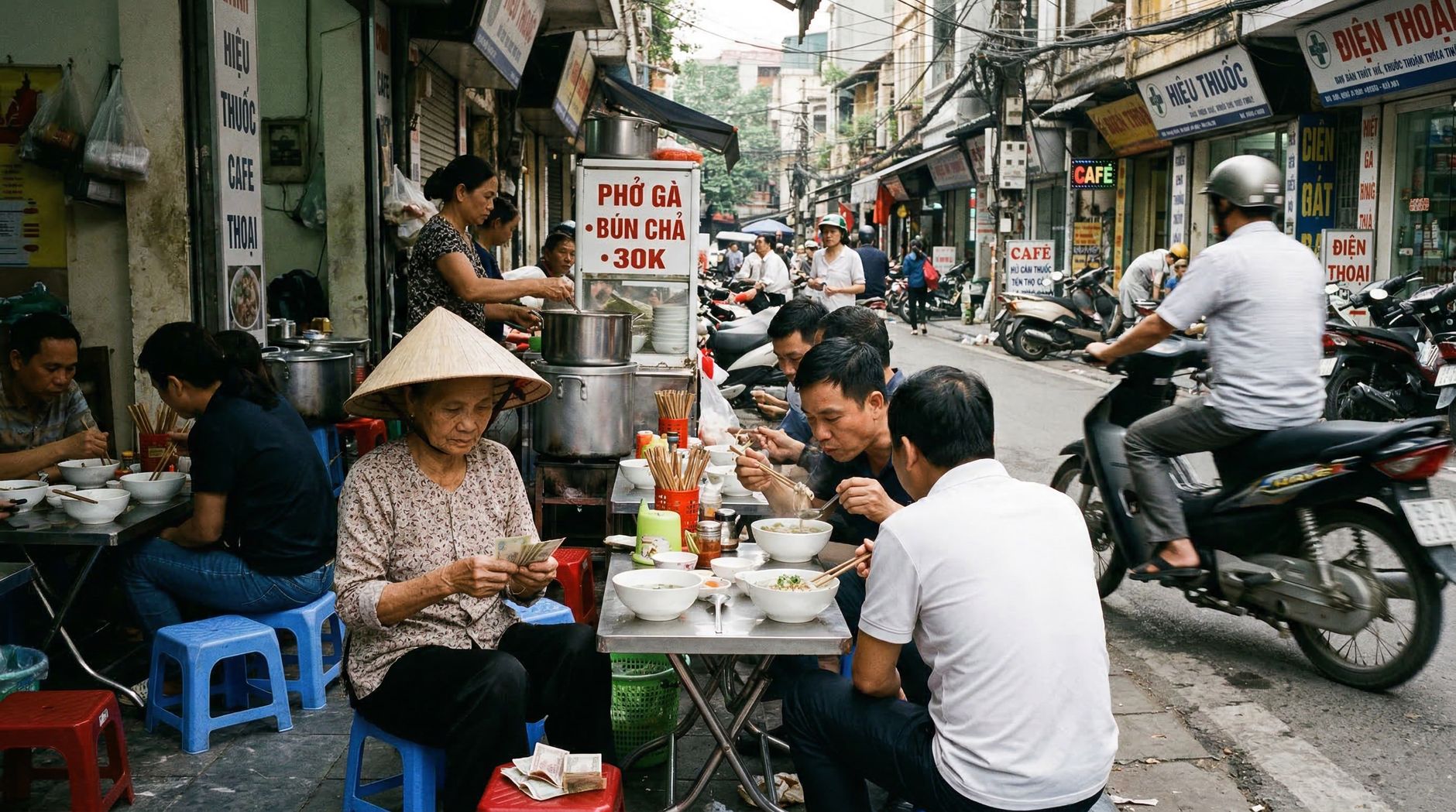
The Old Quarter runs a circuit of the finest street food in Vietnam — pho at dawn, banh mi from rolling carts, bun cha (grilled pork with noodles) at noon, and bia hoi on plastic stools at dusk. The night market on Hang Dao is best on weekends.
💡 The finest Old Quarter street food is found on Hang Manh (banh mi), Hang Dieu (bun cha), and Dao Duy Tu (bun rieu). Walk rather than choosing the first stall you see — the smaller the queue behind it, the better.

The Temple of Literature is a 1,000-year-old Confucian university — the first in Vietnam — with five walled courtyards, a central lake, and the stelae of 82 doctors’ names carved on stone tortoise backs. The finest Vietnamese classical architecture in the city.
💡 The Temple of Literature opens at 8am — arrive then to have the five courtyards and the stelae garden to yourself before the school groups arrive. The fifth courtyard has the finest view over the entire complex.

Ho Chi Minh’s embalmed body lies in the granite mausoleum on Ba Dinh Square (open Tue–Thu, Sat–Sun 7:30–10:30am; strict dress code). The adjacent museum covers his life from 1890 to 1969 with the finest archival photographs in Vietnam.
💡 The Ho Chi Minh Mausoleum opens Tue–Thu and Sat–Sun at 7:30am — the queue moves in 20 minutes on weekday mornings. Cover knees and shoulders; no cameras inside the mausoleum building.
Hanoi’s food culture is the most refined and most specifically northern Vietnamese in the country: the phở bò (the northern beef pho; clearer, more delicate and less sweet than the Ho Chi Minh City version; the correct breakfast from 6am at any of the Old Quarter pho stalls; VND 50,000–80,000), the bún chả (the Obama–Bourdain dish; the grilled pork in sweet-sour broth with vermicelli; at Huong Lien, 24 Le Van Huu; VND 60,000–80,000), the chả cá (the turmeric-marinated fish, fried at the table on a small charcoal brazier with dill and spring onion; the most festive Hanoi dish; at Cha Ca La Vong on Cha Ca Street, the one-dish restaurant that has served only this dish since 1871; VND 200,000–300,000 pp), and the egg coffee (cà phê trứng; the Robusta coffee whisked with egg yolk and condensed milk into a thick mousse; invented in Hanoi in 1946 by Nguyen Giang; still sold at the original Cafe Giang on Nguyen Huu Huan Street; VND 30,000–50,000) make Hanoi the most culinarily distinctive city in Vietnam.
Grab (the Southeast Asian ride-hailing app; the GrabBike motorbike taxi and the GrabCar; always cheaper and more reliable than negotiating with unlicensed taxi or xe ôm motorbike drivers in Hanoi; VND 20,000–50,000 for most Old Quarter journeys; VND 50,000–100,000 to the Ba Dinh or West Lake districts) is the only recommended taxi service in Hanoi for tourists. Walking is the best mode for the Old Quarter and Hoan Kiem Lake area (the distances between the main sights are 10–20 minutes on foot; the pedestrianised area around the lake on weekend evenings is the most enjoyable). The cyclo (the three-wheeled bicycle rickshaw; negotiate VND 50,000–100,000 for a 30-min Old Quarter tour before boarding; the driver will propose a longer route — agree a fixed time and price upfront) is the most atmospheric.
Pho Gia Truyen on Bat Dan opens at 6am and serves the most revered bowl of pho in Hanoi — arrive before 7am or it sells out.
Hanoi traffic never fully stops — walk slowly and steadily straight across while making eye contact with the motorbikes. They flow around you. Stopping or running unpredictably is what causes accidents.
Bia hoi — fresh-brewed Vietnamese draught beer at ₫7,000 a glass — is served at plastic-stool corners across the Old Quarter.
Train Street in the Old Quarter: the Hanoi–Saigon train passes within metres of the houses twice a day. Locals sell coffee from the balconies.
The Temple of Literature opens at 8am and is best before the tour groups — the 1,000-year-old Confucian university is the finest Vietnamese classical architecture in Hanoi.
The overnight train from Hanoi to Lao Cai (for Sapa) departs at 9:30pm and arrives at 6am — the SE5 sleeper carriage is the finest way to wake up in the northern highlands.
Oct–Apr is the dry season (15–25°C; best for exploring). Jan–Feb is the coolest (a light jacket needed; the Tet New Year is very festive). May–Sep is hot and humid (28–38°C; afternoon rains). Tet (Jan–Feb): book 3 months ahead; most restaurants close for 3–7 days.
Three days: pho at dawn, the Old Quarter, the Temple of Literature, the Ho Chi Minh complex, a Ninh Binh day trip, and the Hoan Kiem evening.
Hoan Kiem Lake at dawn for tai chi. Old Quarter walk: Hang Bac, Hang Gai, Dong Xuan market. Temple of Literature. Evening bia hoi at the corner of Luong Ngoc Quyen and Ta Hien.
💡 The bia hoi corner has the cheapest cold beer in the world — ₫7,000 a glass at the junction of Luong Ngoc Quyen and Ta Hien. Best at 5pm before the evening crowd fills every plastic stool.
Ho Chi Minh Mausoleum at 8am (Tue–Thu, Sat–Sun). Lenin Park. Tran Quoc Pagoda on West Lake. West Lake promenade at sunset.
💡 West Lake (Ho Tay) at sunset from the Tran Quoc Pagoda causeway is the finest free vista in Hanoi — the 6th-century pagoda on an island with the lake stretching behind it.
Minibus to Ninh Binh (90km, 2h). Tam Coc by rowing boat through limestone karsts. Bich Dong cave. Bai Dinh Pagoda. Return to Hanoi by 7pm.
💡 Ninh Binh’s Tam Coc rowing boat takes 2 hours round-trip through three limestone caves — sit in the front seat and go early (8am) to have the rice paddies and karsts without tour groups.
Hanoi is one of the most affordable capital cities in the world for foreign visitors. The pho (VND 50,000–80,000 ≈ €2), the bia hoi (VND 10,000 ≈ €0.40), and the Old Quarter street food make Hanoi extraordinary value. Per person per day.
The pho (VND 60,000 ≈ €2), the bun cha (VND 70,000), the bia hoi (VND 10,000 per glass), and the Old Quarter walk (free) give the quintessential Hanoi experience for approximately USD 10 (€9) in food and activities &mdash.
The Cha Ca La Vong (the one-dish restaurant at 14 Cha Ca Street; the turmeric fish fried at the table since 1871; VND 200,000–300,000 pp; the Hanoi restaurant experience) is the best-value fine-dining heritage experience in Southeast Asia.
The Sofitel Legend Metropole Hanoi (15 Ngo Quyen Street; the colonial grande dame; opened 1901; the finest hotel in northern Vietnam; the pool; the Le Spa; the Bamboo Bar; the resident ghosts; the Graham Greene and Charlie Chaplin)
Real-time maps and Grab taxi integration for the Old Quarter, West Lake and city-wide navigation.
Free
Instant food and drink ordering from Hanoi street food vendors and restaurants with live tracking.
Free
Bus and train booking for Sapa, Halong Bay and all Vietnam intercity routes with live availability.
Free
Hanoi restaurant discovery and street food stall reviews across all 36 Old Quarter streets.
Free
Overnight train sleeper booking for the Hanoi–Lao Cai (Sapa) and Hanoi–Danang routes.
Free
Download the Hanoi offline map before arrival — essential for navigating the Old Quarter without data.
Free
Explore more of Vietnam’s extraordinary cities and landscapes.