VN
Ho Chi Minh City
The City That Never Slows Down
The City That Never Slows Down

The 1966 Independence Palace was captured by North Vietnamese tanks on 30 April 1975, ending the war — the tank tracks in the grass are still visible. The entire building is preserved as it was that morning: war rooms, communications centre, and a helicopter on the roof.
💡 The Reunification Palace is best visited at 7:30am opening — the war rooms and basement command centre are best explored before the tour groups arrive. Allow 90 minutes for the full building.
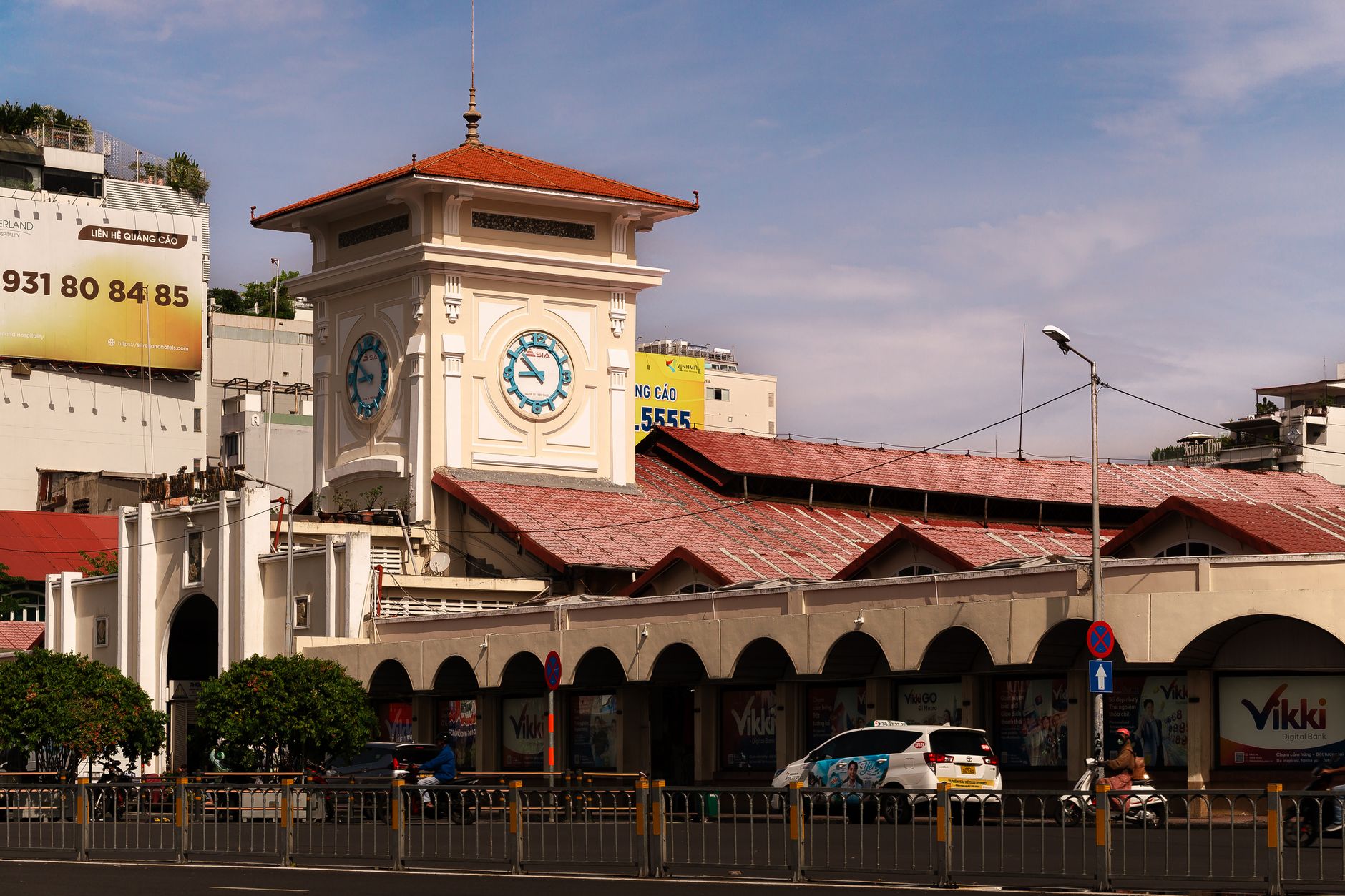
Ben Thanh Market is the historical centre of Saigon commerce — 1,500 stalls under one roof since 1914, best in the morning before prices rise for tourists. The surrounding streets (Le Loi, Dong Khoi) have the finest French colonial architecture in the city.
💡 Ben Thanh Market prices are set by 9am for tourists — arrive before 8am to buy at the local rate. The food stalls around the market perimeter open at 7am for the best Saigon breakfast circuit.

The Mekong Delta’s floating markets are best at dawn — Can Tho’s Cai Rang market has hundreds of wooden boats trading wholesale produce from 5–9am. Ben Tre, closer and less visited, is better for cycling the palm-grove delta channels on an overnight trip.
💡 Go to Ben Tre rather than Can Tho for the Mekong Delta — it’s closer (90km), less visited, and the delta cycling routes through coconut palms are the finest in the delta.

The Cu Chi Tunnels run 250km beneath the district northwest of Saigon — the Viet Cong lived underground here for years, with kitchens, hospitals, and weapon workshops cut from the red clay. Visitors crawl through a widened 50m section and try the wartime food.
💡 Cu Chi Tunnels Ben Dinh section is less developed than Ben Duoc and sees fewer visitors — the crawling section is longer and less modified for tourists.
Ho Chi Minh City’s food culture is the most diverse in Vietnam and the most influenced by the south’s Chinese, Cambodian and French colonial heritage: the hú tiếu (the southern noodle soup; clearer and lighter than Hanoi’s phở; the pork and seafood broth; the Chinese egg noodles or rice noodles; the most ubiquitous Saigon breakfast; VND 40,000–70,000 at any local restaurant before 9am), the bánh mỳ Saigon (the southern banh mi; more generous filling than the Hanoi version; the pate, the pickled daikon, the chilli, the fresh coriander; VND 20,000–40,000; the Huynh Hoa banh mi shop on Pham Hong Thai Street is the most celebrated in the city — queues form at 6am), the cơm tấm (the broken rice; white jasmine-scented broken rice grains with grilled pork ribs, steamed egg cake and a fried egg; the definitive Saigon lunch; VND 50,000–80,000; at any of the com tam shops on Vo Van Tan Street), and the Vietnamese craft beer scene (the Pasteur Street Brewing Company — the finest craft brewery in Vietnam; the jasmine IPA; the District 1 taproom; VND 90,000–150,000 per pint) make HCMC the most gastronomically rich city in Vietnam.
Grab (GrabBike for short journeys in District 1: VND 15,000–40,000; GrabCar for airport transfers and Cho Lon Chinatown: VND 60,000–150,000) is the only recommended taxi service in HCMC for tourists. The city’s traffic (the 7 million registered motorbikes; the permanent gridlock in Districts 1, 3 and 5 from 7–9am and 4–7pm) makes all road travel unpredictable in timing; always leave 30–45 min more than the Grab app estimates during peak hours. Walking is the best mode for the District 1 core (from Ben Thanh Market to the Reunification Palace: 15 min; to Notre Dame Cathedral: 10 min; to the War Remnants Museum: 20 min). The Cu Chi Tunnels: organised minibus tours from the hotels (USD 10–25; the most practical option). The Mekong Delta: the Sinh Tourist or Mekong Eyes boat tours (USD 15–45 from District 1; 2–3.5h each way).
Com tam (broken rice with grilled pork, egg, and pickled vegetables) is the definitive Saigon breakfast — eaten at plastic-stool joints from ₫30,000.
The War Remnants Museum (₫40,000; 8am–5pm; closed Mon) covers the US–Vietnam War through the photographs of the killed correspondents — allow 2 hours and prepare emotionally.
District 5 Cho Lon is the largest Chinatown in Vietnam — the Binh Tay market and the Thien Hau Temple on Nguyen Trai are the two best stops.
Go to the Cu Chi Tunnels on the first morning departure (7am minibus from District 1) to beat the tour groups — the tunnels are cramped and hot by midday.
Ben Thanh Market prices are fixed by 9am when the tourist groups arrive — come before 8am to buy dried goods, coffee, and spices at the local rate.
Can Tho (3.5 hours from HCMC by bus; the Mekong Delta’s largest city) has the Cai Rang floating market at dawn (6am; best from a river taxi).
Dec–Apr is the dry season and most comfortable (26–32°C). Tet (Jan–Feb) is the most festive but many restaurants close. May–Nov is rainy season (heavy afternoon downpours of 1–2h; the city stays functional; lower prices and fewer tourists).
Three days: the Reunification Palace, the War Remnants Museum, the Cu Chi Tunnels, Cho Lon Chinatown, and a Mekong Delta day trip.
Reunification Palace at 8am. War Remnants Museum (2h). Notre-Dame Cathedral and Central Post Office exteriors. Ben Thanh Market. Rooftop bar at sunset on Bui Vien.
💡 The War Remnants Museum third floor has the photographs by the four combat photographers killed in Vietnam — the most significant and most difficult room in the museum. Allow more time than you expect.
Morning minibus to Cu Chi Tunnels (7am; 2h drive; the crawl, the weapons display, the wartime kitchen). Return to HCMC by 1pm. Jade Emperor Pagoda at sunset.
💡 Cu Chi Tunnels are genuinely small — 50cm wide, 80cm high in the original sections. The widened tourist section is still claustrophobic. Skip if you’re uncomfortable in tight underground spaces.
Morning boat to Ben Tre on the Mekong (2h). Coconut candy factory. Cycling through the palm groves. Floating restaurant lunch on the river. Return to Saigon by 6pm.
💡 Ben Tre’s Mekong cycling routes pass through rice paddies and coconut palm groves on paths that never see tourist buses — rent a bicycle from the guesthouse and go without a guide.
HCMC is very affordable for foreign visitors. The com tam (VND 60,000 ≈ €2.20), the War Remnants Museum (₫40,000 ≈ €1.50), and the Cu Chi Tunnels tour (USD 12–20) are extraordinary value. Per person per day.
The com tam (VND 60,000), the banh mi (VND 30,000), the War Remnants Museum (₫40,000) and the Reunification Palace (₫40,000) give the essential HCMC experience for under VND 200,000.
Quan An Ngon (160 Pasteur Street, District 3; the best survey of Vietnamese regional cuisine in HCMC; 50+ dishes from all regions; VND 200,000–400,000 pp; the most educational single restaurant meal in Vietnam) is the correct.
The Cai Rang Floating Market at dawn (Can Tho; the overnight trip; the 4am wake-up on the wooden river boat; the hundreds of farm boats trading in the dark and the early light of the Mekong; the most extraordinary food market experience in)
Motorbike and car rides across all districts — the fastest and cheapest way to navigate Ho Chi Minh City.
Free
Restaurant discovery and food delivery across Districts 1, 3, 4, and Cho Lon Chinatown.
Free
Minibus and boat tickets for Cu Chi Tunnels, Mekong Delta and intercity Vietnam routes.
Free
Ho Chi Minh City restaurant discovery with District 1, 3 and 4 neighbourhood filtering.
Free
Mekong Delta river cruise and tour booking for Ben Tre, Can Tho and floating market day trips.
Free
Download the HCMC offline map before arrival — essential for navigating Districts 1 through 5 without data.
Free
Explore more of Vietnam’s extraordinary cities and landscapes.