CV
Cape Verde
Atlantic volcano archipelago of morna, wine & white sand
Atlantic volcano archipelago of morna, wine & white sand
Cape Verde is an archipelago of ten volcanic islands in the Atlantic Ocean, 570 kilometres off the coast of Senegal — a Portuguese-speaking African nation whose islands range from the lush, green, mountainous Santiago and Fogo to the flat, white-sand, wind-swept Sal and Boa Vista. The islands are an island-hopper’s paradise of extraordinary geological and cultural diversity. Fogo’s active volcano rising from the ocean floor to 2,829 metres is one of the Atlantic’s most dramatic natural features; the Pico do Fogo last erupted in 2014. The music of Cape Verde — morna, the melancholic Portuguese-African genre made internationally famous by Cesaria Evora — is the sonic heart of island life.
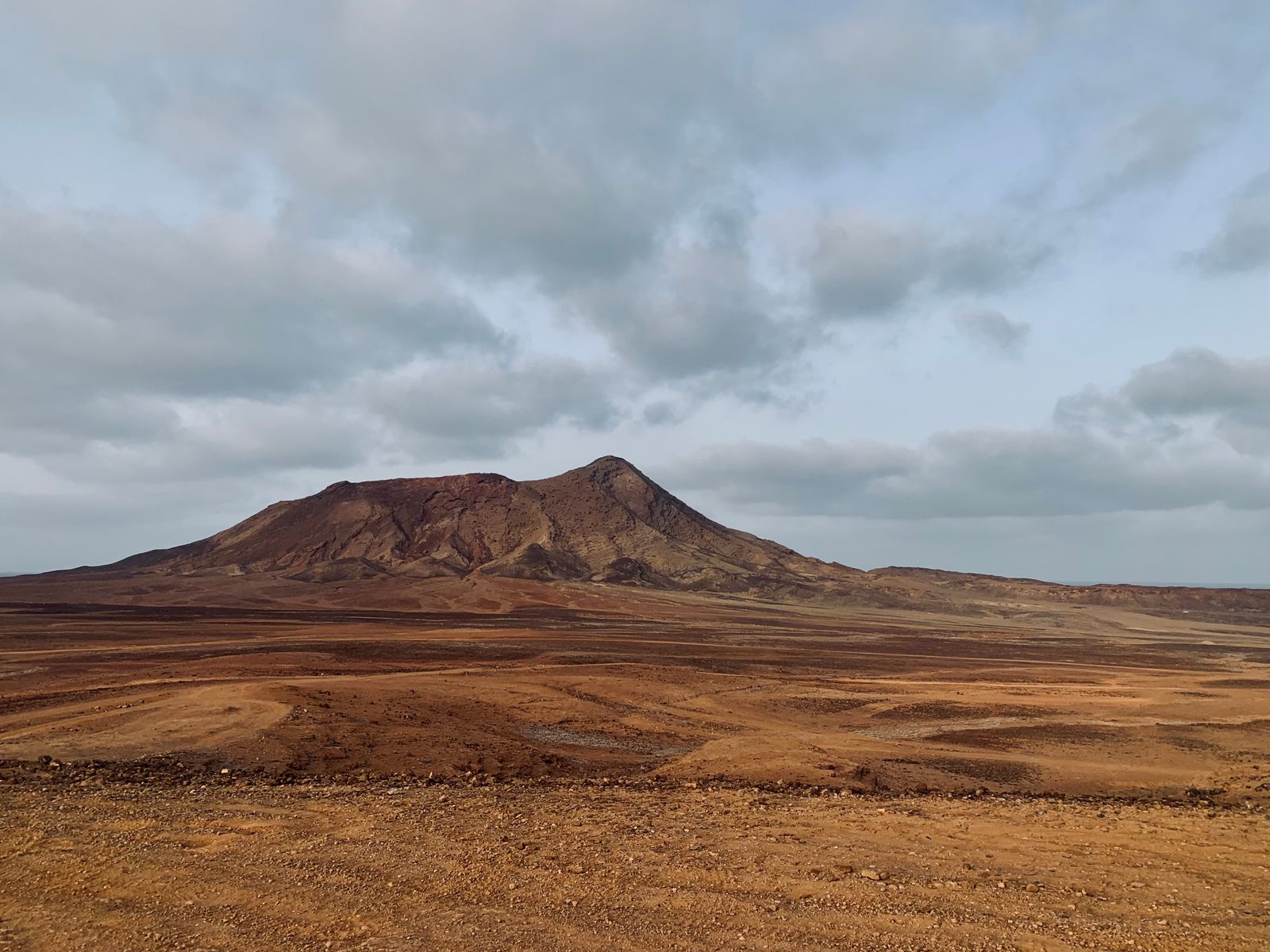
The island of Fogo is dominated by an immense active volcano — the Atlantic’s highest, rising 2,829 metres from the sea floor. Inside the caldera, a wine-producing community was buried by lava in 2014 and has since been rebuilt. Trekking the crater rim and spending a night in the caldera village is Cape Verde’s most dramatic experience. The local Fogo wine, grown in volcanic soil, is extraordinary.
Mindelo, the cultural capital of Cape Verde, sits in a natural harbour of great beauty and has the music, arts and carnival scene that makes it the spiritual home of morna. The International Music Festival, the bars of the Rúa de Lisboa and the Mercado do Peixe (fish market) make Mindelo the most alive city in the archipelago.
The most spectacularly beautiful island in the archipelago — a mountainous, green, cloud-draped island with vertiginous ravines, ribeiras (valleys) planted with sugar cane and bananas, and hiking trails along old irrigation channels (levadas) that rate among the finest walks in the Atlantic islands.
The two flat eastern islands offer the classic resort experience: vast dunes, miles of white sand, turquoise water and constant Atlantic trade winds that have made Sal and Boa Vista globally renowned kite-surfing and windsurfing destinations.
Cape Verde (Wikipedia) →a slow-cooked stew of maize, beans, sweet potato and meat or fish, simmered for hours and eaten for breakfast, lunch and dinner — is the national dish and the foundation of Cape Verdean identity.
The national spirit of Cape Verde — a rough distilled sugarcane rum produced on nearly every island from locally grown cane. Drunk neat, used as a base for ponche (mixed with honey and lemon) and the heart of every social gathering.
Cape Verde sits on some of the Atlantic’s richest yellowfin tuna grounds — caught daily and served grilled whole with local herbs and milho (corn porridge), raw as carpaccio, or preserved in olive oil. One of the freshest tuna experiences available anywhere in the Atlantic.
lobster) are the seafood highlights. Cape Verde’s
Made inside the crater of Pico do Fogo on volcanic soil, Fogo wine has a mineral intensity found nowhere else in Atlantic winemaking — produced by the Cooperativa Vitivinícola do Fogo in tiny quantities. Seek out the red.
A rough distilled sugarcane spirit produced on nearly every island from locally grown cane — drunk neat, used as the base for ponche (mixed with honey and lemon) and the heart of every social gathering in Cape Verde.
Amílcar Cabral (SID) on Sal and Nelson Mandela (RAI) on Santiago are the two main international airports. TACV Cabo Verde Airlines, TAP Portugal, Ryanair and TUI connect the islands to Europe. For trip planning, see the official Cape Verde tourism portal.
💡 Ryanair and TUI both operate year-round direct Gatwick–Sal services — Cape Verde is one of the most directly accessible African destinations from the UK, making it a popular winter sun option.
💡 Lisbon is the most frequent gateway — 3h30 from Cape Verde with multiple daily TAP connections, reflecting the Portuguese connection. All major European capitals have at least weekly charter services.
💡 TACV and the newer BestFly operate inter-island flights; book in advance as capacity is limited. The Mindelo–Santo Antão ferry (30–50 min depending on sea state) is the most scenic short crossing in the Atlantic.
💡 Sal is flat and small (30km × 12km) — easy to explore by car, quad bike or even bicycle. Santa Maria’s main strip is walkable. An island circuit takes under 2 hours.
November to June is the best window — dry, fresh northeast trade winds, the beaches of Sal and Boa Vista calm. January to March are the coolest and most pleasant months (22–26°C). July to October brings the rainy season on the mountainous islands (Santiago, Santo Antão) — the desert islands (Sal, Boa Vista) remain arid year-round.
Cape Verde is mid-range — more affordable than the Canaries but more expensive than mainland West Africa. The Cape Verdean Escudo (CVE) is the currency; euros are widely accepted.
Cachupa — Cape Verde’s national dish (a slow-cooked stew of dried corn, beans, sweet potato, cassava, plantain and whatever meat or fish is available — tuna, pork, chicken or linguica sausage) — is eaten at breakfast as.
The Fogo wine (Adegas do Fogo — red wine grown on the volcanic slopes of Pico do Fogo at 1,500m altitude in ash-enriched soil, with an unusual mineral and smoky character) is the most distinctive wine produced in Africa, available.
The Melía Tortuga Beach and Melia Dunas resorts on Sal are Cape Verde’s most established luxury addresses — large all-inclusive resorts with direct access to Santa Maria beach and the kitesurf lagoon.
Sal for two days, Boa Vista for one, Santiago and Praia for one, Santo Antão for two, São Vicente and Mindelo for one. Cape Verde — ten volcanic islands in the Atlantic — is the most geographically and culturally diverse small island nation in the world.
Sal — a flat, semi-desert island of extraordinary beaches and constant wind (the Harmatãn from the Sahara at 15–25 knots year-round) — with Santa Maria (a colonial salt-shipping village turned kitesurf capital of Africa, with the finest beach in Cape Verde: a 4km arc of white sand and turquoise water at the south end) and Pedra de Lume (a volcanic crater filled with a salt lake so saline that swimmers float effortlessly).
💡 Cape Verde’s Pedra de Lume salt crater — a collapsed volcanic caldera whose sea-level floor is filled with hypersaline water from a lava tube connection to the Atlantic — was the primary salt export of the Sal island from the 16th to 20th centuries. The salt concentration is 4–6 times that of seawater, making the same effortless floating experience as the Dead Sea.
Santa Maria beach for a kitesurfing lesson (Santa Maria is one of the world’s top three kitesurfing locations — consistent 15–25 knot side-shore wind, flat lagoon water, a 4km sand runway) and a whale shark snorkel tour (whale sharks (Rhincodon typus) aggregate in the warm Atlantic waters around Sal from October to May, the largest documented congregation in the Northeast Atlantic).
💡 The whale shark aggregation around Cape Verde — documented by researchers since 2011 — is the only known nursery of juvenile whale sharks in the Northern Hemisphere. The individuals (primarily juveniles 4–7m) congregate around Sal and Boavista to feed on seasonal plankton blooms. The discovery has made Cape Verde a key site in global whale shark research.
45-min flight from Sal. Boa Vista — the flattest and most desert-like island, with the Viana Desert (the largest sand desert in Cape Verde, with migrating dunes up to 50m high that have buried an 18th-century church — the tower still visible above the sand) and the loggerhead sea turtle nesting beaches (the third-largest nesting population in the world, June–October).
💡 Boa Vista’s loggerhead sea turtle (Caretta caretta) nesting population — approximately 10,000 nests per season — is the third-largest in the world, after Florida and Oman. The islands were virtually deserted when systematic turtle protection began in 2007; the nesting beaches are now some of the most actively protected in the Atlantic.
2h flight from Boa Vista. Praia — the capital of Cape Verde (population 132,000) and the most African-feeling of the Cape Verdean cities, with the Platona (the raised plateau of the old colonial town above the harbour) and Ribeira Grande de Santiago (UNESCO World Heritage Site — the first European colonial settlement in the tropics, established 1462, with a cathedral, fort and Portuguese colonial streets in various states of handsome decay).
💡 Ribeira Grande de Santiago (now called Cidade Velha, “Old City”) was founded in 1462 — the first permanent European settlement in the tropics, 30 years before Columbus. It was a primary port in the Atlantic slave trade, with an estimated 400,000 enslaved Africans passing through its slave market between 1500 and 1680. The Pillory of Ribeira Grande (a 16th-century public punishment column) still stands.
40-min ferry or flight from São Vicente. Santo Antão — the most dramatic landscape in Cape Verde: volcanic peaks (Monte Tope Coroa, 1,979m), deep ribeiras (valleys cut to sea level), irrigated terraces with coffee and sugarcane, and the finest hiking in the Atlantic islands (the Paul Valley trail — a 2h walk through a lush mountain valley with traditional Creole homesteads, the most beautiful interior in Cape Verde).
💡 Santo Antão receives 3–4 times the rainfall of Sal and Boa Vista — the mountains trigger orographic rainfall that sustains banana plantations, coffee, papaya and tropical forest on the north-facing slopes. The contrast between the north coast (lush, cool, misty) and the south coast (barren, desert, hot) within the same island is one of the most dramatic microclimatic divides in any small territory.
The Ribeira do Paul (a full-day trail from the mountain village of Cova to the coastal town of Paul, descending 1,400m through terraced agricultural landscapes, past waterfall pools and the local grogue (sugarcane rum) distilleries where farmers process their own harvest with small pot stills) — one of the finest day hikes in the Atlantic.
💡 Grogue (from the English “grog”, via Portuguese colonial adoption) is Cape Verde’s national spirit — a rough, unaged sugarcane rum distilled in home pot stills from freshly pressed cane juice, similar to cachaça but with a more rustic character. The best grogue comes from Santo Antão, where the cane grows in the valley ribeiras; a bottle costs CVE 400–800 (US$4–8) at a local distillery.
Ferry or short flight from Santo Antão. Mindelo — the cultural capital of Cape Verde, the most cosmopolitan small city in West Africa, with the finest music scene in the Atlantic (morna — the deeply melancholic Cape Verdean musical form, associated above all with Cesária Évora, who brought it to world attention — performed live in bars and restaurants every evening). Fly from Nelson Mandela (VXE, São Vicente) or Amílcar Cabral (SID, Sal).
💡 Cesária Évora (1941–2011), born in Mindelo, was the most globally celebrated Cape Verdean musician — her barefoot performances of morna (a form of melancholic Portuguese-African fado-adjacent song) won a Grammy in 2004 and made Cape Verde internationally known. The word that defines morna and Cape Verdean emotional identity is “saudade” — the Portuguese-Creole concept of longing for absent people and places.
Visa required for most non-Portuguese-speaking nationalities; e-visa available online before departure.
TACV (Cabo Verde Airlines) connects the 10 islands. Sal (SID) and Santiago (RAI) are the international hubs. Inter-island flights take 30-60 min.
Sal and Boa Vista have strong northeast trade winds year-round — ideal for kitesurfing but beach time can be blustery outside sheltered bays.
Santo Antão in the northwest is the volcanic hiking island — ribeira (canyon) walks through banana and sugarcane valleys are the finest hiking experience in Cape Verde.
TACV and Binter airlines connect the islands (30–60 min flights); ferries operate some routes but are slow and weather-dependent.
The harmattan (trade winds) blow strongly October–April, especially on Sal and Boa Vista — ideal for water sports, less ideal for beach relaxing.
Inter-island airline booking and flight status for Cape Verde routes.
FreePoint your camera at menus, signs or street text for instant translation. Download the language pack offline before you arrive for full use without data.
FreeReal-time and offline exchange rates for all world currencies — converts prices instantly so you always know what you are paying in your home currency.
FreeFind and book hotels, guesthouses and apartments with free cancellation on most rates — one of the widest selections of accommodation worldwide.
FreeBrowse millions of traveller reviews for restaurants, attractions and hotels — helps identify the best local spots and avoid tourist traps.
FreeCape Verde sits within easy reach of several other destinations — each with a completely different character.