SL
Sierra Leone
West Africa’s finest beaches, freed-slave history & jungle chimpanzees
West Africa’s finest beaches, freed-slave history & jungle chimpanzees
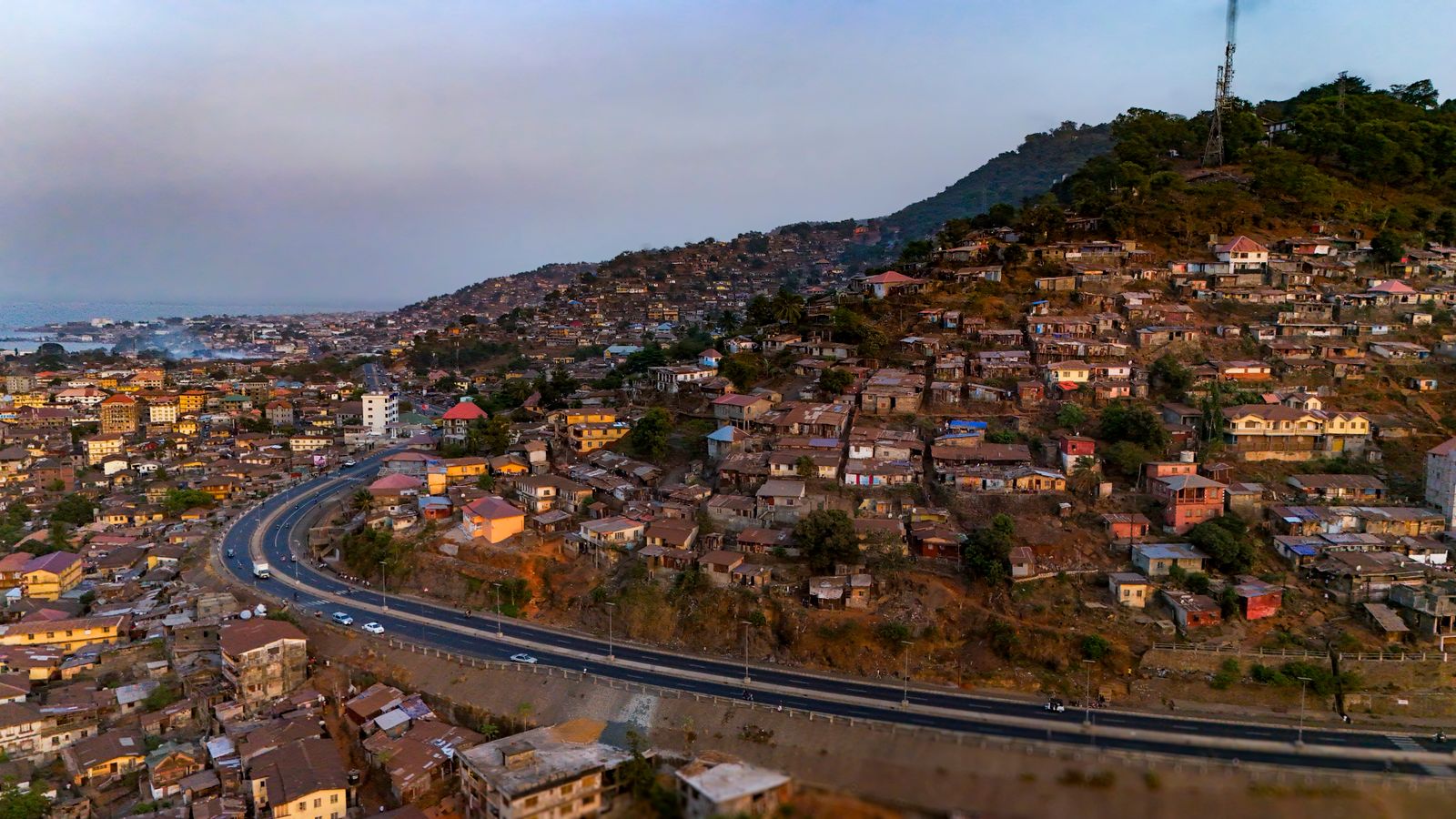
Sierra Leone is West Africa’s most beautiful beach destination — a country of natural richness that is finally rediscovering its tourism potential after decades of difficulty. The Freetown Peninsula, a 40-kilometre headland of lush, forest-covered hills dropping to white-sand beaches and Atlantic surf, contains some of the finest beaches in West Africa: Bureh Beach (excellent right-hand surf break), Tokeh Beach, River No. 2 Beach (regularly cited as West Africa’s most beautiful) and the quiet coves near Banana Islands. Freetown itself, built on the hills above the Sierra Leone River estuary, is one of West Africa’s most distinctive capitals — a city of Krio colonial architecture, the remarkable Cotton Tree and a history as the settlement for freed slaves that gives it a unique cultural identity.
The 40-kilometre chain of beaches along the Freetown Peninsula — Lumley Beach (nearest to the city), Lakka, Sussex, Bureh Beach (a consistent right-hand point break popular with surfers), Tokeh and River No. 2 — forms the most beautiful coastal stretch in West Africa. River No. 2 Beach, set at the mouth of a river in a jungle cove, is particularly beautiful.
Sierra Leone’s capital on its hilly peninsula has a unique history as the destination for freed slaves from Britain, Canada and the Americas from 1787 onwards — their Krio descendants developed a distinct language and culture that flavours the city. The ancient Cotton Tree (a sacred silk-cotton tree in the city centre), the National Museum and the Krio colonial architecture of the Hill Station suburb reflect this history.
A river island in the Moa River in southern Sierra Leone, one of the best places in West Africa to see chimpanzees, pygmy hippos and a wide diversity of primates (11 species on one small island) in relatively undisturbed rainforest. Guided walks and canoe trips are the main activities.
Three small islands off the Freetown Peninsula with historic Portuguese and British colonial ruins, excellent snorkelling on healthy reefs, quiet beaches and a living culture of fishing communities that has barely changed in centuries.
leafy greens — cassava leaves, potato leaves or krain krain — cooked in palm oil with fish, meat and spices) is the national dish, eaten with rice at every meal.
A thick, rich stew of pounded peanuts with chicken, fish or beef and palm oil — the national soup of Sierra Leone, eaten with rice balls or fufu. The groundnut sauce is the same across West Africa but each country claims ownership; Sierra Leone’s is notably rich.
tomato and spice rice cooked in one pot) are the social dishes. Fresh Atlantic
The large, predatory barracuda fish caught off Freetown’s beaches — grilled over charcoal with peppered onion sauce, or smoked and added to soups. A firm, meaty fish that holds up well to strong seasoning and open fire cooking.
Atlantic grouper and croaker caught in the Sierra Leone River estuary, sold at Freetown’s Congo Market every morning — grilled with onion and pepper sauce, or smoked for transport inland. The freshness of the fish at the market before 8am is excellent.
are impressive and inexpensive on the beach.
palm wine, tapped fresh from the palm tree) is the local drink of celebration.
Lungi International Airport (FNA) is across the Sierra Leone River estuary from Freetown. Reaching the city requires a ferry or speedboat — a journey that has inconvenienced travellers since independence.
Brussels Airlines (6h30 direct) and Royal Air Maroc via Casablanca are the most direct European connections. The historic Brussels Airlines “tropical” routes are the primary link between West Africa and Europe.
Abidjan and Accra (both 1h30) are the most convenient West African hubs. Ethiopian Airlines (Addis Ababa, 8h direct) connects East Africa.
The speedboat from Lungi Airport across the Sierra Leone River Estuary to the Aberdeen Bridge water taxi point in Freetown (30 min, US$10–20) is the most popular and practical option. The government ferry is slower but far cheaper.
Freetown is navigated by poda-poda and motorbike taxi. Upcountry travel requires a 4WD with driver; most roads outside the main highways are unpaved and can be challenging.
November to April is the dry season — the ideal window (26–32°C), with clear skies, accessible roads and the finest beach conditions. December to February is the peak. May to October is the wet season with very heavy rain; interior roads can become impassable.
📅 Sierra Leone is in its best season in January, February, March, April, November, December. See where else is good to go in those months, or browse where to go by month.
The leone (SLE, redenominated in 2022) is the currency; US dollars widely accepted. Very affordable.
Cassava leaf stew (the national dish — pounded cassava leaves simmered with palm oil, fish or meat and spices, served with rice or fufu — available at local chop houses throughout Sierra Leone for US$2–6) is.
The Tiwai Island Wildlife Sanctuary overnight stay (US$60–100 per person with meals and guided walks — 11 primate species before breakfast in a 120-hectare island sanctuary) is the finest and most affordable primate.
Sierra Leone’s combination of history (Bunce Island, Cotton Tree, freed slave heritage), primate diversity (Tiwai, Tacugama, Gola) and beach quality (Tokeh, Bureh, Sussex) makes it the most underrated tourism destination.
Freetown for one day, Bunce Island history for one, Tacugama chimpanzees for one, Tiwai Island for one, Outamba-Kilimi for one, Gola Forest for one, Tokeh beach farewell for one. Sierra Leone — where freed slaves built a capital called Freetown — has the most biodiverse river island in West Africa, the best Atlantic beaches on the continent, the rockfowl of Gola Forest and direct connections to Gullah-Geechee African American heritage.
Freetown — the capital of Sierra Leone (population 8 million, a former British colony independent since 1961, named for the freed slaves repatriated there beginning 1787, devastated by a brutal civil war 1991–2002 in which the RUF rebel movement systematically amputated the hands and arms of civilians as a terror tactic, killing 50,000 and displacing 2 million) with the Cotton Tree (the 500-year-old kapok tree at the centre of Freetown, under which freed slaves prayed on arrival in 1792) and the National Railway Museum.
The founding of Freetown (1787 — the British government, working with abolitionists including Granville Sharp, established the Province of Freedom for 400 “Black Poor” (freed American slaves, African-born former slaves and some white women) in West Africa, intended as a model free settlement — the settlement nearly failed in the first year due to disease and local resistance, but was re-established in 1792 with 1,200 Black Loyalists from Nova Scotia and became Sierra Leone’s capital) is one of the most significant events in the history of the trans-Atlantic slave trade’s aftermath.
Bunce Island (the most historically significant site in West Africa for the transatlantic slave trade — a fortified British slave trading post in the Sierra Leone River, operating 1670–1808, the primary source of enslaved Africans for the rice plantations of South Carolina and Georgia, accessible by boat from Freetown — the ruined fort, slave holding cells and cannon emplacements preserved as a conservation site, with direct genealogical connections to African American communities in the Low Country of the US Southeast).
The Gullah-Geechee people of the South Carolina and Georgia Sea Islands (the African American community descended primarily from enslaved people captured in Sierra Leone’s rice-growing region around Bunce Island — who preserved their West African language, rice-farming techniques, basket-weaving and cultural practices in relative isolation on the Sea Islands for 200 years) maintain a direct genealogical and cultural connection to Bunce Island. Gullah-Geechee delegations visit annually.
Tacugama Chimpanzee Sanctuary (located in the Western Area Peninsula National Park, 20 minutes from Freetown — a rehabilitation centre for chimpanzees rescued from the bushmeat trade and the illegal pet trade, with 80+ resident chimpanzees at various stages of rehabilitation, the most accessible chimpanzee experience in West Africa — guided tours allow close observation of the chimp social groups through the forest enclosures).
Sierra Leone contains one of the highest densities of western chimpanzee (Pan troglodytes verus — the western subspecies of common chimpanzee, listed as Endangered with a population of approximately 50,000 — outside of protected areas) of any West African country. The bushmeat trade, which killed an estimated 10,000+ chimps per year in Sierra Leone before the civil war, has decreased significantly with improved law enforcement but remains a significant conservation challenge.
Tiwai Island (a 120-hectare river island in the Moa River — the most biodiverse small protected area in West Africa, with 11 species of primate in a single location including the diana monkey, the sooty mangabey, the western red colobus and the olive colobus — accessible by canoe from the mainland, with guided wildlife walks on the island’s forest trails producing reliable multi-primate encounters in a single morning) and the pygmy hippos in the river.
Tiwai Island’s primate density (11 species in a 120-hectare island — the highest diversity of coexisting primate species in any West African protected area — is possible because the river island provides natural protection from hunting and because the different species occupy different ecological niches within the forest, reducing competition. The absence of large predators (leopards cannot swim to the island) also maintains higher population densities than the mainland.
Outamba-Kilimi National Park (the largest national park in Sierra Leone, 1,008km² in the north of the country — with West African elephants, pygmy hippopotamuses, chimpanzees, the last surviving savanna elephants in Sierra Leone, the hippopotamus pool at the Outamba camp, and the bird diversity of the Guinea forest-savanna mosaic).
Sierra Leone’s West African forest elephant population (Loxodonta cyclotis — the smaller, forest-adapted subspecies of African elephant, with straighter, thinner tusks adapted for navigating forest — was severely impacted by ivory poaching during and after the civil war; the current population is estimated at 100–400 individuals, concentrated in Outamba-Kilimi and the Gola Forest).
The Gola Rainforest National Park (the most biodiverse forest in Sierra Leone, shared with Liberia as the Gola Forest — part of the Upper Guinea Forest Biodiversity Hotspot, home to the white-necked rockfowl (Picathartes gymnocephalus — one of the rarest and most sought-after birds in Africa, nesting in rocky outcrops in the forest), 300+ bird species and the last intact forest block connecting Sierra Leone to the Liberia forest corridor).
The white-necked rockfowl (Picathartes gymnocephalus — a strange, almost prehistoric-looking bird with a bare yellow and black head, nesting in small colonies on rock faces in the Upper Guinea Forest, one of the most sought-after birds in Africa for serious birders — is the defining bird of the Gola Forest and the primary reason specialist birding tours visit Sierra Leone.
Tokeh Beach (one of the finest beaches in West Africa — a broad crescent of white sand on the Freetown Peninsula, 30 minutes from Freetown by water taxi or road, with clear warm Atlantic water and almost no development — the most beautiful beach in Sierra Leone) and Bureh Beach (the best surf in Sierra Leone, a consistent left-hand point break 40 minutes south of Freetown, with a small surfer village that has hosted West African surf championships) before flying from Lungi Airport (FNA).
The Freetown Peninsula beaches (30km of relatively undeveloped Atlantic beaches running south from the ferry terminal — Lumley Beach, Tokeh, Black Johnson, Sussex and River No.2 — represent the finest accessible Atlantic coast beaches in West Africa, with white sand, warm water and minimal crowds — the most underdeveloped beach tourism corridor in any West African country with stable government and infrastructure.
Visa on arrival for most nationalities at Lungi International Airport.
Freetown is across a bay from Lungi Airport. The water taxi (45 min) is the fastest option; the road route takes 2-4 hours. Factor this into arrival planning.
The SLE is the currency. USD widely accepted in Freetown tourism businesses. Cash is essential everywhere.
Sierra Leone has recovered from the 2014-16 Ebola epidemic and the 1991-2002 civil war. Freetown and the beaches are safe; interior travel requires local advice.
Lungi Airport is on the north side of the Sierra Leone River from Freetown — a ferry or speed boat (30–45 min) crosses to the city; plan arrivals before dark.
Yellow fever vaccination certificate required for entry.
Quick answers to the questions people most often ask before visiting Sierra Leone.
Fly into Lungi International Airport (FNA). Direct flights run from Brussels (about 6h30) and Casablanca (about 5 hours), with regional connections via Abidjan and other hubs.
The airport is across the river estuary from Freetown. The quickest way is a water taxi or ferry across the bay (around 30–45 minutes); the road route around takes much longer.
Most nationalities need a visa, which has been available on arrival or online. A yellow fever vaccination certificate is required for entry. Check the current process before travel.
November to April, the dry season (26–32°C), with December to February the peak. May to October brings very heavy rain and makes interior roads difficult.
The leone. US dollars are widely accepted by tourism businesses in Freetown, and cash is essential everywhere. Sierra Leone is very affordable — around US$35–65 per day on a budget.
Point your camera at menus, signs or street text for instant translation. Download the language pack offline before you arrive for full use without data.
FreeReal-time and offline exchange rates for all world currencies — converts prices instantly so you always know what you are paying in your home currency.
FreeFind and book hotels, guesthouses and apartments with free cancellation on most rates — one of the widest selections of accommodation worldwide.
FreeBrowse millions of traveller reviews for restaurants, attractions and hotels — helps identify the best local spots and avoid tourist traps.
FreeSierra Leone sits within easy reach of several other destinations — each with a completely different character.
Sierra Leone is one of the world’s least-visited places. See all 90 in our guide to the world’s least-visited countries & territories.


