LY
Libya
Rome’s greatest ruins outside Europe, Saharan rock art & emerald oasis lakes
Rome’s greatest ruins outside Europe, Saharan rock art & emerald oasis lakes
⚠️ Travel advisory: most governments advise against travel
Governments advise against all travel to Libya because of armed conflict, terrorism and kidnapping. This guide is kept for background and future planning.
Latest official advice: UK FCDO · US State Department · Reviewed September 2026
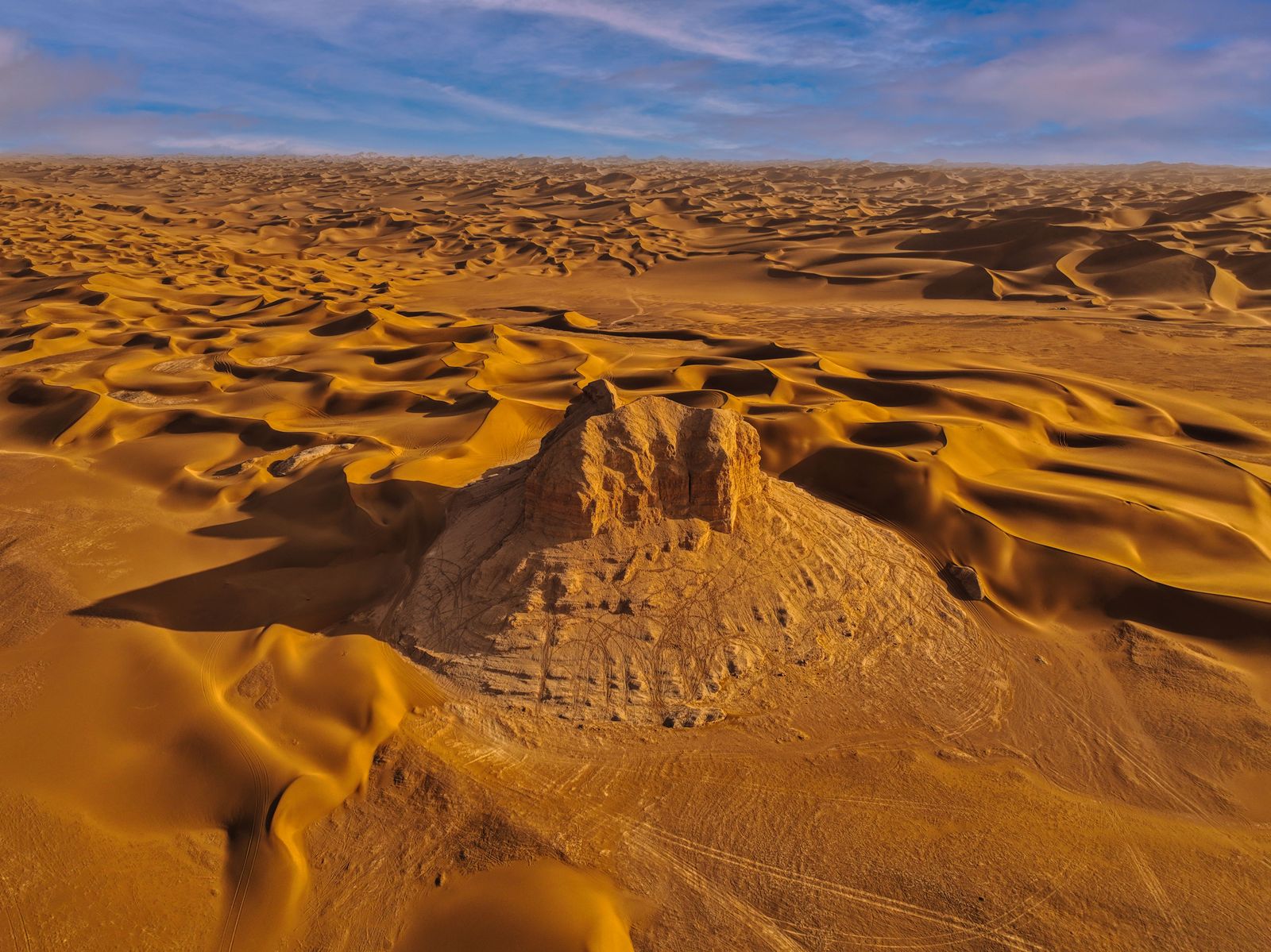
Libya is North Africa’s most striking archaeological destination — home to the finest Greek and Roman ruins on earth outside Europe itself. Leptis Magna, the UNESCO-listed birthplace of Emperor Septimius Severus, has Roman monuments of scale and preservation: its basilica, theatre, forum, arch and harbour are a match for anything in Rome or Athens. Cyrene — the ancient Greek colony founded in 631 BC on a high plateau above the Mediterranean — has a sanctuary of Apollo, agora, theatre and necropolis of haunting beauty. Sabratha’s theatre, with its three-storey stage facade of marble columns, is one of the most dramatic Roman stages in the world. The Sahara of the Fezzan — the Ubari Sand Sea with its emerald oasis lakes, the Acacus Mountains with their prehistoric rock art (a UNESCO World Heritage Site) — rivals any desert landscape in Africa. The country has faced significant instability since 2011; check advisories carefully before planning any visit.
A UNESCO World Heritage Site and the finest Roman city outside Europe — the birthplace of Emperor Septimius Severus (193–211 AD) was lavished with the finest marble Rome could produce. The Arch of Septimius, the Severan Basilica (80m long), the Hadrianic Baths, the 25,000-seat amphitheatre and the hunting baths (with wall paintings intact) are preserved in a state of almost surreal completeness in the desert air.
A UNESCO site — the ancient Greek colony at 620 metres above the Mediterranean coast has a Sanctuary of Apollo (founded 631 BC), a complete agora, Greek theatre, Roman forum and a necropolis of rock-cut tombs carved into the hillside above the valley. The site’s remote, high-plateau setting amplifies its beauty.
A UNESCO World Heritage Site in the Fezzan desert of southern Libya — prehistoric rock paintings and engravings showing elephants, giraffes, crocodiles and human figures in a landscape that was once lush savannah, made between 12,000 BC and 100 AD in one of the world’s greatest concentrations of Saharan rock art.
Barley dough pressed into a mound and topped with lamb and tomato stew — Libya’s most traditional dish, eaten communally from a shared plate with the right hand.
A smooth wheat-flour dough served with date syrup and butter — eaten at celebrations and for the Prophet’s birthday.
Gunpowder green tea poured from a great height to create foam, served in small glasses in three rounds: bitter, sweet, mild. The ritual of hospitality throughout Libya and North Africa.
Lamb and tomato soup with orzo, chickpeas and dried mint — the classic dish for breaking the Ramadan fast.
Mitiga International Airport (MJI) in Tripoli is the functional main gateway (Tripoli International TIP has had limited operations). Libyan Wings, BuraqAir and Turkish Airlines serve the current routes.
Istanbul (3h, Turkish Airlines), Cairo (2h) and Tunis (1h) are the most practical connections from the current limited international schedule. Check all current airline operations before planning.
Tunisia is the nearest stable country and the most practical overland gateway. The Ras Ajdir crossing (between Ben Gardane, Tunisia and Zuwara, Libya) has historically been the most used land border.
Tripoli is 3km from Mitiga Airport. Leptis Magna (130km east) and Sabratha (70km west) are accessible as day trips. Ghadames and the Fezzan require multi-day 4WD expeditions with security support.
A dedicated driver-guide and current security briefing are non-negotiable for all travel in Libya. Heritage sites (Leptis Magna, Sabratha) are accessible from Tripoli with a local guide and vehicle; desert regions require full expedition planning.
October to April is the most comfortable window for the Mediterranean north (15–25°C in Tripoli and Benghazi). March to May is ideal for the Sahara (Fezzan/Ubari). June to August is extreme heat in the south (45–50°C), hot in the north (30–38°C). Libya has been in a state of civil conflict since 2011 and remains divided; check all current advisories before any travel plans.
📅 Libya is in its best season in January, February, March, October, November, December. See where else is good to go in those months, or browse where to go by month.
The Libyan dinar (LYD) is the currency; USD widely used in the humanitarian/NGO economy. Costs are distorted by the conflict economy.
Bazeen (the traditional Libyan dish of barley dough formed into a dome, served with lamb broth, tomato sauce and eggs)
The Leptis Magna site (when accessible with appropriate security — the scale, completeness and state of preservation of this Roman city, with no significant restoration interventions, surpass Pompeii and Herculaneum in the sense of)
The full Fezzan desert circuit.
Tripoli for one day, Leptis Magna for one, Sabratha for one, Cyrene for one, Ubari Sand Sea for one, Ghadames for one, heritage farewell for one. Libya — 90% Sahara — has the best-preserved Roman city in the world at Leptis Magna, the finest Greek city in Africa at Cyrene, the most striking Saharan landscape in the Ubari Sand Sea and the UNESCO oasis city of Ghadames. Currently under serious travel advisory; content is for future reference when conditions improve.
Tripoli — the capital of Libya (1.76 million km² — the fourth-largest country in Africa, 90% Sahara, population 7 million — under Roman and Italian colonial influence for centuries, Muammar Gaddafi’s rule 1969–2011, and since the 2011 NATO-backed uprising in a state of division between rival governments in Tripoli and Benghazi). The UK FCO and US State Dept advise against all travel to most of Libya; check current advisories.
The Libyan civil war (began March 2011 as part of the Arab Spring uprising against Muammar Gaddafi, with NATO air support enabling the rebel National Transitional Council to overthrow and kill Gaddafi in October 2011 — followed by a descent into factional fighting between militias, a second civil war from 2014, and since 2019 a division between the UN-recognised Government of National Accord in Tripoli (supported by Turkey) and the Libyan National Army of General Khalifa Haftar in Benghazi (supported by Russia, UAE and Egypt) — with a fragile ceasefire since October 2020 but no political settlement.
Leptis Magna (UNESCO World Heritage — the finest and best-preserved Roman city in the world, 130km east of Tripoli — more complete than Pompeii in some respects, with the Severan Forum, the Basilica of Septimius Severus, the Arch of Septimius Severus, the Hadrianic Baths, the Old Forum and the extraordinary Hunting Baths with intact ceiling paintings — the greatest Roman heritage site accessible in Africa, the birthplace of Emperor Septimius Severus (reigned 193–211 CE)).
Septimius Severus (born in Leptis Magna 145 CE — Roman Emperor 193–211 CE, the first African-born Roman Emperor — invested heavily in his birthplace, constructing the Severan Forum, the Nymphaeum and the Colonnaded Street with marble imported from Greece and Asia Minor, transforming Leptis Magna from a prosperous trading city into one of the most architecturally elaborate in the empire. The city was subsequently buried under Saharan sand dunes from the 7th century, which preserved it in condition.
Sabratha (UNESCO World Heritage — 70km west of Tripoli, a Phoenician trading post turned Roman city with the finest Roman theatre in Africa: the 2nd-century CE Theatre of Sabratha, with its three-storey marble stage wall reconstructed to its original height overlooking the Mediterranean Sea — the most photogenic ancient monument in Libya and one of the most beautiful Roman theatres in the world, with the backdrop of the North African coast behind the stage columns).
The Theatre of Sabratha (built approximately 180–200 CE during the reign of Commodus — with a stage wall 27m high and 92 columns in three storeys of Corinthian, Ionic and Doric orders, reconstructed in the 1920s by Italian archaeologists from the fallen marble debris — is the best-preserved and most photogenic Roman theatre in Africa, and one of only a few Roman theatres in the world where the full three-storey stage wall has been rebuilt.
Cyrene (UNESCO World Heritage — the ancient Greek colony in the Jebel Akhdar (Green Mountain) region of eastern Libya, founded 631 BCE as one of the most important Greek cities in Africa — with the Sanctuary of Apollo, the Agora, the Nekropolis, the Zeus Temple and the extraordinary Tomb of the Battiads — the finest Greek archaeological site in Africa, representing 1,000 years of Greek and Roman settlement on the North African coast accessible from Benghazi).
Cyrene (founded by Greek colonists from Thera in 631 BCE — one of the five great Greek cities of North Africa (the Pentapolis), and the source of silphium (a plant used as a spice, medicine and contraceptive that was so important to the ancient world that it appeared on Cyrenaean coins — the plant was harvested to extinction by the 1st century CE, probably the first recorded human-caused species extinction). Cyrene’s archaeological park covers 10km² of ancient city on a plateau above the Mediterranean.
The Ubari Sand Sea (the Fezzan region of southwestern Libya — the most dramatic desert landscape in the entire Sahara: the massive ergs of the Ubari Sand Sea surrounding a series of hypersaline crater lakes (Mandara, Gaberoun, Um el-Maa) of turquoise and green colour, surrounded by towering dunes of 200m, palm trees and abandoned settlements — one of the finest desert landscapes in the world, currently accessible only with dedicated security logistics).
The Ubari Lakes (a series of hypersaline lakes fed by ancient fossil groundwater in the heart of the Ubari Sand Sea — the turquoise and green colours of the water (produced by extremely high salt concentrations and algal blooms) contrasting with the orange dunes and blue sky creates one of the most surreal and visually striking landscapes in the Sahara. The lakes were used as water sources by Tuareg and Tebu nomadic communities for centuries; the largest (Mandara) is still surrounded by palm trees and traditional camp structures.
Ghadames (UNESCO World Heritage — the “pearl of the desert”, an oasis city in the extreme northwest of Libya on the border with Algeria and Tunisia — with the most striking and complete traditional Saharan urban architecture in Africa: a labyrinthine network of covered streets (designed to be walked at second-floor level on terraces connecting the rooftops of the houses, leaving the street-level alleys for shade and donkeys), the traditional painted plasterwork interiors and the historical date palm grove).
Ghadames old city (a traditional Libyan Berber settlement with continuous occupation dating to at least Roman times — the covered street network, built to protect residents from the summer heat, creates a city-wide air-conditioning system: the narrow dark alleys remain 10–15°C cooler than the outside air even at 45°C, with the women’s elevated terrace routes providing a separate movement network above the male ground-level streets — is the finest example of traditional Saharan desert architecture accessible in Africa).
A final reflection on Libya’s heritage: five UNESCO World Heritage sites, the best-preserved Roman city in the world, the finest Greek city in Africa, the most striking Saharan landscape in the eastern Sahara — a country that was, before the 2011 conflict, welcoming limited groups of archaeological tourists to its sites, and which carries the potential to be one of the great heritage destinations of the Mediterranean and the Sahara once stability returns. Fly from Tripoli International Airport (TIP) or Mitiga (MJI).
Libya’s five UNESCO World Heritage sites (Leptis Magna, Sabratha, Cyrene, Ghadames and the Tadrart Acacus rock art) represent a concentration of ancient heritage that would, under stable conditions, attract hundreds of thousands of visitors per year. The country was welcoming small groups of European tourists to Leptis Magna and Ghadames in the 2000s before the 2011 uprising; the restoration of those visits depends entirely on political resolution of the current division.
Libya has experienced ongoing conflict and instability since 2011. Check your government’s current travel advisory carefully — travel is currently restricted to most western nationals.
Libya has been in civil conflict since 2011. Two rival governments and multiple armed factions control different areas. Most Western governments advise against all travel. Tripoli and the west are nominally controlled by the GNU; the east by the LNA.
Leptis Magna (UNESCO), Sabratha and Cyrene are impressive Roman ruins in condition — among the finest in the world, receiving almost no visitors due to the political situation.
The main airport for western Libya. Limited international connections to Tunis, Cairo, Istanbul and Amman.
Visa required and currently difficult to obtain for most Western nationals. Requirements may change as the political situation evolves.
Quick answers to the questions people most often ask about travel to Libya.
Libya has experienced conflict and instability since 2011, with rival authorities controlling different areas, and most Western governments advise against travel. Check your government's current advice before considering a trip.
Yes. Visas have been difficult for most Western nationals to obtain, and requirements change with the political situation. Specialist operators can advise on the current process.
Tripoli's Mitiga Airport (MJI) is the main functioning gateway, with limited flights from Istanbul, Tunis, Cairo and Amman. Benghazi has its own connections. Schedules change often.
Libya has some of the finest Roman ruins in the world, including Leptis Magna, Sabratha and Cyrene — all UNESCO World Heritage Sites — as well as the Sahara landscapes of the Fezzan.
October to April is most comfortable on the Mediterranean coast (15–25°C); spring is best for the Sahara. Summers are extremely hot in the south.
Download offline maps before you travel so navigation works without mobile data — essential for walking, driving and finding local spots.
FreePoint your camera at menus, signs or street text for instant translation. Download the language pack offline before you arrive for full use without data.
FreeReal-time and offline exchange rates for all world currencies — converts prices instantly so you always know what you are paying in your home currency.
FreeFind and book hotels, guesthouses and apartments with free cancellation on most rates — one of the widest selections of accommodation worldwide.
FreeBrowse millions of traveller reviews for restaurants, attractions and hotels — helps identify the best local spots and avoid tourist traps.
FreeLibya sits within easy reach of several other destinations — each with a completely different character.
Libya is one of the world’s least-visited places. See all 90 in our guide to the world’s least-visited countries & territories.


